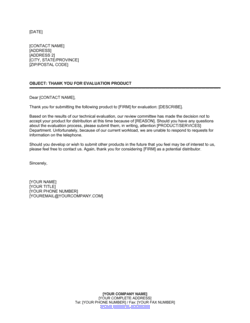
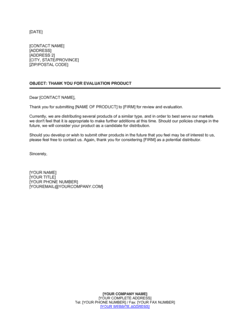
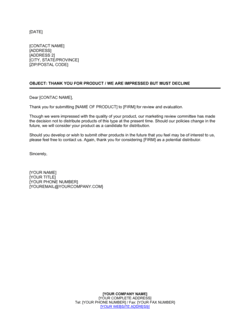
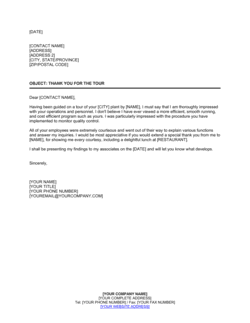
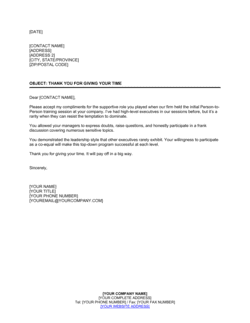
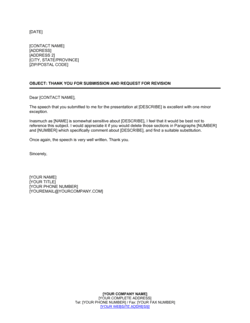
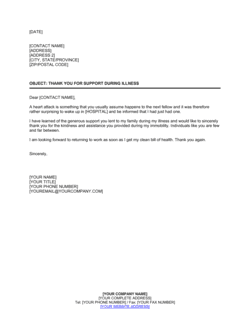
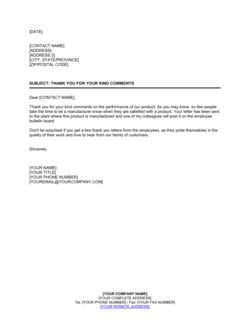
Thank You for Favorable Product Review Template

Free Word download • Edit online • Save & share with Drive • Export to PDF

1 page20–30 min to fillDifficulty: StandardSignature requiredLegal review recommended
Learn more ↓
FreeThank You for Favorable Product Review Template

At a glance

What it is
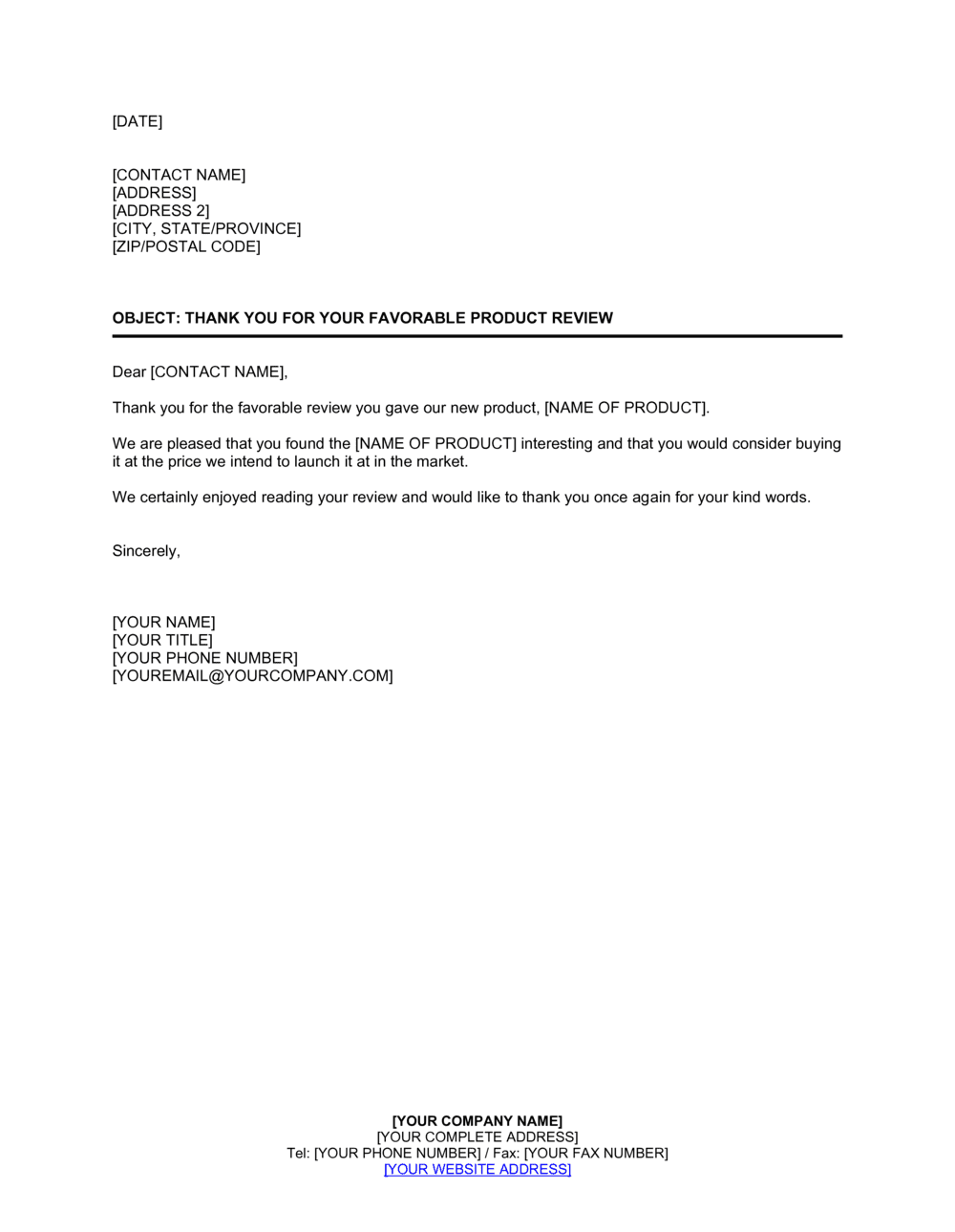
A Thank You For Favorable Product Review letter is a formal written acknowledgment from a business to a customer, reviewer, or partner who has published or submitted a positive review of a product. This free Word download provides a structured template you can edit online and export as PDF — covering expressions of gratitude, product or brand reinforcement, optional incentive disclosure, and a closing call to action, all formatted for professional correspondence.
When you need it
Use it whenever a customer, influencer, journalist, or trade partner submits a positive product review — whether on a retail platform, industry publication, social media channel, or internal feedback portal. It is especially important when any incentive, gift, or discount is attached to the acknowledgment, triggering FTC and equivalent disclosure obligations.
What's inside
Sender and recipient identification, formal salutation, personalized expression of gratitude referencing the specific review or platform, brand or product reinforcement language, optional incentive or reward disclosure, a forward-looking customer relationship statement, and an authorized signature block from the appropriate company representative.

What is a Thank You For Favorable Product Review Letter?

A Thank You For Favorable Product Review letter is a formal written communication sent by a business to a customer, reviewer, or partner who has published a positive evaluation of one of its products. It goes beyond a brief platform reply by acknowledging the specific review in detail, reinforcing the brand relationship, and — where applicable — disclosing any reward or incentive offered in connection with the acknowledgment. The letter also provides the structured framework to request permission to reproduce the reviewer's comments in marketing materials, with full written consent documented for compliance purposes.

Why You Need This Document

Leaving a favorable product review unacknowledged is a measurable missed opportunity: research consistently shows that customers who receive a personal response after leaving a review are significantly more likely to make a repeat purchase and to recommend the brand to others. Beyond the relationship benefit, if your acknowledgment includes any incentive — a discount code, free sample, or gift — failing to disclose that material connection in writing exposes your business to FTC enforcement action in the US, ASA sanctions in the UK, and equivalent regulatory penalties across Canada and the EU, regardless of whether the reward was offered before or after the review was published. A properly structured thank you letter closes the loop on all four risks simultaneously: it deepens customer loyalty, creates a documentable disclosure record, captures written consent for testimonial use, and delivers one focused call to action that supports your current marketing objectives. This template gives you a compliant, professional starting point you can complete in under 15 minutes per letter.

Which variant fits your situation?

If your situation is…Use this template
Thanking a customer for a verified retail platform review with no incentiveThank You For Favorable Product Review (No Incentive)
Acknowledging a positive review and offering a discount on the next purchaseThank You For Review With Discount Offer Letter
Responding to a favorable review from an influencer or content creatorInfluencer Thank You and Partnership Invitation Letter
Thanking a trade publication or journalist for a positive product write-upMedia Review Acknowledgment Letter
Following up on a positive review to request a case study or testimonialCustomer Testimonial Request Letter
Responding to an internal employee product feedback submissionEmployee Product Feedback Acknowledgment Letter
Acknowledging a review submitted as part of a loyalty or rewards programLoyalty Program Review Acknowledgment Letter

Common mistakes to avoid

❌ Sending a generic template without personalization

Why it matters: Reviewers who receive an obviously automated response feel their effort was not valued — and are more likely to note the impersonal response publicly than to share a warm acknowledgment.

Fix: Reference at least one specific detail from the reviewer's submission. Even a single personalized sentence transforms the letter from form mail into genuine correspondence.

❌ Omitting incentive disclosure when a reward is attached

Why it matters: The FTC, ASA, and equivalent regulators treat undisclosed post-review rewards as deceptive advertising — exposing the business to fines, enforcement action, and reputational damage.

Fix: Include the incentive disclosure clause in full whenever any reward accompanies the letter, and state explicitly that the reward is not conditioned on the content of the review.

❌ Assuming public reviews can be reproduced without permission

Why it matters: Review platform terms of service often restrict reproduction of user-submitted content. Using a review in marketing without individual consent can result in platform takedown demands or copyright claims.

Fix: Always include the testimonial permission clause when you intend to reproduce review language, and retain the reviewer's written consent before publishing.

❌ Using a senior executive's name without their review

Why it matters: A letter signed by a VP or CEO that the executive never saw creates reputational inconsistency and, where incentives are attached, potential liability if the offer is later disputed or denied.

Fix: Route every letter bearing an executive signature through that individual for approval before it is sent, or designate a consistent authorized signatory for all review correspondence.

❌ Including multiple calls to action in the closing paragraph

Why it matters: Giving the reviewer three or four next steps — join our program, follow us, share the review, visit our store — produces decision paralysis and results in none of the actions being taken.

Fix: Select the single most valuable next step for the business at that moment and write one clear, direct CTA. Test different CTAs across batches to identify which drives the highest engagement.

❌ Making specific future performance promises in the relationship statement

Why it matters: Statements like 'we guarantee your next order will ship within 24 hours' or 'this price is locked for you permanently' can be read as contractual commitments and create legal exposure if not fulfilled.

Fix: Keep the forward-looking clause general and aspirational — 'we are committed to maintaining the quality you experienced' — without specific timelines, pricing guarantees, or product promises.

The 9 key clauses, explained

Sender and recipient identification

In plain language: Names the business sending the letter, the authorized signatory, and the reviewer or customer receiving it — establishing the formal correspondence relationship.

Sample language
[COMPANY NAME] | [STREET ADDRESS] | [CITY, STATE, ZIP] | [DATE] | [REVIEWER FULL NAME] | [REVIEWER ADDRESS OR PLATFORM HANDLE]

Common mistake: Addressing the letter to a platform username rather than the reviewer's real name. When the letter is forwarded or published, an impersonal address undermines the sincerity the letter is meant to convey.

Formal salutation

In plain language: Opens the letter with a professional greeting using the reviewer's name, setting a respectful and personalized tone.

Sample language
Dear [REVIEWER FIRST NAME / MR. / MS. LAST NAME],

Common mistake: Using 'To Whom It May Concern' for a letter responding to a named reviewer. Generic salutations signal a form letter and negate the goodwill the acknowledgment is designed to build.

Expression of gratitude referencing the specific review

In plain language: States sincere thanks and references the specific review, platform, or product mentioned — demonstrating the business actually read what was written.

Sample language
Thank you sincerely for your [DATE] review of [PRODUCT NAME] on [PLATFORM]. Your feedback — particularly your comments on [SPECIFIC FEATURE OR BENEFIT] — is deeply appreciated by our entire team.

Common mistake: Using generic praise language without referencing any detail from the review. Reviewers can tell the difference between a canned response and a letter that reflects genuine reading of their submission.

Brand and product reinforcement

In plain language: Restates one or two key product values or brand differentiators, tying the reviewer's experience to the company's broader mission.

Sample language
Your experience reflects exactly what we set out to achieve with [PRODUCT NAME] — [CORE PRODUCT VALUE OR BENEFIT]. It is gratifying to hear that [PRODUCT FEATURE] made a real difference for you.

Common mistake: Turning this clause into an advertisement with feature lists and promotional language. The tone should remain conversational and customer-centric, not a sales pitch.

Incentive or reward disclosure (conditional)

In plain language: Discloses any gift, discount, or reward offered in connection with the review acknowledgment — required when a material connection exists under FTC and equivalent rules.

Sample language
As a token of our appreciation, we would like to offer you [DESCRIPTION OF REWARD — e.g., a 20% discount code valid for 90 days on your next purchase at [WEBSITE]]. Please note that this gesture is offered after the fact and is in no way conditioned on the content of your review.

Common mistake: Omitting the disclosure that the incentive is not conditioned on review content. Even post-publication rewards can create implied endorsement obligations if the connection is not clearly stated.

Permission request for testimonial use (optional)

In plain language: Politely requests the reviewer's written consent to reproduce their review or comments in marketing materials, specifying the channels and formats.

Sample language
With your permission, we would love to feature your review on [WEBSITE / SOCIAL MEDIA / MARKETING MATERIALS]. If you are agreeable, please reply to this letter confirming your consent, and we will ensure your name is credited exactly as you prefer.

Common mistake: Assuming consent because the review was posted publicly. Public platform reviews may be subject to platform-specific terms of service that restrict reproduction without explicit individual permission.

Forward-looking relationship statement

In plain language: Expresses the company's commitment to continued quality and the ongoing customer relationship, without making specific promises the company cannot keep.

Sample language
We remain committed to delivering [PRODUCT CATEGORY] that consistently meets the standard your review describes. We look forward to serving you again and welcome any future feedback.

Common mistake: Making specific future performance promises — such as guarantees about product versions, pricing, or delivery timelines — that create contractual expectations the company may not be able to fulfill.

Call to action

In plain language: Invites the reviewer to take a specific next step — visiting the website, joining a loyalty program, or following the brand — aligned to the company's current marketing objectives.

Sample language
We invite you to join our [LOYALTY PROGRAM NAME] at [URL] to enjoy [BENEFIT], and to follow us at [SOCIAL HANDLE] for updates on new products and exclusive offers.

Common mistake: Including multiple competing CTAs in the same closing paragraph. One clear next step outperforms three ambiguous ones and is far less likely to be ignored.

Authorized signature block

In plain language: Closes the letter with the signatory's full name, title, company name, and contact information — confirming who sent the communication on behalf of the business.

Sample language
Sincerely, [SIGNATORY FULL NAME] | [TITLE] | [COMPANY NAME] | [EMAIL ADDRESS] | [PHONE NUMBER]

Common mistake: Having a junior staff member sign a letter that goes out under a senior executive's name without their knowledge. This creates reputational inconsistency and, where incentives are attached, potential liability if the offer terms are later disputed.

How to fill it out

  1. 1

    Identify the reviewer and the review

    Locate the reviewer's name, the platform where the review was posted, the review date, and the specific product reviewed. Note any standout language or details from the review text that you can reference personally in the letter.

    💡 Screenshot or archive the original review before sending — platforms occasionally remove reviews, and having a record protects you if the reviewer later disputes the correspondence.

  2. 2

    Enter sender and recipient details

    Complete the letterhead block with your company's registered name, mailing address, and the date. Add the reviewer's full name and address, or their platform handle if a physical address is unavailable.

    💡 Use your company's registered legal name in the sender block — not just a brand name — especially if any incentive is attached, since the legal entity is the party making the offer.

  3. 3

    Personalize the gratitude clause

    Reference at least one specific detail from the review — a product feature mentioned, a use-case described, or a phrase the reviewer used. Replace all [PLACEHOLDERS] with specific text from the actual review.

    💡 The more precisely you reflect the reviewer's own words, the higher the probability they share your response publicly — effectively amplifying a positive review.

  4. 4

    Draft the brand reinforcement paragraph

    Write one to two sentences connecting the reviewer's experience to your product's core value proposition. Keep it conversational and focused on the customer's outcome, not your product's features.

    💡 Avoid superlatives like 'world-class' or 'unmatched.' Specific, factual statements — 'engineered to last 10 years under daily use' — are more credible than vague praise.

  5. 5

    Complete the incentive disclosure if applicable

    If you are attaching any reward — discount code, free product, gift card — complete the incentive disclosure clause in full. State the reward description, value, expiry, and the explicit statement that it is not conditioned on review content.

    💡 Keep a log of every incentive sent in connection with a review acknowledgment. The FTC and equivalent regulators treat patterns of incentivized reviews as advertising, even when sent one-to-one.

  6. 6

    Add the testimonial permission request if you want to reproduce the review

    If the review contains quotable language you wish to use in marketing, add the permission request clause and specify exactly where the quote will appear — website, email campaign, social media, print materials.

    💡 Request only the channels you actually plan to use. Overly broad permission requests make reviewers uncomfortable and reduce the rate of consent.

  7. 7

    Insert the call to action and finalize the signature block

    Choose a single next step and write it as a clear, direct invitation. Then complete the signature block with the authorized signatory's full name, title, and contact information.

    💡 Route the letter through whoever is listed as the authorized signatory for review before it is sent — especially when an incentive is involved, since the offer constitutes a binding commitment.

  8. 8

    Export as PDF and send via appropriate channel

    Export the completed letter as a PDF for formal correspondence. Send via email with the PDF attached, or via the reviewer's preferred platform message function if a physical address is unavailable.

    💡 For high-value reviewers — journalists, influencers with large audiences, or long-tenured customers — print and mail a signed physical copy in addition to the digital version. The physical letter has a disproportionate impact relative to its cost.

Frequently asked questions

What is a thank you for favorable product review letter?

A thank you for favorable product review letter is a formal written acknowledgment sent by a business to a customer, influencer, or partner who has submitted or published a positive review of a product. It expresses genuine gratitude, reinforces the brand relationship, and — where applicable — discloses any reward or incentive offered in connection with the acknowledgment. Used correctly, it transforms a one-time review into a lasting customer relationship asset.

Is a thank you for product review letter legally required?

No law requires a business to send a thank you letter for a product review. However, if the letter includes an incentive — a discount, free product, or gift — disclosure obligations under FTC Endorsement Guidelines in the US, ASA rules in the UK, and equivalent regulations in Canada and the EU are triggered. Failing to disclose a material connection between the business and the reviewer, even in private correspondence, can constitute deceptive advertising practice.

When should I send a thank you letter for a product review?

Send it within 5–7 business days of the review being posted or submitted, while the experience is still fresh for the reviewer. Delayed responses — weeks or months after the review — lose the relationship-building impact and can feel performative rather than genuine. For high-value reviewers such as journalists or influencers with large audiences, a same-week response is strongly recommended.

Do I need to disclose a discount or gift included with this letter?

Yes, in most jurisdictions. The FTC in the US requires clear disclosure of any material connection between a reviewer and a brand, including post-review rewards. The UK ASA and Canadian ASC apply similar principles. Best practice is to include a disclosure clause in the letter itself stating the nature of the reward and confirming it was not conditioned on the review's content. This applies even when the incentive is sent after the review has already been published.

Can I use a customer's positive review in my marketing materials?

Only with the reviewer's explicit written consent. Platform terms of service frequently restrict reproduction of user-submitted content, and copyright in a written review typically belongs to the reviewer. The thank you letter template includes an optional testimonial permission clause you can use to request consent in the same correspondence, specifying exactly where and how the review will be used.

Should the letter be signed by a senior executive or a customer service representative?

For standard retail or e-commerce reviews, a customer success manager or brand manager is the appropriate signatory. For reviews from journalists, prominent influencers, or long-standing major accounts, a letter signed by a senior director or VP carries more weight and reflects the importance the business places on the relationship. Whoever signs must actually review and approve the letter before it is sent — especially when any offer or incentive is included.

What is the difference between this letter and a review response posted on the platform?

A platform response is a short, public reply visible to all future visitors — typically 1–3 sentences and part of your public reputation management. A thank you letter is a private, formal document sent directly to the reviewer — longer, more personal, and capable of including incentives, testimonial requests, and relationship-building content that would be inappropriate in a public reply. Both should be sent when the review is particularly detailed or valuable to the business.

What tone should a thank you for product review letter use?

Warm, professional, and specific. The letter should feel like genuine correspondence from a real person, not a marketing communication. Avoid superlatives, promotional language, and feature lists. Reference the reviewer's actual words or experience, keep sentences concise, and close with one clear next step. The goal is to make the reviewer feel their feedback mattered — not to sell them something.

Can I send this letter by email rather than physical mail?

Yes — email is the most common delivery method and is entirely appropriate for most reviewers. Export the completed template as a PDF and attach it to a brief, professional covering email that restates the gratitude in one or two sentences. For high-profile reviewers, journalists, or major wholesale partners, a printed and physically signed copy sent by mail or courier significantly increases the impression of sincerity and effort.

How this compares to alternatives

vs Thank You For Your Order Letter

A thank you for your order letter is sent immediately after a purchase to confirm the transaction and express post-sale appreciation. A thank you for favorable product review letter is sent after a review is published and focuses on the reviewer relationship, reputation management, and optional incentive or testimonial use. They serve different moments in the customer lifecycle and should not be combined.

vs Customer Feedback Acknowledgment Letter

A customer feedback acknowledgment letter is a neutral response to any feedback — positive, negative, or neutral — confirming receipt and outlining next steps. A favorable review thank you letter is specifically celebratory in tone, designed to reinforce a positive relationship, and may include incentives or testimonial requests that would be inappropriate in a generic feedback response.

vs Influencer Partnership Agreement

An influencer partnership agreement is a binding contract governing a paid or compensated content arrangement — deliverables, timelines, payment, and FTC disclosure obligations. A thank you for favorable product review letter is sent in response to an organic review that was not commissioned. When the relationship progresses to a formal paid arrangement, the partnership agreement replaces or supplements the goodwill letter.

vs Testimonial Release Form

A testimonial release form is a standalone consent document granting the business explicit written permission to reproduce a reviewer's statements in specific marketing channels. A thank you for favorable product review letter may include an informal permission request clause, but for formal marketing use — advertising, printed materials, video — a dedicated release form provides cleaner legal protection and should be executed separately.

Industry-specific considerations

E-commerce and retail

High review volume means templated but personalized letters sent within 48 hours of a five-star review drive measurable repeat purchase rates and public review sharing.

Consumer packaged goods

Favorable reviews on retail platforms directly influence shelf placement and buyer decisions; formal acknowledgment letters reinforce distributor and retailer relationships alongside consumer outreach.

SaaS and technology

Positive reviews on G2, Capterra, or Trustpilot carry outsized B2B purchasing influence; thank you letters double as an opportunity to request case study participation or referral introductions.

Healthcare and wellness

Product claims in review acknowledgment letters must avoid therapeutic or clinical language that could trigger FDA or equivalent regulatory scrutiny; letters should focus on customer experience, not health outcomes.

Professional services

Reviews on LinkedIn, Google, or industry directories are critical to lead generation; formal acknowledgment letters strengthen the personal referral relationships that drive the majority of new business.

Food and beverage

Favorable reviews on Yelp, Google, or specialty food platforms influence foot traffic and online orders; letters should avoid making unsubstantiated health or ingredient claims when referencing the product.

Jurisdictional notes

United States

The FTC Endorsement Guides require clear and conspicuous disclosure of any material connection between a business and a reviewer — including post-review rewards such as discounts or free products. The FTC updated these guidelines in 2023 to cover a broader range of platforms and connection types. Incentive disclosure applies even when the reward is sent privately and not posted alongside the review. Failure to comply can result in civil penalties of up to $51,744 per violation.

Canada

The Canadian Anti-Spam Legislation (CASL) governs commercial electronic messages, including thank you letters sent by email that include promotional content or CTAs. The Advertising Standards Canada (ASC) Code requires disclosure of material connections between brands and reviewers. Quebec's Act Respecting the Protection of Personal Information in the Private Sector (Law 25) imposes additional requirements on how reviewer contact data collected for acknowledgment purposes is stored and used.

United Kingdom

The Advertising Standards Authority (ASA) and the Committee of Advertising Practice (CAP) Code require that any incentivized review acknowledgment — including post-review rewards — be clearly labeled as involving a commercial relationship. The Consumer Protection from Unfair Trading Regulations 2008 treats undisclosed paid or incentivized endorsements as a misleading commercial practice. The Digital Markets, Competition and Consumers Act 2024 introduced strengthened rules on fake and incentivized reviews that businesses must monitor carefully.

European Union

The EU Omnibus Directive, effective in member states from 2022, prohibits submitting or facilitating fake reviews and requires that incentivized reviews be clearly disclosed. GDPR applies to any personal data collected from reviewers — including names, email addresses, and platform handles — used to send acknowledgment letters; a valid legal basis (typically legitimate interest or consent) must exist. Member state advertising authorities apply varying levels of enforcement, with Germany, France, and the Netherlands among the most active.

Template vs lawyer — what fits your deal?

PathBest forCostTime
Use the templateStandard retail or e-commerce thank you letters with no attached incentive and no intention to reproduce the review in marketingFree10–15 minutes per letter
Template + legal reviewLetters that include an incentive, discount, or reward — or where the business intends to reproduce the review in advertising or paid media$150–$400 for a marketing compliance review1–2 business days
Custom draftedHigh-profile influencer acknowledgments, regulated industries (healthcare, financial products), or situations where the reviewer has an existing commercial relationship with the business$500–$1,500+3–7 business days

Glossary

Favorable Review
A publicly or privately submitted evaluation of a product that conveys a positive assessment, typically four or five stars or an equivalent written commendation.
Material Connection
Any relationship between a reviewer and a business — including free products, discounts, or payment — that could influence the review and must be disclosed under FTC and equivalent regulations.
FTC Endorsement Guidelines
US Federal Trade Commission rules requiring that any material connection between a reviewer and a brand be clearly and conspicuously disclosed in the review and any acknowledgment correspondence.
Goodwill Letter
A formal written communication intended to strengthen a business relationship by expressing appreciation, with no immediate transactional obligation attached.
Call to Action (CTA)
A specific next step invited of the recipient — such as sharing the review, visiting a product page, or joining a loyalty program — included at the close of a business letter.
Testimonial
A statement from a customer or reviewer affirming the quality or value of a product, which a business may seek permission to reproduce in marketing materials.
Review Platform
A third-party service — such as Amazon, Google, Yelp, Trustpilot, or G2 — where customers submit ratings and written feedback on products or services.
Authorized Signatory
The individual within a company legally empowered to sign correspondence on behalf of the organization — typically a director, manager, or designated officer.
Incentive Disclosure
A written statement in the letter confirming that any reward offered in connection with the review — a discount, sample, or gift — is clearly identified to avoid deceptive marketing claims.
Brand Reinforcement
Language within a letter that restates core product values, differentiators, or brand promises to deepen the recipient's positive association with the business.

Part of your Business Operating System

This document is one of 3,000+ business & legal templates included in Business in a Box.

  • Fill-in-the-blanks — ready in minutes
  • 100% customizable Word document
  • Compatible with all office suites
  • Export to PDF and share electronically

Create your document in 3 simple steps.

From template to signed document — all inside one Business Operating System.
1
Download or open template

Access over 3,000+ business and legal templates for any business task, project or initiative.

2
Edit and fill in the blanks with AI

Customize your ready-made business document template and save it in the cloud.

3
Save, Share, Send, Sign

Share your files and folders with your team. Create a space of seamless collaboration.

Save time, save money, and create top-quality documents.

★★★★★

"Fantastic value! I'm not sure how I'd do without it. It's worth its weight in gold and paid back for itself many times."

Managing Director · Mall Farm
Robert Whalley
Managing Director, Mall Farm Proprietary Limited
★★★★★

"I have been using Business in a Box for years. It has been the most useful source of templates I have encountered. I recommend it to anyone."

Business Owner · 4+ years
Dr Michael John Freestone
Business Owner
★★★★★

"It has been a life saver so many times I have lost count. Business in a Box has saved me so much time and as you know, time is money."

Owner · Upstate Web
David G. Moore Jr.
Owner, Upstate Web

Run your business with a system — not scattered tools

Stop downloading documents. Start operating with clarity. Business in a Box gives you the Business Operating System used by over 250,000 companies worldwide to structure, run, and grow their business.

Start free · No credit card required