- Product Evaluation
- A structured process in which a buyer tests or inspects a vendor's product sample against predefined specifications, standards, or acceptance criteria.
- Acceptance Criteria
- The documented set of requirements — technical, qualitative, regulatory, or commercial — that a product must satisfy before a buyer will accept it.
- Non-Conformance
- A finding that a product or sample deviates from the agreed or stated specifications, triggering formal rejection or corrective action.
- Sample Return Instructions
- The buyer's direction to the vendor specifying whether a rejected sample should be returned at the vendor's cost, destroyed, or held pending further instruction.
- Rejection Notice
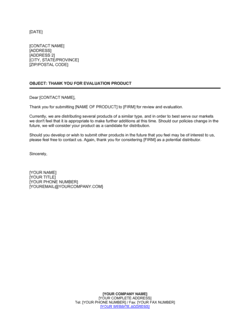
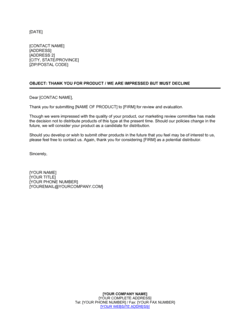
- A formal written communication from a buyer to a seller stating that submitted goods do not meet acceptance criteria and will not be purchased.
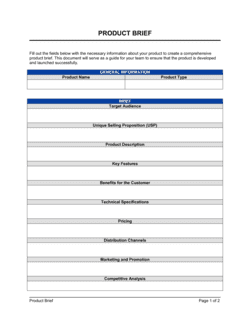
- Specification Sheet
- A document — often attached or referenced — that details the technical, dimensional, material, or performance requirements the product was evaluated against.
- Vendor Scorecard
- An internal evaluation tool rating a supplier's product across multiple criteria such as quality, price, delivery, and compliance — often the basis for a rejection decision.
- Confidentiality Reminder
- A clause in the rejection letter reminding the vendor that any proprietary information shared during the evaluation process remains subject to any existing NDA or confidentiality agreement.
- Evaluation Period
- The defined timeframe during which the buyer tests the product sample, typically specified in a prior evaluation agreement or purchase order.
- Commercial Terms
- Pricing, payment, delivery, and warranty conditions associated with a product submission — separate from technical specifications and often evaluated independently.