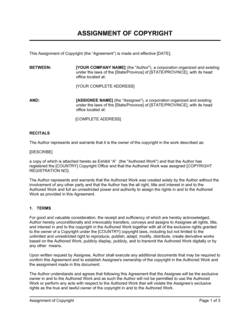
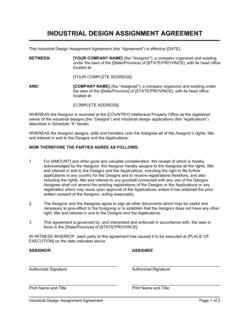
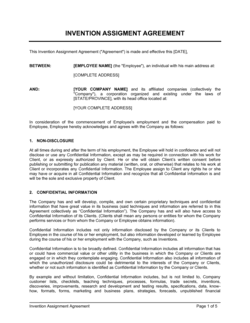
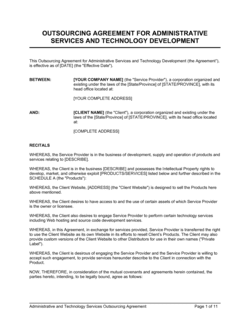
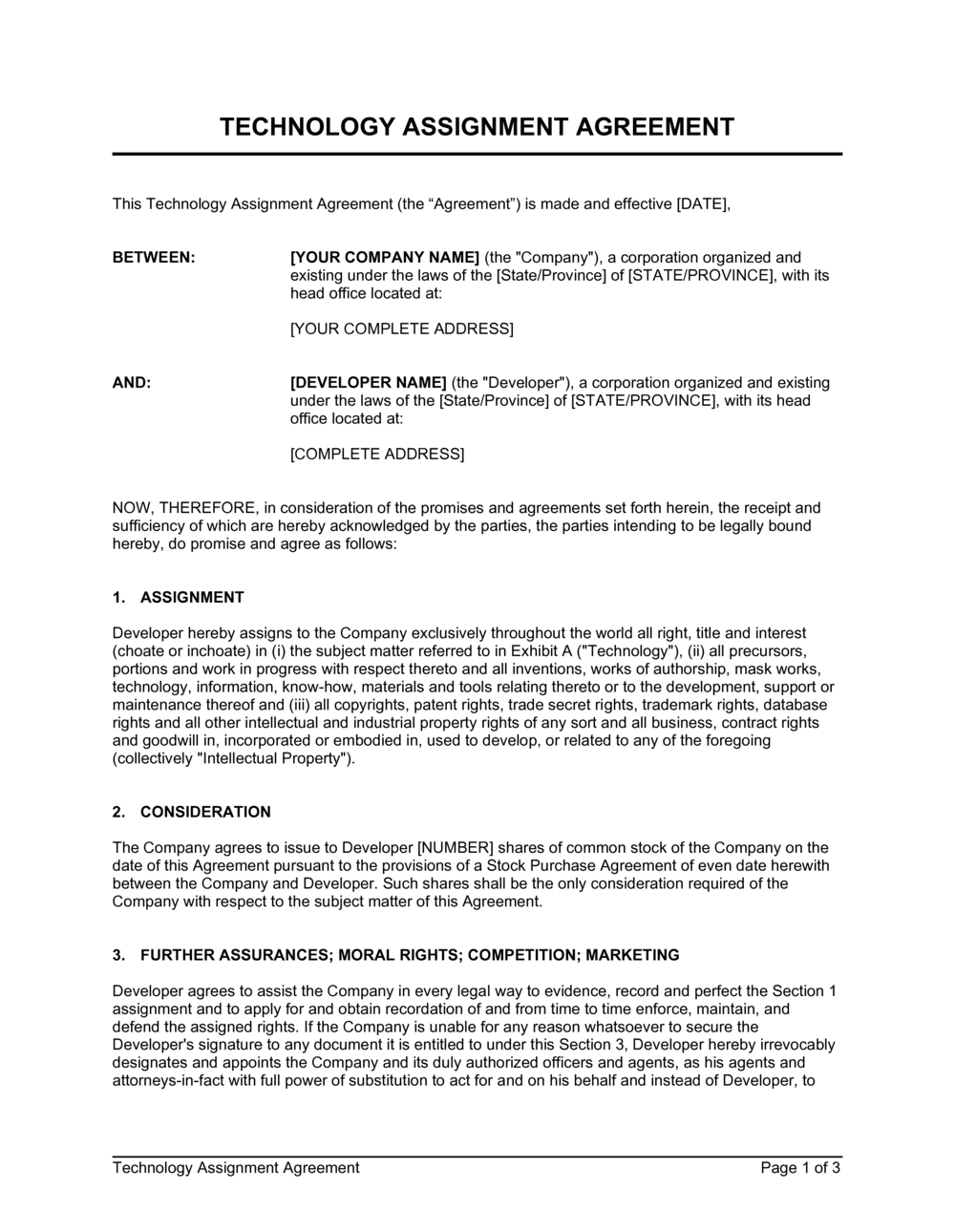
Technology Assignment Agreement Template

Free Word download β€’ Edit online β€’ Save & share with Drive β€’ Export to PDF

3 pagesβ€’25–30 min to fillβ€’Difficulty: Complexβ€’Signature requiredβ€’Legal review recommended
Learn more ↓
FreeTechnology Assignment Agreement Template

At a glance

What it is
A Technology Assignment Agreement is a legally binding contract that permanently transfers ownership of software, patents, source code, technical documentation, trade secrets, and related intellectual property from one party (the Assignor) to another (the Assignee). This free Word download gives you a professionally structured starting point you can edit online and export as PDF β€” covering every material transfer clause in a single document.
When you need it
Use it when a founder, employee, contractor, or third-party developer holds title to technology that the company needs to own outright β€” particularly before a funding round, acquisition, or product launch where clean IP ownership is a due-diligence requirement.
What's inside
Identification of assigned assets, representations and warranties on ownership and originality, consideration and payment terms, a broad IP assignment clause with moral rights waiver, confidentiality obligations, retained license carve-outs, governing law, and indemnification for third-party IP claims.

What is a Technology Assignment Agreement?

A Technology Assignment Agreement is a legally binding contract that permanently transfers ownership of intellectual property β€” including software, source code, patents, trade secrets, proprietary algorithms, and related technical documentation β€” from the creator or current owner (the Assignor) to a receiving party (the Assignee). Unlike a software license, which grants permission to use technology while the owner retains title, an assignment transfers all rights irrevocably and outright. The agreement records what is being transferred, confirms the consideration exchanged, and includes representations by the Assignor that they hold clean title and are authorized to transfer it. When properly executed and, where applicable, recorded with the relevant patent office, it gives the Assignee the legal foundation to enforce, commercialize, and defend the technology without challenge from the transferring party.

Why You Need This Document

The absence of a technology assignment agreement is consistently one of the top issues uncovered in startup due diligence and M&A transactions. When a founder built the core product on a personal laptop before incorporating the company, when a freelance developer was paid for their work but never signed an IP transfer clause, or when an employee created a critical feature under a contract that lacked an assignment provision, the company does not legally own the technology it depends on β€” regardless of who paid for its development. Investors routinely require clean IP ownership as a condition precedent to closing a funding round, and acquirers can demand price reductions or walk from a deal entirely when title is unclear. A properly structured technology assignment agreement closes that gap before it becomes a negotiating liability, ensures the Assignee's ability to enforce patents against infringers, and gives both parties documented certainty about what was transferred, for how much, and on what terms.

Which variant fits your situation?

If your situation is…Use this template
Transferring IP created by a founder before the company was incorporatedFounder IP Assignment Agreement
Assigning IP created by an employee during employmentEmployee IP Assignment Agreement
Transferring code and deliverables from a contractor or freelancerIndependent Contractor IP Assignment
Granting usage rights without transferring ownershipSoftware License Agreement
Assigning patents specifically as part of a patent portfolio dealPatent Assignment Agreement
Transferring technology as part of a broader M&A asset purchaseAsset Purchase Agreement
Sharing confidential technology details without transferring ownershipNon-Disclosure Agreement

Common mistakes to avoid

❌ Using 'agrees to assign' instead of 'hereby assigns'

Why it matters: Courts in the US, UK, and Canada have held that 'agrees to assign' creates a contractual promise of future transfer, not an immediate present-tense assignment. Until a further act of assignment occurs, legal title remains with the Assignor β€” meaning it can be claimed by a trustee in bankruptcy or transferred to a competing buyer.

Fix: Use present-tense operative language: 'Assignor hereby irrevocably assigns.' If the assignment is conditional, state the conditions explicitly and include a clause requiring the Assignor to execute further instruments on demand.

❌ Omitting an itemized Schedule of Assigned Assets

Why it matters: Broad language like 'all technology related to [Product]' is ambiguous and routinely disputed in post-closing diligence, M&A representations, and litigation. If the schedule cannot identify each asset, the assignment may be held unenforceable as to that item.

Fix: Attach a Schedule A listing every repository, patent, trademark, data set, and documentation package by name, version, and location. For software, include repository URLs and commit hashes.

❌ No open-source license disclosure warranty

Why it matters: A single GPL or AGPL dependency embedded in the assigned codebase can obligate the Assignee to release their entire product under an open-source license. Discovering this after a funding round or acquisition creates material liability and deal risk.

Fix: Require the Assignor to warrant that no open-source components subject to copyleft licenses are embedded in the Assigned Technology, or attach a software bill of materials (SBOM) disclosing every dependency and its license.

❌ Skipping patent assignment recordal with the relevant patent office

Why it matters: In most jurisdictions, an unrecorded patent assignment is unenforceable against a subsequent bona fide purchaser who acquires the patent without notice of the prior transfer. A startup that forgets to record loses its priority position.

Fix: File the assignment recordal with the USPTO, CIPO, UKIPO, or EPO within 3 months of execution. Include recordal filing as a closing condition in any M&A transaction that includes patents.

❌ No cap on the Assignor's indemnification liability

Why it matters: An uncapped indemnification obligation for IP infringement claims can expose a founder or freelance developer to liability that far exceeds the consideration they received. A $10,000 assignment fee does not justify unlimited exposure to a multi-million dollar infringement suit.

Fix: Negotiate an indemnification cap tied to the consideration paid β€” typically 1–2Γ— the consideration amount β€” with a carve-out for fraud and wilful misrepresentation.

❌ Failing to address moral rights in non-US assignments

Why it matters: In Canada, the UK, and EU member states, moral rights β€” including the right of attribution and the right to object to derogatory treatment β€” survive a copyright assignment unless explicitly waived. A developer who retains moral rights can object to the Assignee modifying or rebranding the technology.

Fix: Include a moral rights waiver clause for all assignments involving non-US parties and obtain local legal advice in France and Germany, where moral rights waivers are structurally limited.

The 10 key clauses, explained

Recitals and defined terms

In plain language: Sets out the background context β€” who the parties are, why the agreement exists β€” and defines every capitalized term used throughout the document.

Sample language
WHEREAS, Assignor has developed certain technology, software, and related intellectual property described herein ('Assigned Technology'); and WHEREAS, Assignee desires to acquire full and exclusive ownership of the Assigned Technology on the terms set out below.

Common mistake: Leaving 'Assigned Technology' undefined in the recitals and relying on a vague Schedule. Courts have found assignment clauses unenforceable when the transferred assets cannot be identified with reasonable specificity.

Schedule of assigned assets

In plain language: An attached exhibit itemizing every discrete piece of technology being transferred β€” source code repositories, patent applications, trade secrets, documentation, and data sets β€” by name, version, and location.

Sample language
The Assigned Technology includes: (a) all source code in the GitHub repository at [REPOSITORY URL] as of [DATE]; (b) U.S. Patent Application No. [PATENT NUMBER]; (c) the technical documentation set out in Exhibit A-1.

Common mistake: Using a broad catch-all description like 'all technology related to the Product' without an itemized list. Ambiguous schedules are the single most common source of post-closing IP ownership disputes.

Assignment of intellectual property

In plain language: The operative clause that transfers all IP rights β€” copyright, patent, trade secret, and trademark rights β€” in the Assigned Technology from Assignor to Assignee, effective on the execution date.

Sample language
Assignor hereby irrevocably assigns to Assignee all right, title, and interest in and to the Assigned Technology, including all copyright, patent, trade secret, and other intellectual property rights, throughout the world and for the full term of protection.

Common mistake: Using 'agrees to assign' instead of 'hereby assigns.' Courts in the US and UK have treated 'agrees to assign' as a promise of future transfer rather than an immediate present-tense assignment, requiring a separate subsequent act.

Moral rights waiver

In plain language: The Assignor waives any moral rights (right of attribution, right of integrity) they hold in the technology under applicable copyright law, to the extent permitted by law.

Sample language
To the extent permitted by applicable law, Assignor irrevocably waives all moral rights in the Assigned Technology, including the right to be identified as author and the right to object to derogatory treatment.

Common mistake: Omitting a moral rights waiver entirely. In Canada, the UK, and EU member states, moral rights survive a copyright assignment unless explicitly waived β€” leaving the Assignor with residual rights to object to modifications.

Consideration

In plain language: States what the Assignee pays the Assignor in exchange for the transfer β€” a cash lump sum, equity, or a nominal amount β€” and confirms receipt, making the agreement binding.

Sample language
In consideration for the assignment herein, Assignee shall pay Assignor the sum of $[AMOUNT] ('Consideration'), receipt of which Assignor hereby acknowledges. / In consideration of Assignor's continued employment and compensation, Assignor hereby makes the assignment set out herein.

Common mistake: Omitting consideration entirely in a standalone assignment document. Without it, the agreement may be treated as a gratuitous transfer and challenged as unenforceable in jurisdictions that require mutual exchange.

Representations and warranties

In plain language: The Assignor makes binding factual statements that they own the technology outright, have the right to assign it, have not previously licensed or encumbered it, and that it does not infringe any third party's IP rights.

Sample language
Assignor represents and warrants that: (a) Assignor is the sole and exclusive owner of the Assigned Technology; (b) the Assigned Technology is free and clear of all liens, claims, and encumbrances; (c) the Assigned Technology does not infringe the intellectual property rights of any third party; and (d) Assignor has full authority to execute this Agreement.

Common mistake: No warranty that the technology is free of open-source license obligations. A single GPL-licensed dependency can restrict the Assignee's ability to commercialize the software, and discovering it post-closing is expensive.

Prior inventions carve-out

In plain language: Lists technology developed by the Assignor before the assignment date that is explicitly excluded from transfer, preventing the Assignee from claiming ownership of work the Assignor created independently.

Sample language
The parties acknowledge that the technology listed in Schedule B ('Prior Inventions') is excluded from this Agreement and remains the sole property of Assignor. Assignee acquires no rights in any Prior Invention.

Common mistake: Skipping the Prior Inventions schedule when the Assignor has a body of pre-existing work. Without it, the assignment clause's broad language may inadvertently capture older projects β€” leading to disputes over assets the Assignee never intended to acquire.

Confidentiality

In plain language: Obliges both parties to keep the terms of the agreement and any technical information exchanged during the transfer process confidential for a defined period.

Sample language
Each party agrees to keep confidential all non-public technical information and the terms of this Agreement for a period of [3] years from the Effective Date, except as required by law or with the prior written consent of the other party.

Common mistake: No confidentiality obligation on the Assignee. Once the Assignee receives the technology, they may have strategic reasons to disclose its existence β€” a mutual confidentiality clause preserves the Assignor's privacy interests during and after the transfer.

Indemnification

In plain language: Requires the Assignor to defend and compensate the Assignee if a third party claims that the Assigned Technology infringes their IP rights β€” and vice versa for breaches of the Assignee's obligations.

Sample language
Assignor shall indemnify, defend, and hold harmless Assignee from and against any third-party claims, losses, or expenses (including reasonable attorneys' fees) arising from a breach of Assignor's representations or from any claim that the Assigned Technology infringes a third party's intellectual property rights.

Common mistake: Uncapped indemnification with no limitation of liability clause. An Assignor transferring a startup's entire codebase for nominal consideration should not bear unlimited indemnification exposure β€” negotiate a cap tied to the consideration amount.

Governing law and dispute resolution

In plain language: Specifies which jurisdiction's law governs the agreement and the mechanism for resolving disputes β€” typically arbitration or the courts of a named jurisdiction.

Sample language
This Agreement is governed by the laws of [STATE / PROVINCE / COUNTRY], without regard to conflict-of-law principles. Any dispute arising under this Agreement shall be resolved by binding arbitration administered by [AAA / JAMS / LCIA] in [CITY], except claims for injunctive or equitable relief.

Common mistake: Choosing a governing law with no connection to either party's location or the technology's development. In cross-border assignments, a neutral jurisdiction can be appropriate β€” but courts may still apply local IP law regardless of the contractual choice.

How to fill it out

  1. 1

    Identify the parties and their roles

    Enter the Assignor's full legal name (individual or entity) and the Assignee's full registered company name and jurisdiction of incorporation. Confirm that the Assignor is the actual legal owner β€” not a nominee or licensee β€” before proceeding.

    πŸ’‘ Run a quick patent and copyright registry check on the Assignor's name before execution. Discovering a prior assignment after signing is far more expensive than catching it beforehand.

  2. 2

    Build a specific Schedule of Assigned Assets

    List every item being transferred by name, version, file path, patent number, or repository URL. Attach this as Schedule A. For software, include the commit hash or release tag to pin the exact version.

    πŸ’‘ A one-line description like 'all software' will be challenged. Courts require sufficient specificity to identify each asset without extrinsic evidence.

  3. 3

    Confirm and document consideration

    State the exact monetary amount, equity grant, or nominal consideration being paid. If the transfer is in connection with employment, reference the employment agreement by date. Confirm receipt of consideration in the agreement body.

    πŸ’‘ Even $1 of documented consideration strengthens enforceability in jurisdictions that require mutual exchange. Never leave consideration blank.

  4. 4

    Complete the representations and warranties block

    Work through each warranty with the Assignor and confirm each is accurate. Pay particular attention to open-source component use, third-party licenses embedded in the code, and any prior assignments or licenses granted.

    πŸ’‘ Request a software bill of materials (SBOM) from the Assignor before signing. A GPL or AGPL dependency that the Assignee inherits can materially limit commercialization options.

  5. 5

    List prior inventions on Schedule B

    Have the Assignor identify all pre-existing technology they want explicitly excluded from the assignment. List each item by name and a brief description. An empty Schedule B is valid β€” it signals the Assignor has reviewed and found nothing to exclude.

    πŸ’‘ An Assignor who refuses to complete Schedule B is a red flag. It may indicate they are uncertain about what they actually own or have previously licensed.

  6. 6

    Tailor the moral rights waiver to jurisdiction

    In the US, moral rights are limited to visual art under the Visual Artists Rights Act and generally are not an issue for software. For UK, Canadian, and EU assignments, include an explicit waiver or acknowledgment that moral rights are waived to the fullest extent permitted by law.

    πŸ’‘ In France and Germany, moral rights cannot be fully waived by contract β€” include best-efforts waiver language and obtain legal confirmation on the practical impact.

  7. 7

    Set governing law and dispute resolution

    Choose the jurisdiction where the Assignee is incorporated or where the technology was developed. For cross-border assignments, consider a neutral seat for arbitration. Exclude injunctive relief from arbitration so either party can seek emergency court orders.

    πŸ’‘ If the Assignor is a foreign national and the technology has patent applications pending in multiple countries, name the recordal jurisdiction explicitly to avoid downstream filing complications.

  8. 8

    Execute and record the assignment

    Both parties must sign the agreement. For patents, file a recordal of assignment with the relevant patent office (USPTO, CIPO, UKIPO, or EPO) within 3 months of execution to preserve priority and enforce against third parties.

    πŸ’‘ Unrecorded patent assignments are generally unenforceable against a subsequent bona fide purchaser for value. Do not treat recordal as optional.

Frequently asked questions

What is a technology assignment agreement?

A technology assignment agreement is a legally binding contract that permanently transfers ownership of intellectual property β€” software, source code, patents, trade secrets, and related documentation β€” from the creator or current owner (the Assignor) to another party (the Assignee). Unlike a license, which grants usage rights while the Assignor retains ownership, an assignment transfers title outright and irrevocably. It is the document that makes a company the legal owner of the technology it operates and builds upon.

What is the difference between a technology assignment and a license?

An assignment is a permanent transfer of ownership β€” after execution, the Assignor has no remaining rights in the technology unless a retained license is explicitly carved out. A license is a permission to use the technology while the licensor retains ownership and can terminate or restrict use under defined conditions. Most investors and acquirers require outright assignment rather than a license because a license can be revoked, expire, or be voided by the licensor's bankruptcy.

When should a startup use a technology assignment agreement?

Any time technology critical to the business was created before incorporation, by a contractor without a work-made-for-hire clause, or by a founder on personal equipment. These are the three most common clean-IP issues raised in Series A and M&A due diligence. Executing assignments early β€” before the first investor conversation β€” is far cheaper than negotiating them under time pressure at closing. Most investor term sheets include a representation that the company owns all its IP free and clear.

Does a technology assignment agreement need to be signed by both parties?

Yes. Both the Assignor and Assignee must sign for the agreement to be binding and to satisfy formal requirements for patent assignments in most jurisdictions. For US patent assignments, the USPTO additionally requires the assignment to be recorded within 3 months of execution to be enforceable against subsequent purchasers. Some jurisdictions also require the signature to be witnessed or notarized for the recordal to be accepted.

What consideration is required for a valid technology assignment?

In most common-law jurisdictions, some form of consideration is required for a contract to be enforceable. Consideration can be a cash payment, equity grant, employment compensation, or a nominal sum β€” even $1 is typically sufficient if both parties acknowledge receipt. For assignments from employees, the employment contract and salary often constitute sufficient consideration, provided the assignment clause was included before or on the start date.

What happens if a technology assignment agreement is not recorded with the patent office?

In the US, an unrecorded patent assignment is generally unenforceable against a subsequent bona fide purchaser who acquires the patent for value without notice of the prior transfer. This means a founder who assigns a patent to their company but fails to record it could theoretically re-assign it to a third party, who would then hold superior title. Similar principles apply in Canada, the UK, and EU member states. Recordal is not optional for patent assignments.

Can moral rights block a technology assignment?

In the US, moral rights for software do not exist under federal copyright law, so this is rarely an issue. In Canada, the UK, and most EU countries, moral rights β€” including the right of attribution and the right to object to derogatory treatment β€” automatically vest in the creator and survive a copyright assignment unless explicitly waived. A developer who retains moral rights can, in theory, object to modifications that distort or mutilate their work. Always include a moral rights waiver for non-US assignments.

What open-source issues should I check before signing a technology assignment?

Before executing, request a software bill of materials (SBOM) listing every third-party library or component embedded in the codebase, along with its license. Copyleft licenses β€” GPL, AGPL, LGPL β€” impose conditions on downstream distribution and can require the Assignee to release their product under the same open-source terms. Permissive licenses β€” MIT, Apache 2.0, BSD β€” are generally safe. A single undisclosed copyleft dependency discovered post-assignment can create significant commercial and legal exposure.

Do I need a lawyer to draft a technology assignment agreement?

For straightforward domestic assignments β€” a freelancer transferring a single application to their client, or a founder assigning pre-incorporation code β€” a high-quality template reviewed by the parties is often sufficient. Engage a lawyer when the assignment involves patents pending in multiple countries, when the consideration exceeds $50,000, when the assignment is part of an M&A transaction, or when the Assignor is a foreign national and cross-border IP rules apply. A 1–2 hour attorney review typically costs $400–$800 and is worthwhile for any assignment material to the business.

How this compares to alternatives

vs Software License Agreement

A software license agreement grants the licensee permission to use the software while the licensor retains ownership β€” the license can expire, be revoked, or be voided by the licensor's insolvency. A technology assignment agreement transfers ownership permanently. Investors and acquirers require ownership, not a license, for technology core to the business.

vs Independent Contractor Agreement

An independent contractor agreement governs the working relationship and may include a work-made-for-hire clause, but many contractor agreements either omit IP assignment or rely on ambiguous language. A standalone technology assignment agreement is a cleaner, more defensible instrument for capturing ownership of specific deliverables after the work is complete.

vs Non-Disclosure Agreement

An NDA protects confidential information shared between parties but does not transfer ownership of anything. It is a precursor to β€” not a substitute for β€” a technology assignment agreement. Use an NDA during pre-assignment negotiations, then execute the assignment to formalize the ownership transfer.

vs Asset Purchase Agreement

An asset purchase agreement transfers a broad bundle of business assets β€” equipment, contracts, customer lists, and goodwill β€” in addition to IP. A technology assignment agreement is a narrower, purpose-built instrument focused exclusively on intellectual property. In M&A transactions, a technology assignment is typically executed as a closing deliverable under the broader asset purchase agreement.

Industry-specific considerations

SaaS / Technology

Founder-to-company pre-incorporation code assignments are standard investor due-diligence requirements, and contractor assignments cover every third-party-built feature or integration.

Biotech and Life Sciences

University-to-spinout technology assignments must comply with Bayh-Dole Act obligations in the US, and often involve co-inventors across multiple institutions requiring individual assignment execution.

Financial Services / Fintech

Proprietary trading algorithms, scoring models, and data pipelines require assignment agreements that explicitly address trade secret protection and restrict the Assignor's ability to re-create similar systems for competitors.

Manufacturing and Hardware

Design files, embedded firmware, and manufacturing process patents must all be listed on the asset schedule; hardware assignments often require simultaneous recordal in multiple patent jurisdictions.

Jurisdictional notes

United States

Under US copyright law, works created by employees within the scope of employment are 'works made for hire' owned by the employer from creation β€” but contractor-created works require a written agreement to qualify. Patent assignments must be recorded with the USPTO within 3 months under 35 U.S.C. Β§ 261 to be enforceable against a subsequent bona fide purchaser. California Labor Code Β§2870 limits the scope of IP assignment clauses for off-duty inventions unrelated to the employer's business.

Canada

Under the Canadian Copyright Act, moral rights cannot be transferred but can be waived β€” the waiver must be explicit and is interpreted narrowly by courts. Copyright in works created by employees in the course of employment vests in the employer by default, but independent contractors retain copyright unless a written assignment exists. Patent assignments must be recorded with the Canadian Intellectual Property Office to bind third parties. Quebec civil law may impose additional formality requirements for assignments involving Quebec-domiciled parties.

United Kingdom

Under the UK Copyright, Designs and Patents Act 1988, copyright assignments must be in writing and signed by or on behalf of the Assignor to be effective. Moral rights apply to software but can be waived by a written instrument. Employees' IP created in the course of normal duties belongs to the employer under section 39 of the Patents Act 1977, but the threshold for 'normal duties' is interpreted strictly. UK patent assignments should be filed with the UKIPO within 6 months of execution to preserve priority.

European Union

EU member states recognize moral rights of varying strength β€” French and German law treat moral rights as inalienable and not fully waivable by contract, meaning a best-efforts waiver clause is the practical maximum protection. The EU Software Directive provides that employers own copyright in software created by employees in performance of their duties, but contractor assignments require explicit written transfer. GDPR is relevant where the Assigned Technology processes personal data β€” the assignment should include a data processing agreement or controller transfer clause. Patent assignments should be recorded with the EPO and relevant national offices.

Template vs lawyer β€” what fits your deal?

PathBest forCostTime
Use the templateDomestic founder-to-company assignments, freelancer-to-client code transfers, or contractor IP cleanups with no pending patentsFree30–45 minutes
Template + legal reviewAssignments involving pending patent applications, open-source risk, or cross-border parties$400–$800 for a 1–2 hour IP attorney review2–5 business days
Custom draftedM&A technology transfers, multi-jurisdiction patent assignments, university spinout agreements, or consideration exceeding $100,000$2,000–$8,000+1–3 weeks

Glossary

Assignor
The party transferring ownership of the technology β€” typically a founder, developer, contractor, or former employee.
Assignee
The party receiving full ownership of the technology β€” typically the company, acquirer, or client.
Assigned Technology
The specific software, code, patents, trade secrets, data, and documentation being transferred, as defined in the agreement's Schedule.
Consideration
The payment or other benefit provided to the Assignor in exchange for the transfer β€” required for the agreement to be legally binding in most jurisdictions.
Moral Rights
Rights recognized in many jurisdictions allowing creators to claim authorship and object to modifications of their work, separate from economic copyright ownership.
Work Made for Hire
A US copyright doctrine under which works created by employees within the scope of employment β€” or by contractors under a qualifying written agreement β€” are owned by the employer from creation.
Representations and Warranties
Factual statements made by the Assignor confirming ownership, originality, absence of encumbrances, and compliance with third-party licenses β€” breaches trigger indemnification.
Indemnification
A contractual obligation by which one party agrees to compensate the other for losses arising from a defined event, such as a third-party IP infringement claim.
Encumbrance
Any lien, license, claim, or restriction on the technology that limits the Assignee's ability to use or exploit it freely after transfer.
Schedule of Assigned Assets
An exhibit attached to the agreement that lists each item of technology being transferred β€” repositories, patent numbers, file names, and documentation β€” with sufficient specificity to avoid later disputes.
Retained License
A carve-out allowing the Assignor limited continued use of portions of the assigned technology for defined purposes β€” common when open-source components or prior client work is involved.
Prior Inventions
Technology developed by the Assignor before the assignment date that is explicitly excluded from transfer and listed on a schedule to prevent later ownership disputes.

Part of your Business Operating System

This document is one of 3,000+ business & legal templates included in Business in a Box.

  • Fill-in-the-blanks β€” ready in minutes
  • 100% customizable Word document
  • Compatible with all office suites
  • Export to PDF and share electronically

Create your document in 3 simple steps.

From template to signed document β€” all inside one Business Operating System.
1
Download or open template

Access over 3,000+ business and legal templates for any business task, project or initiative.

2
Edit and fill in the blanks with AI

Customize your ready-made business document template and save it in the cloud.

3
Save, Share, Send, Sign

Share your files and folders with your team. Create a space of seamless collaboration.

Save time, save money, and create top-quality documents.

β˜…β˜…β˜…β˜…β˜…

"Fantastic value! I'm not sure how I'd do without it. It's worth its weight in gold and paid back for itself many times."

Managing Director Β· Mall Farm
Robert Whalley
Managing Director, Mall Farm Proprietary Limited
β˜…β˜…β˜…β˜…β˜…

"I have been using Business in a Box for years. It has been the most useful source of templates I have encountered. I recommend it to anyone."

Business Owner Β· 4+ years
Dr Michael John Freestone
Business Owner
β˜…β˜…β˜…β˜…β˜…

"It has been a life saver so many times I have lost count. Business in a Box has saved me so much time and as you know, time is money."

Owner Β· Upstate Web
David G. Moore Jr.
Owner, Upstate Web

Run your business with a system β€” not scattered tools

Stop downloading documents. Start operating with clarity. Business in a Box gives you the Business Operating System used by over 250,000 companies worldwide to structure, run, and grow their business.

Start freeΒ Β·Β No credit card required