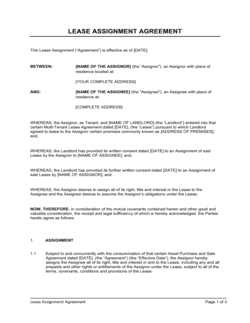
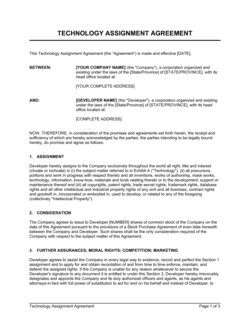
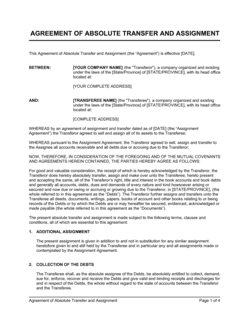
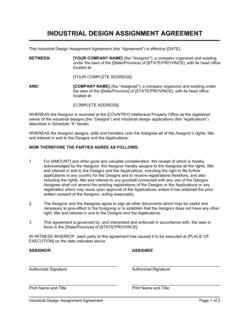
Invention Assignment Agreement Template

Free Word download β€’ Edit online β€’ Save & share with Drive β€’ Export to PDF

5 pagesβ€’25–35 min to fillβ€’Difficulty: Complexβ€’Signature requiredβ€’Legal review recommended
Learn more ↓
FreeInvention Assignment Agreement Template

At a glance

What it is
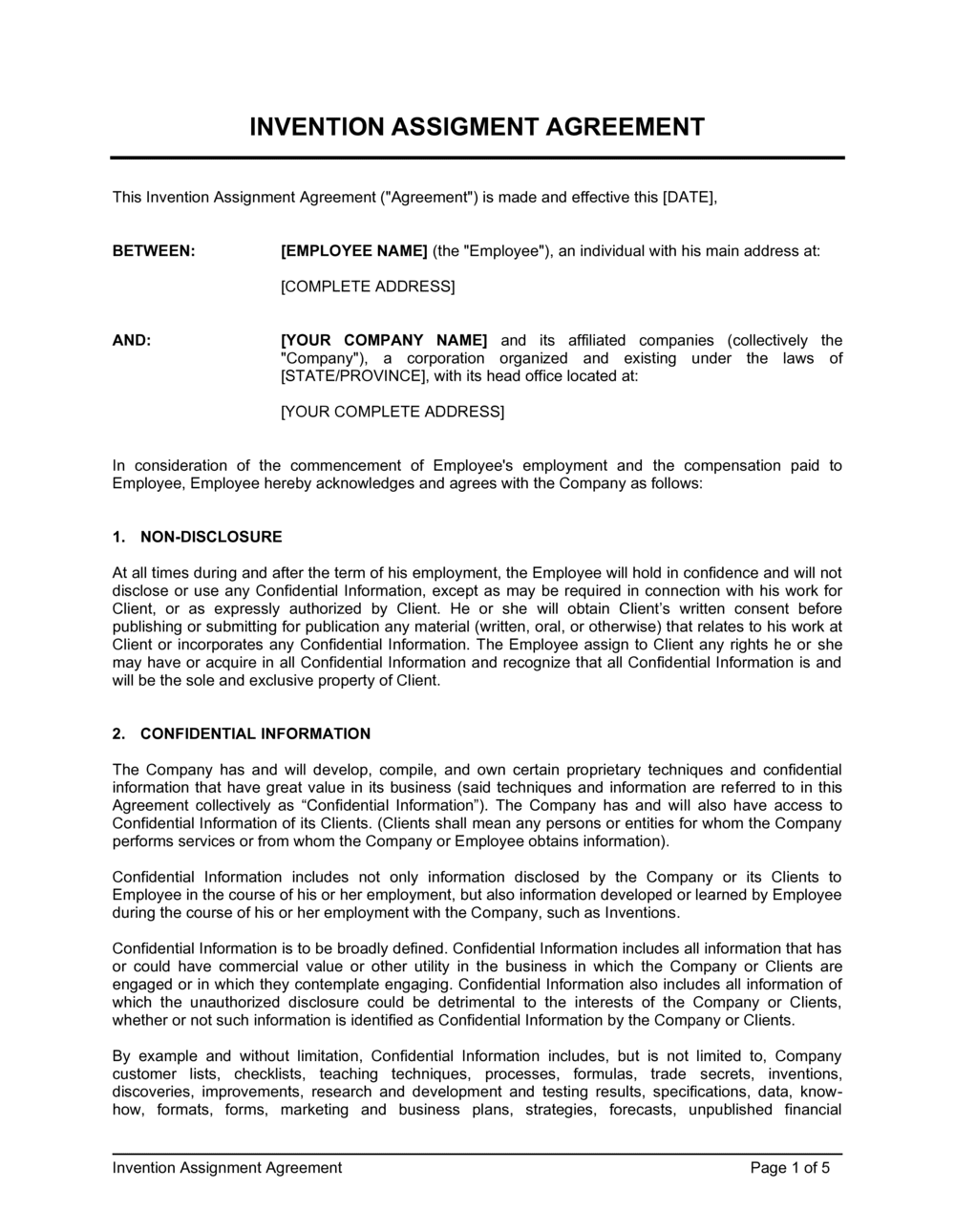
An Invention Assignment Agreement is a legally binding contract in which an employee, contractor, or co-founder transfers ownership of any inventions, patents, trade secrets, software, and other intellectual property created in connection with their work to the company. This free Word download gives you a structured, attorney-reviewed starting point you can edit online and export as PDF to sign before work begins.
When you need it
Use it when onboarding any employee or contractor who may create IP β€” code, algorithms, product designs, formulas, or processes β€” that the company needs to own outright. It is especially critical for technical roles, research and development staff, and co-founders who work on the core product before or during incorporation.
What's inside
Definitions of covered inventions and confidential information, the assignment clause transferring all IP to the company, a disclosure obligation requiring the signer to report new inventions, carve-outs for pre-existing inventions, non-compete and non-solicitation provisions (where applicable), work-made-for-hire acknowledgment, and governing law.

What is an Invention Assignment Agreement?

An Invention Assignment Agreement is a legally binding contract in which an employee, independent contractor, or co-founder transfers ownership of all inventions, patents, software, trade secrets, and other intellectual property they create in connection with their work to the company. Unlike a non-disclosure agreement, which restricts what a person can share, an invention assignment agreement determines who legally owns what was created. Without it, the default rule in most jurisdictions is that the individual β€” not the company β€” retains ownership of IP they produce, subject to narrow statutory exceptions. The agreement operates at the moment of creation, meaning the company takes title to a covered invention the instant it is conceived, without any further action required by either party.

Why You Need This Document

The most expensive IP disputes in startup history share a common origin: a founder, early engineer, or contractor who never signed an invention assignment agreement. Investors conduct IP diligence before every funding round, and a single unsigned agreement from a key contributor can delay or kill a term sheet until the gap is remedied β€” often at significant legal cost and leverage loss. Acquirers impose the same requirement at closing, and a missing agreement from a developer who wrote core product code creates a title defect that can reprice or block an M&A transaction. Even absent a capital event, an employee who departs without a signed agreement retains rights to improvements, processes, and inventions they created while on your payroll. This template gives you a signed, dated, prior-inventions-scheduled agreement for every employee and contractor before they produce a single line of code or a single patentable idea β€” the lowest-cost insurance available against losing ownership of the technology your entire business depends on.

Which variant fits your situation?

If your situation is…Use this template
Onboarding a full-time employee in a technical or R&D roleEmployee Invention Assignment Agreement
Engaging an independent contractor who will build core product featuresContractor IP Assignment Agreement
Assigning a co-founder's pre-incorporation inventions to the companyFounder IP Assignment Agreement
Transferring ownership of a specific patent from an individual to the companyPatent Assignment Agreement
Protecting confidential information without a full IP assignmentNon-Disclosure Agreement (NDA)
Covering both IP assignment and employment terms in a single documentEmployment Contract with IP Assignment
Assigning software and digital deliverables from a vendor or agencySoftware Development Agreement

Common mistakes to avoid

❌ Signing after the employee's first day

Why it matters: In common-law jurisdictions, an employee who has already started work provided no fresh consideration for a post-start agreement. Courts have voided IP assignments, confidentiality obligations, and assignment clauses on this basis β€” leaving the company without enforceable rights to inventions already created.

Fix: Execute the agreement on or before the first day of employment. If circumstances require a later signature, document a specific additional benefit β€” a bonus, equity grant, or salary increase β€” as fresh consideration at the time of signing.

❌ Omitting the prior inventions schedule

Why it matters: Without a completed Schedule A, a signer can later claim that code, algorithms, or designs predating their employment were pre-existing inventions, creating a disputed title that can block patent prosecution or a funding round.

Fix: Make completion of Schedule A β€” with either a list of prior inventions or an explicit 'None' β€” a mandatory step in the onboarding checklist before the agreement is countersigned.

❌ Using an overbroad assignment covering all inventions regardless of connection to company business

Why it matters: California, Delaware, Illinois, Minnesota, North Carolina, and Washington have statutes that void assignments covering inventions made entirely on the employee's own time with no connection to company business. An overbroad assignment is void in those states β€” not narrowed β€” potentially eliminating the entire IP clause.

Fix: Include jurisdiction-specific statutory carve-out language and limit the assignment scope to inventions that use company resources, relate to company business, or result from work performed for the company.

❌ Relying solely on work-made-for-hire doctrine for contractor deliverables

Why it matters: Under US copyright law, independent contractors do not create works made for hire for most categories of work β€” including software β€” without a written agreement and even then only for certain enumerated categories. Absent an explicit assignment clause, the contractor may retain copyright ownership.

Fix: Always include a standalone assignment clause in agreements with contractors, regardless of whether work-made-for-hire language is also present. The assignment operates as a fallback that transfers ownership even if the doctrine does not apply.

❌ Omitting the power of attorney provision

Why it matters: Without a power of attorney, the company cannot execute patent assignments or file continuation applications if a former employee is unresponsive, overseas, or actively refuses to cooperate β€” a situation that arises frequently in contested departures.

Fix: Include a limited, irrevocable power of attorney clause authorizing the company to execute IP transfer documents on the inventor's behalf, coupled with a covenant by the inventor to cooperate if called upon.

❌ Skipping the moral rights waiver for international employees

Why it matters: Moral rights survive an IP assignment in Canada, the UK, Australia, and most EU member states. Without a waiver, the creator retains the right to object to modifications, sublicensing, or rebranding of assigned work β€” a right that can block product commercialization.

Fix: Add a jurisdiction-appropriate moral rights waiver clause for every signer outside the United States. For Canadian employees, confirm the waiver language meets the Copyright Act (Canada) section 14.1 requirements.

The 10 key clauses, explained

Definitions

In plain language: Establishes precise meanings for key terms β€” 'Invention,' 'Confidential Information,' 'Company Business,' and 'Related Fields' β€” to set the boundaries of what is and is not assigned.

Sample language
'Invention' means any invention, discovery, improvement, development, concept, design, process, formula, algorithm, or work of authorship, whether or not patentable, that [EMPLOYEE/CONTRACTOR NAME] conceives, develops, or reduces to practice, alone or jointly, during the term of engagement with [COMPANY NAME].

Common mistake: Defining 'Invention' so broadly it sweeps in work the employee did entirely outside work hours, unrelated to the company's business β€” courts in several jurisdictions void overbroad assignments and may void the entire clause.

Scope of Assignment

In plain language: The core operative clause: transfers all right, title, and interest in covered inventions to the company, including patent rights, copyright, trade secrets, and all related IP, effective at the moment of creation.

Sample language
[EMPLOYEE/CONTRACTOR NAME] hereby irrevocably assigns to [COMPANY NAME], without additional compensation, all right, title, and interest in and to any and all Inventions developed during the term of engagement that (a) relate to the Company's current or reasonably anticipated business, (b) result from work performed for the Company, or (c) are developed using the Company's equipment, facilities, or Confidential Information.

Common mistake: Omitting the phrase 'and all related worldwide patent rights, copyrights, trade secrets, and other intellectual property rights.' Without this language, the assignment may not transfer foreign IP rights, leaving gaps for internationally active companies.

Prior Inventions Disclosure Schedule

In plain language: Requires the signer to list all inventions they conceived before the engagement and want excluded from the assignment β€” anything not listed is presumed assigned to the company.

Sample language
Schedule A attached hereto lists all inventions, original works of authorship, developments, concepts, and trade secrets that [EMPLOYEE/CONTRACTOR NAME] has made or conceived prior to the commencement of engagement with [COMPANY NAME] and that are not assigned hereunder. If Schedule A is blank or not attached, [EMPLOYEE/CONTRACTOR NAME] represents that there are no Prior Inventions.

Common mistake: Leaving Schedule A blank rather than explicitly listing 'None.' A blank schedule creates ambiguity β€” the employee may later claim they intended to list prior inventions but forgot, creating a disputed carve-out.

Disclosure Obligation

In plain language: Requires the employee or contractor to promptly report all inventions covered by the agreement to a designated company representative, enabling the company to assess ownership and file patents before public disclosure.

Sample language
[EMPLOYEE/CONTRACTOR NAME] agrees to promptly disclose to [COMPANY NAME], in writing, all Inventions as they arise during the term of engagement. Such disclosure shall be made to [DESIGNATED CONTACT / TITLE] within [30] days of conception or reduction to practice.

Common mistake: Setting a disclosure window of 30 days but not specifying the recipient or format. Vague disclosure obligations go unfulfilled β€” name a specific role (e.g., General Counsel or CTO) and require a written summary.

Work Made for Hire Acknowledgment

In plain language: Acknowledges that all copyrightable works created within the scope of employment are 'works made for hire' under the Copyright Act, owned by the company from creation β€” and adds an assignment as a fallback in jurisdictions or situations where the doctrine does not apply automatically.

Sample language
[EMPLOYEE/CONTRACTOR NAME] acknowledges that all works of authorship created within the scope of engagement are 'works made for hire' as defined under 17 U.S.C. Β§ 101. To the extent any such work does not qualify as a work made for hire, [EMPLOYEE/CONTRACTOR NAME] hereby irrevocably assigns all copyright and related rights thereto to [COMPANY NAME].

Common mistake: Relying solely on the work-made-for-hire doctrine without a backup assignment clause. Independent contractors do not create works made for hire under US law for most categories of work β€” explicit assignment is required.

Assistance and Power of Attorney

In plain language: Requires the signer to cooperate in executing patent applications and IP transfer documents after termination, and grants the company a limited power of attorney to act on their behalf if they are unavailable or uncooperative.

Sample language
[EMPLOYEE/CONTRACTOR NAME] agrees to execute all documents and take all actions reasonably requested by [COMPANY NAME] to perfect, record, and enforce its rights in Inventions. In the event [EMPLOYEE/CONTRACTOR NAME] is unavailable or refuses to cooperate, [EMPLOYEE/CONTRACTOR NAME] hereby appoints [COMPANY NAME] as attorney-in-fact for the limited purpose of executing such documents.

Common mistake: Omitting the power of attorney entirely. If a former employee is unreachable or hostile, the company cannot execute a patent assignment without this clause, which can delay or block a patent prosecution.

Confidentiality Obligation

In plain language: Prohibits the signer from disclosing or using the company's confidential information β€” trade secrets, product roadmaps, customer data, financials β€” during and after the engagement.

Sample language
[EMPLOYEE/CONTRACTOR NAME] agrees not to use or disclose any Confidential Information of [COMPANY NAME] during or after the term of engagement, except as required to perform assigned duties, without prior written consent. This obligation survives termination indefinitely for trade secrets and for [3] years for other Confidential Information.

Common mistake: Setting the same survival period for trade secrets and general confidential information. Trade secret protection has no expiration under the Defend Trade Secrets Act and most state laws β€” a fixed expiration for trade secrets can inadvertently limit protection.

Moral Rights Waiver

In plain language: In jurisdictions that recognize moral rights (Canada, UK, EU), the signer waives the right to be identified as creator and to object to modifications β€” enabling the company to freely commercialize and adapt the IP.

Sample language
To the fullest extent permitted by applicable law, [EMPLOYEE/CONTRACTOR NAME] hereby irrevocably waives any and all moral rights, including the right of integrity and the right of attribution, in and to all Inventions and works of authorship assigned to [COMPANY NAME] hereunder.

Common mistake: Omitting the moral rights waiver from agreements with employees or contractors in Canada, the UK, or the EU. Moral rights survive assignment in those jurisdictions and can prevent the company from modifying or sublicensing the work without the creator's consent.

Carve-out for Statutory Employee Protections

In plain language: Limits the assignment to comply with state and provincial statutes that protect employees' rights to inventions made entirely on their own time, with their own resources, and unrelated to the company's business.

Sample language
Notwithstanding the foregoing, this Agreement does not apply to any Invention that [EMPLOYEE/CONTRACTOR NAME] developed entirely on their own time, without using Company equipment, facilities, or trade secrets, and which does not relate to the Company's business or reasonably anticipated research and development, as provided under [APPLICABLE STATUTE].

Common mistake: Omitting the statutory carve-out language for California, Delaware, Illinois, Minnesota, North Carolina, or Washington employees. Assignments that violate these statutes are void in those states β€” not narrowed, void β€” potentially eliminating the entire clause.

Governing Law and Dispute Resolution

In plain language: Specifies the jurisdiction whose law governs the agreement and the forum for resolving disputes β€” typically the company's home state or province, with arbitration for efficiency.

Sample language
This Agreement shall be governed by and construed in accordance with the laws of [STATE/PROVINCE/COUNTRY], without regard to conflicts-of-law principles. Any dispute arising hereunder shall be resolved by binding arbitration administered by [AAA/JAMS/ADR INSTITUTE] in [CITY], except that either party may seek injunctive or equitable relief in any court of competent jurisdiction.

Common mistake: Choosing a governing law state that has no employment connection to where the employee works. California courts, for example, apply California law to protect California employees regardless of a contrary choice-of-law clause.

How to fill it out

  1. 1

    Identify the parties and their roles

    Enter the company's full registered legal name as assignee and the individual's full legal name as assignor. Specify whether the individual is an employee, independent contractor, or founder β€” this affects which statutory protections and work-made-for-hire rules apply.

    πŸ’‘ Always use the legal entity name, not a trade name or DBA. An IP assignment running to the wrong entity creates a title defect that must be corrected before a patent can be transferred or a funding round can close.

  2. 2

    Define the scope of covered inventions precisely

    Complete the definition of 'Company Business' and 'Related Fields' to reflect what the company actually does and is reasonably developing. Overly broad definitions are struck down by courts; overly narrow ones leave gaps in coverage.

    πŸ’‘ Review your company's business plan or product roadmap before filling in this field β€” the definition should match your actual and planned activities, not a generic industry description.

  3. 3

    Complete the prior inventions schedule

    Ask the signer to list every invention, open-source project, side project, or IP they want excluded from the assignment. If there are none, have them write 'None' explicitly on Schedule A and initial it.

    πŸ’‘ Review the prior inventions list carefully for anything that overlaps with your core technology before signing. If there is a conflict, resolve it with a separate license or exclusion negotiation before the agreement is executed.

  4. 4

    Insert the statutory carve-out for applicable states or provinces

    If the employee works in California, Delaware, Illinois, Minnesota, North Carolina, or Washington, include the jurisdiction-specific statutory carve-out language in the assignment scope clause. Omitting it voids the assignment in those states.

    πŸ’‘ Maintain a jurisdiction-specific addendum for each high-risk state rather than a single generic carve-out β€” the statutory language requirements differ by state and an imprecise carve-out can itself cause problems.

  5. 5

    Set the disclosure obligation details

    Name the specific company representative (by title) to whom inventions must be reported, set a disclosure window (30 days is standard), and specify that disclosure must be in writing.

    πŸ’‘ Designate the General Counsel or CTO as the disclosure recipient β€” not a direct manager who may change β€” to ensure continuity as the organization grows.

  6. 6

    Add the moral rights waiver for non-US signers

    For employees or contractors in Canada, the UK, Australia, or any EU member state, include an explicit moral rights waiver. This is a separate clause from the assignment itself and must comply with the local statute's waiver requirements.

    πŸ’‘ In Canada, moral rights can only be waived β€” not assigned. Confirm the waiver language complies with the Copyright Act (Canada) section 14.1 before relying on it.

  7. 7

    Execute before the first day of work

    Both parties must sign the agreement before or on the employee's or contractor's first day. Post-start-date signatures raise a fresh-consideration problem in common-law jurisdictions and may void the assignment.

    πŸ’‘ Use Business in a Box eSign to timestamp execution and store the fully-executed copy with a permanent audit trail. Include the signed agreement in the employee's onboarding documentation.

  8. 8

    Retain executed copies and calendar a review cycle

    Store the signed agreement in the company's IP management system alongside the prior inventions schedule. Set a calendar reminder to review the agreement annually as the company's business expands into new areas.

    πŸ’‘ If the company's technology direction changes materially β€” new product lines, acquisitions, or new R&D fields β€” issue an updated agreement to all relevant employees, with documented consideration for the amendment.

Frequently asked questions

What is an invention assignment agreement?

An invention assignment agreement is a contract in which an employee, contractor, or founder transfers ownership of any inventions, patents, software, and related intellectual property they create in connection with their work to the company. It ensures the company β€” not the individual β€” holds clear legal title to all IP that underpins the business, which is essential for raising investment, prosecuting patents, and commercializing products.

Is an invention assignment agreement legally required?

No federal US law requires a standalone invention assignment agreement, but without one the company may not automatically own IP created by employees β€” and almost certainly does not own IP created by independent contractors. Investors and acquirers treat a missing or unsigned agreement as a material title defect that must be remedied before closing. Many employment contracts include invention assignment clauses, but a standalone agreement provides stronger, cleaner documentation.

What is the difference between an invention assignment agreement and an NDA?

An NDA (non-disclosure agreement) prohibits a party from sharing confidential information β€” it protects secrecy but does not transfer IP ownership. An invention assignment agreement transfers ownership of inventions and IP to the company. The two obligations are complementary and often appear in the same document or in companion agreements signed at onboarding. An NDA alone does not give the company ownership of anything the employee creates.

Does an invention assignment agreement cover software and code?

Yes. A properly drafted agreement covers software, source code, algorithms, database schemas, and related documentation as both copyrightable works and potentially patentable inventions. The work-made-for-hire doctrine provides a copyright basis for employee-written code, but an explicit assignment clause is required for contractor-written code and as a fallback for employee code where the doctrine is disputed.

Can an employee keep any inventions they create?

Yes β€” the statutory carve-out in California, Delaware, Illinois, Minnesota, North Carolina, and Washington protects inventions made entirely on the employee's own time, using no company resources, and unrelated to the company's business or anticipated R&D. Employees in those states retain rights to qualifying personal inventions regardless of what the contract says. Outside those states, employees typically retain only inventions they explicitly list on the prior inventions schedule before signing.

When should an invention assignment agreement be signed?

The agreement must be signed before or on the employee's or contractor's first day of work. In common-law jurisdictions β€” including the US, Canada, and the UK β€” a contract signed after the start of employment may lack fresh consideration, which can render the IP assignment and any restrictive covenants unenforceable. If a company discovers unsigned agreements after onboarding, it should provide documented additional consideration when obtaining the late signature.

Does an invention assignment agreement cover inventions made before employment?

No β€” prior inventions are carved out and listed on a Schedule A attached to the agreement. The employee or contractor discloses inventions they conceived before the engagement that they want to retain. Anything not listed on Schedule A is generally presumed to fall within the assignment scope, which is why it is critical for the signer to complete Schedule A carefully and for the company to review it for potential conflicts with its core technology.

Do I need a separate invention assignment agreement if IP assignment is already in the employment contract?

An IP assignment clause embedded in an employment contract provides substantial protection, but a standalone invention assignment agreement has advantages: it is more detailed, it includes the prior inventions schedule as an integrated exhibit, it covers contractors and founders who are not employees, and it survives termination of the employment relationship as an independent document. For companies with significant IP value, a standalone agreement is the more defensible approach.

What happens to IP assignment if the company is acquired?

Properly executed invention assignment agreements run with the IP β€” meaning ownership transfers automatically to the acquirer as part of the acquisition. The acquiring company will conduct IP due diligence to confirm that every employee and contractor who worked on core technology has a signed agreement on file. Missing agreements are one of the most common issues that delay or reprice M&A transactions, sometimes requiring the target to obtain retroactive signatures before closing.

How this compares to alternatives

vs Non-Disclosure Agreement (NDA)

An NDA protects confidential information by prohibiting disclosure β€” it does not transfer any IP ownership to the company. An invention assignment agreement does both: it restricts disclosure and transfers legal title to inventions. Both documents are typically signed at onboarding, but serving different legal functions.

vs Employment Contract with IP Clause

An employment contract may include a brief IP assignment clause, but it rarely contains the prior inventions schedule, power of attorney, moral rights waiver, and statutory carve-outs needed for full IP protection. A standalone invention assignment agreement provides more complete coverage and survives independently if the employment contract is challenged or superseded.

vs Independent Contractor Agreement

An independent contractor agreement governs the scope and payment terms of a project engagement. It may include IP assignment language, but work-made-for-hire protections do not apply automatically to contractors under US law β€” making a standalone or integrated invention assignment clause essential for any contractor who creates valuable IP.

vs Patent Assignment Agreement

A patent assignment agreement transfers ownership of a specific, already-issued or applied-for patent from one party to another β€” it is a targeted, transactional document. An invention assignment agreement is a forward-looking contract that captures all future inventions during an engagement. Companies typically need both: the invention assignment for ongoing employees, and a patent assignment when recording a specific transfer with a patent office.

Industry-specific considerations

Technology / SaaS

Core product code, proprietary algorithms, machine-learning models, and API designs must be cleanly assigned to the company before any investor will fund or any acquirer will close β€” making signed agreements a hard diligence requirement.

Pharmaceuticals and Biotech

Lab notebook protocols, compound formulas, and research discoveries may be independently patentable by the scientist without a robust assignment clause β€” agreements must cover joint inventions and university-transition IP carefully.

Manufacturing and Engineering

Process improvements, tooling designs, and manufacturing methods created on the shop floor by employees represent significant trade-secret and patent value that requires explicit assignment to remain with the company after turnover.

Creative and Marketing Agencies

Creative work product β€” campaigns, brand assets, copy, and software tools β€” built by contractors is not automatically owned by the agency under US copyright law, making assignment agreements with every freelancer essential.

Jurisdictional notes

United States

Six states β€” California, Delaware, Illinois, Minnesota, North Carolina, and Washington β€” have statutes that void invention assignments covering inventions made entirely on the employee's own time with no connection to company business. California Labor Code Β§2870 is the most commonly litigated. The Defend Trade Secrets Act (DTSA) provides a federal civil cause of action for trade secret misappropriation. The FTC's non-compete rule (challenged in court as of 2025) may affect combined invention assignment and non-compete agreements β€” monitor current status.

Canada

Canada's Copyright Act provides that works made by employees in the course of employment belong to the employer, but independent contractor works are owned by the creator without explicit assignment. Moral rights cannot be assigned under the Copyright Act (Canada) β€” only waived β€” making a proper waiver clause essential. Quebec employers must provide French-language agreements for employees covered by the Charter of the French Language.

United Kingdom

Under the Patents Act 1977, inventions made by an employee in the normal course of duties or in circumstances where a duty to further the employer's interests exists automatically belong to the employer β€” but only for patents, not copyright or other IP. The Copyright, Designs and Patents Act 1988 (CDPA) vests copyright in employer-created works with the employer. Moral rights under the CDPA can be waived in writing but not assigned. A standalone agreement provides cleaner documentation than relying on statutory defaults alone.

European Union

EU member states vary widely in their approach to employee invention ownership. Germany's Arbeitnehmererfindungsgesetz requires employers to formally claim employee inventions within four months and may require additional compensation beyond salary, especially for patented inventions. France provides statutory supplementary remuneration rights for employee inventors. The EU Trade Secrets Directive (2016/943) harmonizes trade secret protection across member states. Moral rights are recognized across the EU and generally cannot be fully waived in countries like France and Germany.

Template vs lawyer β€” what fits your deal?

PathBest forCostTime
Use the templateStartups and small businesses onboarding employees or contractors in standard domestic roles without complex prior IP ownership questionsFree15–30 minutes per onboarding
Template + legal reviewCompanies hiring technical founders, key engineers with existing IP, or employees in California or other states with restrictive assignment statutes$300–$700 for a one-time attorney review of your standard template2–5 business days
Custom draftedBiotech, pharma, or deep-tech companies with complex inventorship questions, joint-development arrangements, or multi-jurisdiction workforces$1,500–$5,000+ depending on complexity1–3 weeks

Glossary

Invention
Any discovery, improvement, process, formula, algorithm, software, design, or other creation that may be patentable or protectable as trade secret, developed by the assignor during the covered period.
Assignment
The legal transfer of ownership of intellectual property rights from one party (the assignor) to another (the assignee), effective immediately upon creation without further action required.
Work Made for Hire
A US copyright doctrine under which original works created by an employee within the scope of employment are automatically owned by the employer β€” the agreement reinforces this by adding an explicit assignment as a backup.
Prior Inventions
Inventions the employee or contractor conceived before their engagement with the company, listed on a disclosure schedule and carved out from the assignment obligation.
Disclosure Obligation
A contractual duty requiring the assignor to promptly report all inventions covered by the agreement to the company so it can evaluate and document ownership.
Power of Attorney
A clause authorizing the company to execute patent applications and IP transfer documents on the inventor's behalf if the inventor is unavailable or refuses to cooperate after termination.
Trade Secret
Confidential business information β€” formulas, processes, customer data, source code β€” that derives economic value from not being publicly known and is protected by reasonable security measures.
Moral Rights
In many non-US jurisdictions, the right of a creator to be identified as the author and to object to derogatory treatment of their work β€” typically waived in invention assignment agreements.
Assignor
The individual (employee, contractor, or founder) who creates the invention and transfers ownership to the company under the agreement.
Assignee
The company or entity receiving ownership of the inventions and IP rights under the agreement.
Residuals Clause
A provision stating that an employee retains the right to use general knowledge, skills, and experience gained during employment β€” but not specific confidential information β€” in subsequent roles.

Part of your Business Operating System

This document is one of 3,000+ business & legal templates included in Business in a Box.

  • Fill-in-the-blanks β€” ready in minutes
  • 100% customizable Word document
  • Compatible with all office suites
  • Export to PDF and share electronically

Create your document in 3 simple steps.

From template to signed document β€” all inside one Business Operating System.
1
Download or open template

Access over 3,000+ business and legal templates for any business task, project or initiative.

2
Edit and fill in the blanks with AI

Customize your ready-made business document template and save it in the cloud.

3
Save, Share, Send, Sign

Share your files and folders with your team. Create a space of seamless collaboration.

Save time, save money, and create top-quality documents.

β˜…β˜…β˜…β˜…β˜…

"Fantastic value! I'm not sure how I'd do without it. It's worth its weight in gold and paid back for itself many times."

Managing Director Β· Mall Farm
Robert Whalley
Managing Director, Mall Farm Proprietary Limited
β˜…β˜…β˜…β˜…β˜…

"I have been using Business in a Box for years. It has been the most useful source of templates I have encountered. I recommend it to anyone."

Business Owner Β· 4+ years
Dr Michael John Freestone
Business Owner
β˜…β˜…β˜…β˜…β˜…

"It has been a life saver so many times I have lost count. Business in a Box has saved me so much time and as you know, time is money."

Owner Β· Upstate Web
David G. Moore Jr.
Owner, Upstate Web

Run your business with a system β€” not scattered tools

Stop downloading documents. Start operating with clarity. Business in a Box gives you the Business Operating System used by over 250,000 companies worldwide to structure, run, and grow their business.

Start freeΒ Β·Β No credit card required