Stakeholder Analysis Template

Free download β€’ Use as a template β€’ Print or share

8 pagesβ€’20–30 min to useβ€’Difficulty: Standard
Learn more ↓
FreeStakeholder Analysis Template

At a glance

What it is
A Stakeholder Analysis is a structured document that identifies everyone with a stake in a project, initiative, or organizational change, assesses their level of influence and interest, and maps the engagement strategy needed to keep each group informed, aligned, or actively involved. This free Word download gives you a ready-to-edit template you can complete in a single planning session and export as PDF for distribution to project leads or executives.
When you need it
Use it at the start of any project, policy rollout, organizational restructuring, or strategic initiative where multiple internal or external parties have a stake in the outcome. It is also useful mid-project when stakeholder dynamics shift β€” new decision-makers join, key sponsors disengage, or opposition emerges.
What's inside
A stakeholder identification register, influence-interest grid, individual stakeholder profiles with role and concern descriptions, an engagement strategy matrix, communication frequency and channel assignments, and a risk and resistance log for high-influence stakeholders.

What is a Stakeholder Analysis?

A Stakeholder Analysis is a structured planning document that identifies every individual, group, or organization with a stake in a project or initiative, assesses their level of influence over the outcome and their degree of interest in it, and defines the engagement strategy required to keep each party appropriately informed, consulted, or involved. It is produced at the start of a project and updated throughout the lifecycle as the stakeholder landscape shifts. The core output β€” an influence-interest grid paired with a prioritized stakeholder register β€” gives project leads a clear map of who needs to be managed closely, who needs to be kept satisfied, and who can be monitored with minimal effort.

Why You Need This Document

Projects that skip a formal stakeholder analysis routinely encounter the same preventable problems: a senior decision-maker who was never consulted vetoes a deliverable at the final approval stage; a regulatory body whose sign-off the project required was not identified until week eight; a department head who felt excluded from the process mobilizes resistance that delays the rollout by months. Each of these failure modes is a people problem, not a technical one, and each is addressable with a half-day of structured analysis before the project begins. A completed stakeholder analysis makes engagement effort proportionate to actual influence, surfaces resistance early enough to address its root causes, and gives the project sponsor a clear picture of where the political risk sits. This template provides the framework to produce that analysis consistently, regardless of project type or industry.

Which variant fits your situation?

If your situation is…Use this template
Mapping stakeholders for a single defined project with a fixed timelineProject Stakeholder Analysis
Planning ongoing engagement across an organization's full stakeholder landscapeStakeholder Engagement Plan
Tracking communications sent to each stakeholder group over timeCommunications Plan
Managing a large-scale organizational change with a formal change strategyChange Management Plan
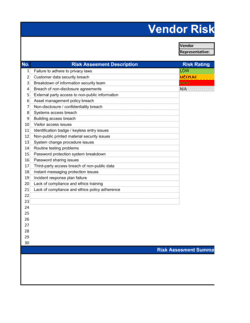
Documenting risks associated with key stakeholder groupsRisk Assessment
Presenting stakeholder findings to a senior leadership team or boardExecutive Summary Report

Common mistakes to avoid

❌ Treating the analysis as a one-time deliverable

Why it matters: Stakeholder influence, interest, and attitude shift throughout a project lifecycle. A map created at kickoff that is never updated becomes misleading rather than useful.

Fix: Schedule a formal review of the stakeholder register and grid at each major project milestone or every four to six weeks, whichever comes first.

❌ Missing external and latent stakeholders

Why it matters: Regulatory bodies, community groups, or end users not represented in internal planning can surface late in a project with enough authority to delay or block delivery.

Fix: Use a structured checklist β€” internal, external, regulatory, end users, media, community β€” to prompt identification beyond the immediate project team.

❌ Assigning identical engagement levels to all stakeholders

Why it matters: Applying a blanket 'keep informed' strategy to high-influence stakeholders leaves decision-makers feeling bypassed, which reliably generates resistance at approval gates.

Fix: Differentiate engagement levels by quadrant: high-influence/high-interest stakeholders need active collaboration, not passive updates.

❌ Confusing job title with actual influence

Why it matters: The formal hierarchy and the real influence network diverge in most organizations β€” a senior VP with no budget authority has less project influence than a mid-level subject-matter expert whose sign-off the project requires.

Fix: Assess influence based on three concrete factors: budget control, decision authority, and ability to mobilize others β€” not title alone.

❌ Documenting resistance without identifying its root cause

Why it matters: A mitigation plan built on the wrong diagnosis β€” sending more communications to someone whose real objection is a resource constraint β€” wastes effort and deepens frustration.

Fix: For every resistant stakeholder, require the field 'Root Cause' to be completed before assigning a mitigation action. If the root cause is unknown, schedule a direct conversation first.

❌ Not assigning a named owner to each stakeholder relationship

Why it matters: When a stakeholder relationship is collectively owned by 'the team,' no one sends the communication when the deadline passes and no one notices when the stakeholder goes quiet.

Fix: Assign one named individual as relationship owner for every stakeholder in the top two priority quadrants, with explicit accountability for scheduled touchpoints.

The 8 key sections, explained

Project or initiative overview

Stakeholder identification register

Influence-interest grid

Individual stakeholder profiles

Engagement strategy matrix

Communication plan and schedule

Risk and resistance log

Stakeholder summary and prioritization

How to fill it out

  1. 1

    Define the project scope and objectives

    Complete the project overview section with a one-sentence goal, the timeline, and a clear statement of what is in and out of scope. This context anchors every subsequent assessment.

    πŸ’‘ Keep the scope statement to three sentences maximum. Longer descriptions signal unclear project boundaries, which will make stakeholder scoping equally unclear.

  2. 2

    Brainstorm and list all potential stakeholders

    Use a structured prompt: who approves resources, who is affected by the outcome, who has regulatory authority, who has subject-matter expertise the project depends on, and who can block it. Include both internal and external parties.

    πŸ’‘ Run the brainstorm with at least two team members from different functions β€” single-person lists consistently miss external or cross-functional stakeholders.

  3. 3

    Plot each stakeholder on the influence-interest grid

    Score each stakeholder on influence (1–5) and interest (1–5) independently, then place them in the corresponding quadrant of the 2Γ—2 grid. Treat scores as provisional until validated with someone who knows each stakeholder directly.

    πŸ’‘ When in doubt about influence level, ask: could this person stop or significantly delay the project if they chose to? If yes, score them high.

  4. 4

    Complete individual stakeholder profiles

    For each stakeholder in the top two quadrants (high influence), document their specific concerns, current attitude, and preferred way of receiving information. Use direct conversations where possible rather than assumptions.

    πŸ’‘ One conversation with a key stakeholder before the plan is finalized will surface more useful data than an hour of internal speculation.

  5. 5

    Define the engagement strategy for each stakeholder

    Assign an engagement level (inform, consult, involve, collaborate, or empower) and document the specific actions required to move a resistant or neutral stakeholder toward support.

    πŸ’‘ The gap between current and target engagement level is your action list. If a stakeholder needs to move from 'inform' to 'collaborate,' plan for at least three structured touchpoints.

  6. 6

    Build the communication schedule

    Map every high-priority stakeholder to a specific communication type, channel, owner, and frequency. Enter the first communication date and set a recurring calendar reminder for each.

    πŸ’‘ Assign a single named owner per stakeholder relationship β€” shared ownership means no one acts when the schedule slips.

  7. 7

    Log risks and resistance sources

    For every resistant or uncertain stakeholder, document the root cause of their resistance and one specific mitigation action with a deadline and owner.

    πŸ’‘ If you cannot name a root cause for someone's resistance, you need another conversation before you can plan effectively.

  8. 8

    Prioritize and review with the project sponsor

    Produce the ranked summary table and review it with the project sponsor before distribution. Confirm that the top three priority stakeholders and their mitigation plans are aligned with leadership's view.

    πŸ’‘ Present the grid and summary together β€” the visual grid makes patterns immediately obvious to sponsors who don't have time to read a full register.

Frequently asked questions

What is a stakeholder analysis?

A stakeholder analysis is a structured process β€” and the document it produces β€” that identifies all parties with an interest in a project or initiative, assesses their level of influence and interest, and defines how each will be engaged throughout the project lifecycle. It is used to prioritize engagement effort, prevent late-stage resistance, and ensure the right people are involved at the right stages of decision-making.

Why is stakeholder analysis important?

Projects fail most often not because of technical errors but because key decision-makers were not aligned, critical concerns were not surfaced early, or opposition was not anticipated. A stakeholder analysis forces teams to think systematically about who has the power to affect the outcome before the project is underway. Studies in project management consistently identify poor stakeholder engagement as a top cause of cost overruns and late delivery.

What is the influence-interest grid?

The influence-interest grid β€” also called the power-interest matrix β€” is a 2Γ—2 tool that plots stakeholders on two axes: how much power they have to affect the project outcome, and how invested they are in that outcome. The four quadrants produce four default engagement strategies: manage closely (high/high), keep satisfied (high influence/low interest), keep informed (low influence/high interest), and monitor (low/low).

Who should be involved in creating a stakeholder analysis?

The project manager or lead is typically responsible for producing the document, but the identification and scoring process should involve at least two to three people from different functions to reduce blind spots. The completed analysis should be reviewed and approved by the project sponsor before it is acted upon, as sponsors often have visibility into organizational dynamics that project teams lack.

How often should a stakeholder analysis be updated?

Review the register and influence-interest grid at every major project milestone and at least every four to six weeks on longer engagements. Key trigger events that should prompt an immediate update include a change in project scope, a change in project leadership, a significant organizational restructuring, or any instance where a previously neutral stakeholder becomes visibly resistant or disengaged.

What is the difference between a stakeholder analysis and a stakeholder engagement plan?

A stakeholder analysis is the diagnostic document β€” it identifies who the stakeholders are, maps their influence and interest, and assesses their current attitude. A stakeholder engagement plan is the action document β€” it defines how the project team will communicate with and involve each stakeholder group over time. The analysis feeds directly into the engagement plan; the two are often built together but serve different purposes.

How detailed should individual stakeholder profiles be?

For stakeholders in the high-influence quadrants, profiles should cover their specific interests and concerns, current attitude toward the project, preferred communication channel and frequency, and any known constraints or dependencies. For low-influence stakeholders, a single row in the register with contact details and engagement level is sufficient. Depth should be proportionate to priority β€” over-documenting low-priority stakeholders wastes time better spent on active relationship management.

Can I use a stakeholder analysis for non-project contexts?

Yes. Stakeholder analysis is equally applicable to policy development, product launches, organizational change programs, grant applications, community consultations, and strategic planning processes. Any situation where multiple parties have a stake in an outcome and need to be managed differently can benefit from a structured stakeholder map. The template sections adapt to context β€” the core framework of identify, assess, and engage remains the same.

What tools or formats work best for a stakeholder analysis?

A Word document works well for narrative profiles and the register; a spreadsheet is preferred when managing a large number of stakeholders (20 or more) where filtering and sorting by priority are needed. The influence-interest grid is most effective as a visual β€” either drawn in the document or built in a presentation slide β€” because it communicates relative priorities at a glance in ways a table cannot.

How this compares to alternatives

vs Communications Plan

A communications plan schedules what messages are sent to whom, through which channel, and how often. A stakeholder analysis is the upstream document that determines who those recipients are, why they matter, and what their specific concerns require. Without a stakeholder analysis, a communications plan lacks the prioritization logic that makes it effective.

vs Change Management Plan

A change management plan defines the full strategy for transitioning an organization through a significant change β€” including readiness assessment, training, and adoption metrics. A stakeholder analysis is one input to that plan, focusing specifically on identifying and prioritizing the people who will support or resist the change. For large transformations, both documents are needed.

vs Risk Assessment

A risk assessment identifies project risks across all categories β€” technical, financial, operational, and environmental β€” and rates them by probability and impact. A stakeholder analysis addresses the people dimension of risk: who has the power to create problems, what their concerns are, and how those concerns can be mitigated proactively. The two documents complement each other and are typically produced together.

vs Project Charter

A project charter formally authorizes a project, defines its objectives, and names the sponsor and key roles. A stakeholder analysis goes deeper into the people dimension β€” mapping influence, interest, and engagement strategy for every party beyond the named team. A charter typically references the stakeholder analysis as a companion document produced during the initiation phase.

Industry-specific considerations

Technology / SaaS

Stakeholder maps for product launches must account for engineering, product, sales, and customer success teams internally, plus enterprise buyers and integration partners externally.

Construction and Infrastructure

Large capital projects involve regulators, planning authorities, community groups, subcontractors, and financiers β€” each with distinct influence levels and engagement requirements at different project phases.

Healthcare

Clinical system implementations or policy changes must map clinicians, administrators, patients, insurers, and regulatory bodies β€” groups with deeply divergent interests and varying degrees of formal authority.

Nonprofit and Public Sector

Funders, board members, beneficiaries, government partners, and community advocates each require tailored engagement strategies, and their influence often does not correlate with formal organizational hierarchy.

Template vs pro β€” what fits your needs?

PathBest forCostTime
Use the templateProject managers, team leads, and consultants running projects of any size who need a structured framework for stakeholder mappingFree2–4 hours for a complete analysis
Template + professional reviewComplex organizational change programs or initiatives with politically sensitive stakeholders where facilitation expertise helps surface hidden dynamics$500–$2,000 for a change management consultant review or workshop facilitation1–3 days
Custom draftedLarge-scale infrastructure projects, mergers, or public-sector consultations with 50 or more distinct stakeholder groups requiring a bespoke engagement framework$3,000–$15,000 for a specialist engagement or change management firm2–6 weeks

Glossary

Stakeholder
Any individual, group, or organization that has an interest in or is affected by the outcome of a project or initiative.
Influence-Interest Grid
A two-axis matrix that plots stakeholders by their level of influence over a project and their level of interest in its outcome, used to determine engagement priority.
Key Stakeholder
A stakeholder with both high influence and high interest β€” typically the group requiring the most active and frequent engagement.
Stakeholder Register
A structured list of all identified stakeholders with their roles, contact details, interests, and engagement status recorded in one place.
Engagement Strategy
The defined approach β€” inform, consult, involve, collaborate, or empower β€” used to manage a stakeholder's participation in a project.
Salience Model
A stakeholder prioritization framework that scores each party on three dimensions: power, legitimacy, and urgency.
Resistance Analysis
The process of identifying stakeholders likely to oppose a change, understanding the source of their resistance, and planning mitigating actions.
Communication Matrix
A table mapping each stakeholder or group to the information they need, the channel used to deliver it, and the frequency of communication.
Latent Stakeholder
A party not yet aware of or engaged with a project who may become influential once the initiative becomes visible or affects their interests.
Sponsor
The senior individual or group with authority to approve resources and decisions for a project, typically the highest-priority stakeholder.

Part of your Business Operating System

This document is one of 3,000+ business & legal templates included in Business in a Box.

  • Fill-in-the-blanks β€” ready in minutes
  • 100% customizable Word document
  • Compatible with all office suites
  • Export to PDF and share electronically

Create your document in 3 simple steps.

From template to signed document β€” all inside one Business Operating System.
1
Download or open template

Access over 3,000+ business and legal templates for any business task, project or initiative.

2
Edit and fill in the blanks with AI

Customize your ready-made business document template and save it in the cloud.

3
Save, Share, Send, Sign

Share your files and folders with your team. Create a space of seamless collaboration.

Save time, save money, and create top-quality documents.

β˜…β˜…β˜…β˜…β˜…

"Fantastic value! I'm not sure how I'd do without it. It's worth its weight in gold and paid back for itself many times."

Managing Director Β· Mall Farm
Robert Whalley
Managing Director, Mall Farm Proprietary Limited
β˜…β˜…β˜…β˜…β˜…

"I have been using Business in a Box for years. It has been the most useful source of templates I have encountered. I recommend it to anyone."

Business Owner Β· 4+ years
Dr Michael John Freestone
Business Owner
β˜…β˜…β˜…β˜…β˜…

"It has been a life saver so many times I have lost count. Business in a Box has saved me so much time and as you know, time is money."

Owner Β· Upstate Web
David G. Moore Jr.
Owner, Upstate Web

Run your business with a system β€” not scattered tools

Stop downloading documents. Start operating with clarity. Business in a Box gives you the Business Operating System used by over 250,000 companies worldwide to structure, run, and grow their business.

Free Forever PlanΒ Β·Β No credit card required