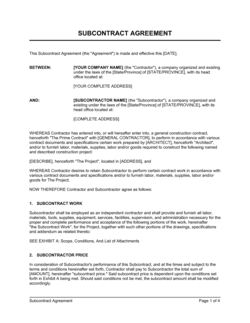
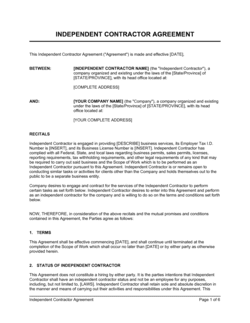
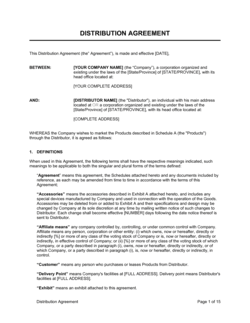
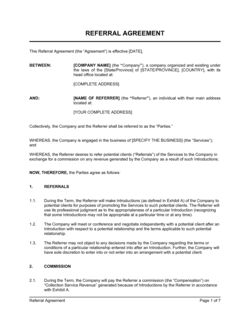
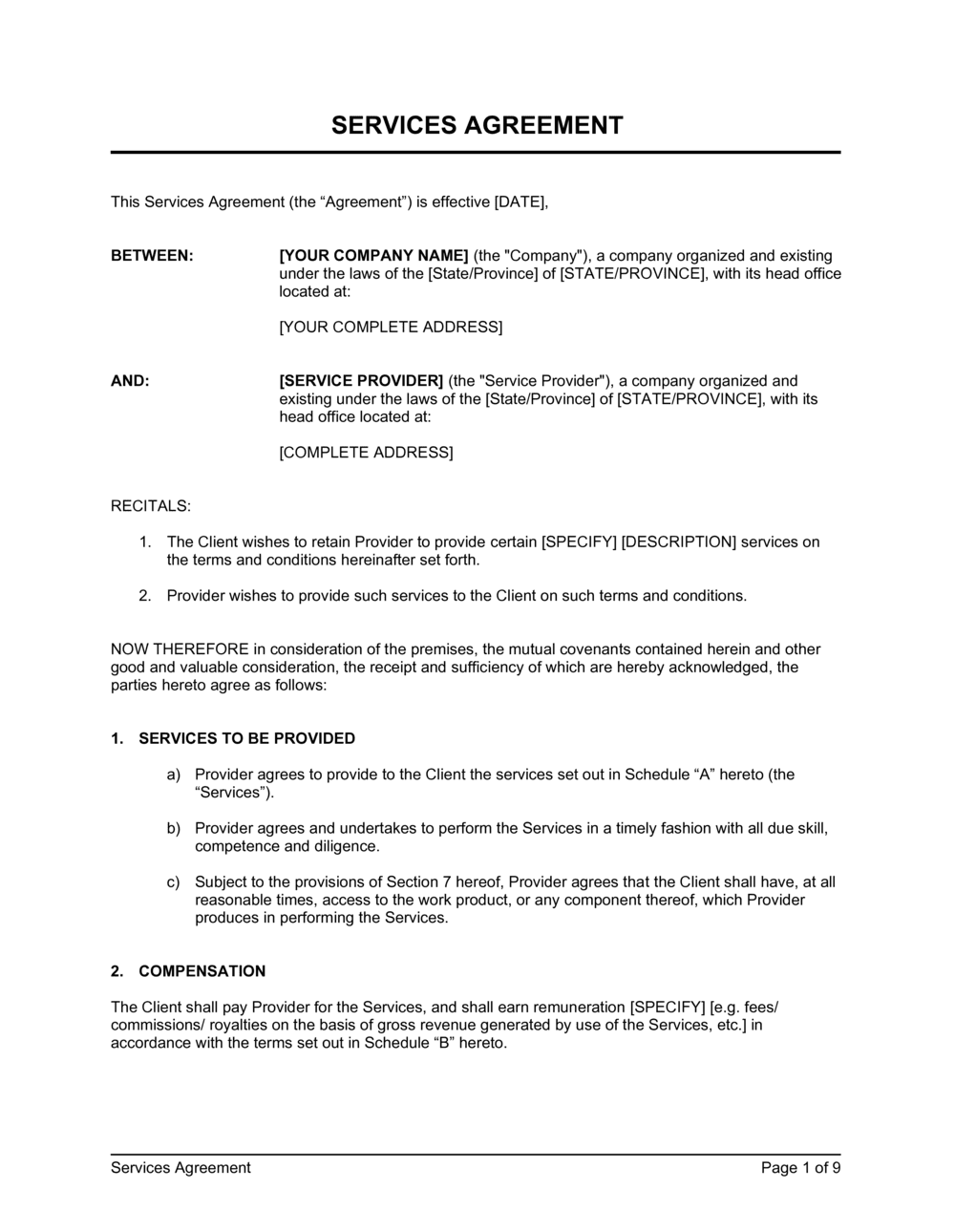
Services Agreement With Royalties or Commission Template

Free Word download • Edit online • Save & share with Drive • Export to PDF

9 pages30–40 min to fillDifficulty: ComplexSignature requiredLegal review recommended
Learn more ↓
FreeServices Agreement With Royalties or Commission Template

At a glance

What it is
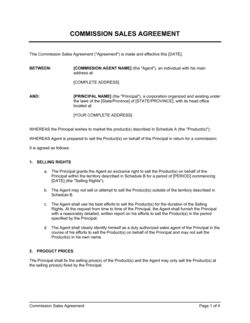
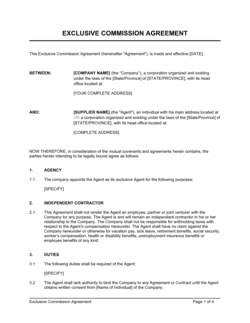
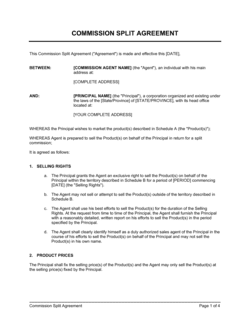
A Services Agreement With Royalties or Commission is a legally binding contract between a service provider and a client that defines the scope of work, deliverables, and a performance-linked compensation structure — either a royalty tied to revenue or usage, a commission on sales or deals closed, or a hybrid of both. This free Word download gives you a structured, attorney-reviewed starting point you can edit online and export as PDF for immediate execution.
When you need it
Use it when engaging a contractor, consultant, sales agent, creative professional, or licensing partner whose compensation is partly or wholly tied to the revenue, sales volume, or usage their work generates. It is equally appropriate for ongoing service relationships and project-specific engagements where performance-based pay replaces or supplements a flat fee.
What's inside
Scope of services and deliverables, royalty rate or commission structure with calculation methodology, payment schedule and reporting obligations, intellectual property ownership and licensing terms, confidentiality, term and termination provisions, and dispute resolution and governing law.

What is a Services Agreement With Royalties or Commission?

A Services Agreement With Royalties or Commission is a legally binding contract that defines both the scope of work a service provider will perform and a performance-linked compensation structure — either a royalty calculated as a percentage of revenue or usage generated by a licensed asset, a commission on sales or deals the provider closes on the client's behalf, or a combination of both. Unlike a flat-fee services contract, this agreement requires detailed clauses governing the royalty or commission calculation base, reporting obligations, audit rights, and post-termination entitlements, because the provider's total compensation depends on figures the client controls and reports. It is available as a free Word download you can edit online and export as PDF for execution.

Why You Need This Document

Without a written agreement that precisely defines the royalty or commission structure, both parties operate on assumptions that inevitably diverge the moment the first payment is due. Providers find themselves unable to verify whether reported revenue is complete; clients face ambiguous clawback exposure when deals reverse. If the agreement is silent on post-termination commissions, courts in most jurisdictions will not imply an entitlement — leaving a provider uncompensated for deals they sourced before the contract ended. Intellectual property ownership disputes are equally common: a royalty arrangement assumes the provider retains the IP they are licensing, but a poorly drafted services contract may assign that IP to the client, eliminating the legal basis for the royalty itself. This template closes each of those gaps with clearly structured clauses for calculation methodology, audit rights, IP ownership, and post-termination tail provisions — giving both parties a clear, enforceable framework before any work begins.

Which variant fits your situation?

If your situation is…Use this template
Paying a flat commission percentage on each sale closedCommission Agreement
Licensing intellectual property for a royalty on revenueRoyalty Agreement
Engaging a contractor with a fixed-fee plus performance bonusIndependent Contractor Agreement
Appointing an exclusive sales agent in a defined territorySales Agency Agreement
Commissioning a creative work with licensing and royalty rightsCreative Services Agreement
Distributing a product through a third-party channel partnerDistribution Agreement
Referral partner earning a fee per lead or converted customerReferral Agreement

Common mistakes to avoid

❌ Undefined royalty or commission base

Why it matters: Whether the rate applies to gross or net revenue, which deductions are permitted, and how chargebacks are treated can shift the payment obligation by 20–40%. Ambiguity consistently resolves in favor of the paying party.

Fix: Define the calculation base in a Schedule, list every permitted deduction by name, and include a worked numerical example showing the full calculation from gross revenue to payment due.

❌ No audit right clause

Why it matters: Without the right to inspect records, the provider has no independent mechanism to verify that reported revenue is complete and accurate. Underpayments go undetected indefinitely.

Fix: Include an annual audit right with a 30-day notice requirement, specify which records are in scope, and add a cost-shifting provision triggered when underpayment exceeds 5% of amounts due.

❌ Omitting a post-termination tail provision

Why it matters: If the agreement is silent on post-termination commissions, courts in most jurisdictions will not imply an entitlement — leaving the provider uncompensated for deals they sourced or IP they created that generates revenue after termination.

Fix: Add a tail clause specifying the period (90–180 days for commissions; duration of use for royalties) and defining precisely which transactions qualify as in-scope for post-termination payment.

❌ Assigning all IP to the client in a royalty engagement

Why it matters: A royalty structure assumes the provider retains ownership of the underlying IP and licenses it to the client. If the IP is fully assigned, the royalty has no legal basis and the provider loses leverage to enforce payment.

Fix: Use a license grant rather than an assignment for royalty arrangements. If assignment is required by the client, replace the royalty with a one-time lump-sum buy-out or negotiate a perpetual license-back to the provider.

❌ Using the same governing law clause regardless of provider location

Why it matters: Several jurisdictions — California, the EU, and Canada — have mandatory local protections for service providers and commission agents that apply regardless of what the contract says. A New York choice-of-law clause does not override California's Labor Code protections for a California-based provider.

Fix: Identify where each party is located and where services are performed before selecting governing law. Have counsel confirm which mandatory local statutes apply and whether they create minimum payment floors that override the contract.

❌ No clawback definition or scope

Why it matters: Without a defined clawback scope and time window, disputes arise over whether the provider must return commissions on deals that reverse months or years later. Unlimited clawback exposure makes the compensation structure unpredictable for the provider.

Fix: Define clawback triggers precisely — refunds within 90 days, chargebacks within 30 days, customer cancellation within the first billing cycle — and cap clawback exposure at a defined percentage of total commissions paid in the prior quarter.

The 10 key clauses, explained

Parties, recitals, and effective date

In plain language: Identifies both parties by legal name, describes the nature of the relationship in plain terms, and states the date the agreement takes effect.

Sample language
This Services Agreement is entered into as of [EFFECTIVE DATE] between [CLIENT LEGAL NAME], a [STATE/COUNTRY] [ENTITY TYPE] ('Client'), and [PROVIDER LEGAL NAME], a [STATE/COUNTRY] [ENTITY TYPE] ('Provider').

Common mistake: Using trade names or DBA names instead of registered legal entity names — creating an identification mismatch that complicates enforcement if the relationship breaks down.

Scope of services and deliverables

In plain language: Defines exactly what the provider will do, the format and standard of deliverables, and what is explicitly excluded from the engagement.

Sample language
Provider shall perform the services described in Schedule A ('Services'), including [SPECIFIC DELIVERABLES], in accordance with the performance standards set out therein. Services exclude [EXCLUDED ACTIVITIES] unless agreed in a signed amendment.

Common mistake: Omitting a clear exclusions list — leaving the scope open-ended invites scope creep that erodes the economics of a commission-based engagement.

Royalty rate or commission structure

In plain language: States the specific rate, the calculation base (gross vs. net revenue, units, or another metric), any tiered thresholds, and the currency.

Sample language
Client shall pay Provider a commission of [X]% of Net Revenue attributable to Provider's Services, as defined in Schedule B. Commission rates increase to [Y]% on Net Revenue exceeding $[THRESHOLD] per Accounting Period.

Common mistake: Defining the royalty base as 'revenue' without specifying whether it is gross or net — a distinction that can shift hundreds of thousands of dollars of payment obligation once deductions are applied.

Accounting period, reporting, and payment

In plain language: Establishes how often commissions or royalties are calculated, when the client must provide a statement, and when payment is due after the period closes.

Sample language
Client shall provide Provider with a written royalty statement within [15] days of the end of each calendar quarter, accompanied by payment of all amounts due. Statements shall itemize gross revenue, permitted deductions, net revenue, and the resulting commission.

Common mistake: Setting the reporting deadline and payment deadline as the same date — giving the client no time to prepare an accurate statement before payment is due, leading to chronic underpayments and disputes.

Audit rights

In plain language: Grants the provider the right to inspect the client's financial records related to the royalty or commission base, with defined frequency, notice requirements, and cost allocation.

Sample language
Provider may, upon [30] days' written notice, audit Client's books and records related to the calculation of commissions no more than once per calendar year. If an audit reveals an underpayment exceeding [5]%, Client shall bear the cost of the audit and pay any shortfall within [10] business days.

Common mistake: No audit right at all — leaving the provider entirely dependent on the client's self-reported numbers with no mechanism to verify accuracy.

Intellectual property ownership and license

In plain language: Specifies who owns work product created during the engagement and what license (if any) the other party receives to use it.

Sample language
All work product created by Provider under this Agreement ('Work Product') is and shall remain the intellectual property of [PROVIDER / CLIENT]. Client is granted a [non-exclusive / exclusive] license to use Work Product solely for [PURPOSE] during the Term.

Common mistake: Using a template clause that assigns all IP to the client by default — appropriate for employment but incorrect for a royalty engagement where the provider's ongoing ownership of the IP is the basis for the royalty payment.

Confidentiality

In plain language: Prohibits both parties from disclosing the other's non-public information — including commission rates, customer data, pricing, and proprietary methods — during and for a defined period after the agreement.

Sample language
Each party shall hold the other's Confidential Information in strict confidence and shall not disclose it to any third party without prior written consent. This obligation survives termination for a period of [3] years.

Common mistake: One-sided confidentiality clauses that only bind the provider — failing to protect the provider's proprietary methods, pricing models, or client lists disclosed during the engagement.

Term and termination

In plain language: Sets the initial contract duration, renewal mechanics, and the conditions under which either party may end the agreement — with or without cause — and any notice requirements.

Sample language
This Agreement commences on the Effective Date and continues for an initial term of [1 YEAR], renewing automatically for successive [1-YEAR] periods unless either party provides [30] days' written notice of non-renewal. Either party may terminate for Cause immediately upon written notice specifying the breach.

Common mistake: No post-termination tail provision — leaving it ambiguous whether the provider earns commissions on deals in-progress or sales that close after termination from work performed during the term.

Post-termination royalties and residuals

In plain language: Defines whether and for how long the provider continues to receive royalties or commissions on revenue generated after the agreement ends, specifically for work completed or sales initiated during the term.

Sample language
Following termination, Provider shall continue to receive commissions on Net Revenue from sales initiated by Provider prior to the termination date for a period of [180] days post-termination ('Tail Period'). No commissions are payable on sales initiated after the Tail Period.

Common mistake: Omitting the tail provision entirely — depriving the provider of compensation for deals they sourced or IP they created that generates revenue after termination, which is a primary source of post-engagement disputes.

Governing law and dispute resolution

In plain language: Specifies which jurisdiction's law governs the agreement and the mechanism for resolving disputes — arbitration, mediation, or litigation — including venue.

Sample language
This Agreement is governed by the laws of [STATE / PROVINCE / COUNTRY], without regard to conflict-of-law rules. Any dispute shall be resolved by binding arbitration administered by [AAA / JAMS / ICDR] in [CITY], except that either party may seek injunctive relief in any court of competent jurisdiction.

Common mistake: Choosing a governing law based on the client's home state without considering that the provider works in a different jurisdiction with mandatory local protections for contractors and commission agents.

How to fill it out

  1. 1

    Enter the parties' full legal names and effective date

    Use each party's registered corporate or legal name — not a trading name or DBA. Confirm the entity type (LLC, corporation, sole proprietorship) and the jurisdiction of formation for both parties.

    💡 Run a quick business registry search before signing to confirm the counterparty's legal name and good standing — a mismatch can void the agreement.

  2. 2

    Define the scope of services in Schedule A

    List specific deliverables, performance standards, and an explicit exclusions list. Attach Schedule A as a separate exhibit so the scope can be updated by amendment without redrafting the main contract.

    💡 For commission-based engagements, specify which activities count as 'Provider-initiated' sales — this definition controls how much of the revenue stream is commissionable.

  3. 3

    Set the royalty rate or commission structure in Schedule B

    State the exact percentage, define the calculation base (gross or net revenue, units sold, or another metric), include any tiered thresholds, and specify the currency. If using a hybrid structure, show the calculation order explicitly.

    💡 Spell out every deduction that reduces the royalty base — returns, refunds, shipping, and taxes. Any undefined deduction will be taken by the paying party and disputed by the recipient.

  4. 4

    Establish the accounting period, reporting, and payment schedule

    Set the accounting period (monthly or quarterly), the deadline for the client to deliver a written royalty or commission statement, and the payment due date after statement delivery. Include a required line-item format for statements.

    💡 Build in a 10–15 day gap between the statement deadline and the payment deadline so the provider can review the statement before funds are due — disputes caught early are far cheaper than disputes escalated after payment.

  5. 5

    Draft the audit rights clause

    Specify how many audits per year the provider may conduct, the notice period required, what records are in scope, and who pays for the audit if underpayment is found above a materiality threshold.

    💡 A 5% materiality threshold is the market standard for shifting audit costs to the client — set it any higher and the clause loses its deterrence value.

  6. 6

    Allocate intellectual property ownership and license

    Decide whether the provider retains ownership of work product (typical for royalty arrangements) or assigns it to the client (typical for flat-fee work). Draft the corresponding license grant — exclusive or non-exclusive, territory, duration, and permitted use.

    💡 If the royalty is the economic consideration for the IP license, confirm the ownership and license terms are internally consistent — a provider cannot grant a license to IP they have already assigned away.

  7. 7

    Set the term, termination, and post-termination tail

    Define the initial term, renewal mechanics, and notice periods. Add a post-termination tail clause specifying the period and conditions under which the provider continues to receive commissions or royalties on work completed during the term.

    💡 A 90–180 day tail is market standard for commission-based sales agreements. For royalty arrangements tied to a licensed asset, the tail often runs as long as the asset generates revenue.

  8. 8

    Select governing law and dispute resolution mechanism

    Choose governing law that has a meaningful connection to where the services are delivered or where the client operates. Select arbitration over litigation for confidentiality and speed; specify an established administrator (AAA, JAMS, or ICDR) and a seat city.

    💡 Include a carve-out allowing either party to seek emergency injunctive relief in court without waiving the arbitration clause — this is critical if IP misuse or commission theft requires a temporary restraining order.

Frequently asked questions

What is a services agreement with royalties or commission?

A services agreement with royalties or commission is a binding contract between a service provider and a client that combines a defined scope of work with performance-based compensation — either a royalty tied to revenue or usage of a work or licensed asset, a commission on sales generated, or a hybrid of both. It differs from a flat-fee services contract because the provider's total pay depends partly on the commercial outcome their work produces, which requires detailed clauses on calculation methodology, reporting, and audit rights that standard services agreements lack.

What is the difference between a royalty and a commission in a services agreement?

A royalty is paid to a rights-holder based on revenue or usage generated by a licensed work, invention, or technology — the provider is typically compensated for allowing the client to use something they created or own. A commission is paid to an agent or salesperson based on the sales value or deals they close on the client's behalf. Both use a percentage-of-revenue structure, but royalties are typically ongoing for as long as the asset is used, while commissions are transactional and tied directly to individual sales events.

Does this agreement classify the provider as an employee?

No. A properly structured services agreement with royalties or commission engages the provider as an independent contractor, not an employee. The key markers are that the provider controls how and when they perform the services, assumes their own business expenses, and is not integrated into the client's workforce. Misclassification — treating an employee as a contractor to pay commission instead of salary — triggers tax liability, benefit entitlement claims, and penalties. If in doubt, consult an employment lawyer before signing.

How should royalty rates or commission percentages be set?

Rates vary significantly by industry and the nature of the services. Sales commissions for B2B SaaS typically run 8–15% of annual contract value. Royalty rates for licensed music or creative content commonly range from 5–15% of net revenue. Inventor royalties on patented products typically run 3–8% of net sales. The rate should reflect the provider's contribution to the revenue stream, the exclusivity granted, and the duration of the obligation. Always define whether the rate applies to gross or net revenue before negotiating the percentage.

What records should the royalty or commission statement include?

A complete statement should show gross revenue for the accounting period, each permitted deduction itemized by type and dollar amount, net revenue after deductions, the applicable rate or tiered rates, the commission or royalty amount calculated, any clawbacks or adjustments from prior periods, and the net amount payable. Requiring this level of detail in the contract makes disputes far easier to resolve and gives the audit-right clause practical teeth.

Can the provider terminate the agreement if commissions are not paid on time?

Yes, in most jurisdictions a material breach of the payment obligation entitles the non-breaching party to terminate after providing written notice and a defined cure period — typically 10 to 30 days. The contract should spell this out explicitly, including whether late payments accrue interest, the notice format required, and whether the provider retains the right to post-termination tail commissions even if they terminate for the client's non-payment.

Is an audit right standard in commission and royalty agreements?

Yes. Audit rights are a standard and expected feature of any agreement where compensation is tied to reported revenue figures. Without one, the provider has no independent mechanism to verify the accuracy of statements. Market practice is one audit per calendar year with 30 days' notice, limited to records relevant to the royalty or commission calculation. Cost-shifting to the client when underpayment exceeds 5% is the accepted threshold in most commercial agreements.

What happens to commissions or royalties if the agreement is terminated early?

This depends entirely on what the contract says. Without an explicit post-termination tail clause, courts in most jurisdictions will not imply an entitlement to commissions on deals completed after termination, even if the provider sourced or substantially advanced the deal before leaving. A well-drafted tail clause specifies a defined period — typically 90–180 days for commissions — during which the provider receives payment on revenue from qualifying transactions initiated before termination.

Do I need a lawyer to finalize this agreement?

For straightforward domestic engagements with clear scope and simple commission structures, a high-quality template is a strong starting point. Legal review is strongly recommended when the commission or royalty base is complex, when IP ownership is material to the economics, when either party is in a jurisdiction with mandatory contractor protections (California, Canada, UK, EU), or when the total compensation exposure is significant. A one-to-two hour attorney review typically costs $400–$800 and is worthwhile for any arrangement where commissions could exceed $25,000 annually.

How this compares to alternatives

vs Commission Agreement

A standalone commission agreement covers only the payment of a percentage on sales closed — it typically lacks service scope, IP clauses, and royalty mechanics. A services agreement with royalties or commission combines the full contractor relationship with performance-based pay, making it the right choice when the provider's activities extend beyond pure sales to include creative work, licensing, or advisory services.

vs Royalty Agreement

A royalty agreement governs the licensing of existing intellectual property in exchange for ongoing revenue-based payments, without a defined services scope. Use it when the provider has already created the asset and simply licenses it. A services agreement with royalties adds a concurrent services scope — covering work the provider will perform during the term — making it the right choice when the provider is both performing services and receiving ongoing royalties.

vs Independent Contractor Agreement

A standard independent contractor agreement defines scope, deliverables, and typically a flat fee or hourly rate — it lacks royalty calculation mechanics, accounting period reporting obligations, and audit rights. It is appropriate for project-based engagements with fixed compensation. Use the services agreement with royalties or commission whenever any portion of compensation is variable and tied to revenue performance.

vs Distribution Agreement

A distribution agreement governs the resale of physical or digital products through a defined channel — the distributor earns a margin on resale, not a commission paid by the manufacturer. A services agreement with commissions is used when the provider actively promotes or sells the client's products as an agent, with the client retaining the direct customer relationship. The key distinction is whether the provider takes title to goods (distribution) or acts as an agent (commission services).

Industry-specific considerations

Technology and SaaS

Reseller and channel partner commission agreements, API licensing royalties, and white-label revenue-share arrangements where the rate typically applies to monthly recurring revenue.

Media, Publishing, and Entertainment

Author, musician, and filmmaker royalty agreements calculated on net sales or streaming plays, with detailed audit rights given the complexity of distributor-reported revenue.

Professional Services and Sales

Independent sales representative agreements with tiered commission structures, territory exclusivity clauses, and tail provisions covering deals in progress at contract end.

Manufacturing and Consumer Products

Inventor and patent-holder royalty agreements on units sold, with royalty bases defined at the ex-factory price level and carve-outs for returns and distributor allowances.

Jurisdictional notes

United States

Commission agent protections vary sharply by state. California Labor Code §2751 requires written commission plans and prohibits clawbacks on earned commissions once a deal closes. Illinois, New York, and several other states have similar earned-commission statutes. At the federal level, independent contractor classification under the IRS 20-factor test and Department of Labor ABC test must be satisfied to avoid employment tax liability. Non-compete and non-solicit enforceability for commission agents varies by state.

Canada

Independent sales agents in Canada are generally protected under provincial legislation. Ontario's Arthur Wishart Act and similar provincial statutes regulate certain commission relationships. Courts frequently imply reasonable notice obligations even in contractor agreements if the relationship resembles employment. Quebec requires that contracts for services performed in the province be available in French for Quebec-based parties. Ensure commission calculation clauses meet provincial minimum standards for transparency and timely payment.

United Kingdom

The Commercial Agents (Council Directive) Regulations 1993 provide mandatory protections to self-employed agents who negotiate or conclude sales on behalf of a principal — including rights to a written contract, minimum commission on orders procured, and compensation or indemnity on termination. These protections cannot be contracted out and apply regardless of governing law if the agent operates in the UK. Royalty arrangements tied to IP licensing must also consider HMRC withholding tax obligations on cross-border royalty payments.

European Union

EU Directive 86/653/EEC on self-employed commercial agents is implemented in all member states and grants agents the right to commission on transactions procured during and after the agency, a minimum notice period, and compensation or indemnity on termination — typically one year's average commission. Post-termination non-compete clauses for agents are limited to two years and must be accompanied by compensation in many member states. GDPR applies to any personal data processed in connection with the commission reporting or audit process.

Template vs lawyer — what fits your deal?

PathBest forCostTime
Use the templateStraightforward domestic commission or royalty engagements with clear scope and a single jurisdictionFree30–60 minutes
Template + legal reviewCross-border engagements, complex tiered commission structures, or material IP licensing components$400–$8002–5 business days
Custom draftedHigh-value royalty arrangements, multi-territory licensing, regulated industries, or exclusive channel partner agreements$1,500–$5,000+1–3 weeks

Glossary

Royalty
A recurring payment made to a rights-holder based on a percentage of revenue, units sold, or usage generated by the licensed work or technology.
Commission
A payment to a service provider calculated as a percentage of the sales value, deal size, or revenue they directly generate.
Net Revenue
Gross revenue minus defined deductions — typically returns, refunds, chargebacks, and transaction fees — used as the base for royalty or commission calculations.
Royalty Base
The specific dollar amount or unit measure to which the royalty rate is applied — critical because small definitional differences compound into large payment discrepancies over time.
Commission Tier
A stepped commission structure where the percentage rate increases once the service provider exceeds defined revenue or volume thresholds.
Audit Right
A contractual right allowing the service provider to inspect the client's books and records to verify the accuracy of royalty or commission calculations.
Clawback
A provision requiring the service provider to return previously paid commissions if the underlying sale is reversed, refunded, or the customer churns within a defined period.
Exclusivity
A restriction preventing the client from engaging other service providers for the same scope, or preventing the provider from offering the same services to competitors, within a defined territory or period.
Accounting Period
The defined interval — monthly, quarterly, or annually — over which royalties or commissions are calculated, reported, and paid.
Residuals
Ongoing royalty or commission payments that continue after the active service engagement ends, based on revenue generated by work or sales completed during the term.
Intellectual Property License
A grant of rights allowing one party to use, reproduce, or distribute the other's intellectual property under defined conditions without transferring ownership.

Part of your Business Operating System

This document is one of 3,000+ business & legal templates included in Business in a Box.

  • Fill-in-the-blanks — ready in minutes
  • 100% customizable Word document
  • Compatible with all office suites
  • Export to PDF and share electronically

Create your document in 3 simple steps.

From template to signed document — all inside one Business Operating System.
1
Download or open template

Access over 3,000+ business and legal templates for any business task, project or initiative.

2
Edit and fill in the blanks with AI

Customize your ready-made business document template and save it in the cloud.

3
Save, Share, Send, Sign

Share your files and folders with your team. Create a space of seamless collaboration.

Save time, save money, and create top-quality documents.

★★★★★

"Fantastic value! I'm not sure how I'd do without it. It's worth its weight in gold and paid back for itself many times."

Managing Director · Mall Farm
Robert Whalley
Managing Director, Mall Farm Proprietary Limited
★★★★★

"I have been using Business in a Box for years. It has been the most useful source of templates I have encountered. I recommend it to anyone."

Business Owner · 4+ years
Dr Michael John Freestone
Business Owner
★★★★★

"It has been a life saver so many times I have lost count. Business in a Box has saved me so much time and as you know, time is money."

Owner · Upstate Web
David G. Moore Jr.
Owner, Upstate Web

Run your business with a system — not scattered tools

Stop downloading documents. Start operating with clarity. Business in a Box gives you the Business Operating System used by over 250,000 companies worldwide to structure, run, and grow their business.

Start free · No credit card required