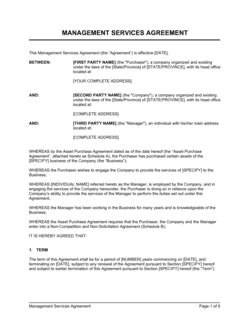
- Transition Services Agreement (TSA)
- A contract in which a seller provides specified operational services to a buyer for a limited period after a transaction closes, allowing the buyer time to build independent capabilities.
- Service Schedule
- An exhibit or attachment to the TSA that defines a specific service category — such as IT, HR, or finance — including scope, deliverables, service levels, and fees.
- Carve-out
- A transaction in which a parent company separates a business unit or subsidiary and sells it to a third party, typically requiring a TSA because the carved-out entity lacks standalone infrastructure.
- Reverse TSA
- An arrangement in which the buyer provides services back to the seller post-close — common when the buyer acquires assets or systems the seller still depends on.
- Service Level Agreement (SLA)
- A defined standard of performance — uptime percentage, response time, or accuracy rate — that the service provider must meet for each service under the TSA.
- Exit Plan
- A documented schedule and set of milestones under which the recipient progressively transfers each TSA service to its own systems or third-party providers, ending dependence on the seller.
- Stranded Costs
- Fixed costs the seller retains after a divestiture because the sold business previously absorbed them — TSA fees are often structured to recover stranded costs during the transition period.
- Integration Management Office (IMO)
- A cross-functional team, typically established by the buyer, that coordinates TSA governance, tracks exit milestones, and manages disputes between service provider and recipient.
- Force Majeure
- A clause excusing a party from performance obligations due to events outside their reasonable control — natural disasters, cyberattacks, or government actions — that make performance impossible.
- Cap on Liability
- A contractual ceiling on the total financial damages either party can claim under the TSA, typically expressed as a multiple of fees paid in the prior 12 months.
- Step-up Fee
- A scheduled fee increase applied when a service continues beyond its original term end date, designed to incentivize the recipient to exit TSA services on time.