Second Request for Renewal of Service Agreement Template

Free Word download β€’ Edit online β€’ Save & share with Drive β€’ Export to PDF

1 pageβ€’20–25 min to fillβ€’Difficulty: Standardβ€’Signature requiredβ€’Legal review recommended
Learn more ↓
FreeSecond Request for Renewal of Service Agreement Template

At a glance

What it is
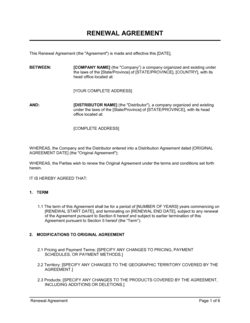
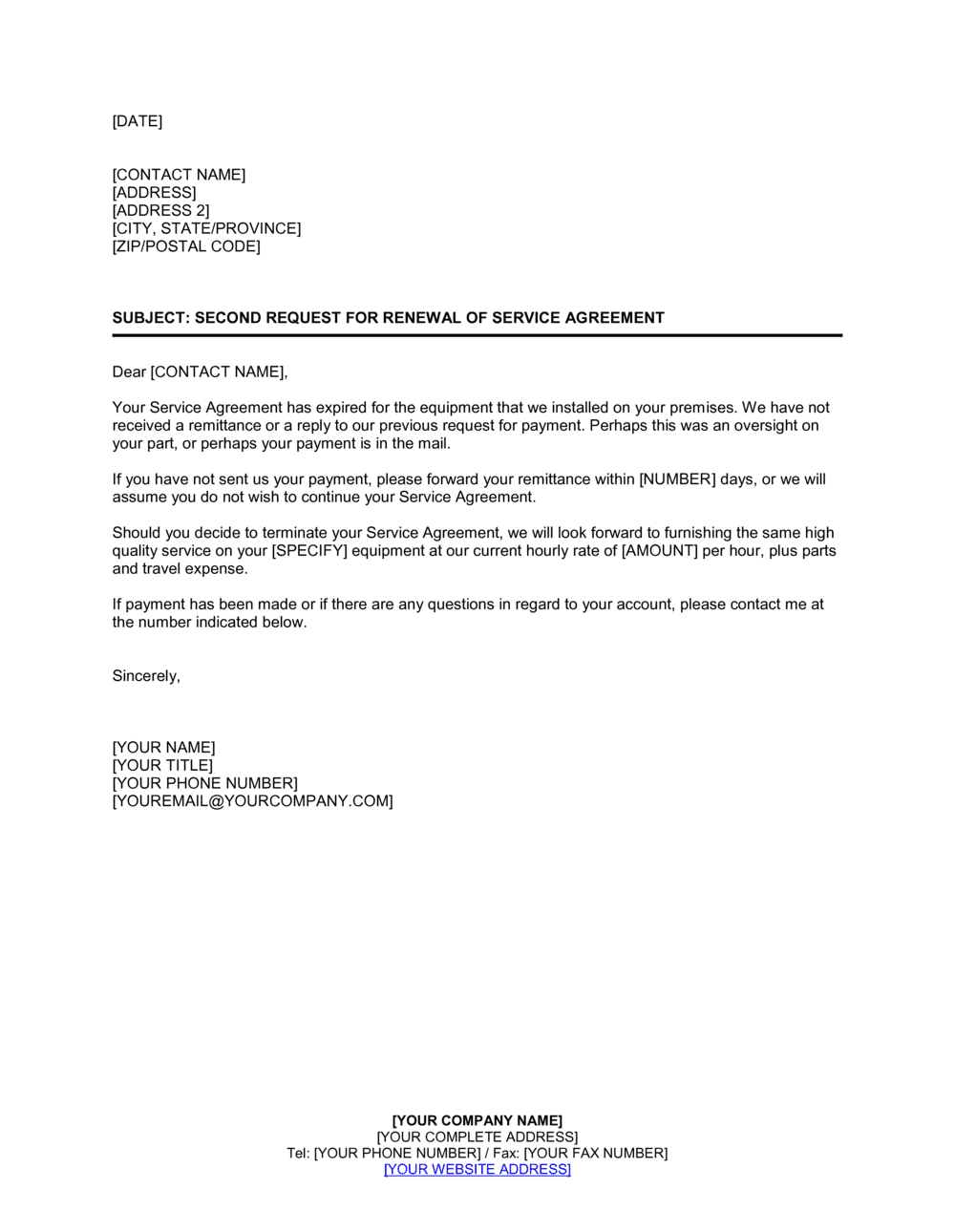
A Second Request For Renewal Of Service Agreement is a formal written notice sent by a service provider or client to the counterparty after an initial renewal request has gone unanswered or unacknowledged. This free Word download gives you a structured, professionally worded letter you can edit online and export as PDF β€” establishing a documented paper trail that a first informal reminder alone cannot provide.
When you need it
Use it when your first renewal request has passed without a response and the existing service agreement's expiry date is approaching or has already lapsed. It signals urgency, sets a firm response deadline, and creates a written record that the other party was formally notified twice.
What's inside
Reference to the original agreement and first renewal request, a clear statement of the renewal terms being proposed, a firm response deadline, consequences of non-response, and execution blocks for both parties to confirm their intent to renew.

What is a Second Request For Renewal Of Service Agreement?

A Second Request For Renewal Of Service Agreement is a formal written notice sent by one contracting party to the other after an initial renewal request has gone unanswered and the existing service agreement's expiry date is approaching. It references the prior notice, re-states the proposed renewal terms, sets a firm response deadline, and explains the consequence of continued non-response. Unlike an informal email follow-up, this document creates a dated, signed paper trail that evidences diligent communication β€” a record that becomes critical if the relationship lapses, a dispute arises, or the sender needs to justify engaging an alternative provider.

Why You Need This Document

When a service agreement lapses without documented renewal attempts, both parties lose the legal framework governing their relationship β€” invoices become harder to enforce, liability for service failures becomes ambiguous, and the non-renewing party faces no formal accountability for the disruption. A single unanswered email is rarely sufficient evidence that the counterparty was properly notified. A second formal request, signed and delivered with proof of receipt, demonstrates that the other party had two documented opportunities to act and chose not to. It also converts an informal follow-up sequence into a record that supports escalation to a notice of default or termination if the deadline passes without reply. This template gives you a professionally structured letter that takes under 20 minutes to complete and eliminates the ambiguity that silence alone creates.

Which variant fits your situation?

If your situation is…Use this template
Sending the very first renewal notice to the other partyRequest For Renewal Of Service Agreement
The counterparty has declined renewal and you need to wind downNotice of Termination of Service Agreement
Both parties agree to renew and want to amend specific termsService Agreement Amendment
The original service agreement needs to be replaced entirelyService Agreement
Renewing a maintenance-specific contract rather than a general service agreementMaintenance Service Agreement
Following up on a consulting engagement nearing its end dateConsulting Agreement Renewal Request
Escalating non-response to a formal breach or dispute noticeNotice of Default

Common mistakes to avoid

❌ Failing to reference the first renewal request

Why it matters: Without explicitly referencing the earlier notice, the letter reads as a first request rather than a second one, undermining the urgency and the paper trail it is meant to create.

Fix: Include the exact date the first renewal request was sent and attach or reference a copy. If sent by email, cite the subject line and date.

❌ Setting a response deadline inside the agreement's expiry window

Why it matters: If the deadline falls after the agreement lapses, you have already lost coverage β€” the counterparty has no legal obligation to respond to a renewal of a contract that has already expired.

Fix: Send the second request early enough that the response deadline falls at least 5–10 business days before the agreement's expiry date.

❌ Omitting a signature block for the counterparty

Why it matters: A letter without a signature block invites email confirmation, which may not constitute a binding renewal in all jurisdictions and is easily disputed later.

Fix: Always include a countersignature block so the counterparty can confirm renewal by signing the document itself, converting the request into a binding written renewal.

❌ Using vague language about what happens if there is no response

Why it matters: Phrases like 'we may take further action' give the other party no meaningful notice of consequence and provide little legal basis for claims arising from a lapse.

Fix: State the specific consequence clearly: the right to engage an alternative provider, the right to invoice for service disruption costs, or the intent to treat the agreement as terminated on the expiry date.

❌ Sending the letter without proof of delivery

Why it matters: A letter that cannot be proven to have been received is legally equivalent to one never sent β€” the counterparty can simply deny receipt.

Fix: Use registered post, courier with tracking, or email with a read-receipt request and a delivery confirmation. Retain all delivery records with the file copy of the letter.

❌ Proposing materially different terms without clearly flagging the changes

Why it matters: If the renewal request buries a significant price increase or scope change in general language, the counterparty may sign without realizing and later dispute the new terms, or refuse to sign on the basis of surprise.

Fix: Call out every material change explicitly in a numbered list β€” 'The following terms differ from the original agreement: (1) ... (2) ...' β€” and invite the counterparty to raise concerns before the deadline.

The 8 key clauses, explained

Reference to Original Agreement and First Request

In plain language: Identifies the existing service agreement by title, date, and parties, and explicitly references the first renewal request that went unanswered β€” establishing the timeline of communication.

Sample language
This letter constitutes a second formal request to renew the Service Agreement dated [ORIGINAL DATE] between [PARTY A] and [PARTY B] ('Agreement'). Our initial renewal request, dated [FIRST REQUEST DATE], has not received a response as of [CURRENT DATE].

Common mistake: Omitting the date of the first renewal request. Without it, the second notice loses its status as a follow-up and cannot demonstrate a pattern of diligent communication.

Description of Services to Be Renewed

In plain language: Restates or references the specific services covered by the agreement so both parties are aligned on exactly what is being renewed β€” avoiding scope ambiguity.

Sample language
The Agreement covers the following services: [DESCRIPTION OF SERVICES] as set out in Schedule A of the Agreement, which services [PARTY A] requests be continued under the same terms for the Renewal Term.

Common mistake: Using a vague reference such as 'the services previously provided.' If scope has evolved since the original agreement, the description must reflect the current scope or disputes will arise over what was actually renewed.

Proposed Renewal Term and Effective Date

In plain language: States the proposed start and end date of the renewed agreement β€” or the duration of the renewal period β€” and the date on which the renewal would take effect.

Sample language
The proposed Renewal Term is [X] months / years, commencing on [START DATE] and expiring on [END DATE], unless earlier terminated in accordance with the Agreement.

Common mistake: Proposing a renewal start date that has already passed by the time the letter is received. Always allow sufficient lead time between the letter date and the proposed effective date.

Proposed Renewal Terms and Pricing

In plain language: Specifies whether the renewal is on the same terms as the original agreement or whether any terms β€” particularly pricing β€” are being adjusted, and provides the basis for any change.

Sample language
The renewal is proposed on the same terms and conditions as the Agreement, except that the monthly service fee shall be adjusted to $[AMOUNT] effective [DATE], representing a [X]% adjustment in line with [CPI / agreed escalation clause].

Common mistake: Failing to state whether terms are the same or different. Silence on this point creates an assumption in the counterparty's favor that all original terms continue unchanged β€” which may not reflect the sender's intent.

Firm Response Deadline

In plain language: Sets a specific calendar date by which the counterparty must respond, creating urgency and establishing the point at which non-response becomes a documented failure to act.

Sample language
Please confirm your intention to renew the Agreement no later than [DEADLINE DATE]. Failure to respond by this date will be treated as [an election not to renew / grounds for [PARTY A] to seek alternative arrangements].

Common mistake: Setting a deadline that is too close to the agreement's expiry date. If the counterparty needs internal approvals to renew, an insufficient window forces a lapse regardless of intent.

Consequences of Non-Response

In plain language: Explains what happens if the deadline passes without a response β€” whether the sender will treat silence as rejection, proceed without the service, or pursue alternative remedies.

Sample language
If [PARTY A] does not receive a written response by [DEADLINE DATE], [PARTY A] reserves the right to engage an alternative service provider and/or seek recovery of any losses resulting from the disruption to service continuity.

Common mistake: Threatening consequences that the sender cannot legally or practically enforce. Overstating consequences undermines the letter's credibility and may expose the sender to a counterclaim for misrepresentation.

Acknowledgment and Signature Block for Renewal Confirmation

In plain language: Provides a signature line for the counterparty to confirm their agreement to renew β€” converting the request letter into a binding renewal confirmation upon signature.

Sample language
By signing below, [PARTY B] confirms its agreement to renew the Service Agreement on the terms set out herein. Signed: _________________________ Name: [NAME] | Title: [TITLE] | Date: [DATE]

Common mistake: Omitting a signature block and relying on email reply as confirmation. An email acknowledgment may not constitute a binding renewal in all jurisdictions β€” a signed document removes that ambiguity.

Governing Law and Notices Clause

In plain language: States which jurisdiction's law governs the renewal and how formal notices must be delivered β€” by post, courier, or email β€” to be legally effective.

Sample language
This renewal request and any renewal confirmed hereunder shall be governed by the laws of [JURISDICTION]. Notices shall be in writing and delivered to the addresses set out in the Agreement, or as subsequently updated in writing.

Common mistake: Assuming the governing law in the renewal letter matches the original agreement. If the parties have changed locations or the renewal covers services in a new jurisdiction, verify that the governing law clause is still appropriate.

How to fill it out

  1. 1

    Gather the original agreement and first renewal request

    Locate the signed service agreement and a copy of the first renewal notice you sent. Note the original agreement date, the first request date, and the agreement's expiry date. You will need all three to complete the reference clause accurately.

    πŸ’‘ If the first renewal request was sent by email rather than formal letter, attach a copy or note the email date in the reference clause β€” it strengthens the paper trail.

  2. 2

    Enter the parties' legal names and contact details

    Use the full registered legal name of both parties exactly as they appear in the original service agreement. Add current mailing addresses and a primary contact name for each party.

    πŸ’‘ If either party has changed its legal name, address, or entity structure since the original agreement was signed, update the details here and note the change explicitly.

  3. 3

    Define the proposed renewal term and effective date

    Enter the proposed start date, end date, and duration of the renewal period. Ensure the start date gives the counterparty enough time to obtain internal approvals before the existing agreement lapses.

    πŸ’‘ Build in at least 10–15 business days between the letter date and the proposed effective date β€” most organizations require at least one approval cycle.

  4. 4

    State the renewal terms and any pricing adjustments

    Confirm whether the renewal is on the same terms as the original agreement. If pricing or scope is changing, specify the new amount, the basis for the change, and the effective date of the adjustment.

    πŸ’‘ Reference any price escalation clause in the original agreement when justifying a rate increase β€” it signals that the adjustment was contractually anticipated, not unilateral.

  5. 5

    Set the firm response deadline

    Enter a specific calendar date by which the counterparty must respond. Allow sufficient time for their internal process while still preserving enough lead time to arrange alternatives if they decline.

    πŸ’‘ A deadline of 7–14 calendar days from the letter date is typical for most B2B service renewals. For complex enterprise contracts, 20–30 days may be more realistic.

  6. 6

    Describe consequences of non-response

    Complete the non-response clause with a consequence that is proportionate, accurate, and enforceable β€” such as the right to engage an alternative provider or to treat the agreement as expired.

    πŸ’‘ Avoid threatening legal action in this clause unless you genuinely intend to pursue it β€” an idle threat weakens the letter's authority.

  7. 7

    Sign the letter before sending

    The sender should sign the letter before dispatching it. Include the signatory's full name, title, and date. Send by a method that creates a delivery record β€” email with read receipt, courier, or registered post.

    πŸ’‘ Retain a copy of the sent letter with proof of delivery. If the matter later escalates, the delivery record is as important as the letter itself.

  8. 8

    Follow up if the deadline passes without response

    If no reply is received by the stated deadline, note the failure in writing β€” an internal memo or a brief follow-up email to the counterparty β€” and begin executing the stated consequence (engaging alternatives or escalating to a notice of termination).

    πŸ’‘ Do not simply let the deadline pass silently. Acting on the stated consequence is what gives the paper trail its legal weight.

Frequently asked questions

What is a second request for renewal of service agreement?

A second request for renewal of service agreement is a formal written notice sent after an initial renewal request has gone unanswered. It re-states the renewal terms, sets a firm response deadline, and documents that the counterparty received at least two opportunities to confirm continuation of the service relationship. This two-notice approach creates a stronger paper trail than a single informal reminder and is commonly used before escalating to termination proceedings or engaging alternative providers.

When should I send a second renewal request instead of just following up informally?

Send a formal second request when the original agreement's expiry date is within 30–45 days, your first renewal notice has gone unanswered for at least 7–14 days, and the continuation of the service relationship has material operational or financial consequences. Informal follow-ups by phone or email are appropriate first steps, but once deadlines are close, a signed written document creates the legal record an informal message cannot. It also signals to the counterparty that non-response carries real consequences.

Does a second renewal request automatically renew the contract?

No. A second renewal request is an offer, not a binding renewal. The contract is renewed only when the counterparty confirms acceptance β€” ideally by signing the countersignature block on the letter or by returning a separately executed renewal agreement. Silence or non-response generally does not constitute acceptance in most jurisdictions, though some contracts include auto-renewal clauses that operate differently. Check the original agreement's renewal clause before assuming silence equals acceptance.

What should I do if the counterparty still does not respond after the second request?

If the stated deadline passes without a response, act on the consequence you described in the letter β€” whether that means engaging an alternative provider, issuing a notice of termination, or initiating a dispute process. Document this action in writing. If the relationship has material financial value, consider engaging a lawyer to review your options before proceeding, particularly if the original agreement contains arbitration or notice-of-default provisions.

Can the second renewal request change the terms of the original agreement?

Yes, but any proposed changes must be clearly identified in the letter. If the counterparty signs the renewal confirmation without being explicitly told that terms have changed, they may have a basis to dispute the new terms later. Best practice is to list every material change β€” pricing adjustments, scope changes, updated notice periods β€” in a clearly labeled section so the counterparty's signature constitutes informed acceptance of the revised terms.

Is a second renewal request legally binding on its own?

The request letter itself is not binding β€” it is an offer. It becomes binding when the counterparty signs the countersignature block or separately confirms acceptance in writing. In some jurisdictions, a continued course of conduct (the counterparty continuing to receive and pay for services after expiry) may be interpreted as implied acceptance, but relying on conduct alone creates uncertainty. A signed written confirmation is always preferable.

What is the difference between a renewal request and a contract extension?

A renewal request initiates a new contract term β€” the original agreement expires and a fresh term begins, typically on the same or updated terms. A contract extension prolongs the existing agreement beyond its original end date without creating a new contract, often using a brief amendment or addendum. Use a renewal request when the parties intend a fresh term; use an extension when you need to bridge a short gap while longer negotiations are underway.

How many days before expiry should the second renewal request be sent?

The second request should be sent early enough that the stated response deadline falls at least 5–10 business days before the agreement's expiry date. For most standard service agreements, sending the second request 30–45 days before expiry with a 14-day response deadline is sufficient. For complex agreements requiring board or procurement approval, 60 days before expiry with a 20-day deadline is more practical.

Do I need a lawyer to send a second renewal request?

For most standard service agreements, a well-drafted template is sufficient. Consider engaging a lawyer when the agreement has a value exceeding $50,000 annually, the renewal involves materially changed terms, the relationship is in dispute, or the governing jurisdiction has specific formality requirements for contract renewals. A brief legal review typically costs $150–$400 and is worthwhile when the service relationship is operationally critical.

How this compares to alternatives

vs Request For Renewal Of Service Agreement

The first renewal request is the initial, lower-urgency notice sent well before expiry. The second request is sent after the first goes unanswered, explicitly references the prior notice, sets a firm deadline, and states consequences for non-response. Use the first request as standard practice; use this template when a response is overdue and the expiry window is closing.

vs Service Agreement Amendment

An amendment modifies specific terms within an existing, still-active agreement. A second renewal request addresses the imminent expiry of the agreement and asks the counterparty to confirm continuation for a new term. Use an amendment when the agreement is current and needs changes; use this template when the agreement is nearing expiry and the counterparty has not responded to a prior renewal notice.

vs Notice of Termination of Service Agreement

A termination notice ends the service relationship. A second renewal request attempts to preserve it. They represent opposite outcomes at the same decision point β€” expiry of an existing agreement. If the second renewal request deadline passes without response and you choose not to pursue the relationship further, a termination notice is the appropriate next document.

vs Service Agreement

A service agreement is the full governing contract setting out all rights and obligations from scratch. A second renewal request is a short letter-form document that asks an existing counterparty to extend their current agreement β€” it references rather than replaces the original contract. Use a new service agreement when the relationship needs to be rebuilt on different terms; use this template when you want to continue an existing arrangement.

Industry-specific considerations

Information Technology

Software support, managed services, and SLA-governed contracts where a coverage lapse creates immediate security or uptime risk make a documented two-notice renewal process standard practice.

Facility Management

Cleaning, security, and maintenance contracts typically run on annual terms β€” a lapse in coverage creates liability exposure, making formal renewal documentation essential for property managers.

Professional Services

Accounting, legal retainer, and consulting agreements often renew annually; a second formal request protects the provider's revenue continuity and gives the client a documented decision point.

Healthcare

Medical equipment maintenance, clinical staffing, and laboratory service agreements are subject to regulatory continuity requirements β€” an undocumented lapse can trigger compliance issues.

Jurisdictional notes

United States

Contract renewal requirements are governed by state law and the terms of the original agreement. Most states recognize written renewal letters as valid offers, binding upon countersignature. Auto-renewal clauses are enforceable in most states but must meet specific consumer notice requirements in California, New York, and several others β€” B2B agreements have more latitude. Delivery by email is generally sufficient for commercial notices unless the agreement specifies otherwise.

Canada

Contract renewal is governed by provincial common law (or civil law in Quebec) and the terms of the original agreement. In Quebec, contracts governed by the Civil Code require clear mutual consent to renew β€” silence alone rarely constitutes acceptance. For consumer-facing service agreements, provincial consumer protection statutes impose specific auto-renewal disclosure requirements. B2B service renewals are largely governed by the parties' own contract terms.

United Kingdom

English contract law requires offer and acceptance for a valid renewal β€” a written second request constitutes a formal offer that becomes binding on countersignature. The Late Payment of Commercial Debts Act 1998 applies to renewed agreements and allows statutory interest on overdue invoices. For contracts with a consumer element, the Consumer Rights Act 2015 imposes additional transparency requirements on renewal terms.

European Union

EU member states apply their own national contract law to service agreement renewals; there is no single EU-wide renewal requirement for B2B contracts. GDPR may be relevant where the renewed agreement involves the processing of personal data β€” the renewal is a good point to confirm that a current Data Processing Agreement is in place. Consumer-facing auto-renewals are subject to the EU Consumer Rights Directive, which requires clear pre-renewal notice and easy cancellation mechanisms.

Template vs lawyer β€” what fits your deal?

PathBest forCostTime
Use the templateStandard commercial service agreements under $50,000 annually where both parties have an established relationshipFree15–20 minutes
Template + legal reviewAgreements with materially changed renewal terms, cross-border service relationships, or contracts nearing expiry in a disputed relationship$150–$4001–2 business days
Custom draftedHigh-value service contracts, regulated industries, or situations where the counterparty's non-response may itself constitute a breach$500–$1,500+3–7 business days

Glossary

Service Agreement
A contract between a service provider and a client that defines the scope, duration, pricing, and conditions under which services are delivered.
Renewal Clause
A contract provision specifying the conditions, notice period, and procedure by which the agreement may be extended for a further term.
Notice Period
The minimum number of days before a deadline by which one party must formally notify the other of an intention β€” such as to renew or terminate.
Auto-Renewal
A contractual mechanism that automatically extends the agreement for a further term unless one party provides notice of non-renewal by a stated deadline.
Lapse
The expiry of a contract without renewal or replacement, leaving both parties without a governing legal framework for the service relationship.
Counterparty
The other party to a contract β€” in a service agreement context, either the provider or the client depending on who is sending the renewal request.
Paper Trail
A chronological record of written communications β€” letters, emails, and signed documents β€” that evidences what each party knew and when.
Time Is of the Essence
A contractual phrase making strict compliance with specified deadlines a material obligation β€” missed deadlines can constitute a breach.
Material Terms
The core contractual provisions that define the substance of the agreement β€” price, scope, duration, and performance standards β€” as distinct from procedural boilerplate.
Consideration
Something of value exchanged between the parties that makes a contract legally binding β€” in a renewal context, the continued provision of services in exchange for ongoing payment.

Part of your Business Operating System

This document is one of 3,000+ business & legal templates included in Business in a Box.

  • Fill-in-the-blanks β€” ready in minutes
  • 100% customizable Word document
  • Compatible with all office suites
  • Export to PDF and share electronically

Create your document in 3 simple steps.

From template to signed document β€” all inside one Business Operating System.
1
Download or open template

Access over 3,000+ business and legal templates for any business task, project or initiative.

2
Edit and fill in the blanks with AI

Customize your ready-made business document template and save it in the cloud.

3
Save, Share, Send, Sign

Share your files and folders with your team. Create a space of seamless collaboration.

Save time, save money, and create top-quality documents.

β˜…β˜…β˜…β˜…β˜…

"Fantastic value! I'm not sure how I'd do without it. It's worth its weight in gold and paid back for itself many times."

Managing Director Β· Mall Farm
Robert Whalley
Managing Director, Mall Farm Proprietary Limited
β˜…β˜…β˜…β˜…β˜…

"I have been using Business in a Box for years. It has been the most useful source of templates I have encountered. I recommend it to anyone."

Business Owner Β· 4+ years
Dr Michael John Freestone
Business Owner
β˜…β˜…β˜…β˜…β˜…

"It has been a life saver so many times I have lost count. Business in a Box has saved me so much time and as you know, time is money."

Owner Β· Upstate Web
David G. Moore Jr.
Owner, Upstate Web

Run your business with a system β€” not scattered tools

Stop downloading documents. Start operating with clarity. Business in a Box gives you the Business Operating System used by over 250,000 companies worldwide to structure, run, and grow their business.

Start freeΒ Β·Β No credit card required