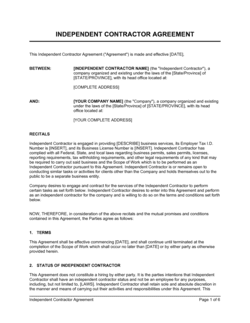
Religious Accommodation Policy Template

Free Word download β€’ Edit online β€’ Save & share with Drive β€’ Export to PDF

4 pagesβ€’20–30 min to fillβ€’Difficulty: Standard
Learn more ↓
FreeReligious Accommodation Policy Template

At a glance

What it is
A Religious Accommodation Policy is an internal HR document that defines how an employer receives, evaluates, and responds to employee requests for adjustments to work schedules, dress codes, or duties based on sincerely held religious beliefs or practices. This free Word download gives you a structured, ready-to-edit template you can customize to your organization's size and industry, then publish in your employee handbook or HR portal.
When you need it
Use it when formalizing how your organization handles faith-based requests for scheduling flexibility, prayer breaks, religious dress, or exemptions from specific tasks. It is especially critical before an employee files a formal accommodation request or before a related complaint arises.
What's inside
A statement of purpose and legal basis, definitions of key terms, the step-by-step request and interactive process, criteria for evaluating undue hardship, approved and denied accommodation examples, documentation requirements, anti-retaliation protections, and an appeals procedure.

What is a Religious Accommodation Policy?

A Religious Accommodation Policy is an internal HR document that defines how an organization receives, evaluates, and responds to employee requests for adjustments to work schedules, dress codes, grooming standards, or job duties based on sincerely held religious beliefs or practices. It establishes a consistent, documented process β€” from initial request through the interactive dialogue to a written decision β€” that protects employees from discrimination and gives managers a clear procedure to follow rather than improvising case by case. A well-drafted policy reduces legal exposure under Title VII of the Civil Rights Act, Canadian provincial Human Rights Codes, and equivalent statutes by demonstrating that the organization engages with accommodation requests in good faith.

Why You Need This Document

Without a written religious accommodation policy, accommodation requests are handled inconsistently across managers and locations β€” one supervisor grants a schedule change without documentation, another denies the same request without engaging the employee, and the company has no auditable record of either decision. When an EEOC charge or human rights complaint follows, the absence of a documented interactive process is itself evidence of bad faith, regardless of whether the underlying decision was legally defensible. The Supreme Court's Groff v. DeJoy ruling in 2023 raised the undue hardship standard materially, meaning many denials that were valid before 2023 now require reconsideration β€” a policy without a review cadence will apply outdated criteria without anyone noticing. This template gives you a structured, legally current starting point that takes under two hours to customize and publish, eliminating the procedural gaps that turn manageable accommodation requests into formal complaints.

Which variant fits your situation?

If your situation is…Use this template
Creating a broad policy covering all protected characteristicsEqual Employment Opportunity (EEO) Policy
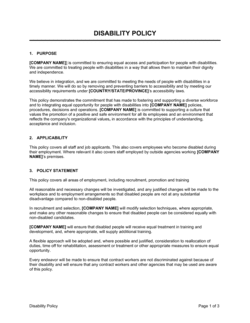
Documenting a disability-related accommodation separatelyDisability Accommodation Policy
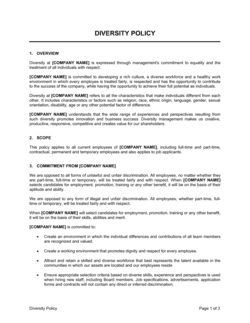
Establishing overall anti-discrimination standardsAnti-Discrimination Policy
Addressing dress code and appearance standards for all employeesDress Code Policy
Managing flexible schedules and time-off requests across the workforceFlexible Work Arrangement Policy
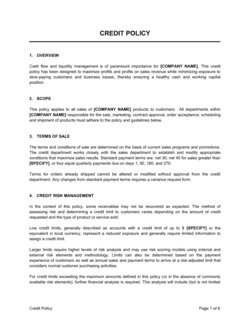
Capturing individual accommodation requests in a standardized formReligious Accommodation Request Form
Compiling all workplace conduct policies into a single referenceEmployee Handbook

Common mistakes to avoid

❌ Requiring clergy letters or proof of religious membership

Why it matters: The EEOC and most courts do not permit employers to demand official religious documentation as a condition of processing an accommodation request. Doing so is independently actionable as discriminatory gatekeeping.

Fix: Revise the request procedure to state clearly that no formal documentation is required. Train managers to accept the employee's own description of their belief or practice at face value unless specific circumstances give objective reason for doubt.

❌ Skipping the interactive process and issuing an immediate denial

Why it matters: A documented interactive process is the employer's primary procedural defense in EEOC charges and Title VII litigation. Without it, a denial β€” even one that would have been legally justified β€” becomes much harder to defend.

Fix: Require HR to schedule an interactive meeting within five business days of every request and document the discussion, options considered, and outcome in writing before any decision is issued.

❌ Using the pre-2023 'more than de minimis' undue hardship standard

Why it matters: The Supreme Court's Groff v. DeJoy decision (2023) significantly raised the undue hardship threshold. Policies still using the old language will cause managers to deny accommodations that now legally must be granted, creating immediate EEOC exposure.

Fix: Update the evaluation criteria section to reflect the 'substantial burden in the overall context of the employer's business' standard and note the change in the policy version log.

❌ Issuing verbal approval or denial decisions without written documentation

Why it matters: Oral decisions cannot be audited, are frequently recalled differently by each party, and leave the employer with no defense record if a complaint is filed months later.

Fix: Require all accommodation decisions β€” approvals and denials β€” to be issued in writing, signed by an HR representative, and retained in a separate confidential accommodation file for at least three years.

The 10 key sections, explained

Purpose and Scope

Definitions

Employee Request Procedure

Interactive Process

Evaluation Criteria and Undue Hardship

Types of Accommodations

Decision and Notification

Anti-Retaliation and Confidentiality

Appeals Procedure

Policy Review and Updates

How to fill it out

  1. 1

    Enter company name and geographic scope

    Replace all [COMPANY NAME] placeholders throughout the document and confirm which locations and employee categories the policy covers.

    πŸ’‘ If you operate in multiple countries, note that Canadian provinces use Human Rights Code language rather than Title VII β€” flag those sections for jurisdiction-specific review.

  2. 2

    Set request timelines and notice periods

    Fill in the advance notice period for requests (typically 10 business days) and the employer response deadline (typically 10–15 business days after the interactive process). Both figures should reflect your actual HR capacity.

    πŸ’‘ Shorter notice periods favor employees; longer ones favor scheduling stability. A 10-business-day request window is the most commonly used standard across mid-size employers.

  3. 3

    Update the undue hardship language to the Groff standard

    Confirm the evaluation criteria section uses 'substantial burden in the overall context of the employer's business' rather than the outdated 'more than de minimis' standard. Delete any language referencing the pre-2023 test.

    πŸ’‘ The EEOC published updated guidance on Groff v. DeJoy in 2023 β€” download it and keep a copy in the HR file supporting this policy.

  4. 4

    Customize the types-of-accommodations list

    Add examples relevant to your industry β€” for example, prayer room access for manufacturing shift workers, or head-covering exceptions for food-service employees β€” and confirm the list is labeled non-exhaustive.

    πŸ’‘ One or two industry-specific examples make the policy feel concrete to managers and reduce requests that get misrouted or ignored.

  5. 5

    Name the appeals reviewer role

    Replace [HR DIRECTOR / VP OF PEOPLE] with the actual title of the person who will review appeals, and confirm it is not the same role that issues first-level decisions.

    πŸ’‘ If your HR team is small and the same person handles both levels, designate an outside senior manager (e.g., CFO or COO) as the appeals reviewer.

  6. 6

    Align with your employee handbook and EEO policy

    Cross-reference this policy with your existing Equal Employment Opportunity statement, Anti-Discrimination Policy, and Employee Handbook to ensure consistent language and no conflicting procedures.

    πŸ’‘ A single cross-reference table listing related policies and their last-reviewed dates takes 15 minutes to build and prevents managers from applying two contradictory policies to the same request.

  7. 7

    Publish and train managers before rollout

    Distribute the policy via your HR portal or employee handbook and conduct a 30-minute manager briefing covering the interactive process, documentation requirements, and what never to say when a request comes in.

    πŸ’‘ The most common source of legal exposure is not the written policy but managers who improvise responses. A short briefing with two or three scenario examples prevents the most common errors.

Frequently asked questions

What is a religious accommodation policy?

A religious accommodation policy is an internal HR document that defines how an employer processes, evaluates, and responds to employee requests for adjustments based on sincerely held religious beliefs or practices. It covers the request procedure, the interactive process, undue hardship criteria, approved accommodation types, documentation requirements, and anti-retaliation protections. A written policy ensures consistent, legally defensible handling of requests across all managers and locations.

Are employers legally required to accommodate religious practices?

In the United States, Title VII of the Civil Rights Act of 1964 requires employers with 15 or more employees to reasonably accommodate an employee's sincerely held religious beliefs unless doing so would impose an undue hardship. Following Groff v. DeJoy (2023), undue hardship means a substantial burden in the overall context of the employer's business β€” a meaningfully higher bar than the prior standard. Canadian employers are subject to provincial Human Rights Codes with similar obligations.

What counts as a sincerely held religious belief?

The EEOC applies a very broad definition that extends well beyond membership in an organized religion. It includes moral or ethical beliefs held with the strength of traditional religious convictions, and practices that are not universally followed within a denomination. Employers may not question the theological validity of a belief or require it to align with official doctrine β€” only whether the employee genuinely holds it.

What types of accommodations are most commonly requested?

The four most frequent requests are: schedule adjustments or shift swaps for Sabbath observance or religious holidays; prayer breaks during the workday; exceptions to dress code or grooming policies for religious dress, head coverings, or uncut hair; and reassignment from specific tasks that conflict with sincerely held beliefs. Employers are expected to consider all of these before citing undue hardship.

When can an employer deny a religious accommodation request?

An employer may deny a request only when granting it would impose a substantial burden on its operations, evaluated in the overall business context. Relevant factors include the direct and indirect cost of the accommodation, impact on safety, effect on other employees' rights, and the operational requirements of the specific role. Under Groff v. DeJoy, minor inconvenience or small cost is not sufficient to establish undue hardship.

What is the interactive process and why does it matter?

The interactive process is a good-faith dialogue between the employer and the requesting employee to identify an accommodation that works for both sides. Employers are not required to grant the employee's preferred accommodation β€” only to engage seriously in exploring options. A documented interactive process is the employer's primary defense against EEOC charges; skipping it makes even a legally justified denial very difficult to defend.

Does a religious accommodation policy need to be reviewed regularly?

Yes. Employment law in this area changes meaningfully β€” the Groff v. DeJoy Supreme Court ruling in 2023 materially raised the undue hardship standard, and EEOC guidance has been updated accordingly. An annual review cycle is the minimum; any significant court decision or EEOC guidance update should trigger an immediate revision. A policy without a review schedule will drift out of compliance without anyone noticing.

Should this policy be separate from or part of an employee handbook?

Both approaches are valid. A standalone policy is easier to update without reissuing the entire handbook and provides a clean document for managers to reference when handling a specific request. Many employers include a summary in the handbook with a reference to the full standalone policy. Whichever approach you use, ensure the version date is visible and that the handbook cross-reference is kept current.

How long should accommodation request records be retained?

Retain all documentation related to accommodation requests β€” the initial request, interactive process notes, the decision letter, and any appeals β€” for at least three years, or longer if a complaint has been filed. The EEOC's charge filing window is 180 to 300 days depending on the state, but related civil litigation can extend the relevant lookback period significantly. Store records in a confidential file separate from the employee's general personnel file.

How this compares to alternatives

vs Disability Accommodation Policy

A disability accommodation policy addresses physical, mental, and cognitive impairments under the ADA or equivalent statutes, typically requiring medical documentation and a formal interactive process with objective verification. A religious accommodation policy covers faith-based practices and beliefs, where documentation requirements are much more restricted and the verification standard is sincerity rather than medical necessity. Both policies share the interactive process framework but differ in what evidence the employer may request.

vs Anti-Discrimination Policy

An anti-discrimination policy sets broad standards prohibiting adverse treatment on the basis of any protected characteristic, including religion. A religious accommodation policy is narrower and procedural β€” it governs the specific process for handling proactive requests for workplace adjustments. Both documents are necessary; the anti-discrimination policy covers conduct, while the accommodation policy covers process.

vs Equal Employment Opportunity (EEO) Policy

An EEO policy is a high-level commitment statement covering all protected classes and the company's overall non-discrimination posture, often required by federal contractors. A religious accommodation policy is an operational procedure document that tells managers and employees exactly what to do when a specific request arises. The EEO policy sets the principle; the accommodation policy operationalizes it for one protected characteristic.

vs Employee Handbook

An employee handbook compiles all major workplace policies β€” conduct, benefits, PTO, safety, and more β€” into a single reference document. A religious accommodation policy is a standalone operational policy designed to be detailed enough for managers to apply without additional guidance. Most organizations include a summary of accommodation rights in the handbook and link to the full standalone policy for procedural depth.

Industry-specific considerations

Healthcare

Scheduling accommodations for Sabbath-observing staff must be balanced against patient safety coverage ratios and on-call requirements, making documented undue hardship analysis especially important.

Manufacturing and Distribution

Shift-rotation and mandatory overtime policies frequently generate accommodation requests; the policy must address how shift swaps are coordinated without creating coercion risks for covering coworkers.

Retail and Hospitality

High-volume holiday scheduling β€” precisely when religious observance peaks β€” creates the most frequent conflicts; a clear request timeline and pre-approved swap list reduces last-minute disputes.

Professional Services

Client-facing dress code and grooming standards are the most common friction point; the policy should include specific language authorizing religious dress exceptions without manager discretion.

Template vs pro β€” what fits your needs?

PathBest forCostTime
Use the templateSmall to mid-size employers establishing a written policy for the first timeFree1–2 hours to customize and publish
Template + professional reviewEmployers in heavily regulated industries, those with prior EEOC complaints, or multi-state operations$300–$800 for an employment attorney review3–5 business days
Custom draftedFederal contractors, healthcare systems, or organizations with complex multi-jurisdiction workforce$1,000–$3,500+1–3 weeks

Glossary

Sincerely Held Religious Belief
A belief, practice, or observance that is genuinely held by the employee β€” courts apply a broad definition that is not limited to formal religions or doctrinal conformity.
Reasonable Accommodation
An adjustment to the work environment, schedule, or duties that allows an employee to practice their religion without imposing an undue hardship on the employer.
Undue Hardship
Under US federal law post-Groff v. DeJoy (2023), a burden that is substantial in the overall context of the employer's business β€” a higher bar than the prior 'more than de minimis' standard.
Interactive Process
A good-faith dialogue between the employer and the requesting employee to explore possible accommodations before reaching a final decision.
Title VII
The US federal statute prohibiting employment discrimination based on religion, race, color, sex, and national origin β€” enforced by the Equal Employment Opportunity Commission (EEOC).
Disparate Impact
When a neutral workplace policy β€” such as a uniform rule or shift rotation β€” disproportionately burdens employees of a particular religion without justification.
Anti-Retaliation Protection
A legal and policy prohibition on adverse employment actions taken against an employee for requesting an accommodation or participating in a related complaint process.
Shift Swap
An accommodation mechanism in which an employee exchanges a scheduled shift with a willing colleague to observe a religious day of rest or holiday.
De Minimis Cost
The former US standard for undue hardship β€” any cost or burden more than minimal β€” largely superseded by the higher Groff v. DeJoy standard in 2023.
Human Rights Code
Canadian provincial legislation prohibiting discrimination based on religion and creed in employment, requiring employers to accommodate to the point of undue hardship.

Part of your Business Operating System

This document is one of 3,000+ business & legal templates included in Business in a Box.

  • Fill-in-the-blanks β€” ready in minutes
  • 100% customizable Word document
  • Compatible with all office suites
  • Export to PDF and share electronically

Create your document in 3 simple steps.

From template to signed document β€” all inside one Business Operating System.
1
Download or open template

Access over 3,000+ business and legal templates for any business task, project or initiative.

2
Edit and fill in the blanks with AI

Customize your ready-made business document template and save it in the cloud.

3
Save, Share, Send, Sign

Share your files and folders with your team. Create a space of seamless collaboration.

Save time, save money, and create top-quality documents.

β˜…β˜…β˜…β˜…β˜…

"Fantastic value! I'm not sure how I'd do without it. It's worth its weight in gold and paid back for itself many times."

Managing Director Β· Mall Farm
Robert Whalley
Managing Director, Mall Farm Proprietary Limited
β˜…β˜…β˜…β˜…β˜…

"I have been using Business in a Box for years. It has been the most useful source of templates I have encountered. I recommend it to anyone."

Business Owner Β· 4+ years
Dr Michael John Freestone
Business Owner
β˜…β˜…β˜…β˜…β˜…

"It has been a life saver so many times I have lost count. Business in a Box has saved me so much time and as you know, time is money."

Owner Β· Upstate Web
David G. Moore Jr.
Owner, Upstate Web

Run your business with a system β€” not scattered tools

Stop downloading documents. Start operating with clarity. Business in a Box gives you the Business Operating System used by over 250,000 companies worldwide to structure, run, and grow their business.

Free Forever PlanΒ Β·Β No credit card required