- Sincerely Held Religious Belief
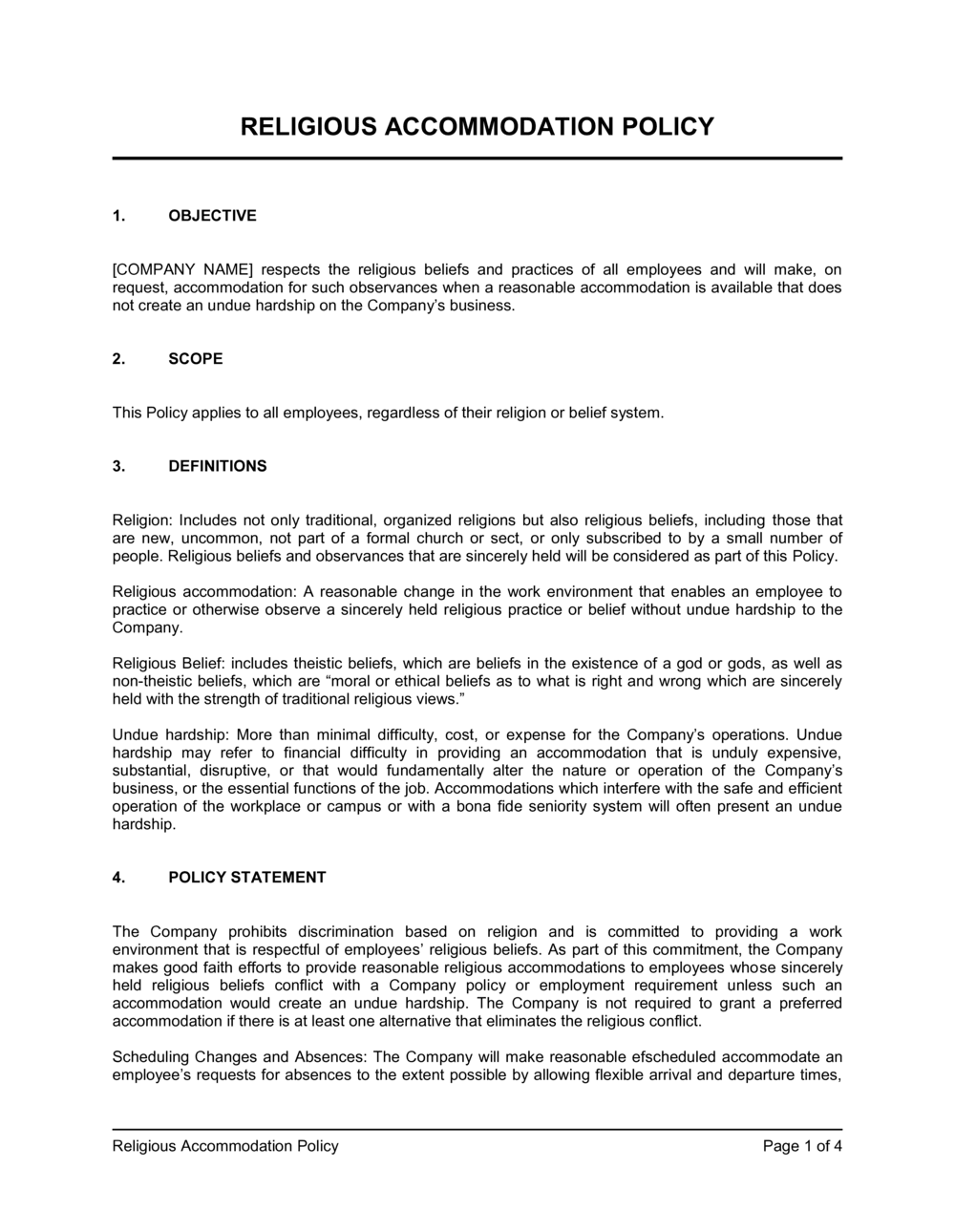
- A belief, practice, or observance that is genuinely held by the employee — courts apply a broad definition that is not limited to formal religions or doctrinal conformity.
- Reasonable Accommodation
- An adjustment to the work environment, schedule, or duties that allows an employee to practice their religion without imposing an undue hardship on the employer.
- Undue Hardship
- Under US federal law post-Groff v. DeJoy (2023), a burden that is substantial in the overall context of the employer's business — a higher bar than the prior 'more than de minimis' standard.
- Interactive Process
- A good-faith dialogue between the employer and the requesting employee to explore possible accommodations before reaching a final decision.
- Title VII
- The US federal statute prohibiting employment discrimination based on religion, race, color, sex, and national origin — enforced by the Equal Employment Opportunity Commission (EEOC).
- Disparate Impact
- When a neutral workplace policy — such as a uniform rule or shift rotation — disproportionately burdens employees of a particular religion without justification.
- Anti-Retaliation Protection
- A legal and policy prohibition on adverse employment actions taken against an employee for requesting an accommodation or participating in a related complaint process.
- Shift Swap
- An accommodation mechanism in which an employee exchanges a scheduled shift with a willing colleague to observe a religious day of rest or holiday.
- De Minimis Cost
- The former US standard for undue hardship — any cost or burden more than minimal — largely superseded by the higher Groff v. DeJoy standard in 2023.
- Human Rights Code
- Canadian provincial legislation prohibiting discrimination based on religion and creed in employment, requiring employers to accommodate to the point of undue hardship.