1
Confirm your securities exemption before drafting
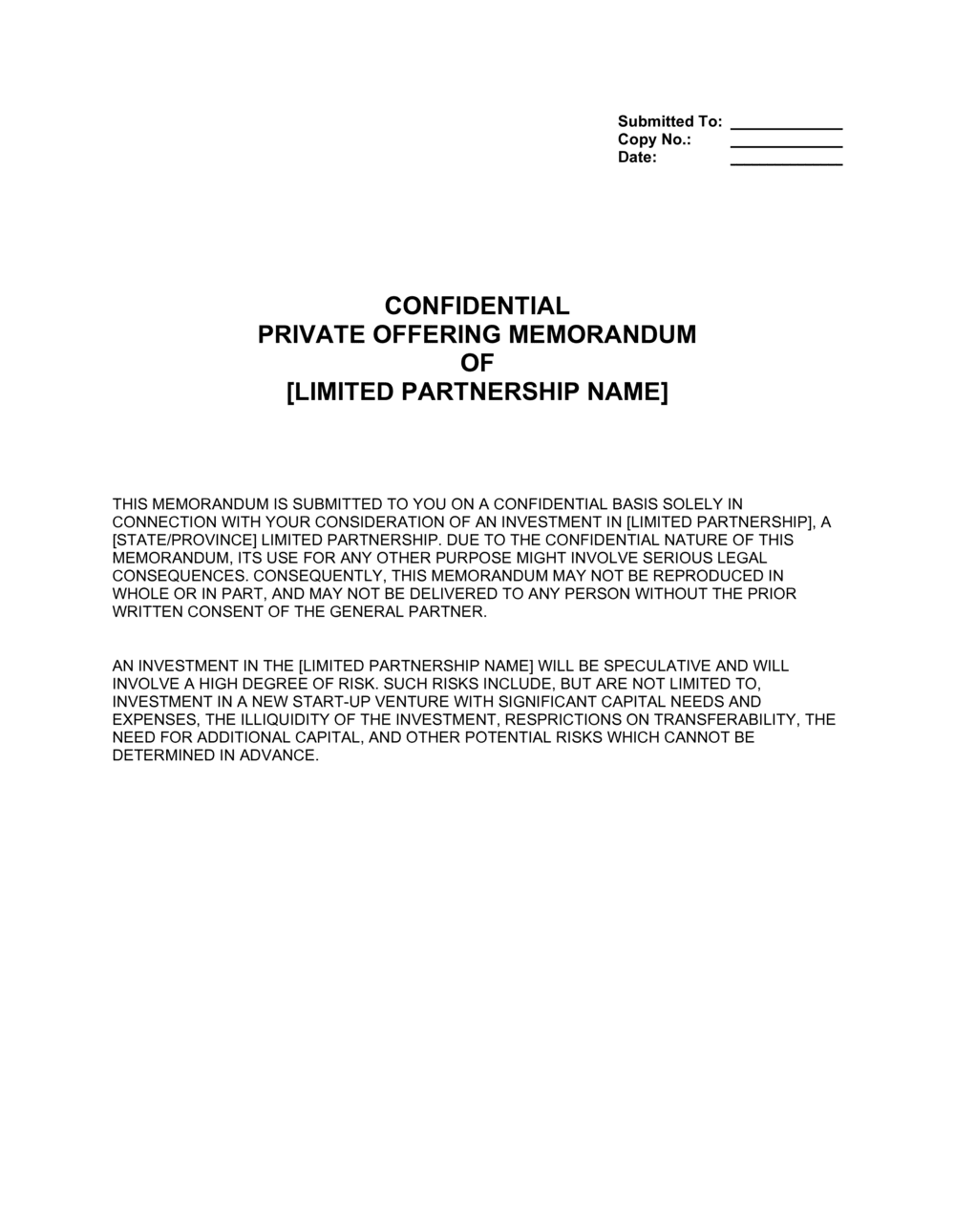
Identify whether you are relying on Reg D Rule 506(b) (up to 35 non-accredited investors, no general solicitation), Rule 506(c) (accredited only, general solicitation permitted), or a non-US equivalent. The exemption determines which disclosures are mandatory and which investor-verification steps are required.
💡 Rule 506(c) lets you advertise publicly but requires you to take 'reasonable steps' to verify accredited status — passive self-certification is not sufficient.
2
Complete the offering summary table
Enter the security type, total offering size, minimum and maximum investment per investor, price per unit, anticipated close date, and whether the offering has a minimum raise threshold before proceeds are released from escrow.
💡 A minimum escrow threshold protects investors and reduces your rescission risk if the raise falls short of the capital needed to execute your business plan.
3
Draft specific, company-tailored risk factors
Write a numbered list of material risks specific to your business, industry, and offering structure. Cover at minimum: execution risk, competition, regulatory risk, liquidity and transfer restrictions, dilution from future rounds, and key-person dependency.
💡 Courts have held that a company that experienced a known risk without disclosing it is liable even if the PPM contains generic boilerplate. Specificity is your defense.
4
Write the company description with verifiable facts
Describe your business model, products, market, and history using facts you can document. Attach source citations for market size claims. Avoid superlatives and promotional language — every statement in a PPM can be the basis of a securities fraud claim.
💡 Run a plain-language review: if a sentence could appear in a marketing brochure unchanged, rewrite it as a factual disclosure.
5
Specify use of proceeds to the dollar
Break down how the capital raised will be spent across at minimum four categories, expressed as both absolute dollar amounts and percentages of gross proceeds. Disclose offering costs, broker-dealer commissions, and any finder fees as a separate line.
💡 If you plan to pay yourself a salary from proceeds, disclose the amount explicitly — undisclosed compensation to founders is a common SEC enforcement target.
6
Attach audited or reviewed financial statements
For most Reg D offerings, audited financials are not legally required but are expected by sophisticated investors. At minimum, include internally prepared statements with a clear designation of their unaudited status and the accounting basis used.
💡 For raises above $1M or offerings to institutional investors, budget $5,000–$15,000 for a CPA review — it significantly reduces investor pushback and due diligence timelines.
7
Disclose all required management information
Provide biographies for all officers, directors, and 10%+ shareholders. Disclose any prior bankruptcies, felony convictions, or SEC/regulatory actions within the past 10 years. These disclosures are mandatory — omission is a disqualifying event under Rule 506(d).
💡 Cross-reference FINRA BrokerCheck and SEC EDGAR for any affiliated broker-dealers or prior registered entities to ensure no undisclosed enforcement history.
8
Have securities counsel review before distribution
Provide the final draft to a securities attorney for a substantive review of disclosure completeness, exemption compliance, and state Blue Sky law requirements in every state where investors reside.
💡 File Form D with the SEC within 15 days of the first sale. Many states also require pre-sale notice filings — your counsel should map every investor's state before the offering opens.