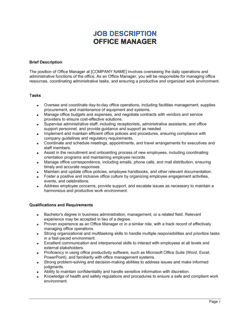
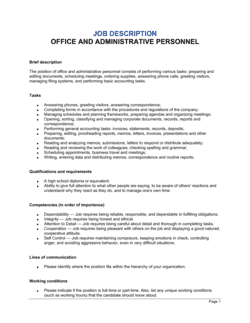
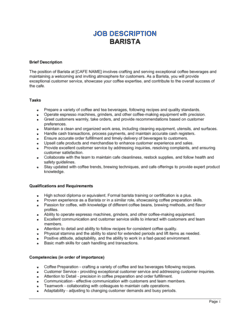
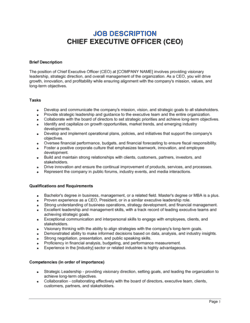
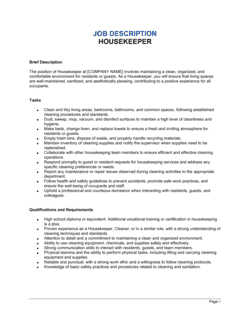
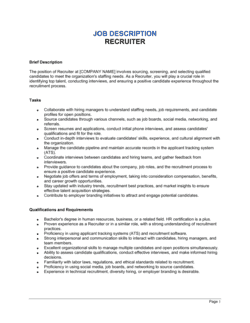
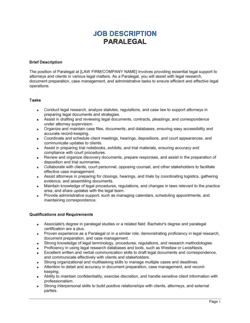
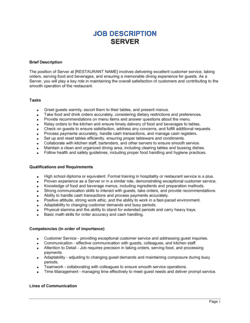
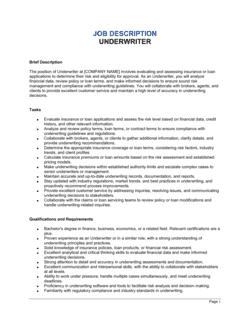
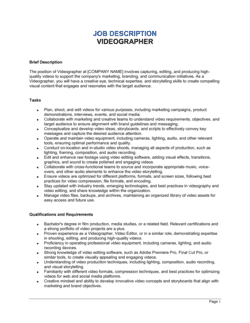
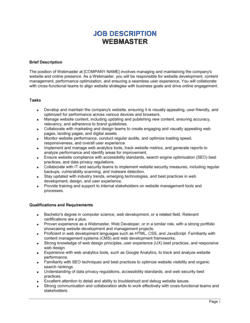
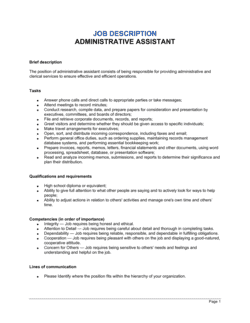
- Job Description
- A formal written document outlining the title, duties, qualifications, reporting structure, and conditions of employment for a specific role.
- Essential Functions
- The core duties an employee must be able to perform, with or without reasonable accommodation — a legally significant designation under disability law in many jurisdictions.
- Reporting Relationship
- The documented chain of authority indicating who the job incumbent reports to and, where applicable, who reports to them.
- Exempt vs. Non-Exempt
- A US classification under the FLSA determining whether an employee is entitled to overtime pay; most general office clerks are classified as non-exempt.
- FLSA (Fair Labor Standards Act)
- US federal law setting minimum wage, overtime entitlement, and child labor standards — directly relevant to how clerical roles are classified and compensated.
- At-Will Employment
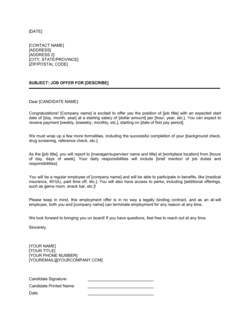
- An employment relationship that either party may end at any time for any lawful reason; common in most US states and typically referenced in or alongside the job description.
- Reasonable Accommodation
- A modification to a job's duties, environment, or schedule that enables a qualified individual with a disability to perform the essential functions of the role.
- Probationary Period
- An initial employment phase — commonly 30 to 90 days — during which performance is formally evaluated before the hire is confirmed as a permanent employee.
- Compensation Band
- The defined minimum and maximum salary or hourly wage range for a given role, used to maintain pay equity and guide offer negotiations.
- Position Summary
- A concise 3–5 sentence overview of the role's primary purpose, typical work environment, and place within the organizational structure.
- KSAs (Knowledge, Skills, and Abilities)
- A structured framework for describing what a candidate must know, be able to do, and possess behaviorally to perform a job successfully.