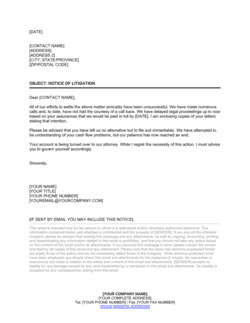
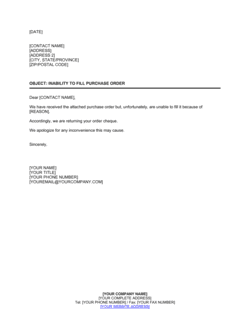
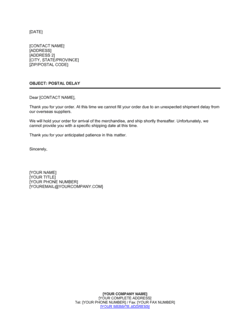
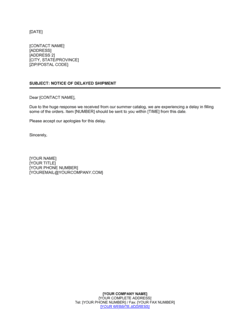
Notice to Disregard Letter Indicating Inability to Ship Template

Free Word download β€’ Edit online β€’ Save & share with Drive β€’ Export to PDF

1 pageβ€’15–20 min to fillβ€’Difficulty: Standard
Learn more ↓
FreeNotice to Disregard Letter Indicating Inability to Ship Template

At a glance

What it is
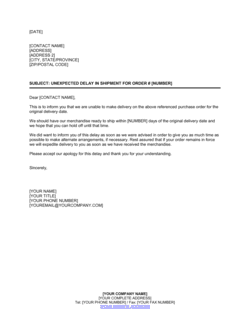
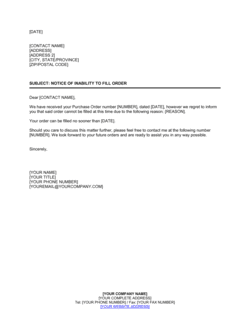
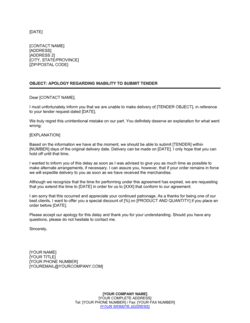
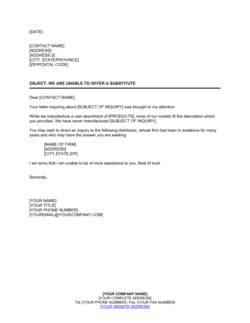
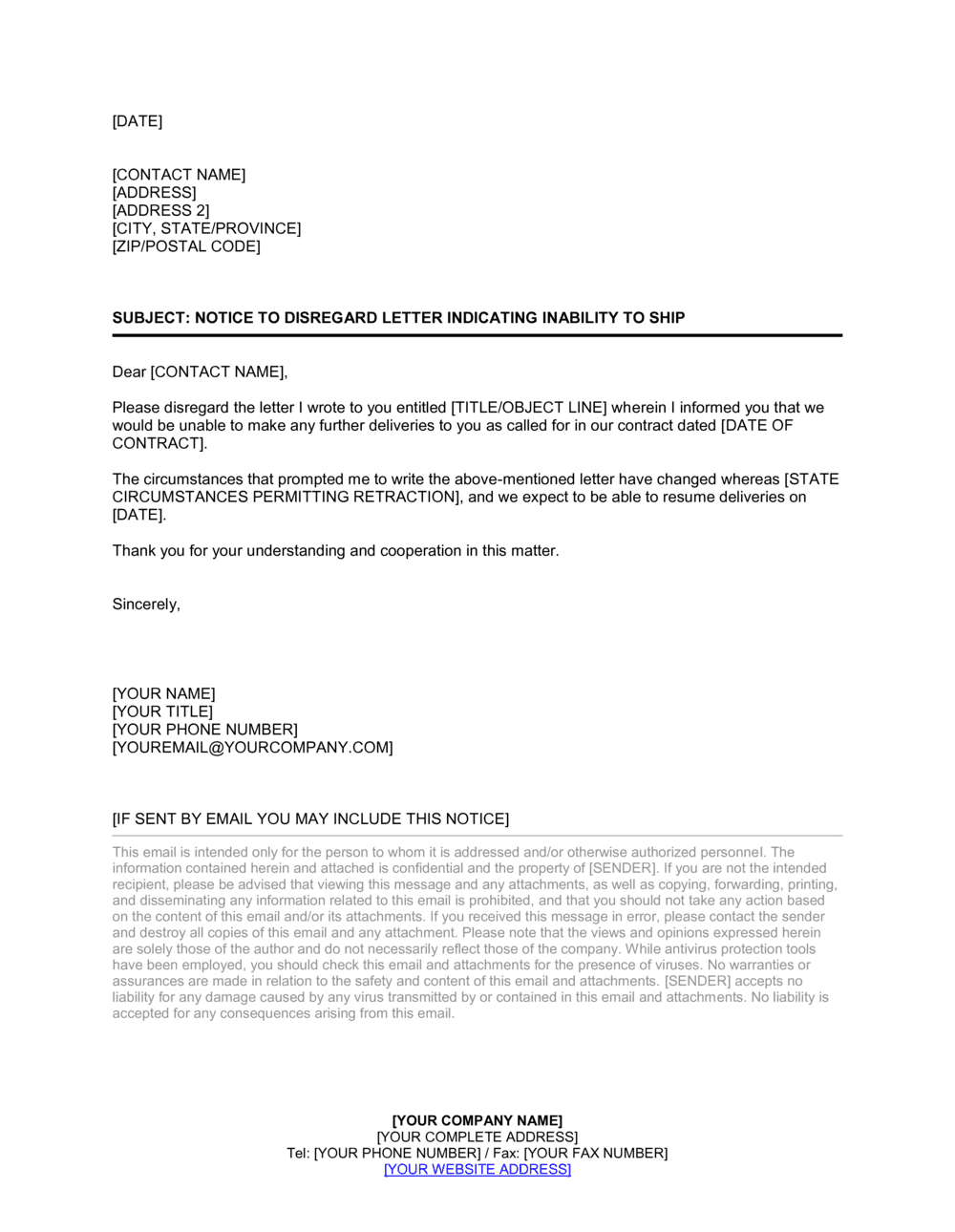
A Notice To Disregard Letter Indicating Inability To Ship is a formal business letter sent to a buyer, supplier, or logistics partner to retract or cancel a previously issued shipping notice or commitment. This free Word download gives you a ready-to-use template you can edit online and send as PDF to notify the recipient promptly and professionally.
When you need it
Use it as soon as you discover that a confirmed shipment cannot proceed β€” due to stock shortages, supply chain disruptions, production delays, or carrier failures β€” so the recipient can adjust their own logistics, inventory, or production schedules before incurring unnecessary costs.
What's inside
Sender and recipient details, a clear reference to the original shipping notice being retracted, a plain explanation of why the shipment cannot proceed, any interim or alternative arrangements, and a professional closing that preserves the business relationship.

What is a Notice To Disregard Letter Indicating Inability To Ship?

A Notice To Disregard Letter Indicating Inability To Ship is a formal business letter sent by a seller, supplier, or shipper to a buyer or logistics partner to retract a previously issued shipping confirmation or commitment. It instructs the recipient to treat the original notice as void because the goods cannot be dispatched as agreed, and provides a brief factual explanation of the reason β€” such as a stockout, supplier delay, or carrier failure. Unlike a shipment delay notice, this letter does not promise a revised ship date; it cancels the shipping commitment at the point of dispatch, giving the recipient the information they need to adjust their own plans before incurring unnecessary costs.

Why You Need This Document

Failing to formally retract a shipping commitment you cannot fulfill leaves the recipient operating on false information β€” booking dock labor, delaying alternative sourcing, or adjusting production schedules around a shipment that will not arrive. The longer the gap between discovering the failure and notifying the recipient, the greater the downstream disruption and the higher your exposure to claims for wasted costs. A prompt, clearly worded retraction letter documents that you notified the recipient at the earliest opportunity, demonstrates professionalism, and gives the recipient the time they need to find alternatives. This template lets you send a complete, relationship-preserving notice in under ten minutes β€” covering every component from reference identification to alternative arrangements β€” so no critical element is accidentally omitted under the pressure of an active supply chain disruption.

Which variant fits your situation?

If your situation is…Use this template
Entire order cannot be shipped due to stockoutNotice To Disregard Letter Indicating Inability To Ship
Partial shipment possible but remainder is delayed indefinitelyPartial Shipment Notification Letter
Shipment delayed but will proceed at a confirmed future dateShipment Delay Notification Letter
Order cancelled entirely by the seller before shipmentOrder Cancellation Letter
Carrier failure prevents delivery after goods have left the warehouseDelivery Failure Notification Letter
Customer formally requesting cancellation of a pending shipmentRequest To Cancel Order Letter

Common mistakes to avoid

❌ Delaying the notice after discovering the shipping failure

Why it matters: Every hour the recipient operates under the assumption that the shipment is coming, they may be committing resources β€” booking dock space, scheduling labor, or delaying alternative sourcing.

Fix: Send the notice as soon as you confirm the shipment cannot proceed, even if alternative arrangements are not yet finalized. A preliminary notice with a follow-up is better than a single delayed one.

❌ Omitting the original shipping notice reference

Why it matters: Recipients managing multiple orders cannot act on a retraction that does not clearly identify which shipment is affected, causing delays and requiring follow-up calls to clarify.

Fix: Always include the original notice date, PO number, and order number in the subject line and the opening paragraph of the retraction letter.

❌ Committing to an unconfirmed revised ship date

Why it matters: If the date is not met, a second retraction is required β€” and each successive failure compounds the damage to the business relationship and increases the risk of a formal dispute.

Fix: Only state a revised date when it has been internally confirmed. Use 'we will notify you of a confirmed ship date by [DATE]' as a holding position when no confirmed date is available.

❌ Sending the letter to the wrong contact

Why it matters: A retraction sent only to a sales contact, rather than the recipient's logistics or AP department, may not reach the people who need to act on it β€” dock scheduling, inventory planners, or production managers.

Fix: Copy all relevant contacts at the recipient organization β€” procurement, logistics, and the primary account contact β€” to ensure the retraction is acted on promptly.

The 8 key clauses, explained

Sender and recipient identification

In plain language: Establishes who is sending the letter and who it is addressed to, including full legal names, addresses, and contact details.

Sample language
[SENDER COMPANY NAME] | [ADDRESS] | [CITY, STATE, ZIP] | [DATE] | To: [RECIPIENT NAME], [TITLE] | [RECIPIENT COMPANY NAME] | [ADDRESS]

Common mistake: Addressing the letter to a general department email or job title instead of the specific individual responsible β€” this delays acknowledgement and creates a paper-trail gap.

Subject line and reference information

In plain language: Identifies the original shipping notice, purchase order, or order number being retracted so the recipient can immediately locate the relevant records.

Sample language
Subject: Notice to Disregard β€” Shipping Confirmation Dated [DATE] | Reference: PO #[PO NUMBER] / Order #[ORDER NUMBER]

Common mistake: Omitting the original document date or reference number, which forces the recipient to search their records and slows their response.

Opening statement of retraction

In plain language: Clearly states in the first sentence that the prior shipping notice or commitment is retracted and should be disregarded in full.

Sample language
Please be advised that the shipping confirmation issued on [DATE] for Purchase Order #[PO NUMBER] is hereby retracted and should be disregarded in its entirety.

Common mistake: Burying the retraction in the second or third paragraph. Recipients scanning a long letter may miss the cancellation and proceed with receiving or production plans based on the original notice.

Explanation of the inability to ship

In plain language: Provides a brief, factual explanation of why the shipment cannot proceed β€” without over-committing to a resolution timeline that has not yet been confirmed.

Sample language
We regret to inform you that due to [REASON β€” e.g., an unexpected inventory shortage / supplier production delay / carrier service disruption], we are unable to fulfill the shipment of [ITEM DESCRIPTION] as previously confirmed.

Common mistake: Providing an overly detailed explanation that inadvertently creates new commitments or implies liability. Keep the explanation factual and brief β€” one to two sentences.

Impact acknowledgement

In plain language: Acknowledges the disruption this causes to the recipient's operations, demonstrating that the sender understands the downstream effect.

Sample language
We understand this may affect your production schedule / inventory planning / delivery commitments, and we sincerely apologize for the disruption this causes.

Common mistake: Skipping this clause entirely. Letters that jump from explanation to alternatives without acknowledging the recipient's inconvenience read as dismissive and damage the relationship.

Alternative arrangements or next steps

In plain language: States any interim solution being offered β€” a partial shipment, a rescheduled date, a refund, or a request to discuss options β€” so the recipient has a clear path forward.

Sample language
We are actively working to resolve the situation and anticipate being able to ship by [ESTIMATED DATE], subject to confirmation. / Alternatively, we are prepared to [OFFER PARTIAL SHIPMENT / ISSUE A FULL REFUND / ARRANGE A SUBSTITUTE PRODUCT] at your discretion.

Common mistake: Offering a specific revised ship date that has not been confirmed internally. If the date slips again, a second retraction is necessary and further erodes trust.

Request for acknowledgement

In plain language: Asks the recipient to confirm receipt of the notice so the sender has evidence the retraction was communicated and received.

Sample language
Please confirm receipt of this notice by return email to [CONTACT EMAIL] or by calling [PHONE NUMBER] at your earliest convenience.

Common mistake: Not including a contact method or deadline for acknowledgement, leaving the sender unsure whether the retraction was received before the recipient acted on the original notice.

Professional closing and signature

In plain language: Closes the letter on a constructive, relationship-preserving note and includes the sender's name, title, and company.

Sample language
We value our business relationship and are committed to resolving this matter as quickly as possible. We appreciate your understanding. Sincerely, [SENDER NAME] | [TITLE] | [COMPANY NAME] | [EMAIL] | [PHONE]

Common mistake: Ending abruptly without expressing intent to resolve the issue. A closing that commits to follow-up maintains goodwill and reduces the likelihood of the recipient escalating the matter.

How to fill it out

  1. 1

    Enter sender and recipient details

    Add your company's full legal name, address, and contact information at the top of the letter. Enter the recipient's full name, title, company, and address. Include today's date.

    πŸ’‘ Address the letter to the specific individual who received the original shipping notice β€” typically the buyer's logistics or procurement contact.

  2. 2

    Complete the subject line with the original reference

    Write the subject line to include the date of the original shipping confirmation and the relevant purchase order or order number. This lets the recipient find their records immediately.

    πŸ’‘ If the original notice referenced multiple PO numbers, list all of them β€” partial references cause confusion about which orders are affected.

  3. 3

    Write the retraction statement in the first paragraph

    State clearly in the opening sentence that the prior shipping notice is retracted and should be disregarded. Do not soften or defer this statement β€” clarity is more respectful than vagueness.

    πŸ’‘ Use the exact date and document reference from the original notice to eliminate any ambiguity about which commitment is being cancelled.

  4. 4

    Explain the reason briefly and factually

    Provide one to two sentences explaining why the shipment cannot proceed. Stick to facts you can confirm β€” stock shortage, supplier delay, carrier issue β€” without speculating about resolution timelines.

    πŸ’‘ Avoid language that implies fault if the cause is force majeure or a third-party failure β€” this limits your exposure to claims arising from the disruption.

  5. 5

    Acknowledge the disruption to the recipient

    Include a short sentence recognizing that the cancellation may affect the recipient's operations. This is a relationship-preservation step, not a legal obligation.

    πŸ’‘ Acknowledge specifically β€” 'your production schedule' or 'your delivery commitments' β€” rather than a generic apology, which signals that you understand their situation.

  6. 6

    State alternative arrangements or next steps

    If a revised ship date, partial shipment, or refund is available, state it here. If nothing is confirmed yet, say so explicitly and offer to discuss options.

    πŸ’‘ Only commit to a revised date if you have internal confirmation. A second retraction is far more damaging to the relationship than an honest 'date to be confirmed.'

  7. 7

    Add a request for acknowledgement and your contact details

    Ask the recipient to confirm receipt by email or phone. Provide a direct contact name, email address, and phone number so they can reach you without hunting for contact information.

    πŸ’‘ Set a soft deadline for acknowledgement β€” 'by end of business [DATE]' β€” to create urgency without being aggressive.

Frequently asked questions

What is a notice to disregard letter indicating inability to ship?

It is a formal written communication sent by a seller, supplier, or shipper to a buyer or logistics partner to retract a previously issued shipping notice or commitment. The letter instructs the recipient to disregard the original shipping confirmation because the goods cannot be dispatched as agreed, and explains why. It is typically sent as soon as the sender discovers the shipment cannot proceed.

When should I send a notice to disregard a shipping commitment?

Send it as soon as you confirm that a shipment cannot proceed as previously communicated β€” regardless of whether you have a resolution ready. Common triggers include discovering a stockout after confirming an order, a supplier failing to deliver components needed for fulfillment, a carrier cancelling a booked service, or a production delay that pushes the ready date past the agreed ship date. Waiting until you have a solution risks leaving the recipient making decisions based on a shipment that will not arrive.

Does this letter need to be signed to be valid?

No. A notice to disregard letter is a business communication, not a binding legal instrument, and does not require a wet or electronic signature to be effective. Including the sender's printed name, title, and contact details is standard practice and sufficient. However, for high-value orders or where a formal shipping commitment was part of a signed contract, you may want to consult your contract terms regarding required notice procedures.

What is the difference between a shipping delay notice and a notice to disregard?

A shipping delay notice communicates that a shipment will proceed but later than originally confirmed β€” it preserves the commitment with a new timeline. A notice to disregard cancels the shipping commitment entirely, meaning the recipient should not expect the goods at all unless a new arrangement is confirmed separately. Use a delay notice when the ship date is pushed back; use a notice to disregard when the shipment cannot proceed at any confirmed date.

Should I offer an explanation for why the shipment cannot proceed?

Yes, but briefly. A one- to two-sentence factual explanation β€” 'due to an unexpected inventory shortage' or 'as a result of a carrier service cancellation' β€” is sufficient and appropriate. Avoid lengthy explanations that over-commit to a resolution timeline or inadvertently assign blame in a way that could be used against you in a dispute. If the cause is a force majeure event, name it clearly, as this may affect the recipient's own insurance or contractual obligations.

Can this letter be used for international shipments?

Yes. The letter format applies to domestic and international shipping commitments. For international orders, include the relevant trade document references β€” commercial invoice number, bill of lading number, or export license number β€” alongside the PO and order references. For orders subject to a letter of credit, the buyer's bank may also need to be notified separately, as the shipping documents may already have been presented or are expected by a specific date.

What should I do if the recipient has already made arrangements based on the original notice?

Acknowledge the disruption in the letter and offer to discuss reimbursement of reasonable costs the recipient incurred as a direct result of acting on the original notice β€” such as booked dock labor or a storage reservation. Document any such agreement in a follow-up written confirmation. Whether you are legally obligated to cover those costs depends on your underlying contract terms, so consider reviewing the relevant agreement before making any financial commitments in the letter.

How should I send this letter to ensure it is received?

Send it by email to all relevant contacts β€” procurement, logistics, and your main account contact β€” and request a read receipt or a reply confirming receipt. For high-value orders or where the original shipping notice was sent via a formal procurement system, also submit the retraction through that same system. Keep a copy of the sent email and any acknowledgement in your records in case the matter escalates to a dispute.

How this compares to alternatives

vs Shipment delay notification letter

A shipment delay letter preserves the original commitment with a revised timeline β€” the goods will still ship, just later. A notice to disregard cancels the commitment entirely, instructing the recipient not to expect the shipment unless a new arrangement is confirmed. Use the delay letter when you have a confirmed new date; use the notice to disregard when no confirmed date exists.

vs Order cancellation letter

An order cancellation letter terminates the entire purchase order β€” including any future delivery obligation β€” and typically initiates a refund or credit process. A notice to disregard a shipping commitment retracts only the shipping notice; the underlying order may remain open for fulfillment at a later date. Use the cancellation letter when the order is being voided; use the notice to disregard when the order is paused or under review.

vs Delivery failure notification letter

A delivery failure notification is sent after goods have left the warehouse and a carrier has failed to deliver them to the recipient. A notice to disregard is sent before the goods leave β€” it retracts the shipping commitment at the dispatch stage. The two letters address different points in the fulfillment chain and are not interchangeable.

vs Force majeure notice letter

A force majeure notice formally invokes a contract clause to suspend or excuse a party's obligations due to an extraordinary event outside their control, with potential legal effect on the contract. A notice to disregard is an operational communication retracting a shipping notice β€” it does not invoke contractual relief. When a force majeure event causes the inability to ship, both documents may be required: the force majeure notice for the contract and the shipping retraction for the logistics team.

Industry-specific considerations

Retail and E-commerce

High order volumes mean stockouts and fulfillment failures occur regularly; a templated notice ensures consistent, prompt communication to customers and 3PL partners without bespoke drafting each time.

Manufacturing and Wholesale

Component shortages or production line failures can prevent finished goods from being ready by the confirmed ship date, requiring immediate retraction of ASNs sent to distributors or OEM customers.

Food and Beverage

Perishable goods and strict shelf-life windows mean a shipment that cannot proceed must be retracted and alternatives arranged within hours, making a clear, rapid notice letter essential.

Construction and Building Materials

Material delivery failures on active job sites cause cascading schedule delays; a formal notice to disregard allows the contractor to source alternatives and document the supplier's failure for contract purposes.

Template vs pro β€” what fits your needs?

PathBest forCostTime
Use the templateAny business needing to retract a standard shipping notice for a domestic or international orderFree10 minutes
Template + professional reviewHigh-value orders where the underlying contract specifies formal notice requirements or where cost reimbursement is being offered$100–$300 (brief legal or contract review)1 business day
Custom draftedComplex multi-party supply chain failures, international letters of credit, or situations where force majeure is being invoked alongside the retraction$300–$8002–3 business days

Glossary

Advance Shipping Notice (ASN)
A document sent to a recipient before goods are dispatched, detailing the contents, packaging, and expected delivery date of an incoming shipment.
Notice to Disregard
A formal communication that instructs the recipient to ignore, cancel, or treat as void a previously issued document or notice.
Shipping Commitment
A confirmed promise β€” written or verbal β€” by a seller or shipper to dispatch specified goods by a defined date.
Stockout
A situation in which available inventory is insufficient to fulfill a confirmed order, preventing shipment.
Force Majeure
An unforeseeable event β€” such as a natural disaster, port strike, or government restriction β€” that prevents a party from meeting a contractual obligation.
3PL (Third-Party Logistics Provider)
An external company contracted to handle warehousing, order fulfillment, or freight on behalf of a shipper.
Purchase Order (PO)
A buyer-issued document authorizing the purchase of specified goods at agreed prices, which forms the basis of most shipping commitments.
Lead Time
The total time between placing an order and receiving the goods, covering production, picking, packing, and transit.
Bill of Lading
A legal document issued by a carrier acknowledging receipt of cargo for shipment and specifying the terms of transport.
Backorder
A status assigned to an item that is temporarily out of stock but expected to become available and ship at a later date.

Part of your Business Operating System

This document is one of 3,000+ business & legal templates included in Business in a Box.

  • Fill-in-the-blanks β€” ready in minutes
  • 100% customizable Word document
  • Compatible with all office suites
  • Export to PDF and share electronically

Create your document in 3 simple steps.

From template to signed document β€” all inside one Business Operating System.
1
Download or open template

Access over 3,000+ business and legal templates for any business task, project or initiative.

2
Edit and fill in the blanks with AI

Customize your ready-made business document template and save it in the cloud.

3
Save, Share, Send, Sign

Share your files and folders with your team. Create a space of seamless collaboration.

Save time, save money, and create top-quality documents.

β˜…β˜…β˜…β˜…β˜…

"Fantastic value! I'm not sure how I'd do without it. It's worth its weight in gold and paid back for itself many times."

Managing Director Β· Mall Farm
Robert Whalley
Managing Director, Mall Farm Proprietary Limited
β˜…β˜…β˜…β˜…β˜…

"I have been using Business in a Box for years. It has been the most useful source of templates I have encountered. I recommend it to anyone."

Business Owner Β· 4+ years
Dr Michael John Freestone
Business Owner
β˜…β˜…β˜…β˜…β˜…

"It has been a life saver so many times I have lost count. Business in a Box has saved me so much time and as you know, time is money."

Owner Β· Upstate Web
David G. Moore Jr.
Owner, Upstate Web

Run your business with a system β€” not scattered tools

Stop downloading documents. Start operating with clarity. Business in a Box gives you the Business Operating System used by over 250,000 companies worldwide to structure, run, and grow their business.

Start freeΒ Β·Β No credit card required