1
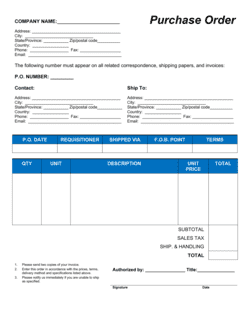
Gather the original purchase order and all related correspondence
Locate the original PO with its number, date, delivery terms, and any email or written amendments. These documents establish the agreed delivery date and the basis for cancellation.
💡 Screenshot or print all relevant email threads before sending the notice — sellers sometimes delete records once a dispute begins.
2
Enter the parties' full legal names and PO reference
Use the registered legal entity name for both buyer and seller — not trade names or abbreviations. Reference the exact PO number and date in the parties block.
💡 Cross-check the seller's legal name against the invoice or contract they signed — discrepancies in entity names can complicate any legal follow-up.
3
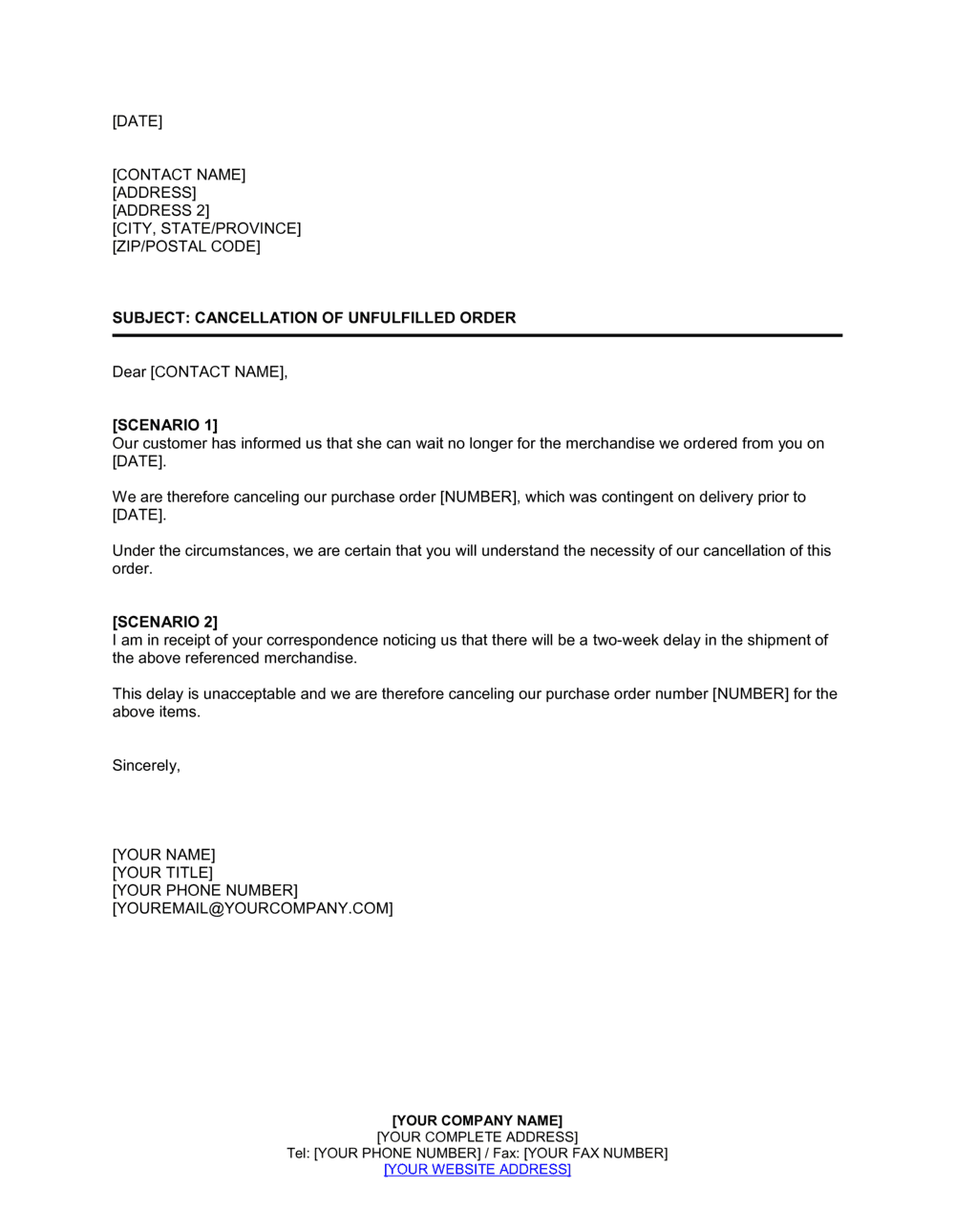
State the cancellation clearly and set an effective date
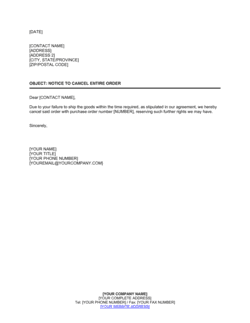
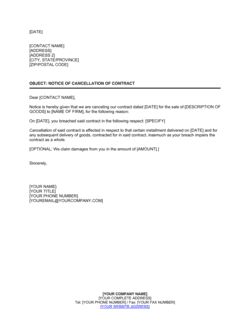
Write the operative cancellation clause using unambiguous language. Set the effective date as the date the notice is sent, or a specific future date if a short cure period applies.
💡 If your original PO included a 'time is of the essence' clause, reference it explicitly — it significantly strengthens your right to cancel without giving the seller additional time to perform.
4
Cite the specific ground for cancellation
Identify the missed delivery date, the seller's communication of non-performance, or the anticipatory breach by name. Quote the relevant delivery date from the PO and the current date to establish the gap.
💡 Attach the original PO delivery terms and any seller communications confirming delay as exhibits — this converts a disputed assertion into documented fact.
5
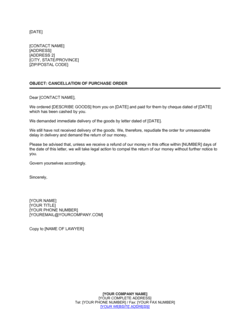
Include a specific refund demand with a deadline
State the total amount paid, the account or method of repayment, and a specific number of business days — typically 5 to 10 — for the seller to return the funds.
💡 A 7-business-day refund deadline is standard in most jurisdictions and is tight enough to prompt action without being so aggressive it triggers unnecessary disputes.
6
Address any goods in transit or partially completed
Decide in advance whether you will accept partial deliveries, reject them in full, or require the seller to retrieve them. State your decision clearly to avoid incurring storage or handling costs.
💡 If the goods are perishable or time-sensitive, specify that no acceptance will occur regardless of when delivery is tendered — otherwise, a delayed delivery may still be forced on you.
7
Add the reservation-of-rights clause and governing law
Include standard reservation-of-rights language and confirm the governing law matches the jurisdiction stated in the original PO or your standard procurement terms.
💡 If the seller is in a different country, check whether the UN Convention on Contracts for the International Sale of Goods (CISG) applies — it may affect your cancellation rights unless expressly excluded.
8
Have an authorized representative sign and send by tracked method
An officer or procurement manager with documented signing authority should execute the notice. Send by email with read receipt and by courier or certified mail to create a delivery record.
💡 Keep a timestamped copy of every transmission method used. In a dispute, the exact date the seller received the notice may determine whether they can still demand acceptance of a late delivery.