Notice of Delayed Shipment 2 Template

Free Word download β€’ Edit online β€’ Save & share with Drive β€’ Export to PDF

1 pageβ€’15–25 min to fillβ€’Difficulty: Standard
Learn more ↓
FreeNotice of Delayed Shipment 2 Template

At a glance

What it is
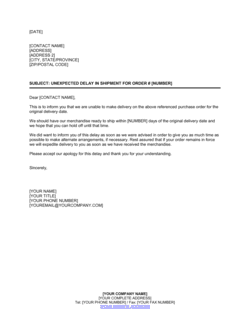
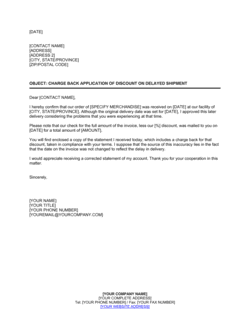
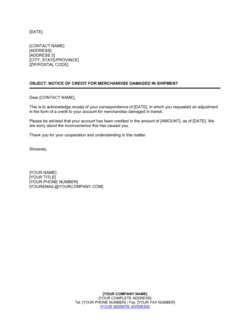
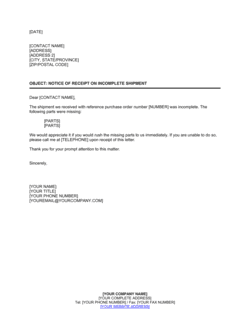
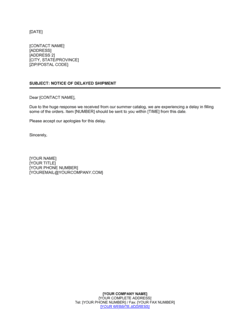
A Notice of Delayed Shipment is a formal business letter a seller or supplier sends to a customer to inform them that an order will not arrive by the originally confirmed delivery date. This free Word download gives you a ready-to-edit structure covering the reason for the delay, the revised delivery estimate, and the steps being taken to resolve the situation β€” exportable as PDF and sendable in minutes.
When you need it
Use it as soon as you become aware that a shipment will miss its committed delivery date β€” whether due to supplier delays, carrier disruptions, inventory shortfalls, or customs holds. Proactive communication before the deadline passes protects the customer relationship and reduces inbound inquiries.
What's inside
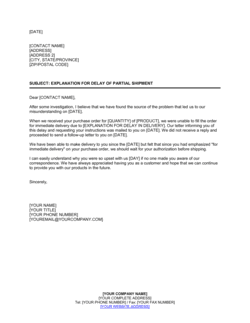
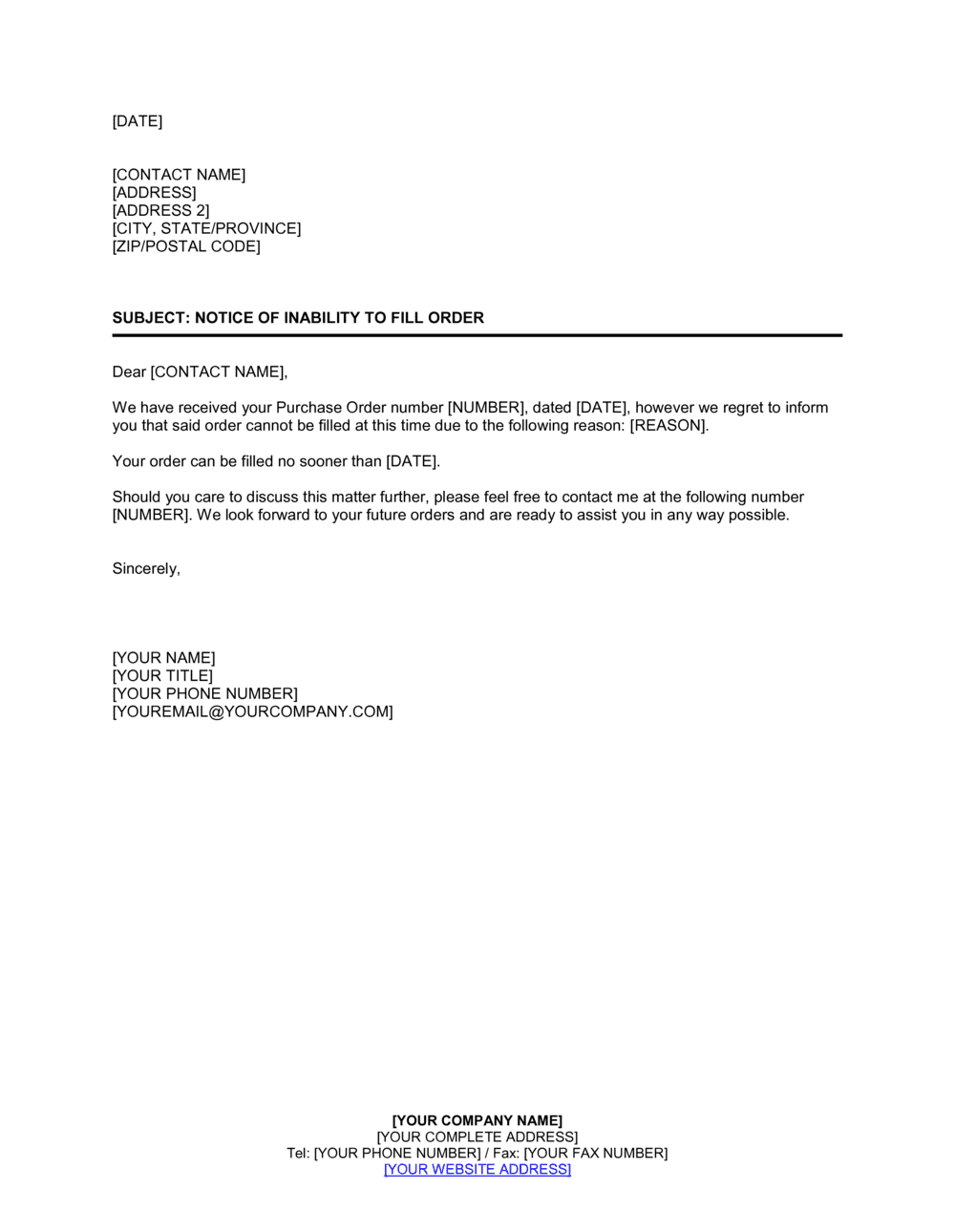
Recipient details and salutation, a clear statement of the delay and original delivery date, the reason for the disruption, a revised estimated delivery date, any remedial action being taken, an apology for the inconvenience, and sender contact information for follow-up.

What is a Notice of Delayed Shipment?

A Notice of Delayed Shipment is a formal business letter a seller, supplier, or logistics operator sends to a customer to communicate that an order will not arrive by the originally confirmed delivery date. It identifies the affected order by number, explains the specific cause of the delay, provides a revised estimated delivery date, and outlines the steps being taken to resolve the situation. Unlike a brief email update, a formal notice creates a documented record of the communication and demonstrates professionalism at a moment when the customer relationship is under pressure.

Why You Need This Document

Failing to notify customers of a shipment delay β€” or notifying them too late β€” is one of the fastest ways to turn a recoverable operational issue into a lost account. When a delivery date passes without explanation, customers assume the worst: that the order is lost, that the seller is unresponsive, or that the original commitment was made in bad faith. A timely, specific delay notice preempts all three assumptions. It also reduces inbound inquiry volume by giving customers the information they need before they have to ask for it. For B2B buyers, the notice provides documentation they can share internally to reschedule dependent activities. This template gives you a professionally structured letter you can complete in under ten minutes β€” with the right fields in the right order β€” so your team sends a consistent, credible message every time a shipment runs late.

Which variant fits your situation?

If your situation is…Use this template
First delay notice for a standard consumer or B2B orderNotice of Delayed Shipment 2
Follow-up notice when the revised delivery date also slipsNotice of Delayed Shipment (Second Notice)
Shipment is lost or unrecoverable and a replacement is neededNotice of Lost Shipment
Customer requests cancellation due to an unacceptable delayOrder Cancellation Letter
Delay caused by force majeure events requiring formal disclaimerForce Majeure Notice Letter
Proactively requesting delivery extension from a supplierRequest for Delivery Extension Letter
Notifying a customer of a partial shipment with remaining items pendingPartial Shipment Notification Letter

Common mistakes to avoid

❌ Delaying the delay notice

Why it matters: Informing a customer on or after the missed delivery date instead of proactively gives them no time to adjust their plans, and turns a manageable inconvenience into a crisis.

Fix: Send the notice as soon as your internal systems flag a shipment at risk β€” even if you do not have full certainty on the revised date yet.
❌ Providing a vague or overly optimistic revised date

Why it matters: An unrealistic revised date forces a second delay notice, which erodes trust far more than the original delay and often triggers cancellation requests.

Fix: Use a conservative estimate with a date range (e.g., 'between [DATE] and [DATE]') and build in buffer before publishing the revised EDD.

❌ Omitting the reason for the delay

Why it matters: A notice that says only 'your order is delayed' gives customers nothing to evaluate and makes the sender appear uninformed or evasive.

Fix: Include one to two factual sentences on the specific cause β€” carrier disruption, inventory shortage, or customs hold β€” even if the full picture is still developing.

❌ No named contact for follow-up

Why it matters: Directing an already-frustrated customer to a generic inbox or call queue increases wait time and reduces confidence that anyone is personally accountable for resolution.

Fix: Include a direct name, email, and phone number for a specific person who is briefed on the order and empowered to provide updates.

The 9 key clauses, explained

Header: Sender and recipient details

In plain language: Identifies who is sending the letter and who it is addressed to, including company names, addresses, and the date of the notice.

Sample language
[SENDER COMPANY NAME] | [ADDRESS] | [CITY, STATE, ZIP] | [DATE] To: [CUSTOMER NAME / COMPANY] [CUSTOMER ADDRESS]

Common mistake: Using a generic 'Dear Customer' salutation instead of the buyer's contact name β€” impersonal openers reduce trust at exactly the moment you are asking for patience.

Subject line

In plain language: A one-line identifier that references the order or PO number and clearly states the letter's purpose so the recipient can route and file it immediately.

Sample language
Subject: Notice of Shipment Delay β€” Order #[ORDER NUMBER] / PO #[PO NUMBER]

Common mistake: Omitting the order or PO number from the subject line, requiring the recipient to read the full letter before they can match it to a transaction in their system.

Opening acknowledgment

In plain language: States the purpose of the letter upfront β€” that the shipment for the referenced order is delayed β€” without burying the news in pleasantries.

Sample language
We are writing to inform you that your order #[ORDER NUMBER], originally scheduled for delivery on [ORIGINAL DELIVERY DATE], will be delayed.

Common mistake: Opening with a paragraph of apology before disclosing the delay. Recipients find it frustrating when the core information is not in the first two sentences.

Original delivery commitment

In plain language: States the date you originally confirmed the shipment would arrive, giving the customer a clear reference point for the extent of the delay.

Sample language
Your order was confirmed with an expected delivery date of [ORIGINAL DATE], based on our standard [X]-day shipping window from the order placement date of [ORDER DATE].

Common mistake: Omitting the original commitment date so the customer has no way to gauge how significant the delay is or whether it affects their planning.

Reason for the delay

In plain language: Explains the specific cause of the delay β€” supplier disruption, carrier transit exception, customs hold, or inventory shortage β€” in plain language without excessive technical jargon.

Sample language
This delay is the result of [REASON β€” e.g., 'an unexpected inventory shortage at our fulfillment center' / 'a carrier transit exception due to severe weather in [REGION]' / 'a customs clearance hold at [PORT]'].

Common mistake: Providing a vague reason like 'unforeseen circumstances' without any specifics. Customers accept delays far more readily when given a concrete, credible explanation.

Revised estimated delivery date

In plain language: States the new expected delivery date based on current information, making clear it is an estimate and subject to further updates if the situation changes.

Sample language
Based on the latest information available, we now expect your shipment to arrive on or before [REVISED DELIVERY DATE]. We will notify you immediately if this estimate changes.

Common mistake: Providing an overly optimistic revised date to placate the customer, only to require a second delay notice β€” which damages trust far more than an honest conservative estimate.

Remedial action being taken

In plain language: Describes the specific steps the sender is taking to resolve the delay and expedite delivery, demonstrating accountability and proactive effort.

Sample language
We are [REMEDIAL ACTION β€” e.g., 'working directly with our carrier to prioritize your shipment' / 'sourcing replacement inventory from an alternate supplier' / 'processing your order through an expedited fulfillment channel'].

Common mistake: Skipping this clause entirely and treating the notice as a pure information dump. Customers want to know what you are doing to fix the problem, not just that a problem exists.

Apology and goodwill statement

In plain language: Offers a direct, professional apology for the inconvenience without excessive self-criticism, and may offer a goodwill gesture such as a discount or expedited shipping on a future order.

Sample language
We sincerely apologize for the inconvenience this delay causes to your operations. As a gesture of goodwill, we would like to offer [GESTURE β€” e.g., 'complimentary expedited shipping on your next order' / 'a [X]% credit toward a future purchase'].

Common mistake: Making a goodwill offer that is not honored or tracked internally β€” a promised discount that never appears on a future invoice turns a delay into a broken promise.

Contact information and closing

In plain language: Provides a direct contact β€” name, phone, and email β€” for the customer to reach if they have questions, and closes the letter with a professional sign-off.

Sample language
If you have any questions or wish to discuss this matter further, please contact [NAME] at [EMAIL] or [PHONE NUMBER]. We appreciate your patience and your continued business. Sincerely, [SENDER NAME] [TITLE] [COMPANY NAME]

Common mistake: Providing only a general customer-service email or phone queue instead of a named contact. A direct contact signals that someone is personally accountable for resolving the situation.

How to fill it out

  1. 1

    Enter sender and recipient details

    Fill in your company's name and address at the top, then add the customer's full name or company name and billing or shipping address. Include the date of the letter.

    πŸ’‘ Use the recipient's accounts-payable or purchasing contact name if the delay affects a B2B order β€” not just the company name.

  2. 2

    Add the order and PO reference numbers

    Include your internal order number and the customer's purchase order number in the subject line so the letter can be matched to the transaction immediately on receipt.

    πŸ’‘ If the customer provided a PO number at time of order, always reference it β€” corporate buyers route documents by PO number, not your internal order ID.

  3. 3

    State the original delivery date

    Write the date you originally committed to in your order confirmation or shipping notification. This gives the customer a clear reference for the scope of the delay.

    πŸ’‘ Pull the exact date from your order confirmation email rather than estimating β€” a discrepancy undermines your credibility.

  4. 4

    Describe the reason for the delay specifically

    Replace the placeholder with the actual cause β€” carrier exception, customs hold, supplier backorder, or production delay. Keep it factual and brief: one to two sentences.

    πŸ’‘ Avoid blaming a third party in language that implies the situation is entirely out of your hands β€” customers expect you to own the resolution regardless of cause.

  5. 5

    Enter the revised estimated delivery date

    Provide your best current estimate of the new delivery date. If you are uncertain, provide a date range rather than a precise date to avoid needing a third notice.

    πŸ’‘ Add two to three business days of buffer to your internal estimate before writing it in the letter β€” conservative estimates protect against a second delay notice.

  6. 6

    Describe the remedial steps you are taking

    Write one to two sentences on the specific actions underway β€” expediting with the carrier, sourcing from an alternate warehouse, or escalating the customs clearance.

    πŸ’‘ Only include actions that are actually in progress β€” promises you cannot keep compound the damage of the original delay.

  7. 7

    Add contact details and sign off

    Replace the placeholder contact information with a named individual's email and direct phone number. Sign with your full name and title.

    πŸ’‘ Set an internal reminder to follow up with the customer on the revised delivery date whether or not the shipment arrives on time.

Frequently asked questions

What is a notice of delayed shipment?

A notice of delayed shipment is a formal letter or email a seller sends to a customer to communicate that an order will not arrive by the originally confirmed delivery date. It identifies the affected order, explains the reason for the delay, provides a revised delivery estimate, and describes what the sender is doing to resolve the situation. Sending it promptly is standard practice in professional supply chain and customer-service operations.

When should a notice of delayed shipment be sent?

Send it as soon as you identify that a shipment will miss its committed delivery date β€” ideally one to three business days before the original date, not after. Proactive notification gives the customer time to adjust their production schedule, project timeline, or personal plans. Waiting until the delivery date passes significantly increases the risk of order cancellation and reputational damage.

What information must a delayed shipment notice include?

At minimum: the order or PO reference number, the original delivery date, the specific reason for the delay, the revised estimated delivery date, the steps being taken to resolve the situation, a direct apology, and a named contact for follow-up questions. Missing any of these leaves the customer without the information they need to make decisions and often generates a flood of inbound inquiries.

Does a delayed shipment notice need to be signed?

No signature is required for this type of operational business letter to be effective. It should, however, be sent from or attributed to a named individual with direct contact information β€” a named sender carries more accountability than a generic 'Customer Service Team' sign-off and reduces follow-up inquiry volume.

How is a delayed shipment notice different from a shipping confirmation?

A shipping confirmation is sent when goods leave the warehouse and provides a tracking number and original estimated delivery date. A delayed shipment notice is sent after a confirmed delivery date has been or is about to be missed, updating the customer on the new timeline and the reason for the change. They serve opposite functions: one sets the expectation, the other manages a deviation from it.

Can a delayed shipment notice be sent by email instead of a formal letter?

Yes. In most B2C and many B2B contexts, email is the standard and preferred channel for shipment delay notifications because it reaches the customer faster. For formal B2B contracts that specify written notice requirements, a PDF attachment of the signed letter sent by email typically satisfies both the speed and formality requirements.

What should I offer the customer when notifying them of a delay?

A goodwill gesture appropriate to the length and impact of the delay is standard practice β€” complimentary expedited shipping on the delayed or a future order, a percentage discount on the affected order, or a store credit. The gesture should be proportionate: a one-day delay warrants a smaller gesture than a two-week delay that disrupts a customer's production schedule. Always ensure the offer is tracked internally so it is actually honored.

What if the revised delivery date also slips?

Send a second delay notice immediately upon learning of the additional slip, following the same structure. A second notice should be more specific about root cause and resolution timeline than the first, and should include a more meaningful goodwill gesture. At this stage, also proactively address whether the customer may cancel the order and what the refund or credit process looks like if they choose to do so.

How this compares to alternatives

vs Shipping Confirmation Letter

A shipping confirmation is sent when an order leaves the warehouse and sets the original delivery expectation. A delayed shipment notice is sent when that expectation cannot be met and provides a revised timeline. Use the shipping confirmation on dispatch and the delay notice only when a confirmed date will be missed.

vs Order Cancellation Letter

An order cancellation letter terminates the transaction entirely and initiates a refund or credit. A delayed shipment notice preserves the order and sets a new delivery date. Send the delay notice first; issue a cancellation letter only if the customer requests it after receiving the delay notice or if the goods become unavailable.

vs Notice of Delayed Shipment (First Notice)

Both templates serve the same core purpose but differ in tone and detail. A second notice is issued when the revised date from the first notice also slips; it requires a fuller explanation, a stronger apology, and typically a more substantial goodwill gesture to maintain the customer relationship.

vs Force Majeure Notice Letter

A force majeure notice is used when an extraordinary, unforeseeable event β€” flood, strike, or pandemic β€” legally excuses performance under a contract. A delayed shipment notice is an operational communication with no contractual excuse function. Use the force majeure notice when the delay is covered by a force majeure clause in the underlying contract; use the shipment delay notice for all other situations.

Industry-specific considerations

Retail and E-commerce

High order volumes mean delay notices are often batched by carrier exception report; consumer protection regulations in some jurisdictions require timely notification of delivery changes.

Manufacturing and Wholesale

B2B buyers use delivery dates to schedule production runs; a delayed shipment notice allows them to reschedule labor and minimize downtime caused by missing components.

Construction and Trades

Material delays on a job site can cascade through a project schedule; a formal notice gives the contractor documentation to support delay claims with their own client.

Food and Beverage

Perishable goods and strict sell-by windows make delayed shipment notices time-critical; notices often include information on whether the goods remain viable for the revised delivery date.

Template vs pro β€” what fits your needs?

PathBest forCostTime
Use the templateAny business needing to notify customers of a delayed order quickly and professionallyFree5–10 minutes per notice
Template + professional reviewHigh-value B2B accounts or situations where the delay may trigger contractual penalties$0–$100 (account manager or legal team review)30–60 minutes
Custom draftedDelay situations involving force majeure claims, regulatory reporting requirements, or pending litigation$200–$800 (lawyer or contract specialist)1–3 days

Glossary

Estimated Delivery Date (EDD)
The revised date by which the sender expects the shipment to reach the recipient, given the current delay.
Transit Exception
A carrier-generated event flag indicating a shipment has encountered an unexpected problem β€” weather, mechanical failure, or customs hold β€” that will affect the original delivery date.
Force Majeure
An unforeseeable event outside a party's control β€” such as a natural disaster, port strike, or pandemic β€” that excuses delay in contractual performance.
Purchase Order (PO) Number
The buyer's reference number for the transaction, included in the notice so both parties can match the delay notification to the correct order.
Carrier
The transportation company (e.g., FedEx, UPS, DHL, or a freight broker) responsible for physically moving the goods from origin to destination.
Back Order
A situation where a product is temporarily out of stock but will be fulfilled once inventory is replenished, causing a shipment delay.
Customs Hold
A delay imposed by border control authorities while a shipment undergoes inspection or awaits documentation clearance for import or export.
Proof of Shipment
Documentation β€” such as a bill of lading or carrier tracking number β€” confirming that goods have been handed to the carrier, used to establish when the delay began.

Part of your Business Operating System

This document is one of 3,000+ business & legal templates included in Business in a Box.

  • Fill-in-the-blanks β€” ready in minutes
  • 100% customizable Word document
  • Compatible with all office suites
  • Export to PDF and share electronically

Create your document in 3 simple steps.

From template to signed document β€” all inside one Business Operating System.
1
Download or open template

Access over 3,000+ business and legal templates for any business task, project or initiative.

2
Edit and fill in the blanks with AI

Customize your ready-made business document template and save it in the cloud.

3
Save, Share, Send, Sign

Share your files and folders with your team. Create a space of seamless collaboration.

Save time, save money, and create top-quality documents.

β˜…β˜…β˜…β˜…β˜…

"Fantastic value! I'm not sure how I'd do without it. It's worth its weight in gold and paid back for itself many times."

Managing Director Β· Mall Farm
Robert Whalley
Managing Director, Mall Farm Proprietary Limited
β˜…β˜…β˜…β˜…β˜…

"I have been using Business in a Box for years. It has been the most useful source of templates I have encountered. I recommend it to anyone."

Business Owner Β· 4+ years
Dr Michael John Freestone
Business Owner
β˜…β˜…β˜…β˜…β˜…

"It has been a life saver so many times I have lost count. Business in a Box has saved me so much time and as you know, time is money."

Owner Β· Upstate Web
David G. Moore Jr.
Owner, Upstate Web

Run your business with a system β€” not scattered tools

Stop downloading documents. Start operating with clarity. Business in a Box gives you the Business Operating System used by over 250,000 companies worldwide to structure, run, and grow their business.

Start freeΒ Β·Β No credit card required