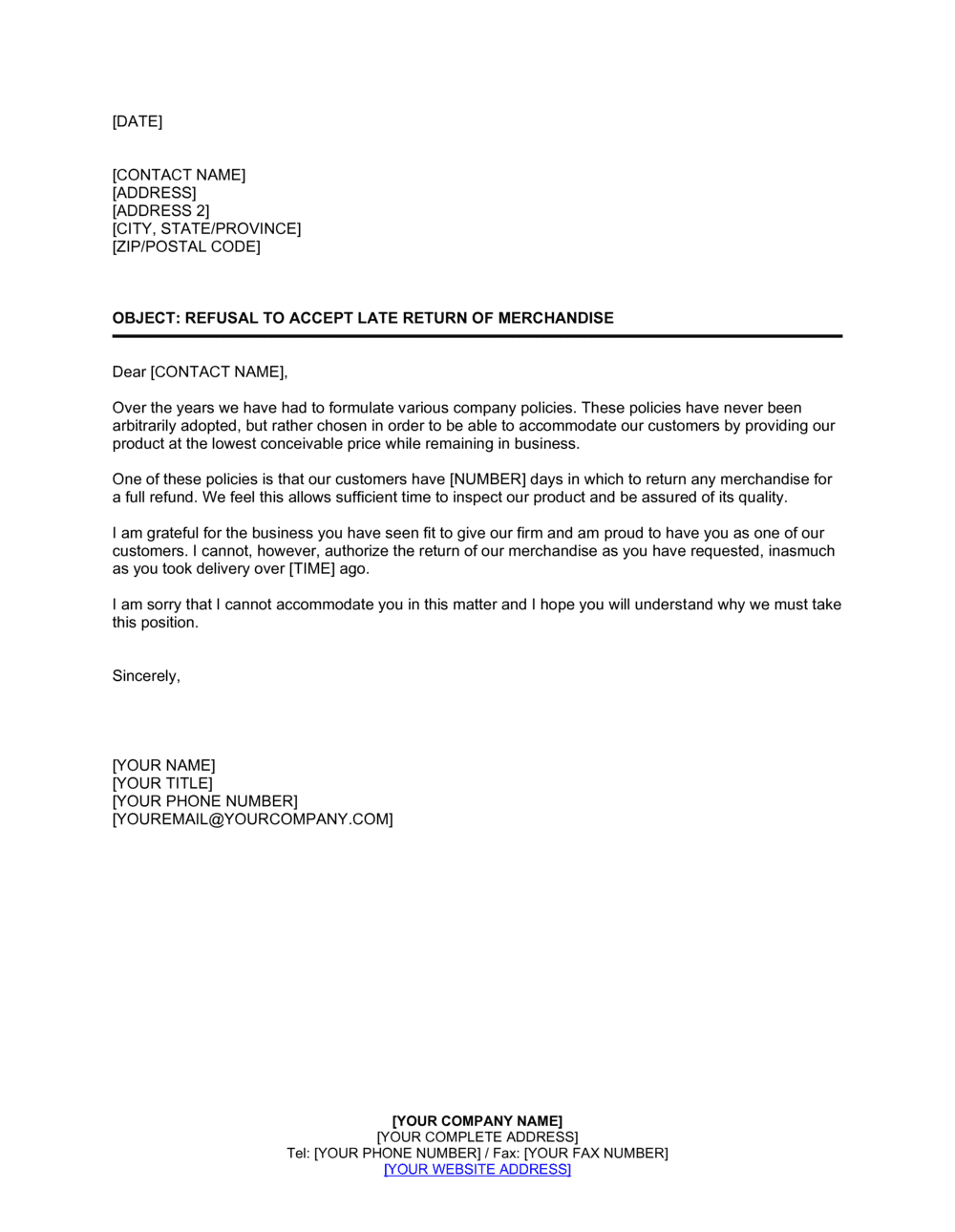
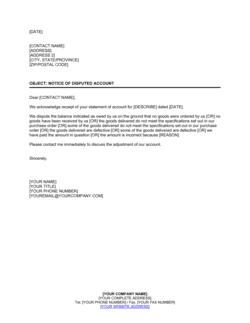
Refusal to Accept Late Return of Merchandise Template

Free Word download β€’ Edit online β€’ Save & share with Drive β€’ Export to PDF

1 pageβ€’20–30 min to fillβ€’Difficulty: Standardβ€’Signature requiredβ€’Legal review recommended
Learn more ↓
FreeRefusal to Accept Late Return of Merchandise Template

At a glance

What it is
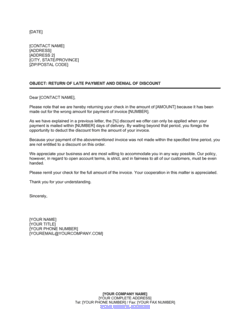
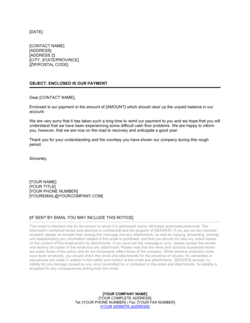
A Refusal To Accept Late Return Of Merchandise is a formal written letter a seller or retailer sends to a customer to decline a return request made outside the stated return window or in violation of the seller's published return policy. This free Word download gives you a professionally structured template you can edit online and export as PDF, clearly communicating the refusal while citing the applicable policy terms and maintaining the business relationship where possible.
When you need it
Use it whenever a customer submits a return request after the permitted return period has elapsed, after goods have been used or altered beyond resale condition, or when the request otherwise falls outside the terms of your posted return policy. It is equally appropriate for B2C retail, B2B wholesale, and e-commerce transactions.
What's inside
Seller and customer identification, reference to the original transaction, a clear statement of refusal with the policy basis for that refusal, an explanation of the applicable return window and conditions, and a professional closing that preserves goodwill where the business relationship warrants it.

What is a Refusal To Accept Late Return Of Merchandise?

A Refusal To Accept Late Return Of Merchandise is a formal written letter a seller sends to a customer to decline a return request that was submitted after the seller's published return window has closed or that otherwise falls outside the conditions of the seller's stated return policy. The letter identifies the original transaction, cites the specific policy provision that disqualifies the request, states the refusal clearly and without qualification, and documents the seller's position in a way that can be produced as evidence in a chargeback dispute, small claims proceeding, or consumer protection inquiry. Unlike an informal email reply, a properly structured refusal letter creates a permanent, signed record that the request was received, reviewed, and lawfully denied on documented grounds.

Why You Need This Document

Refusing a return verbally or through an unstructured email leaves your business exposed on two fronts simultaneously. First, payment processors adjudicating chargeback disputes require sellers to submit documentary evidence that a return was refused for a legitimate, disclosed policy reason β€” sellers without a signed, dated letter citing the specific return window expiry lose chargebacks at a significantly higher rate, even when the policy is squarely in their favor. Second, consumer protection authorities in several US states, Canadian provinces, and EU member countries require sellers to demonstrate that a return policy was disclosed and applied consistently; ad hoc, undocumented refusals can be characterized as arbitrary and trigger regulatory complaints. A standardized refusal letter closes both gaps in under 15 minutes, ensures your customer-facing team communicates the refusal consistently, and signals to customers that the policy is enforced systematically β€” reducing the social pressure that leads to unwarranted exceptions and the goodwill erosion that follows them.

Which variant fits your situation?

If your situation is…Use this template
Refusing a return because the merchandise has been used or damaged by the customerRefusal To Accept Return Of Damaged Merchandise
Declining a return request where no receipt or proof of purchase was providedRefusal To Accept Return Without Receipt
Offering a partial credit or store credit instead of a full refundCounter Offer To Return Merchandise
Accepting the late return as a goodwill exception with conditionsAuthorization To Return Merchandise
Notifying a buyer that returned goods arrived in unacceptable conditionNotice Of Non-Conforming Goods
Responding to a customer dispute over a denied return via formal correspondenceResponse To Customer Complaint Letter
Documenting the original sale terms that include the return windowSales Receipt

Common mistakes to avoid

❌ Using vague or hedged refusal language

Why it matters: Payment processors reviewing chargeback disputes treat an ambiguous refusal as a potential acceptance. The seller loses the chargeback even when the policy clearly applies.

Fix: State the refusal in one direct sentence β€” 'Your return request is declined' β€” before any explanation or context is provided.

❌ Omitting the exact return deadline date

Why it matters: Citing only the policy length ('30 days') without calculating the specific expiry date leaves the customer room to dispute the timeline and forces the seller to prove the math later.

Fix: Calculate the delivery date plus the policy window and state the resulting deadline date explicitly in the letter, alongside the date the return request was received.

❌ No evidence that the policy was disclosed at purchase

Why it matters: Several US states, Canadian provinces, and EU member states require sellers to disclose return policies at or before the point of sale. A refusal based on an undisclosed policy may be unenforceable and trigger a consumer protection complaint.

Fix: Reference the specific disclosure method β€” website URL, order confirmation, receipt language β€” and maintain records of customer acceptance for e-commerce transactions.

❌ Failing to address the disposition of returned merchandise already in the seller's possession

Why it matters: If the customer shipped the goods back before receiving the refusal, and the seller does not communicate a hold plan, disposing of the merchandise without notice can generate a secondary conversion claim.

Fix: Add a clause stating the hold period and return-shipping terms whenever goods have already been received at the seller's facility before the refusal is issued.

❌ Over-apologizing or implying the decision may be reconsidered

Why it matters: Phrases like 'we hope you understand our difficult position' or 'please feel free to contact us to discuss further' are routinely read by customers as an opening to escalate or apply social pressure.

Fix: Close with a professional but final statement. Acknowledge the inconvenience once, confirm the decision is final, and direct further questions to a specific named contact β€” not an open-ended invitation to negotiate.

❌ Sending the refusal without a signed authorized representative

Why it matters: An unsigned letter lacks the formal authority of a business communication and may be dismissed as informal in a chargeback or small claims proceeding.

Fix: Always have the letter signed by an owner, manager, or authorized customer service representative, with their title clearly stated below the signature.

The 9 key clauses, explained

Parties and Transaction Reference

In plain language: Identifies the seller and the customer by full name and contact information, and references the specific transaction β€” order number, invoice number, or purchase date β€” to which the refusal applies.

Sample language
This letter is addressed to [CUSTOMER FULL NAME] of [CUSTOMER ADDRESS] regarding Order No. [ORDER NUMBER] / Invoice No. [INVOICE NUMBER] dated [PURCHASE DATE], issued by [SELLER LEGAL NAME] ('Company').

Common mistake: Omitting the specific order or invoice number. Without a transaction reference, the customer can claim the letter does not apply to their purchase, complicating any subsequent chargeback or dispute.

Statement of Refusal

In plain language: Clearly and unambiguously states that the return request is denied, so there is no room for the customer to interpret the letter as a conditional acceptance or a request for more information.

Sample language
We regret to inform you that we are unable to accept the return of the above-referenced merchandise submitted on [REQUEST DATE]. Your return request is respectfully declined.

Common mistake: Using hedged language like 'we may not be able to process' instead of a direct refusal. Ambiguous refusals are routinely treated as open offers in chargeback disputes, placing the burden of proof on the seller.

Policy Basis for Refusal

In plain language: Cites the specific return policy provision β€” including the return window duration and the date the window closed β€” that makes the request ineligible.

Sample language
Our return policy, accepted at the time of purchase, permits returns within [X] days of the delivery date. Your merchandise was delivered on [DELIVERY DATE], establishing a return deadline of [DEADLINE DATE]. Your return request was received on [REQUEST DATE], which is [X] days beyond this deadline.

Common mistake: Referencing the policy in general terms without calculating and stating the exact expiry date. Courts and payment processors expect sellers to show the specific date the window closed, not just quote the policy length.

Condition of Merchandise (if applicable)

In plain language: Notes any additional disqualifying factors beyond timing β€” such as the item being opened, used, altered, or missing original packaging β€” that independently justify the refusal.

Sample language
We additionally note that the merchandise appears to have been opened and used, and is no longer in its original, resaleable condition as required by our return policy. Items returned in this condition are not eligible for a refund or exchange regardless of the timing of the request.

Common mistake: Raising the condition issue as the primary basis for refusal when timeliness alone is sufficient. Leading with multiple grounds can create the impression that the seller is searching for reasons to refuse, which undermines credibility in a dispute.

Reference to Policy Disclosure

In plain language: Confirms that the return policy was disclosed to the customer at the time of purchase β€” on the receipt, order confirmation, website, or store signage β€” to establish that the customer had prior notice.

Sample language
Our return policy is published on our website at [URL], printed on your order confirmation email dated [DATE], and displayed at our point of sale. By completing your purchase, you acknowledged acceptance of these terms.

Common mistake: Asserting the policy was disclosed without being able to produce evidence of disclosure. If the policy was buried in fine print or never affirmatively accepted by the customer, a consumer protection authority may side with the customer.

Acknowledgment of Customer's Position

In plain language: Briefly acknowledges the customer's return request and, where appropriate, expresses understanding of their situation β€” without conceding the merits of their request or creating any implied obligation.

Sample language
We understand your request and appreciate that you have been a valued customer. While we are unable to accommodate a return in this instance, we remain committed to providing quality service on all future transactions.

Common mistake: Over-apologizing in a way that implies the company may reconsider. Phrases like 'we are sorry we cannot help this time' signal that goodwill exceptions are possible and invite escalation.

Alternative Resolution Offered (Optional)

In plain language: If the seller chooses to offer a partial accommodation β€” such as store credit, a discount on a future purchase, or a referral to a manufacturer warranty β€” this clause documents that offer clearly and limits it to a one-time exception.

Sample language
As a courtesy and without waiving our policy rights, we are pleased to offer you a store credit of $[AMOUNT] valid for [X] days from the date of this letter. This offer is a one-time accommodation and does not constitute a modification of our return policy.

Common mistake: Offering a partial accommodation without a written expiry date or 'one-time exception' qualifier. An undocumented exception becomes the basis for the customer's claim that the policy does not apply to them in the future.

Preservation of Rights

In plain language: States that the seller reserves all legal and contractual rights, that the letter does not waive any claim or defense, and that the seller's return policy remains in full force and effect.

Sample language
Nothing in this letter shall be construed as a waiver of any right or remedy available to [SELLER LEGAL NAME] under applicable law or the terms of sale. Our return policy remains in full force and effect with respect to this and all future transactions.

Common mistake: Omitting a reservation-of-rights clause entirely. Without it, a seller's goodwill gestures or extended correspondence can be characterized as modifying or waiving the return policy in a subsequent dispute.

Next Steps and Contact Information

In plain language: Tells the customer what happens next β€” whether the merchandise will be returned to them at their expense, held for a defined period, or disposed of β€” and provides a contact point for any further questions.

Sample language
The merchandise will be held at our facility until [DATE], after which it will be returned to you at your expense or disposed of in accordance with applicable law. For questions regarding this decision, please contact [NAME] at [EMAIL / PHONE].

Common mistake: Failing to state what happens to the physical merchandise. If goods are disposed of or destroyed without notice, the seller may face a separate claim for conversion or destruction of property.

How to fill it out

  1. 1

    Enter seller and customer identification details

    Fill in the seller's full legal business name, address, and contact information, and the customer's full name and billing or shipping address. Use the legal entity name, not a trade name, to ensure the letter is attributable to the correct contracting party.

    πŸ’‘ Match the seller name exactly to the name on the original invoice β€” discrepancies invite the customer to claim the refusal came from a different entity.

  2. 2

    Reference the specific transaction

    Insert the order number, invoice number, and purchase date from the original transaction. If the sale was made in person, include the receipt number and store location.

    πŸ’‘ Attach a copy of the original invoice or order confirmation to the letter to make the transaction reference self-contained and chargeback-ready.

  3. 3

    State the refusal clearly and without qualifiers

    Use the statement-of-refusal clause to communicate the denial in direct, unambiguous terms. Do not hedge or use conditional language that could be read as an invitation to negotiate.

    πŸ’‘ Read the refusal sentence aloud. If it could be interpreted as anything other than a firm 'no,' rewrite it.

  4. 4

    Calculate and insert the exact return window dates

    Enter the delivery date, the policy's return window in days, the deadline date, and the date the customer's request was received. The gap between the deadline and the request date should be stated explicitly in the policy-basis clause.

    πŸ’‘ Use the carrier's confirmed delivery date β€” not the ship date β€” as the start of the return window. This is the date most courts and payment processors will apply.

  5. 5

    Document how and where the policy was disclosed

    Identify the specific location where the return policy was disclosed to this customer: the website URL, the order confirmation email date, or the in-store signage. Include the date of disclosure if available.

    πŸ’‘ If your e-commerce platform requires customers to check a box accepting return policy terms at checkout, screenshot that confirmation and keep it on file for every order.

  6. 6

    Decide whether to offer an alternative accommodation

    Determine whether a one-time goodwill gesture β€” store credit, exchange, or discount β€” is warranted for relationship management. If so, complete the optional accommodation clause with a specific dollar amount and expiry date. If not, delete the clause entirely.

    πŸ’‘ Reserve accommodations for high-value customers or situations where chargeback risk is elevated β€” not as a default. Offering something to every refused return trains customers to dispute first.

  7. 7

    State the disposition of the physical merchandise

    Specify whether the merchandise is already in the customer's possession or has been received at the seller's facility. If received, state the hold period and what happens at the end of it β€” return shipping at the customer's cost or disposal.

    πŸ’‘ Set the hold period to a minimum of 14 days to give the customer reasonable time to arrange pickup or return shipping, reducing any claim that goods were improperly disposed of.

  8. 8

    Sign, date, and retain a copy

    Have an authorized representative of the seller sign and date the letter. Send it via a method that provides delivery confirmation β€” certified mail, courier, or a read-receipt email β€” and retain a timestamped copy in the customer's transaction file.

    πŸ’‘ A signed, dated letter sent via trackable delivery creates a complete paper trail for a payment processor chargeback inquiry β€” the most common downstream risk of a return refusal.

Frequently asked questions

What is a refusal to accept late return of merchandise letter?

A refusal to accept late return of merchandise letter is a formal written communication from a seller to a customer declining a return request that was submitted after the seller's stated return window has expired. It documents the refusal in writing, cites the applicable policy terms, identifies the specific transaction, and creates a paper trail that protects the seller in the event of a chargeback, small claims action, or consumer protection complaint.

Is a seller legally required to accept a late return?

In most US states, sellers are not legally required to accept returns at all unless the goods are defective, unless a return is promised at the point of sale, or unless a specific consumer protection statute mandates it β€” such as California's requirement to post a return policy conspicuously. In Canada and the UK, statutory implied warranties and consumer protection legislation create minimum return rights for defective goods, but not for change-of-mind or late returns. Sellers who clearly disclose a written return policy at the point of sale are generally entitled to enforce it, including refusing late requests.

Can a customer dispute a refused return through a credit card chargeback?

Yes β€” a customer can initiate a chargeback regardless of the seller's return policy, and the seller must then prove to the card network that the refusal was justified. A signed refusal letter citing the specific policy, the transaction date, the return window expiry, and the date of the late request is the primary evidence a seller uses to win a chargeback dispute. Sellers without this documentation lose chargebacks at a significantly higher rate even when the policy is clearly in their favor.

Does the refusal letter need to be sent by certified mail?

No specific delivery method is legally required in most jurisdictions, but using a method that provides delivery confirmation β€” certified mail, courier with tracking, or email with read receipt β€” is strongly advisable. Delivery confirmation timestamps the refusal, prevents the customer from claiming they never received it, and provides the documentation a payment processor or court expects to see in a dispute.

What should the letter say about merchandise the customer already shipped back?

If the customer has already returned the physical goods before receiving the refusal, the letter must address what happens to those goods. Specify a hold period β€” typically 14 to 30 days β€” during which the customer may arrange return shipping at their own expense. State clearly that if no arrangements are made by the deadline, the merchandise will be disposed of in accordance with applicable law. Failing to address this creates exposure to a secondary claim for improperly disposing of the customer's property.

Can a seller offer partial compensation while still refusing the return?

Yes β€” a seller may choose to offer store credit, a discount on a future purchase, or an exchange as a goodwill accommodation while still declining the return itself. If doing so, the letter should explicitly state that the accommodation is a one-time exception, does not modify the return policy, and carries an expiry date. This protects the seller from the customer using the exception as precedent for future out-of-policy requests.

Does a posted return policy protect a seller against all consumer claims?

A clearly disclosed return policy provides significant protection but does not override statutory consumer rights. In most jurisdictions, goods that are defective, not as described, or unfit for their intended purpose carry implied warranty rights that no return policy can eliminate. A seller can lawfully refuse a late return for a non-defective, as-described product, but cannot refuse a return or refund for genuinely defective goods simply by pointing to a return window.

What is the difference between this letter and a return authorization document?

A return merchandise authorization (RMA) or authorization to return merchandise document grants the customer permission to send goods back and initiates the refund or exchange process. This refusal letter does the opposite β€” it formally declines to open a return and communicates that no credit or exchange will be issued. Both documents reference the same transaction, but they produce opposite outcomes and serve different legal purposes.

Should this letter be reviewed by a lawyer before sending?

For straightforward late-return refusals involving consumer transactions under a clearly posted policy, a well-completed template is typically sufficient. Legal review is advisable when the transaction value is significant, the customer has explicitly threatened legal action or a regulatory complaint, the goods are subject to consumer protection legislation with specific return rights, or the business operates in multiple jurisdictions with differing consumer law requirements.

How this compares to alternatives

vs Authorization To Return Merchandise

An authorization to return merchandise grants the customer permission to send goods back and triggers the refund or exchange process. This refusal letter produces the opposite outcome, formally closing the return request without issuing any credit. Use the authorization when the return is eligible; use this refusal letter when it is not.

vs Response To Customer Complaint Letter

A response to a customer complaint addresses a broader service or product dissatisfaction and may offer various remedies including refunds, replacements, or apologies. This refusal letter is narrowly focused on declining a specific return request based on policy timing, not resolving a general complaint. Use the complaint response when the issue is about service quality; use this letter when the sole issue is a late or ineligible return.

vs Notice Of Non-Conforming Goods

A notice of non-conforming goods is sent by a buyer to a seller, informing the seller that delivered goods do not meet contract specifications and invoking the buyer's right to reject or return them. This refusal letter flows in the opposite direction β€” from seller to buyer β€” declining the buyer's attempt to return merchandise. The two documents address opposite sides of a return dispute.

vs Sales Receipt

A sales receipt documents the completed transaction, records the sale terms, and typically restates the return policy at the point of sale. It is the foundational document that establishes the return window the refusal letter later enforces. The receipt creates the obligation; this letter enforces it when the customer acts outside its terms.

Industry-specific considerations

Retail and E-commerce

High return-request volume makes a standardized refusal template essential for consistent policy enforcement and efficient chargeback documentation across thousands of transactions.

Manufacturing and Wholesale

B2B return windows are often shorter than retail β€” 7 to 15 days net β€” and late returns of bulk merchandise can involve significant restocking and resale loss, making formal written refusals critical for contract enforcement.

Consumer Electronics

High chargeback rates and manufacturer warranty overlaps make documented return refusals especially important; the letter should distinguish between the seller's return policy and the manufacturer's warranty pathway.

Fashion and Apparel

Seasonal inventory cycles make late returns particularly damaging; a formal refusal letter supports enforcement of strict return windows tied to end-of-season and clearance designations.

Jurisdictional notes

United States

No federal law mandates a general right of return for non-defective goods, but several states β€” including California, New York, and Florida β€” require retailers to conspicuously post a return policy or be subject to a default statutory right. Sellers who fail to disclose a policy at the point of sale may be required to accept returns regardless of timing. The FTC's Mail and Telephone Order Rule imposes specific refund obligations for direct-mail and online orders that sellers cannot override with a return policy alone.

Canada

Provincial consumer protection legislation β€” including Ontario's Consumer Protection Act and Quebec's Consumer Protection Act β€” creates mandatory return and refund rights for certain categories of consumer contracts, including internet agreements and direct agreements, that cannot be waived by a return policy. For standard retail transactions, a clearly posted and disclosed return policy is generally enforceable. Quebec consumers have specific cooling-off rights for distance contracts that sellers must account for separately.

United Kingdom

The Consumer Rights Act 2015 gives UK consumers a 30-day right to reject faulty goods for a full refund, which cannot be overridden by a seller's return policy. For distance and online sales, the Consumer Contracts Regulations 2013 provide a 14-calendar-day cooling-off period for change-of-mind returns β€” a right sellers cannot contractually exclude. A refusal letter should distinguish clearly between a late return under the seller's voluntary policy and a return within a statutory right period.

European Union

The EU Consumer Rights Directive grants consumers a minimum 14-day withdrawal right for distance and off-premises contracts β€” meaning online and phone orders β€” during which sellers cannot refuse returns regardless of their posted policy. This right applies across all member states, though some countries extend the period. Returns outside this statutory window may be refused under a clearly posted policy. Any refusal letter for EU consumers should confirm that the statutory withdrawal period has expired before citing a voluntary policy return window.

Template vs lawyer β€” what fits your deal?

PathBest forCostTime
Use the templateRetail and e-commerce businesses refusing standard late returns under a clearly posted policy for transactions under $2,500Free10–15 minutes per letter
Template + legal reviewBusinesses facing a customer who has threatened legal action, a regulatory complaint, or a pattern of chargeback disputes$150–$400 for a one-hour attorney review1–2 business days
Custom draftedHigh-value B2B transactions, regulated industries, multi-jurisdiction consumer protection exposure, or class-action risk$500–$2,000+3–7 business days

Glossary

Return Window
The specified number of days after purchase or delivery during which a customer may submit a valid return request.
Return Policy
A seller's published rules governing which items may be returned, the time frame allowed, the condition required, and the refund or exchange method offered.
Proof of Purchase
Documentation β€” typically a receipt, order confirmation, or invoice β€” that establishes a transaction took place and records the date of sale.
Restocking Fee
A charge the seller deducts from a refund to cover the cost of inspecting, repackaging, and returning goods to saleable inventory.
Chargeback
A forced reversal of a credit card payment initiated by the cardholder's bank, often triggered when a customer disputes a purchase they could not return through normal channels.
Final Sale
A transaction explicitly designated at the point of sale as non-returnable and non-refundable, typically used for clearance, perishable, or customized goods.
Merchantability
An implied warranty under commercial law that goods sold are fit for their ordinary purpose β€” relevant when a seller argues returned goods no longer meet resale standards.
Mitigation of Damages
The legal principle that an injured party must take reasonable steps to limit their losses β€” relevant in return disputes where a seller must document why a late return increases their harm.
Statute of Limitations
The maximum period after a transaction during which a legal claim may be brought β€” relevant to consumer protection claims arising from a refused return.
Consumer Protection Law
Federal, state, or provincial legislation that sets minimum standards for refunds, returns, and disclosure of return policies to consumers.

Part of your Business Operating System

This document is one of 3,000+ business & legal templates included in Business in a Box.

  • Fill-in-the-blanks β€” ready in minutes
  • 100% customizable Word document
  • Compatible with all office suites
  • Export to PDF and share electronically

Create your document in 3 simple steps.

From template to signed document β€” all inside one Business Operating System.
1
Download or open template

Access over 3,000+ business and legal templates for any business task, project or initiative.

2
Edit and fill in the blanks with AI

Customize your ready-made business document template and save it in the cloud.

3
Save, Share, Send, Sign

Share your files and folders with your team. Create a space of seamless collaboration.

Save time, save money, and create top-quality documents.

β˜…β˜…β˜…β˜…β˜…

"Fantastic value! I'm not sure how I'd do without it. It's worth its weight in gold and paid back for itself many times."

Managing Director Β· Mall Farm
Robert Whalley
Managing Director, Mall Farm Proprietary Limited
β˜…β˜…β˜…β˜…β˜…

"I have been using Business in a Box for years. It has been the most useful source of templates I have encountered. I recommend it to anyone."

Business Owner Β· 4+ years
Dr Michael John Freestone
Business Owner
β˜…β˜…β˜…β˜…β˜…

"It has been a life saver so many times I have lost count. Business in a Box has saved me so much time and as you know, time is money."

Owner Β· Upstate Web
David G. Moore Jr.
Owner, Upstate Web

Run your business with a system β€” not scattered tools

Stop downloading documents. Start operating with clarity. Business in a Box gives you the Business Operating System used by over 250,000 companies worldwide to structure, run, and grow their business.

Free Forever PlanΒ Β·Β No credit card required