Late Payment Letter Template

Free Word download β€’ Edit online β€’ Save & share with Drive β€’ Export to PDF

1 pageβ€’20–25 min to fillβ€’Difficulty: Standard
Learn more ↓
FreeLate Payment Letter Template

At a glance

What it is
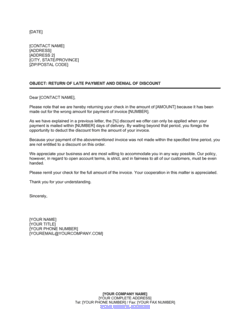
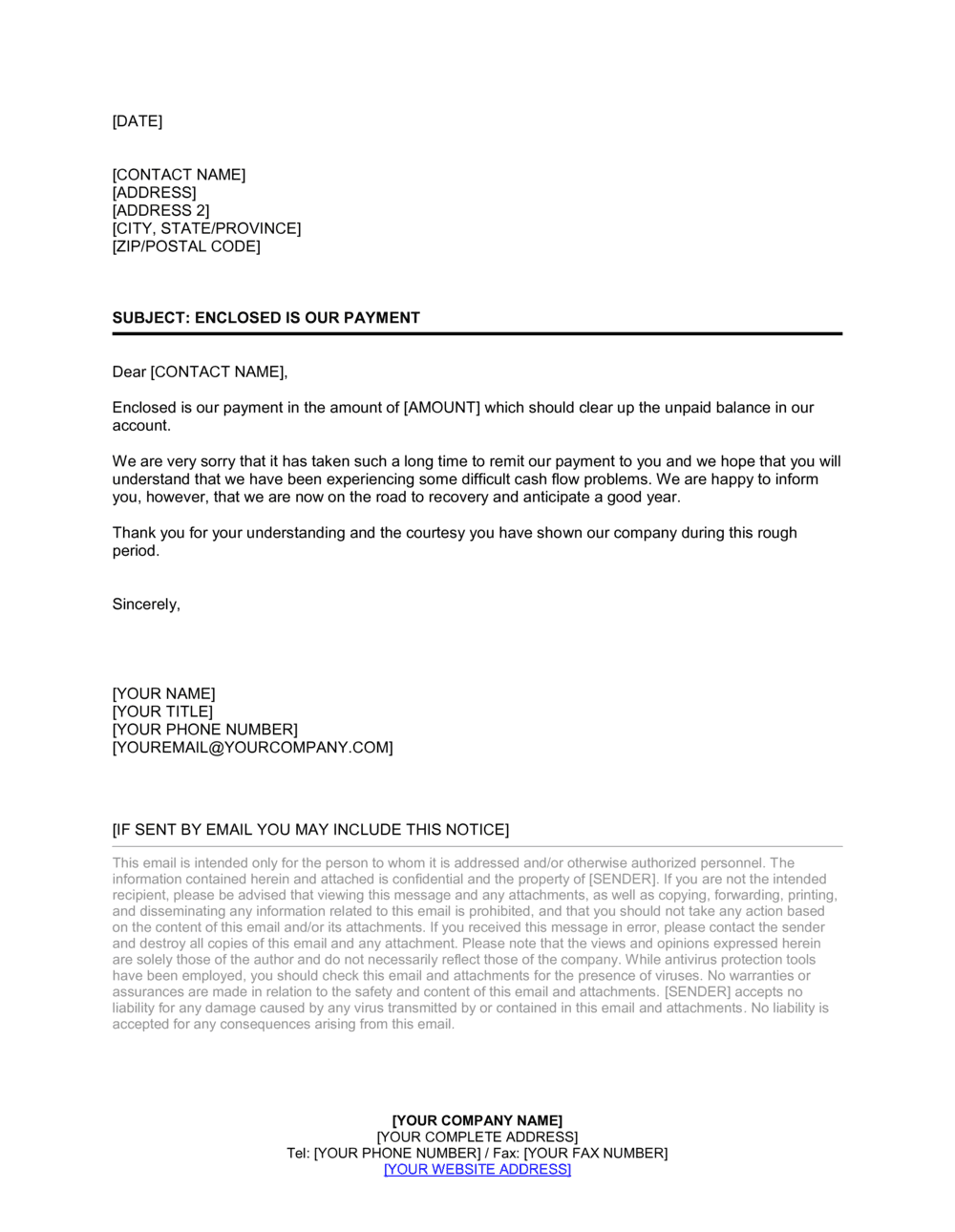
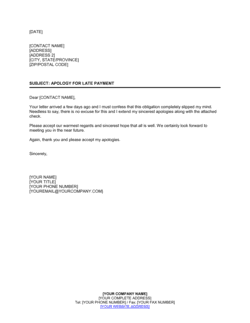
A Late Payment Letter is a formal written notice a business sends to a customer or client whose invoice has not been paid by the agreed due date. This free Word download gives you a ready-to-edit template you can personalise in minutes and send by email or post β€” covering the outstanding balance, the original due date, any accrued late fees, and the action you require from the recipient.
When you need it
Send it as soon as an invoice passes its due date without payment β€” typically after an initial courtesy reminder has gone unanswered for 7 to 14 days. It is also the appropriate document to use before escalating to a collections agency or initiating legal proceedings.
What's inside
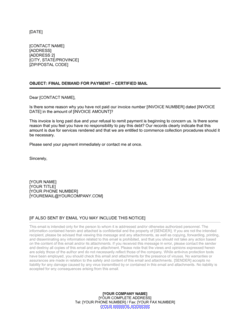
Sender and recipient details, reference to the original invoice number and amount, the number of days overdue, accrued late fees or interest, a firm payment deadline, accepted payment methods, and a clear statement of consequences if payment is not received.

What is a Late Payment Letter?

A Late Payment Letter is a formal written notice a business or individual sends to a customer, client, or debtor whose invoice has not been paid by the agreed due date. It identifies the specific overdue invoice by number and amount, states how many days the payment is outstanding, calculates any accrued late fees, sets a firm new deadline for payment, and describes the consequences β€” service suspension, collections referral, or legal action β€” if the debt remains unpaid. Unlike an informal payment reminder, a late payment letter creates a documented paper trail that supports escalation to collections or court if required.

Why You Need This Document

Allowing overdue invoices to age without formal written notice is one of the most common and costly mistakes in small business cash flow management. Without a dated, documented letter on file, you have no proof you made a reasonable effort to collect before escalating β€” which matters both to collections agencies and to small claims courts. Beyond the legal record, a professional late payment letter signals to the debtor that you are tracking the debt and intend to act on it, which consistently produces faster payment than informal follow-up. This template gives you a ready-to-send, properly structured letter in under ten minutes β€” so you can act on the first missed deadline rather than waiting until the debt is 90 days old and statistically harder to recover.

Which variant fits your situation?

If your situation is…Use this template
First notice β€” invoice is 7 to 14 days overdueLate Payment Letter (First Notice)
Second notice β€” invoice is 30 or more days overdueSecond Overdue Payment Letter
Final notice before collections or legal actionFinal Demand Letter
Formal legal demand citing statutory interestDemand Letter for Payment
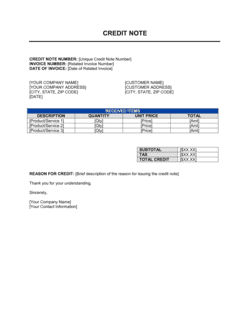
Reversing or partially crediting an overdue amountCredit Note
Confirming a payment plan with a debtorPayment Agreement
Notifying a client work is paused due to non-paymentWork Suspension Notice

Common mistakes to avoid

❌ Using vague payment deadlines

Why it matters: Phrases like 'as soon as possible' or 'at your earliest convenience' are routinely treated as optional. Recipients prioritise invoices with specific dates over those with open-ended requests.

Fix: Always state a specific calendar date β€” 'Please remit payment by [DATE]' β€” and make it prominent in the letter body and subject line.
❌ Sending to the wrong contact

Why it matters: A late payment letter sent to a project manager or account contact rather than accounts payable can sit unread while your deadline passes and your AR ages further.

Fix: Confirm the correct AP email address before sending. For larger clients, copy both the AP contact and your primary account contact.

❌ Threatening consequences you will not enforce

Why it matters: Debtors who receive repeated letters threatening legal action or collections referrals β€” with no follow-through β€” learn that the threats are hollow and deprioritise your invoices.

Fix: Only state consequences you intend to act on. If you say you will refer the matter to collections after 14 days, do it.

❌ Omitting payment instructions from the letter

Why it matters: A debtor who cannot immediately see how to pay is given a practical reason to defer action. Every barrier to payment, however small, adds days to your collection time.

Fix: Include complete payment instructions β€” bank details, portal link, or cheque instructions β€” directly in the body of every late payment letter you send.

The 9 key clauses, explained

Sender and Recipient Details

In plain language: Identifies the business sending the letter and the customer receiving it, including full names, addresses, and contact information.

Sample language
[YOUR COMPANY NAME] | [ADDRESS] | [CITY, STATE, ZIP] | [EMAIL] | [PHONE] β€” To: [CLIENT FULL NAME / COMPANY], [CLIENT ADDRESS]

Common mistake: Sending to a general company address instead of the accounts-payable contact. The letter sits in a generic inbox and is never actioned.

Date and Subject Line

In plain language: States the date the letter is issued and a clear subject line referencing the specific invoice, making the purpose of the letter immediately obvious.

Sample language
Date: [DATE] | Subject: Overdue Payment Notice β€” Invoice #[INVOICE NUMBER] β€” $[AMOUNT] Due [ORIGINAL DUE DATE]

Common mistake: Omitting the invoice number and amount from the subject line. Recipients who manage multiple vendors cannot quickly locate the relevant record, causing further delay.

Opening Statement

In plain language: Opens politely but directly by stating that payment has not been received and identifying the invoice by number, date, and original amount.

Sample language
We are writing to notify you that Invoice #[INVOICE NUMBER], issued on [INVOICE DATE] for $[AMOUNT], remains unpaid as of [TODAY'S DATE] β€” [X] days past the due date of [DUE DATE].

Common mistake: Opening with an apology or excessive softening language. A professional, direct opening sets the appropriate tone and conveys that the request is serious.

Outstanding Balance Summary

In plain language: Breaks down the total amount now owed, including the original invoice amount, any agreed late fees or interest, and the new total due.

Sample language
Original invoice amount: $[AMOUNT] | Late fee ([X]% per month): $[FEE] | Total now due: $[TOTAL]

Common mistake: Omitting the late-fee calculation entirely. If your original agreement included a late fee, failing to state it means you are less likely to collect it.

Payment Deadline

In plain language: States a specific, firm date by which payment must be received β€” not vague language like 'as soon as possible' or 'promptly'.

Sample language
Please arrange payment in full by [SPECIFIC DATE β€” e.g., 14 days from today's date].

Common mistake: Setting a deadline of 'immediately' or 'upon receipt.' Recipients treat these as non-binding and respond more slowly than to a specific calendar date.

Accepted Payment Methods

In plain language: Lists exactly how payment can be made β€” bank transfer details, online portal link, cheque payable to, or credit card β€” so the recipient has no practical barrier to paying.

Sample language
Payment may be made by: Bank transfer to [BANK NAME], Account: [ACCOUNT NUMBER], Routing: [ROUTING NUMBER], Ref: [INVOICE NUMBER] | or via our online payment portal at [URL].

Common mistake: Leaving payment instructions off the letter entirely, assuming the recipient still has the original invoice. Include them every time β€” a self-contained letter gets paid faster.

Consequence Statement

In plain language: Clearly states what action the sender will take if payment is not received by the stated deadline β€” escalating to a collections agency, suspending services, or initiating legal proceedings.

Sample language
If payment is not received by [DATE], we reserve the right to refer this matter to a collections agency and/or initiate legal proceedings to recover the outstanding amount, including any associated costs.

Common mistake: Threatening consequences you have no intention of following through on. Recipients who receive multiple identical letters with no follow-up learn to ignore them.

Dispute Resolution Invitation

In plain language: Invites the recipient to contact the sender directly if they believe the invoice is incorrect or if they need to discuss a payment arrangement, keeping the door open to resolution before escalation.

Sample language
If you believe this notice has been sent in error, or if you wish to discuss a payment arrangement, please contact [NAME] at [EMAIL / PHONE] by [DATE].

Common mistake: Omitting a contact for disputes. Without one, recipients who have a genuine query simply ignore the letter rather than resolving it.

Professional Closing

In plain language: Closes the letter professionally, restating the urgency without hostility, and includes the sender's name, title, and signature block.

Sample language
We value our business relationship and hope to resolve this matter promptly. Yours sincerely, [NAME] | [TITLE] | [COMPANY NAME]

Common mistake: Closing with aggressive or threatening language beyond the stated consequence. An unprofessional tone can damage the relationship and, if proceedings follow, may be used against the sender.

How to fill it out

  1. 1

    Enter your business details and the client's billing contact

    Add your company name, address, phone, and email at the top. In the recipient block, use the client's legal entity name and, where known, the name of their accounts-payable contact rather than a general address.

    πŸ’‘ Call ahead to confirm the AP contact's name and email before sending β€” addressed letters are opened and actioned faster than generic ones.

  2. 2

    Reference the original invoice precisely

    Enter the invoice number, the original issue date, and the original amount exactly as they appear on the invoice. Discrepancies between the letter and the invoice give the recipient grounds to delay.

    πŸ’‘ Attach a copy of the original invoice to the letter so the recipient has everything they need in one email or envelope.

  3. 3

    Calculate the days overdue and any late fees

    Count the calendar days from the due date to today and enter the figure. If your original contract or invoice included a late-fee clause, calculate the fee and add it to the outstanding balance summary.

    πŸ’‘ Only charge late fees that were explicitly agreed in writing β€” either in your contract, your terms of service, or on the original invoice. Unilateral late fees are difficult to enforce.

  4. 4

    Set a specific payment deadline

    Choose a deadline that is firm but realistic β€” 7 to 14 days from the date of the letter is standard for a first or second notice. Enter the exact calendar date, not a relative phrase.

    πŸ’‘ Send the letter on a Monday or Tuesday. Letters sent late in the week are more likely to be deferred to 'next week' and forgotten.

  5. 5

    Include full payment instructions

    Add your bank account details, payment portal URL, or cheque payable-to instructions directly in the letter. Do not assume the recipient still has the original invoice.

    πŸ’‘ If you use an online payment platform (e.g., Stripe, PayPal, QuickBooks Payments), include a direct payment link β€” this alone can cut average collection time by several days.

  6. 6

    State the escalation consequence clearly

    Write one clear sentence describing what you will do if the deadline passes without payment β€” collections referral, service suspension, or legal action. Only state what you are genuinely prepared to do.

    πŸ’‘ If this is a first notice, a softer consequence (service suspension or a second formal notice) is appropriate. Reserve collections or legal action language for the second or final notice.

  7. 7

    Send and record the correspondence

    Send by email with read receipt and, for significant amounts, follow up with a printed copy sent by recorded post. Log the send date and method in your AR records.

    πŸ’‘ Create a follow-up task in your calendar for the day after the deadline so you act on non-response immediately rather than letting more time pass.

Frequently asked questions

What is a late payment letter?

A late payment letter is a formal written notice sent by a business to a customer whose invoice has not been paid by the agreed due date. It states the outstanding amount, the number of days overdue, any accrued late fees, a firm new payment deadline, and the consequences of continued non-payment. It is a standard step in the accounts-receivable collections process, sitting between an initial payment reminder and a formal demand letter.

When should I send a late payment letter?

Send a first late payment letter 7 to 14 days after the invoice due date, assuming an initial courtesy reminder has gone unanswered. A second, firmer notice is appropriate at 30 days overdue. A final demand letter should follow at 60 days if earlier notices have been ignored. Acting quickly matters β€” the probability of collecting a debt drops significantly after 90 days outstanding.

Can I charge late fees in a late payment letter?

You can charge late fees only if they were agreed in advance β€” either in your original contract, your terms and conditions, or on the face of the invoice. Unilaterally adding fees that were never agreed is unlikely to be enforceable. If your agreements do include a late-fee clause, calculate the fee accurately and state it as a separate line item in the letter.

Does a late payment letter need to be signed?

No signature is required for a late payment letter to be effective. It is a business communication, not a legally binding contract. However, sending it on company letterhead with a named sender and title adds credibility and is more likely to prompt a response than an anonymous or informal notice.

What is the difference between a late payment letter and a demand letter?

A late payment letter is an earlier-stage, professionally worded notice requesting payment and giving the recipient an opportunity to respond. A demand letter β€” sometimes called a final demand β€” is a formal legal communication issued when earlier notices have failed, explicitly stating that legal action will follow if payment is not received by a specific date. A late payment letter typically precedes a demand letter in the collections sequence.

How many late payment letters should I send before taking further action?

Two to three letters is the standard sequence for most businesses: a first notice at 7–14 days overdue, a second firmer notice at 30 days, and a final demand at 60 days. Sending more than three letters without escalating signals that your threats are not credible. If three notices are ignored, refer the matter to a collections agency or consult a lawyer about small claims or civil action.

Should I send a late payment letter by email or post?

Email is the fastest and most traceable option for most B2B debts β€” use a read-receipt request and save a copy of the sent message. For significant amounts or before legal escalation, follow up with a printed copy sent by recorded post. Having proof of delivery strengthens your position if the matter proceeds to court or collections.

What tone should a late payment letter use?

Professional, direct, and factual β€” not aggressive or apologetic. State the facts (invoice number, amount, days overdue), give a clear deadline, and explain the consequences of non-payment calmly. Hostile language can damage the client relationship and, if legal proceedings follow, may be used against you. A firm, business-like tone is more effective than an emotional one.

Can a late payment letter be used before filing a small claims case?

Yes β€” and in many jurisdictions a formal written demand is a prerequisite to filing a small claims or civil claim. Sending a late payment letter or final demand and retaining proof of delivery demonstrates to the court that you made a reasonable attempt to resolve the matter before litigation. Check the specific procedural requirements in your jurisdiction before filing.

How this compares to alternatives

vs Payment Reminder

A payment reminder is a courteous, informal nudge sent before or just after a due date β€” typically a brief email noting the upcoming or recently missed deadline. A late payment letter is a formal, structured notice issued after the reminder has been ignored. It references specific invoice details, states late fees, sets a firm deadline, and describes escalation consequences. Use a reminder first; send the letter when it goes unanswered.

vs Demand Letter for Payment

A demand letter is the final formal escalation before legal action β€” it explicitly threatens litigation or collections proceedings if the debt is not settled by a specific date. A late payment letter is an earlier step that still assumes the recipient may respond cooperatively. Reserve demand letters for debts that are 60 or more days overdue and have survived at least two earlier notices.

vs Final Demand Letter

A final demand letter is the last written notice before a matter is referred to collections or court. It is more formal and more explicitly legal in tone than a standard late payment letter, and it is typically used when two or more earlier letters have been ignored. The late payment letter opens the collections sequence; the final demand closes it.

vs Payment Agreement

A payment agreement is a separate document used when the debtor acknowledges the debt but cannot pay in full immediately β€” it sets out an instalment schedule, any interest on deferred amounts, and the consequences of missing an instalment. It replaces further late payment letters when the debtor engages and negotiates a structured repayment plan.

Industry-specific considerations

Professional Services

Consultants and agencies send escalating late payment notices tied to project milestones, often pausing deliverables until overdue balances are cleared.

Construction and Trades

Contractors use late payment letters as a formal step before filing a mechanics lien β€” proper notice documentation is often a statutory prerequisite to lien rights.

Retail and Wholesale

Wholesalers and distributors manage high-volume AR ledgers where a standardised late payment letter template enables consistent, timely follow-up across many accounts.

Healthcare and Allied Health

Private practices and allied health providers send patient billing notices for out-of-pocket balances, with careful attention to privacy regulations governing how health-related debt is communicated.

Template vs pro β€” what fits your needs?

PathBest forCostTime
Use the templateAny business or individual chasing overdue invoices of any size as a first or second noticeFree5–10 minutes per letter
Template + professional reviewBusinesses with high-volume AR or those adding custom late-fee clauses and escalation language$50–$150 (accountant or office manager review)1–2 hours to standardise the template once
Custom draftedSignificant debts, disputed invoices, or matters approaching legal escalation requiring attorney-reviewed language$200–$600 (lawyer review or drafting)1–3 days

Glossary

Overdue Invoice
An invoice that has not been paid by its stated due date and remains outstanding on the sender's accounts-receivable ledger.
Accounts Receivable (AR)
Money owed to a business by its customers for goods or services already delivered but not yet paid for.
Late Fee
A pre-agreed charge added to an outstanding balance when payment is not received by the due date, typically a flat amount or a percentage per month.
Statutory Interest
Interest a creditor is legally entitled to charge on overdue commercial debts under applicable law, without needing a prior contractual agreement.
Days Outstanding
The number of calendar days that have elapsed since an invoice's due date without payment being received.
Payment Terms
The agreed conditions under which payment is due β€” such as Net 30 or Net 60 β€” established in the original contract or invoice.
Demand for Payment
A formal escalation letter, typically sent after multiple overdue notices, stating the exact amount owed and threatening legal action if not paid.
Collections Agency
A third-party firm engaged to recover unpaid debts on behalf of a creditor, usually for a percentage of the amount recovered.
Payment Plan
An agreed schedule allowing a debtor to repay an outstanding balance in instalments rather than a single lump sum.
Proof of Delivery
Documentation confirming that goods were delivered or services were rendered, used to support the validity of an overdue invoice if disputed.

Part of your Business Operating System

This document is one of 3,000+ business & legal templates included in Business in a Box.

  • Fill-in-the-blanks β€” ready in minutes
  • 100% customizable Word document
  • Compatible with all office suites
  • Export to PDF and share electronically

Create your document in 3 simple steps.

From template to signed document β€” all inside one Business Operating System.
1
Download or open template

Access over 3,000+ business and legal templates for any business task, project or initiative.

2
Edit and fill in the blanks with AI

Customize your ready-made business document template and save it in the cloud.

3
Save, Share, Send, Sign

Share your files and folders with your team. Create a space of seamless collaboration.

Save time, save money, and create top-quality documents.

β˜…β˜…β˜…β˜…β˜…

"Fantastic value! I'm not sure how I'd do without it. It's worth its weight in gold and paid back for itself many times."

Managing Director Β· Mall Farm
Robert Whalley
Managing Director, Mall Farm Proprietary Limited
β˜…β˜…β˜…β˜…β˜…

"I have been using Business in a Box for years. It has been the most useful source of templates I have encountered. I recommend it to anyone."

Business Owner Β· 4+ years
Dr Michael John Freestone
Business Owner
β˜…β˜…β˜…β˜…β˜…

"It has been a life saver so many times I have lost count. Business in a Box has saved me so much time and as you know, time is money."

Owner Β· Upstate Web
David G. Moore Jr.
Owner, Upstate Web

Run your business with a system β€” not scattered tools

Stop downloading documents. Start operating with clarity. Business in a Box gives you the Business Operating System used by over 250,000 companies worldwide to structure, run, and grow their business.

Start freeΒ Β·Β No credit card required