Notice of Payment 60 Days Past Due Template

Free Word download β€’ Edit online β€’ Save & share with Drive β€’ Export to PDF

1 pageβ€’15–25 min to fillβ€’Difficulty: Standard
Learn more ↓
FreeNotice of Payment 60 Days Past Due Template

At a glance

What it is
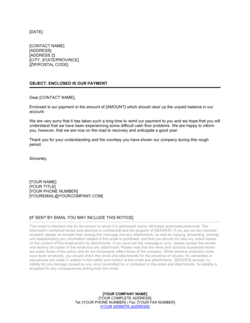
A Notice of Payment 60 Days Past Due is a formal collections letter sent to a customer whose invoice has gone unpaid for two full billing cycles. This free Word download gives you a structured, professional template you can edit online β€” restating the original invoice amount, adding accrued late fees, and clearly warning of next-step consequences β€” then export as PDF and send in minutes.
When you need it
Send it when a customer has not responded to your initial 30-day overdue reminder and the balance remains unpaid at the 60-day mark. It signals a formal escalation and puts the customer on notice before you hand the account to a collections agency or suspend services.
What's inside
Sender and recipient details, original invoice reference and amount, accrued late fees with a running total, a firm payment deadline, a clear statement of consequences such as collections referral or service suspension, and contact information for immediate resolution.

What is a Notice of Payment 60 Days Past Due?

A Notice of Payment 60 Days Past Due is a formal collections letter sent by a creditor to a customer whose invoice has gone unpaid for two full billing cycles past the original due date. It escalates beyond the initial 30-day reminder by restating the outstanding balance with all accrued late fees, setting a firm final payment deadline, and explicitly warning of next-step consequences β€” including referral to a collections agency, service suspension, or credit reporting. Unlike a casual follow-up email, this letter creates a documented paper trail that supports further legal or collections action if the customer continues to ignore the debt.

Why You Need This Document

An unpaid invoice at 60 days is no longer a billing oversight β€” it is a collections problem, and treating it as anything less costs you money twice: once in the lost cash flow and again when recovery becomes harder the longer you wait. Collection rates drop sharply after 90 days, and without a documented escalation sequence β€” 30-day notice, 60-day formal letter, 90-day final demand β€” collections agencies and small claims courts both expect to see evidence that you made systematic, written attempts to collect before escalating. Sending this letter by email and certified mail creates exactly that record. It also signals to the customer that your payment terms are enforced, which deters repeat delinquency across your entire client base. This template gives you a professional, specific letter ready to send in under 10 minutes β€” with every clause your collections sequence requires already in place.

Which variant fits your situation?

If your situation is…Use this template
First overdue notice at 30 days past dueNotice of Payment 30 Days Past Due
Final demand before legal action at 90 days past dueNotice of Payment 90 Days Past Due
Formal demand letter threatening immediate legal proceedingsDemand for Payment Letter
Notifying a customer that their account is suspended for non-paymentAccount Suspension Notice
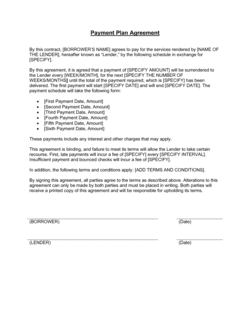
Confirming a payment plan agreed with an overdue customerPayment Plan Agreement
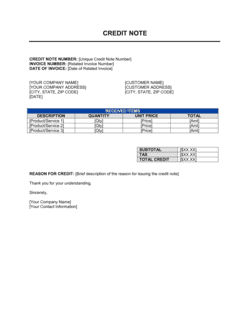
Issuing a credit note to reduce a disputed overdue balanceCredit Note

Common mistakes to avoid

❌ Using soft or apologetic opening language

Why it matters: Phrases like 'we understand you may have overlooked this' signal low urgency and invite further delay at a stage where the account is already two months delinquent.

Fix: Open directly with the account status: the invoice number, the amount, and the number of days past due. State clearly that this is a second and final notice.
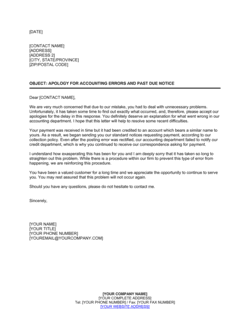
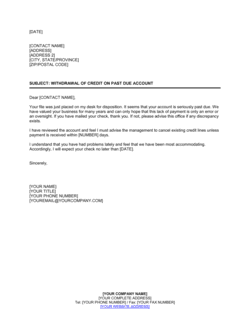
❌ Omitting accrued late fees from the stated balance

Why it matters: Collecting only the original invoice amount forfeits fees you are contractually owed and signals that your late-fee policy is not enforced.

Fix: Calculate fees at the rate stated in your contract or original invoice and display the itemized breakdown β€” original amount, fee month 1, fee month 2, total due.

❌ No specific payment deadline

Why it matters: Without a fixed calendar date, the customer has no actionable trigger, and you have no clean basis for escalating to collections or filing a claim.

Fix: State a deadline of 7 to 10 business days from the letter date and repeat it in both the deadline clause and the consequences clause.

❌ Threatening consequences you will not enforce

Why it matters: If you threaten collections referral at 60 days and then send another letter at 90 days without acting, the customer learns your warnings are empty and stops responding.

Fix: Only include consequences you will actually execute. If you plan to refer to collections at 90 days, say so β€” and follow through on schedule.

The 9 key clauses, explained

Sender and recipient header

In plain language: Identifies your business and the customer's billing contact with full names, addresses, and the date the letter is sent.

Sample language
[YOUR COMPANY NAME] | [ADDRESS] | [CITY, STATE ZIP] | [DATE] To: [CUSTOMER NAME / COMPANY] | Attn: [ACCOUNTS PAYABLE CONTACT] | [CUSTOMER ADDRESS]

Common mistake: Sending the letter to a general company email rather than the specific accounts-payable contact β€” it sits unread while the clock runs.

Subject line with invoice reference

In plain language: States the purpose of the letter and cites the specific invoice number and original due date so there is no ambiguity about which debt is overdue.

Sample language
Re: SECOND NOTICE β€” Invoice #[INVOICE NUMBER] Dated [INVOICE DATE] β€” Payment 60 Days Past Due

Common mistake: Omitting the invoice number in the subject line, forcing the recipient to search their records and creating an excuse for further delay.

Opening statement of account status

In plain language: Clearly states that the account is now 60 days past due and that this is a formal second notice, distinguishing it from routine reminders.

Sample language
Despite our previous notice dated [DATE OF 30-DAY NOTICE], we have not received payment for the above-referenced invoice. As of [CURRENT DATE], this balance is now 60 days past due.

Common mistake: Opening with an apology or overly soft language β€” phrases like 'we understand you may have overlooked' undercut urgency at a critical escalation point.

Itemized balance with accrued late fees

In plain language: Restates the original invoice amount, shows the late fees that have accrued, and gives the total amount now owed.

Sample language
Original Invoice Amount: $[ORIGINAL AMOUNT] Late Fee (30 days): $[FEE MONTH 1] Late Fee (60 days): $[FEE MONTH 2] Total Amount Now Due: $[TOTAL]

Common mistake: Stating only the original invoice amount and ignoring accrued fees β€” this understates what is owed and may require a corrected letter later.

Firm payment deadline

In plain language: Sets a specific calendar date by which full payment must be received to avoid the stated consequences.

Sample language
Full payment of $[TOTAL AMOUNT DUE] must be received by [DEADLINE DATE β€” e.g., 10 business days from letter date]. Payment after this date will not prevent the actions described below.

Common mistake: Setting a vague deadline like 'within a reasonable time' or 'as soon as possible' β€” a specific date is essential for any subsequent legal or collections action.

Warning of consequences

In plain language: Explicitly states what actions the sender will take if payment is not received by the deadline β€” collections referral, service suspension, credit reporting, or legal proceedings.

Sample language
If full payment is not received by [DEADLINE DATE], we reserve the right to (a) refer this account to a third-party collections agency, (b) suspend all services to your account, and (c) report this delinquency to commercial credit bureaus.

Common mistake: Threatening consequences you are not actually prepared to follow through on β€” empty threats undermine credibility and future enforcement.

Payment instructions

In plain language: Provides clear, complete instructions for how the customer can pay immediately β€” bank transfer details, online payment link, check payable-to, or phone number for card payment.

Sample language
To resolve this balance immediately, please remit payment via: Bank Transfer: [BANK NAME] | Account: [ACCOUNT NUMBER] | Routing: [ROUTING NUMBER] Online: [PAYMENT PORTAL URL] Check payable to: [COMPANY NAME] β€” please note Invoice #[INVOICE NUMBER] on the check.

Common mistake: Omitting payment instructions entirely and expecting the customer to look up prior correspondence β€” every friction point adds days to your collection time.

Invitation to contact for disputes or payment arrangements

In plain language: Gives the customer a named point of contact to call or email if they wish to dispute the charge or negotiate a payment plan, keeping the door open while maintaining firmness.

Sample language
If you believe this notice has been sent in error, or if you wish to discuss a payment arrangement, please contact [CONTACT NAME] at [PHONE NUMBER] or [EMAIL ADDRESS] before [DEADLINE DATE].

Common mistake: Providing no contact option β€” customers with legitimate disputes or cash-flow issues will simply ignore the letter rather than proactively reach out.

Closing and authorized signature block

In plain language: Closes the letter formally, states the sender's name and title, and includes a signature line to give the letter authority.

Sample language
We value our relationship with your business and hope to resolve this matter promptly. Sincerely, [SENDER NAME] [TITLE] [COMPANY NAME] [PHONE] | [EMAIL]

Common mistake: Closing with overly conciliatory language that contradicts the urgency of the notice β€” keep the tone professional and firm, not apologetic.

How to fill it out

  1. 1

    Enter your company details and the letter date

    Fill in your full legal business name, address, phone, and email in the sender header block. Enter today's date as the letter date.

    πŸ’‘ Use the same company name that appears on the original invoice to avoid any confusion about the sending entity.

  2. 2

    Identify the correct recipient and contact

    Enter the customer's legal entity name, billing address, and the name of their accounts-payable contact. If you have a PO number or account number on file, include it in the subject line.

    πŸ’‘ Call ahead to confirm the current AP contact before sending β€” personnel changes are a common reason overdue letters go unanswered.

  3. 3

    Reference the original invoice precisely

    Insert the invoice number, original invoice date, original due date, and the date your 30-day notice was sent. This creates a clear paper trail showing escalation.

    πŸ’‘ Attach a copy of the original invoice and the prior 30-day notice to the letter so the recipient has everything in one communication.

  4. 4

    Calculate and itemize the total amount now due

    Start with the original invoice amount, add the late fee for the first 30-day period, add the fee for the second 30-day period, and display the running total clearly.

    πŸ’‘ Reference your original contract or invoice for the agreed late-fee rate β€” typically 1.5% per month. If no rate was agreed, check the statutory rate in your jurisdiction.

  5. 5

    Set a specific payment deadline

    Pick a concrete calendar date β€” typically 7 to 10 business days from the letter date β€” and enter it in both the deadline clause and the consequences clause.

    πŸ’‘ Send the letter by both email and certified mail with return receipt. The certified mail timestamp is evidence of delivery if you later need it in court or collections.

  6. 6

    Confirm the consequences you are prepared to enforce

    Check each consequence listed β€” collections referral, service suspension, credit reporting β€” and remove any you are not actually prepared to act on. Only include credible threats.

    πŸ’‘ If you intend to suspend services, verify your contract gives you that right at 60 days and that doing so does not expose you to a breach-of-contract claim.

  7. 7

    Sign and send before close of business

    Have the letter signed by the owner, controller, or AR manager β€” not a junior staff member. Send on the same day you set as the letter date.

    πŸ’‘ Log the send date, method, and recipient in your AR aging report so you have a documented timeline if the account proceeds to collections or litigation.

Frequently asked questions

What is a 60-day past due notice?

A 60-day past due notice is a formal collections letter sent to a customer whose invoice remains unpaid 60 days after the original due date. It escalates from the initial 30-day reminder by restating the balance with accrued late fees, setting a firm final payment deadline, and warning of specific consequences β€” such as collections referral or service suspension β€” if payment is not received.

When should I send a 60-day past due notice?

Send it on or shortly after the 60th calendar day past the invoice due date, provided a 30-day notice was already sent and went unanswered. Waiting longer reduces the chance of recovery β€” collection rates drop significantly after 90 days of non-payment. Prompt escalation also demonstrates that your terms are enforced, which discourages repeat delinquency.

Can I charge late fees in a past due notice?

Yes, provided your original invoice or contract stated a late-fee rate. A common rate is 1.5% per month on the outstanding balance. If no rate was agreed in advance, you may be limited to the statutory interest rate in your jurisdiction. Always display the fee calculation as a clear itemized breakdown in the letter rather than adding a lump sum without explanation.

What consequences should I include in the notice?

Include only consequences you are prepared and contractually permitted to enforce. Common options are: referral to a third-party collections agency, suspension of services or credit terms, reporting the delinquency to commercial credit bureaus, and initiation of legal proceedings. Threatening all four when you plan to act on only one undermines your credibility if the matter reaches court.

Should I send the letter by email or certified mail?

Send it by both. Email creates an immediate timestamped record; certified mail with return receipt creates proof of delivery that is accepted as evidence in court and by collections agencies. If the account proceeds to a small claims filing or commercial collections, documented delivery at each stage β€” 30 days, 60 days, final demand β€” significantly strengthens your position.

What is the difference between a 60-day past due notice and a demand letter?

A 60-day past due notice is a collections escalation letter that still invites the customer to pay or contact you to resolve the matter. A demand letter is a final formal ultimatum β€” typically sent at 90 days or later β€” that states legal action will be filed by a specific date if payment is not received. The 60-day notice is the second step in a structured collections sequence; the demand letter is the last step before you file.

How many past due notices should I send before going to collections?

Most businesses follow a three-notice sequence: a 30-day reminder, a 60-day formal notice, and a 90-day final demand letter. After the final demand goes unanswered, referral to a collections agency or filing in small claims court is appropriate. Sending more than three notices without escalating signals that your terms are not enforced and encourages delinquent customers to delay indefinitely.

Can I use this template for a B2C customer as well as a B2B client?

Yes, though the tone and legal considerations differ slightly. For consumer debtors (B2C), the Fair Debt Collection Practices Act (FDCPA) in the United States restricts certain collection practices β€” the FDCPA applies primarily to third-party collectors, but some states extend similar rules to original creditors. For commercial debtors (B2B), fewer consumer-protection restrictions apply and the letter can be more direct. When in doubt about B2C compliance, have the letter reviewed by a local attorney before sending.

How this compares to alternatives

vs Notice of Payment 30 Days Past Due

The 30-day notice is the first formal reminder β€” it restates the original invoice and requests payment with a polite but firm tone. The 60-day notice is a direct escalation that adds accrued late fees and introduces specific consequences. Use the 30-day version first; switch to this template only after it goes unanswered.

vs Notice of Payment 90 Days Past Due

The 90-day notice is a final demand that typically states legal action or collections filing is imminent. The 60-day notice still leaves the door open for the customer to resolve the matter directly. Sending a 90-day notice without the 60-day escalation in between weakens your documented collections sequence.

vs Demand for Payment Letter

A demand letter is the last step before legal proceedings β€” it sets a hard deadline and states a specific legal remedy. The 60-day past due notice is a collections-sequence document that still invites resolution; the demand letter is a formal ultimatum. Use the demand letter only after the 60-day notice has been ignored.

vs Payment Plan Agreement

If a customer responds to the 60-day notice but cannot pay in full, a payment plan agreement formalizes an installment schedule. The 60-day notice triggers the conversation; the payment plan agreement documents the resolution. Both documents together create a complete paper trail from delinquency to settlement.

Industry-specific considerations

Professional Services

Consulting and agency firms use 60-day notices to enforce Net 30 retainer terms before pausing active client engagements.

Construction and Trades

Contractors reference the overdue balance alongside potential mechanic's lien filing rights, which adds legal weight to the escalation.

SaaS and Subscription Software

Subscription businesses tie the notice directly to a service-suspension date, making the consequence immediate and operationally tangible for the customer.

Wholesale and Distribution

Distributors include a credit-hold notice alongside the past due letter, cutting off future orders until the balance is cleared.

Template vs pro β€” what fits your needs?

PathBest forCostTime
Use the templateSmall businesses and freelancers managing standard B2B or B2C collections in-houseFree10 minutes per letter
Template + professional reviewBusinesses adding jurisdiction-specific late-fee language or service-suspension clauses to an existing contract$50–$150 (paralegal or accountant review)1–2 hours
Custom draftedHigh-value commercial debts, regulated industries, or accounts where litigation is the expected next step$200–$600 (attorney drafted)1–3 days

Glossary

Days Past Due (DPD)
The number of calendar days an invoice remains unpaid beyond its stated due date.
Late Fee
A charge added to the original invoice amount for each period β€” typically monthly β€” that payment is not received past the due date.
Accrued Interest
The cumulative late fee or interest amount that has built up since the original invoice due date.
Collections Referral
The act of transferring an unpaid account to a third-party debt collection agency, which then pursues payment on the creditor's behalf.
Service Suspension
Temporary termination of access to a product or service until an overdue balance is paid in full.
Demand Letter
A formal written notice requiring payment or action by a specific deadline, often the final step before legal proceedings.
Aging Report
An accounts-receivable report that groups outstanding invoices by how long they have been unpaid β€” typically 0–30, 31–60, 61–90, and 90+ days.
Net 30 / Net 60
Payment terms stating the full invoice amount is due 30 or 60 days after the invoice date.
Charge-Off
An accounting action in which a creditor writes off an uncollectible debt as a loss after exhausting collection efforts.
Written Notice
Formal communication delivered in writing β€” by letter, email, or certified mail β€” that creates a documented record of the notification.

Part of your Business Operating System

This document is one of 3,000+ business & legal templates included in Business in a Box.

  • Fill-in-the-blanks β€” ready in minutes
  • 100% customizable Word document
  • Compatible with all office suites
  • Export to PDF and share electronically

Create your document in 3 simple steps.

From template to signed document β€” all inside one Business Operating System.
1
Download or open template

Access over 3,000+ business and legal templates for any business task, project or initiative.

2
Edit and fill in the blanks with AI

Customize your ready-made business document template and save it in the cloud.

3
Save, Share, Send, Sign

Share your files and folders with your team. Create a space of seamless collaboration.

Save time, save money, and create top-quality documents.

β˜…β˜…β˜…β˜…β˜…

"Fantastic value! I'm not sure how I'd do without it. It's worth its weight in gold and paid back for itself many times."

Managing Director Β· Mall Farm
Robert Whalley
Managing Director, Mall Farm Proprietary Limited
β˜…β˜…β˜…β˜…β˜…

"I have been using Business in a Box for years. It has been the most useful source of templates I have encountered. I recommend it to anyone."

Business Owner Β· 4+ years
Dr Michael John Freestone
Business Owner
β˜…β˜…β˜…β˜…β˜…

"It has been a life saver so many times I have lost count. Business in a Box has saved me so much time and as you know, time is money."

Owner Β· Upstate Web
David G. Moore Jr.
Owner, Upstate Web

Run your business with a system β€” not scattered tools

Stop downloading documents. Start operating with clarity. Business in a Box gives you the Business Operating System used by over 250,000 companies worldwide to structure, run, and grow their business.

Start freeΒ Β·Β No credit card required