- Bulk Sale
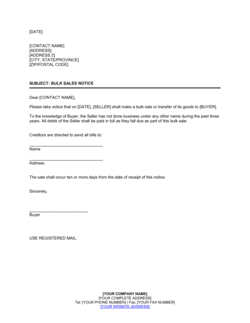
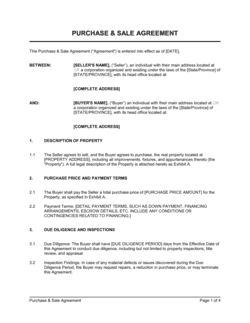
- A transfer of a major portion of a business's inventory or assets in a single transaction outside the ordinary course of that business's trade.
- Bulk Sales Law
- Legislation — historically Article 6 of the Uniform Commercial Code in the US — requiring sellers to notify creditors before a bulk transfer so creditors can protect their interests.
- Asset Schedule
- A detailed list attached to the agreement identifying every item of inventory or property being sold, including descriptions, quantities, and agreed values.
- Encumbrance
- Any lien, mortgage, security interest, or other claim against an asset that may affect the buyer's ability to take clear title.
- Representations and Warranties
- Factual statements made by each party — such as clear title and absence of undisclosed liabilities — that are relied upon by the other party and give rise to indemnification rights if false.
- Indemnification
- A contractual obligation requiring one party to compensate the other for specified losses, claims, or liabilities arising from a breach of the agreement.
- Closing
- The date and event at which all conditions are satisfied, documents are exchanged, payment is made, and title to the assets transfers from seller to buyer.
- Clear Title
- Ownership of an asset free from any liens, encumbrances, or competing claims that would prevent a valid transfer to the buyer.
- Successor Liability
- The legal risk that a buyer of business assets inherits the seller's obligations — including tax debts, employment claims, or product liability — depending on how the transaction is structured.
- Escrow
- An arrangement where a neutral third party holds funds or documents until all closing conditions are satisfied, protecting both buyer and seller during the transition.
- Bill of Sale
- A short-form document executed at closing that formally transfers title of specific personal property from seller to buyer, typically attached as an exhibit to the bulk sale agreement.