1
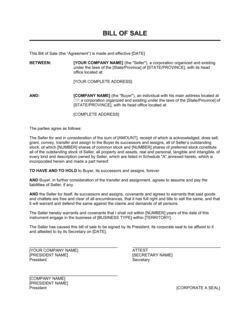
Enter both parties' full legal names and addresses
Use the full legal name of the seller and buyer exactly as they appear on government-issued ID. Include current mailing addresses for both parties.
💡 If the seller is a business entity, use the registered corporate name and include the state of incorporation — not just a trade name.
2
Describe the property with all identifying details
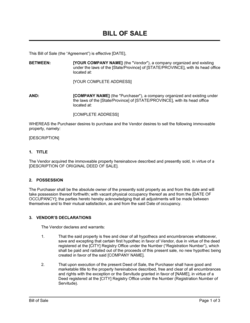
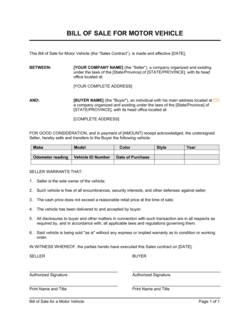
For vehicles, include year, make, model, VIN, color, and license plate. For equipment, include manufacturer, model number, and serial number. For general goods, include quantity, condition, and any distinguishing features.
💡 Take a photograph of the asset's serial number or VIN plate at the time of signing — attach it as an exhibit to the signed document.
3
State the purchase price and payment method
Enter the full agreed sale price in a specific dollar amount and state the currency. Specify whether payment has already been received or will be made on the signature date, and by what method.
💡 Never leave price blank or write 'TBD' — state the actual amount even if a separate promissory note governs installment terms.
4
Select and complete the warranty section
Choose as-is if you are making no representations about condition. If you are providing any limited warranty, describe the scope, duration, and remedy specifically — do not use vague language.
💡 Private party sellers should almost always use the as-is clause. Dealers and businesses may have statutory obligations to provide implied warranties regardless of what the contract says — confirm with local consumer protection law.
5
Complete the warranty of title and disclose any liens
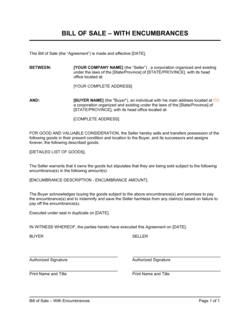
Confirm that you own the property outright and have the right to sell it. If any lien exists — such as a bank loan secured by the vehicle — disclose it by name of lienholder and account reference, and describe how it will be satisfied at or before closing.
💡 Run a lien search on equipment or vehicles before signing. A buyer who discovers an undisclosed lien post-sale has grounds to void the transaction and pursue the seller for damages.
6
Complete the odometer disclosure for vehicle sales
Enter the exact odometer reading at the time of sale. If the odometer is broken, inaccurate, or has exceeded its mechanical limit, check the appropriate disclosure box and explain the discrepancy.
💡 US federal law requires odometer disclosure in writing for vehicles under 10 years old. Falsifying mileage is a federal crime — document the actual reading regardless of how it compares to prior representations.
7
Both parties sign and date the document
Seller and buyer should sign in each other's presence on the same date as the stated transfer date. Print names clearly below each signature. Retain one original copy each.
💡 If the jurisdiction or asset type requires notarization — Louisiana real-property-related personal property, certain state vehicle titles — have a notary witness the signing before leaving the closing.
8
File or register with the relevant authority
For vehicles, submit the signed bill of sale to your state DMV or provincial motor vehicle authority along with the certificate of title to complete registration transfer. For equipment or livestock, retain the document in your records.
💡 Check your state's DMV website before closing — some states require a specific state-issued bill of sale form in addition to, or instead of, a private form.