- Revenue (Net Sales)
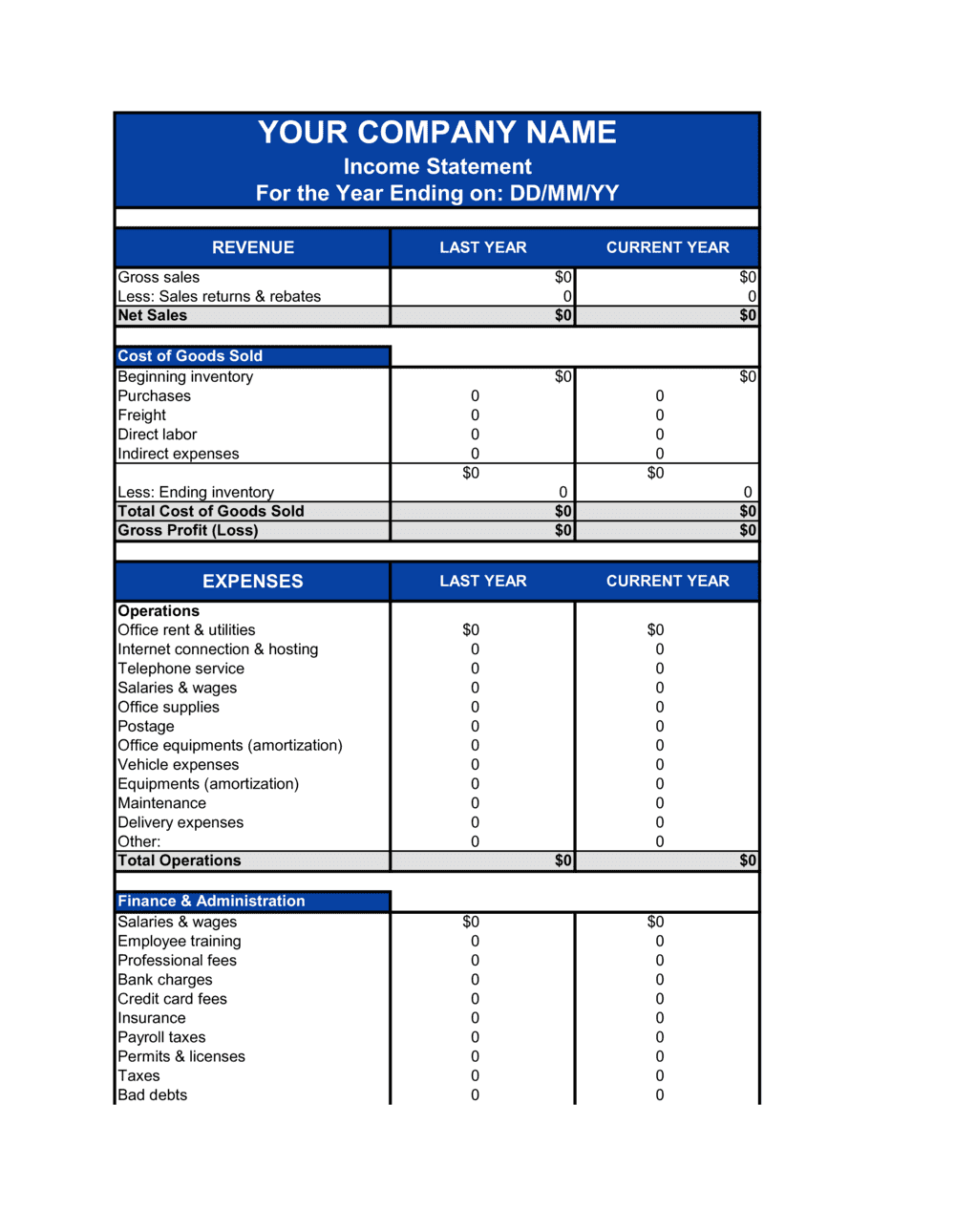
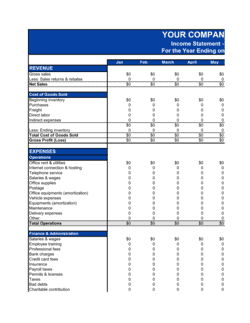
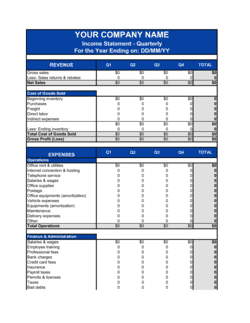
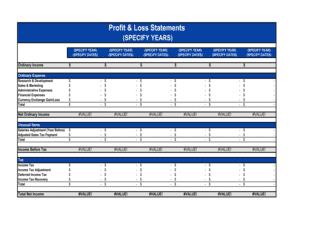
- Total income from the sale of goods or services after deducting returns, allowances, and discounts — the top line of the income statement.
- Cost of Goods Sold (COGS)
- Direct costs attributable to producing the goods or services sold — including materials, direct labor, and manufacturing overhead.
- Gross Profit
- Revenue minus COGS — the amount left to cover operating expenses, interest, taxes, and generate net income.
- Gross Margin
- Gross profit expressed as a percentage of revenue, used to benchmark efficiency against industry peers.
- Operating Expenses (OpEx)
- Costs incurred in running the business that are not directly tied to production — such as salaries, rent, marketing, and depreciation.
- EBITDA
- Earnings Before Interest, Taxes, Depreciation, and Amortization — a proxy for operating cash generation widely used in valuations and lending covenants.
- Operating Income (EBIT)
- Gross profit minus operating expenses — earnings before the effects of financing decisions and tax obligations.
- Non-Operating Income and Expenses
- Items outside normal business operations, such as interest income, interest expense, foreign exchange gains or losses, and gains on asset sales.
- Income Tax Provision
- The estimated corporate income tax expense for the period, calculated on pre-tax income at the applicable statutory rate plus deferred tax adjustments.
- Net Income (Net Loss)
- The bottom line — total revenue minus all expenses, taxes, and interest for the reporting period.
- Accrual Basis
- Accounting method that records revenue when earned and expenses when incurred, regardless of when cash is received or paid.
- Comparative Period
- A prior period column shown alongside the current period on the income statement to enable trend analysis — typically the prior quarter or prior year.