Income Statement_Quarterly Template

Free Excel download • Edit online • Save & share with Drive • Export to PDF

3 pages25–30 min to fillDifficulty: ComplexSignature requiredLegal review recommended
Learn more ↓
FreeXLSIncome Statement_Quarterly Template

At a glance

What it is
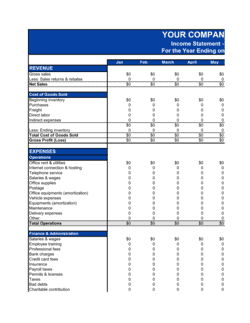
A Quarterly Income Statement is a formal financial reporting document that summarizes a company's revenues, cost of goods sold, operating expenses, and net income over a three-month fiscal period. This free Word download gives you a structured, professionally formatted template you can edit online and export as PDF for submission to lenders, investors, boards, or regulatory bodies.
When you need it
Use it at the close of each fiscal quarter to report financial performance to internal stakeholders, satisfy lender reporting covenants, support tax filings, or fulfill regulatory disclosure obligations. It is also required when applying for credit facilities or presenting interim financials to investors between annual audits.
What's inside
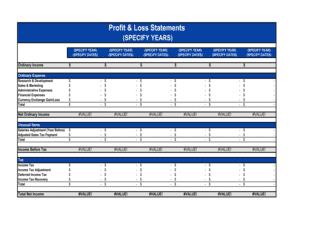
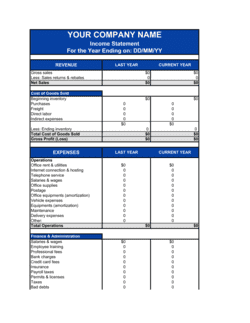
Revenue breakdown by category, cost of goods sold, gross profit calculation, itemized operating expenses, operating income, non-operating income and expenses, pre-tax income, tax provision, and net income — all structured for the reporting quarter with prior-period comparison columns.

What is a Quarterly Income Statement?

A Quarterly Income Statement is a formal financial reporting document that summarizes a company's revenues, cost of goods sold, gross profit, operating expenses, and net income over a single three-month fiscal period. Prepared at the close of each fiscal quarter, it provides a structured, period-specific view of financial performance that annual statements cannot deliver on their own. The document follows the same top-to-bottom logic as an annual income statement — starting with gross revenue and working through every cost layer to arrive at the bottom-line net income figure — but limits its scope to 90 days of activity, making it the standard tool for interim financial reporting to lenders, investors, and boards between annual audits.

Why You Need This Document

Without a properly prepared quarterly income statement, businesses face four concrete risks. First, loan covenant defaults: most commercial credit facilities require quarterly financial submissions, and submitting an incomplete or unsigned statement triggers a technical default even when the company's finances are sound. Second, blind spots in performance management: a single annual review catches cost overruns and revenue shortfalls 9 to 12 months too late to correct them within the fiscal year. Third, investor and board credibility: informal summaries or cash-basis reports presented in place of a structured income statement signal weak financial controls and slow down capital decisions. Fourth, tax installment errors: in the US, Canada, and the UK, quarterly estimated tax payments are calibrated against current-period income — an inaccurate statement leads to underpayment penalties or excess cash tied up in overpayments. This template gives you a certification-ready, lender-compliant quarterly income statement in the time it takes to pull your ledger figures — eliminating the four risks above for the cost of structured preparation.

Which variant fits your situation?

If your situation is…Use this template
Annual financial reporting for tax filing or investor reviewAnnual Income Statement
Monthly performance tracking for internal management reportingMonthly Income Statement
Combined quarterly snapshot of income, cash flow, and balance sheetQuarterly Financial Report
Simplified revenue and expense summary for a sole proprietorProfit and Loss Statement (Simple)
Multi-entity consolidated quarterly income reportingConsolidated Income Statement
Quarterly reporting for a nonprofit or associationNonprofit Statement of Activities
Quarterly budget variance analysis alongside actualsBudget vs. Actual Report

Common mistakes to avoid

❌ Mixing COGS and operating expenses

Why it matters: Misclassifying operating costs as COGS artificially deflates gross margin, making the business look less efficient than it is and corrupting the benchmark ratios lenders use in covenant calculations.

Fix: Apply a strict test: if the cost disappears when production stops, it is COGS; if it continues regardless of output, it is an operating expense. Review every COGS line item against this test each quarter.

❌ Omitting the revenue deductions section

Why it matters: Reporting net revenue as gross revenue overstates top-line performance and hides the true returns and discounting rate from investors and lenders evaluating revenue quality.

Fix: Always include a separate deductions section beneath gross revenue, even if returns and allowances are minimal — a $0 line signals transparency rather than concealment.

❌ Using the statutory tax rate instead of the effective rate

Why it matters: The statutory federal rate bears no relation to what the company actually owes after deductions, credits, and state taxes — the gap can be 10 percentage points or more, materially distorting net income.

Fix: Calculate the effective rate from the prior annual tax return and adjust it for any known current-year changes before applying it to quarterly pre-tax income.

❌ Comparing to the prior sequential quarter rather than the prior-year quarter

Why it matters: Sequential comparisons mislead for seasonal businesses — Q4 retail revenue compared to Q1 retail revenue produces a meaningless variance that masks whether the business actually grew year over year.

Fix: Default to year-over-year comparison (Q1 2026 vs. Q1 2025) and include sequential comparison only as a secondary column when month-over-month trends are specifically requested.

❌ Leaving the certification block unsigned

Why it matters: An unsigned income statement has no authorized party accountable for its accuracy — lenders reject unsigned financials for covenant reporting, and investors treat them as preliminary drafts.

Fix: Route the completed statement to the CFO or controller for review and signature before distribution. Document the review date alongside the preparation date.

❌ Reporting in a single currency without disclosing FX treatment for multi-currency businesses

Why it matters: Companies with foreign operations that translate revenue to reporting currency without disclosing exchange rates or translation methodology create restatement risk and lose auditor and lender confidence.

Fix: Add a footnote stating the average exchange rate used for revenue translation and the period-end rate used for balance sheet items whenever foreign currency transactions exceed 5% of total revenue.

The 10 key clauses, explained

Reporting period identification

In plain language: States the exact start and end dates of the fiscal quarter covered by the statement, the company's legal name, and the currency in which figures are reported.

Sample language
Income Statement for [COMPANY LEGAL NAME] | Quarter Ended [MONTH DAY, YEAR] (e.g., March 31, 2026) | All amounts in [USD / CAD / GBP / EUR] unless otherwise stated.

Common mistake: Using 'Q1 2026' without specifying the exact dates — companies with non-calendar fiscal years create confusion for lenders and auditors who need to match periods precisely.

Revenue breakdown

In plain language: Lists each distinct revenue stream by category with the amount earned in the quarter, totaled into a gross revenue figure before any deductions.

Sample language
Product Sales: $[AMOUNT] | Service Revenue: $[AMOUNT] | Subscription Revenue: $[AMOUNT] | Other Revenue: $[AMOUNT] | Total Revenue: $[AMOUNT]

Common mistake: Combining all revenue into a single line labeled 'Sales.' Lenders and investors require category-level visibility to assess revenue concentration and trend quality.

Revenue deductions

In plain language: Captures returns, allowances, and discounts granted to customers during the quarter, reducing gross revenue to a net revenue figure.

Sample language
Less: Sales Returns and Allowances: ($[AMOUNT]) | Less: Discounts Granted: ($[AMOUNT]) | Net Revenue: $[AMOUNT]

Common mistake: Omitting the deductions section entirely and reporting net revenue as if it were gross. This overstates top-line performance and misrepresents return rates to investors.

Cost of goods sold

In plain language: Itemizes all direct costs of producing the goods or services sold in the quarter — materials, direct labor, and manufacturing overhead.

Sample language
Direct Materials: $[AMOUNT] | Direct Labor: $[AMOUNT] | Manufacturing Overhead: $[AMOUNT] | Total COGS: $[AMOUNT] | Gross Profit: $[AMOUNT]

Common mistake: Including operating expenses such as sales team salaries or office rent inside COGS. This depresses gross margin and makes cost structure analysis meaningless.

Operating expenses

In plain language: Lists all costs incurred in the ordinary course of running the business that are not directly tied to production — organized into logical subcategories.

Sample language
Salaries and Wages: $[AMOUNT] | Rent and Occupancy: $[AMOUNT] | Marketing and Advertising: $[AMOUNT] | General and Administrative: $[AMOUNT] | Depreciation and Amortization: $[AMOUNT] | Total Operating Expenses: $[AMOUNT]

Common mistake: Lumping all operating costs into a single 'Expenses' line. Without subcategory detail, period-over-period variance analysis and budget comparison are impossible.

Operating income calculation

In plain language: Derives operating income (EBIT) by subtracting total operating expenses from gross profit, providing a measure of profitability from core operations before financing costs and taxes.

Sample language
Gross Profit: $[AMOUNT] | Less: Total Operating Expenses: ($[AMOUNT]) | Operating Income (EBIT): $[AMOUNT]

Common mistake: Skipping the operating income subtotal and jumping directly to pre-tax income. Omitting this line obscures whether losses are driven by operations or financing decisions.

Non-operating income and expenses

In plain language: Records interest income, interest expense, investment gains or losses, and other items unrelated to core operations that affect profit before tax.

Sample language
Interest Income: $[AMOUNT] | Interest Expense: ($[AMOUNT]) | Gain / (Loss) on Investments: $[AMOUNT] | Other Non-Operating Items: $[AMOUNT] | Total Non-Operating Items: $[AMOUNT]

Common mistake: Netting interest income against interest expense into a single figure. Lenders covenant on gross interest expense separately, so netting obscures covenant compliance.

Tax provision

In plain language: States the estimated income tax expense for the quarter, calculated at the applicable effective tax rate, and reduces pre-tax income to net income.

Sample language
Pre-Tax Income (EBT): $[AMOUNT] | Income Tax Provision ([X]% effective rate): ($[AMOUNT]) | Net Income: $[AMOUNT]

Common mistake: Using the statutory rate instead of the company's effective rate, or leaving the tax provision at zero for profitable companies. Both misstate net income and invite regulatory scrutiny.

Prior-period comparison column

In plain language: Provides the equivalent figures from the same quarter in the prior fiscal year (or the immediately preceding quarter), enabling trend and variance analysis on every line item.

Sample language
Current Quarter Ended [DATE]: $[AMOUNT] | Prior Quarter Ended [DATE]: $[AMOUNT] | Change ($): $[AMOUNT] | Change (%): [X]%

Common mistake: Comparing the current quarter to the immediately prior quarter (sequential comparison) when a year-over-year comparison is needed — seasonal businesses misread performance badly without year-over-year context.

Certification and authorization block

In plain language: Identifies the preparer and an authorized officer who certifies the accuracy of the statement, along with the preparation date and applicable accounting basis.

Sample language
Prepared by: [NAME], [TITLE] | Certified by: [NAME], [TITLE — e.g., CFO / Controller] | Date: [DATE] | Accounting Basis: [Accrual / Cash] | These financial statements have been prepared in accordance with [GAAP / IFRS / Other].

Common mistake: Omitting the certification block entirely. Without an authorized signature and stated accounting basis, lenders and investors cannot verify who is responsible for the figures or whether they comply with an accepted standard.

How to fill it out

  1. 1

    Confirm the reporting period and entity details

    Enter the company's full legal name, the exact quarter start and end dates, and the reporting currency. If the company has a non-calendar fiscal year, ensure the period dates reflect the actual fiscal quarter boundaries.

    💡 Lock the period dates before entering any figures — changing them mid-completion cascades errors into the prior-period comparison column.

  2. 2

    Enter gross revenue by category

    Pull revenue figures from your accounting system or general ledger, broken down by revenue stream (product, service, subscription, other). Sum them into a gross revenue total.

    💡 If your accounting system reports net revenue, work backward through your returns and allowances register to reconstruct gross revenue separately.

  3. 3

    Deduct returns, allowances, and discounts

    Enter sales returns, customer allowances, and discounts granted during the quarter as negative line items beneath gross revenue. Compute net revenue as the resulting subtotal.

    💡 A returns rate above 5% of gross revenue warrants a footnote — lenders use this ratio to assess product quality and customer satisfaction risk.

  4. 4

    Calculate cost of goods sold

    List direct materials consumed, direct labor costs, and allocated manufacturing overhead for the quarter. Confirm that no period operating expenses — rent, sales salaries, software — are included in this section.

    💡 Cross-reference the COGS total against your inventory movement report: beginning inventory + purchases − ending inventory should approximate COGS for product businesses.

  5. 5

    Itemize operating expenses by subcategory

    Enter each operating expense category — compensation, occupancy, marketing, G&A, and D&A — as separate line items pulled from your ledger. Total them into a single operating expenses figure.

    💡 Depreciation and amortization should appear as a non-cash line within OpEx and also be disclosed in a footnote, since lenders often use EBITDA in covenant calculations.

  6. 6

    Record non-operating items and calculate pre-tax income

    Enter interest income and expense on separate lines, then add any investment gains or losses, foreign exchange impact, and other non-recurring items. Sum these with operating income to arrive at pre-tax income.

    💡 If interest expense is material (greater than 10% of operating income), flag it — lenders track interest coverage ratios and will ask about it in any covenant review.

  7. 7

    Apply the tax provision and compute net income

    Multiply pre-tax income by the company's effective tax rate to calculate the tax provision. Subtract the provision from pre-tax income to arrive at net income. For pass-through entities, note that income taxes are paid at the owner level and this line may be zero.

    💡 Use the prior-year effective tax rate as a baseline unless a tax event — NOL utilization, rate change, or new jurisdiction — has changed your position this quarter.

  8. 8

    Complete the prior-period comparison and certification block

    Populate the prior-period column using the equivalent quarter from the prior fiscal year. Have an authorized officer review and sign the certification block, confirming the accounting basis (accrual or cash) and applicable standards (GAAP or IFRS).

    💡 Do not use sequential quarter comparisons as your only column if the business is seasonal — year-over-year is the standard that lenders and auditors expect.

Frequently asked questions

What is a quarterly income statement?

A quarterly income statement is a formal financial document that summarizes a company's revenues, costs, and net income over a single three-month fiscal period. It follows the same structure as an annual income statement but covers a quarter of the year — Q1, Q2, Q3, or Q4 — enabling more frequent performance monitoring, interim lender reporting, and early identification of cost or revenue trends before year-end.

What is the difference between a quarterly income statement and an annual income statement?

The structure is identical — both report revenue, COGS, gross profit, operating expenses, and net income. The difference is the time period covered. An annual statement covers 12 months and is typically audited or reviewed by an external accountant. A quarterly statement covers 3 months and is usually internally prepared or compiled, though lenders may require a CPA compilation for credit facilities above certain thresholds. Quarterly statements allow faster course-correction than waiting for an annual report.

Who needs to prepare a quarterly income statement?

Any business with lender reporting covenants, investor reporting obligations, or board financial review requirements typically prepares quarterly income statements. Publicly traded companies are required by the SEC to file quarterly (Form 10-Q) within 40 to 45 days of quarter close. Private companies are not legally required to do so unless their loan agreements or shareholder agreements specify it, but most do so for internal management and lender compliance purposes.

What is the difference between an income statement and a profit and loss statement?

They are the same document. 'Income statement' is the terminology used under US GAAP and IFRS in formal financial reporting. 'Profit and loss statement' or 'P&L' is the informal term used most often in small business and management accounting contexts. Both summarize revenues, costs, and net income over a defined period and follow the same structural logic from top-line revenue to bottom-line net income.

Does a quarterly income statement need to be signed?

For internal management reporting, a signature is not strictly required. However, for lender covenant reporting, investor distributions, board packages, or regulatory submissions, most recipients require an authorized officer — typically the CFO or controller — to certify the accuracy of the statement. Some credit agreements explicitly require a compliance certificate signed by a named officer to accompany the quarterly financials.

Should a quarterly income statement use accrual or cash basis accounting?

Accrual basis is the standard for any quarterly income statement prepared under GAAP or IFRS. Accrual accounting records revenue when earned and expenses when incurred, regardless of cash movement, which provides a more accurate picture of periodic performance. Cash basis is acceptable for sole proprietors and very small businesses not required to follow GAAP, but lenders and investors typically require accrual-basis statements for any formal reporting purpose. The accounting basis must be disclosed on the face of the statement.

What line items are typically included in a quarterly income statement?

A complete quarterly income statement includes gross revenue, revenue deductions (returns and allowances), net revenue, cost of goods sold, gross profit, operating expenses itemized by category (compensation, occupancy, marketing, G&A, depreciation), operating income, non-operating items (interest income and expense, investment gains and losses), pre-tax income, tax provision, and net income. A prior-period comparison column and a certification block should also be included for any external reporting purpose.

How does a quarterly income statement relate to a company's covenant compliance?

Many bank and private credit loan agreements include financial covenants tested quarterly — such as a minimum fixed charge coverage ratio, a maximum leverage ratio, or a minimum EBITDA threshold. The quarterly income statement provides the numerator or denominator for these calculations. Submitting an incomplete or incorrectly prepared statement can trigger a technical covenant breach even when the underlying financial performance is within limits.

What accounting standard should a quarterly income statement follow?

US private companies generally follow US GAAP. Companies reporting under IFRS — which is required or permitted in over 140 countries including Canada, the UK, and EU member states — use the same fundamental structure but may use different terminology (e.g., 'statement of profit or loss' instead of 'income statement') and may present expenses by function or by nature. The applicable standard must be stated on the face of the document. For small businesses not required to follow either standard, noting 'prepared on a tax basis' or 'cash basis' is acceptable as long as the basis is disclosed.

How this compares to alternatives

vs Profit and Loss Statement

A profit and loss statement and a quarterly income statement report the same information — revenue, costs, and net income — and are functionally identical documents. The primary distinction is presentation depth and audience: a simple P&L is adequate for internal management review of a small business, while a quarterly income statement includes prior-period comparison columns, a certification block, and explicit accounting basis disclosure required for lender and investor reporting. Use the quarterly income statement format for any external submission.

vs Quarterly Financial Report

A quarterly financial report is a comprehensive package that includes the income statement alongside a balance sheet, cash flow statement, and management commentary. A standalone quarterly income statement covers only the revenue-to-net-income summary. Use the quarterly income statement when a lender or investor has specifically requested the income statement only; use the full quarterly financial report when a complete financial picture is required.

vs Annual Income Statement

An annual income statement aggregates 12 months of activity and is typically the subject of an external audit or CPA review. A quarterly income statement covers 3 months and is usually internally prepared. For businesses with seasonal revenue patterns, comparing a single quarter to the annual total can be misleading — four quarterly statements together should reconcile precisely to the annual figures. Lenders typically require both: quarterly for covenant compliance and annual for credit renewal.

vs Cash Flow Statement

A cash flow statement tracks actual cash inflows and outflows across operating, investing, and financing activities. An income statement tracks revenue and expenses on an accrual basis, regardless of when cash moves. A company can show strong net income on its income statement while experiencing a cash shortfall — the two documents must be read together to assess true financial health. Lenders and investors require both for any meaningful credit or equity analysis.

Industry-specific considerations

Retail and E-commerce

Seasonal revenue swings make year-over-year quarter comparisons essential; COGS includes inventory shrinkage and freight-in, which must be broken out separately.

SaaS and Technology

Revenue recognition follows ASC 606 contract allocation rules; deferred revenue movements affect top-line figures and must be disclosed in accompanying notes.

Manufacturing

COGS is highly detailed — raw materials, direct labor, and factory overhead tracked separately; capacity utilization rates drive per-unit cost fluctuations quarter to quarter.

Professional Services

Revenue is recognized on billable hours delivered or project milestones met; work-in-progress (WIP) valuation affects both revenue and the balance sheet each quarter.

Healthcare

Revenue is reported net of contractual adjustments and insurance allowances; regulatory compliance costs and credentialing fees are material operating expense line items.

Food and Beverage

Food cost as a percentage of net revenue (target 28–35%) is tracked as the primary COGS efficiency metric; quarterly waste and spoilage must be separated from standard COGS.

Jurisdictional notes

United States

Private US companies are not required to file quarterly income statements with any federal agency unless subject to SEC reporting (Form 10-Q for public companies, due 40–45 days after quarter close). However, SBA loans, bank credit facilities, and most institutional lenders require quarterly financial statements as a condition of the loan covenant. US GAAP governs revenue recognition under ASC 606 and requires accrual-basis reporting for any statement provided to third parties.

Canada

Publicly listed Canadian companies must file interim financial statements quarterly with SEDAR+ within 45 days of quarter close, prepared under IFRS as adopted in Canada. Private companies are not subject to mandatory quarterly filing but commonly prepare quarterly statements to satisfy bank covenant requirements and CRA-related tax installment planning. Quebec-incorporated companies operating in French must ensure financial disclosures meet provincial language standards when filed with provincial authorities.

United Kingdom

UK-listed companies (LSE Main Market and AIM) are required to publish half-year financial reports under the FCA Disclosure Guidance and Transparency Rules — quarterly reporting is not mandated for most listed companies, though voluntary quarterly trading updates are common. Private UK companies file annual accounts at Companies House; quarterly income statements are prepared for internal management, bank covenant compliance, or investor reporting. IFRS as adopted by the UK applies to consolidated financial statements of UK-listed groups post-Brexit.

European Union

EU-listed companies are required under the EU Transparency Directive to publish half-year financial reports; the mandatory quarterly reporting requirement was repealed in 2013 to reduce short-termism. However, voluntary quarterly disclosures remain common in Germany, France, and the Netherlands. IFRS as adopted by the EU governs all consolidated financial statements of EU-listed entities. GDPR considerations apply when quarterly financial data includes personally identifiable payroll or officer compensation details shared across borders.

Template vs lawyer — what fits your deal?

PathBest forCostTime
Use the templateSmall business owners and internal finance teams preparing standard quarterly reporting for management or lender covenant packagesFree1–3 hours per quarter
Template + legal reviewCompanies with complex revenue recognition, foreign currency operations, or credit facilities that require CPA-compiled or reviewed financials$300–$1,500 per quarter (CPA compilation or review engagement)3–7 business days
Custom draftedPublic companies, regulated financial institutions, businesses preparing audited IFRS or GAAP financials, or companies in pre-IPO reporting preparation$5,000–$50,000+ per quarter (external audit or full-scope review)3–6 weeks post-quarter close

Glossary

Revenue
The total income earned from the sale of goods or services before any costs or expenses are deducted.
Cost of Goods Sold (COGS)
The direct costs attributable to producing the goods or services sold during the quarter, including materials and direct labor.
Gross Profit
Revenue minus COGS — the profit remaining before operating expenses, interest, and taxes are applied.
Gross Margin
Gross profit expressed as a percentage of revenue, used to assess production efficiency and pricing power.
Operating Expenses (OpEx)
Recurring costs required to run the business that are not directly tied to production, such as salaries, rent, and marketing.
Operating Income (EBIT)
Earnings Before Interest and Taxes — gross profit minus operating expenses, representing the profit generated from core business operations.
Non-Operating Income and Expenses
Revenue or costs unrelated to core operations, such as interest income, investment gains, or foreign exchange losses.
Pre-Tax Income (EBT)
Earnings Before Tax — operating income adjusted for non-operating items, representing profit before the tax provision is applied.
Tax Provision
The estimated income tax expense recognized in the period, calculated as a percentage of pre-tax income based on the applicable statutory rate.
Net Income
The bottom-line profit or loss after all revenues, costs, expenses, and taxes have been accounted for during the quarter.
Prior-Period Comparison
A column showing the same line items from the equivalent prior quarter or the immediately preceding quarter, enabling trend analysis.
Accrual Basis Accounting
A method that records revenues when earned and expenses when incurred, regardless of when cash is received or paid.

Part of your Business Operating System

This document is one of 3,000+ business & legal templates included in Business in a Box.

  • Fill-in-the-blanks — ready in minutes
  • 100% customizable Word document
  • Compatible with all office suites
  • Export to PDF and share electronically

Create your document in 3 simple steps.

From template to signed document — all inside one Business Operating System.
1
Download or open template

Access over 3,000+ business and legal templates for any business task, project or initiative.

2
Edit and fill in the blanks with AI

Customize your ready-made business document template and save it in the cloud.

3
Save, Share, Send, Sign

Share your files and folders with your team. Create a space of seamless collaboration.

Save time, save money, and create top-quality documents.

★★★★★

"Fantastic value! I'm not sure how I'd do without it. It's worth its weight in gold and paid back for itself many times."

Managing Director · Mall Farm
Robert Whalley
Managing Director, Mall Farm Proprietary Limited
★★★★★

"I have been using Business in a Box for years. It has been the most useful source of templates I have encountered. I recommend it to anyone."

Business Owner · 4+ years
Dr Michael John Freestone
Business Owner
★★★★★

"It has been a life saver so many times I have lost count. Business in a Box has saved me so much time and as you know, time is money."

Owner · Upstate Web
David G. Moore Jr.
Owner, Upstate Web

Run your business with a system — not scattered tools

Stop downloading documents. Start operating with clarity. Business in a Box gives you the Business Operating System used by over 250,000 companies worldwide to structure, run, and grow their business.

Free Forever Plan · No credit card required