1
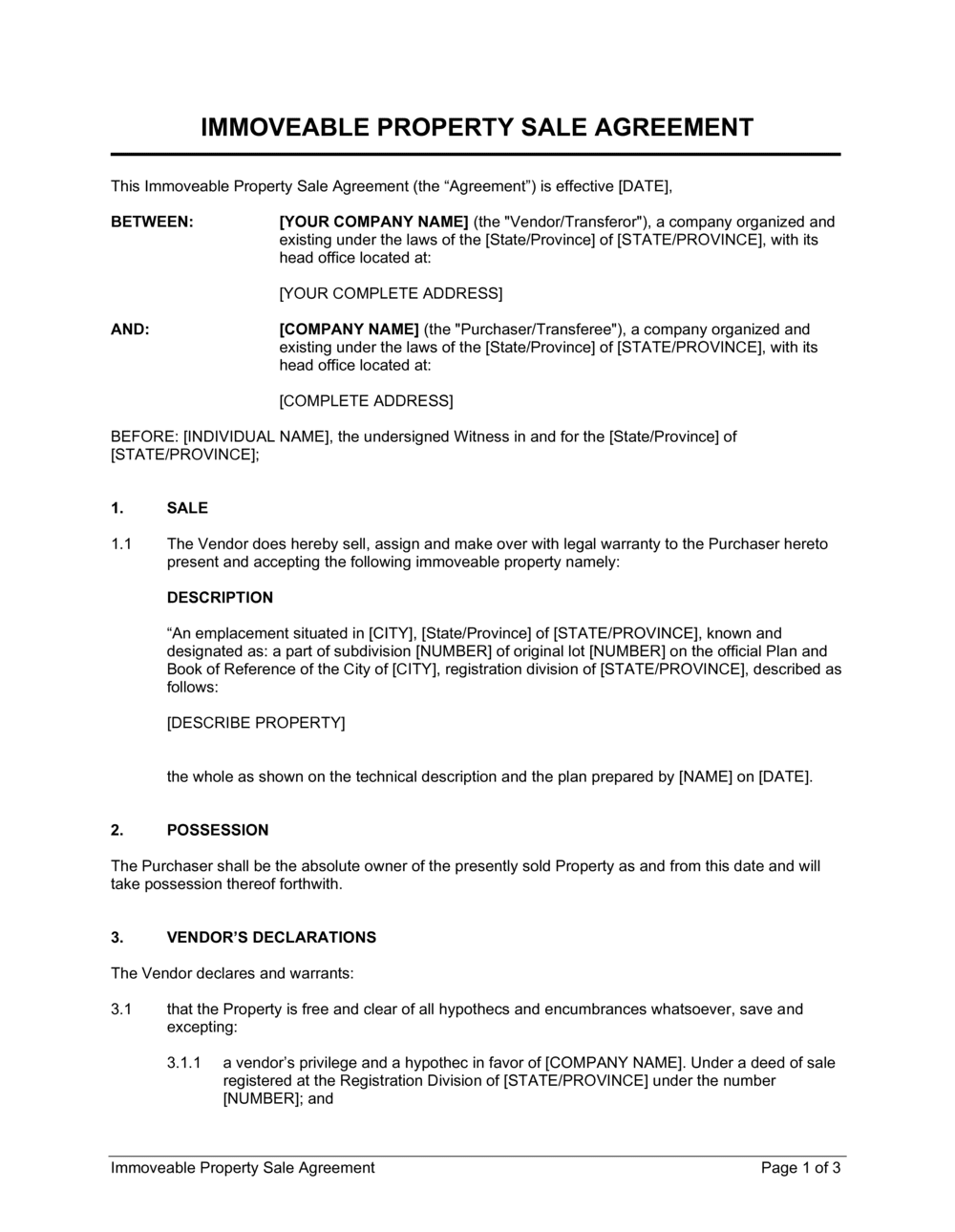
Identify both parties with full legal names and capacity
Enter the seller's and buyer's full legal names exactly as they appear on government ID or corporate registration. For companies, confirm the registered entity name and authorized signatory. For individuals, confirm they have legal capacity to contract and hold or acquire property.
💡 If the seller is a trust, estate, or company, confirm in writing before signing that the signatory has authority to bind the entity — missing authority is the most common cause of delayed registration.
2
Insert the full legal property description
Copy the property description from the title deed, land register, or deeds office record — including erf, lot, parcel, or folio number as applicable. Do not rely on the street address alone.
💡 Request an up-to-date title search from the relevant land registry before completing this section to confirm the seller's name, existing encumbrances, and the precise legal description.
3
Set the purchase price, deposit, and payment mechanics
Enter the agreed total price, the deposit amount (typically 5–10% of the purchase price), the escrow holder, and the deposit due date. Specify the balance payment method and confirm that bank transfer details are correct.
💡 Name a neutral escrow agent — usually a conveyancer or title company — rather than allowing either party to hold the deposit. This protects both sides if the deal collapses.
4
List and date all conditions precedent
Write out each condition clearly and attach a specific deadline. For mortgage conditions, include the minimum loan amount and maximum interest rate. For inspection conditions, specify what 'satisfactory' means — or give the buyer a sole-discretion right.
💡 Keep conditions to the minimum necessary. Every condition is a potential exit for one party — open-ended or vague conditions are routinely used to escape deals that no longer suit a party.
5
Complete the title and encumbrance disclosure
List all known mortgages, charges, easements, restrictive covenants, and servitudes affecting the property. Confirm the seller's obligation to cancel or discharge any mortgage at or before closing.
💡 Obtain a formal title search report before executing the agreement so disclosures are based on the official record, not memory. Undisclosed encumbrances discovered after signing frequently result in buyer claims.
6
Set the closing date and possession time
Enter a specific closing date and time, the location of closing, and the exact time vacant possession will be given. Include a grace period (typically 5–10 business days) and the consequences if either party fails to close on time.
💡 Allow at least 30–60 days from signing to closing for mortgage approval, title search, and conveyancing — shorter timelines increase the risk of a failed closing.
7
Allocate costs, taxes, and adjustments
Specify who pays transfer duty or stamp duty, conveyancing fees, and registration costs. Add an adjustments clause so that rates, levies, and utilities are apportioned as of the closing date.
💡 Check the statutory default allocation of transfer costs in the applicable jurisdiction before drafting — some jurisdictions fix responsibility by law, and a conflicting contractual allocation may be void.
8
Execute before a witness or notary as required
Both parties must sign the agreement. In many jurisdictions, immoveable property agreements must be in writing and witnessed or notarized to be enforceable. Confirm local requirements before signing.
💡 Use your conveyancer or attorney as the witness where possible — their contemporaneous record of execution is valuable evidence if a party later disputes signing.