How To Spend Your Morning Like A Successful Entrepreneur

Free to read β€’ Save or share with one click

FreeHow To Spend Your Morning Like A Successful Entrepreneur Template

At a glance

What it is
How To Spend Your Morning Like A Successful Entrepreneur is a structured daily planning document that maps the first two to four hours of your workday into deliberate blocks covering physical health, mindset, deep work, and priority setting. This free Word download lets you customize each block to your schedule and goals, then export as PDF for daily reference or team sharing.
When you need it
Use it when reactive habits β€” checking email first thing, skipping exercise, or starting the day without a clear top priority β€” are eroding your output and decision quality. It is equally useful when onboarding a new routine after a major life change such as launching a business, hiring a first team, or shifting to remote work.
What's inside
Wake time and sleep anchor, physical movement block, mindset and reflection practice, deep-work session, daily priority setting, communication window, nutrition and hydration cues, and an end-of-morning review checkpoint that confirms you are on track before the reactive part of the day begins.

What is a Morning Routine Template for Entrepreneurs?

A morning routine template for entrepreneurs is a structured daily planning document that organizes the first two to four hours of the workday into deliberate, sequenced blocks β€” physical movement, mindset practice, priority setting, and focused deep work β€” before reactive demands such as email, meetings, and messages begin. It functions as both a habit design tool and a daily operating script, replacing improvised mornings with a repeatable system that compounds over time. Unlike a general to-do list, this template sequences activities in the order that research on energy, focus, and habit formation supports, giving each block a defined duration, trigger, and outcome.

Why You Need This Document

Without a structured morning framework, the first hours of the day default to whoever sends the first message β€” email, Slack, or a news feed β€” pulling attention into reactive mode before any self-directed work has been done. For founders and operators, that pattern means the highest-leverage thinking gets deferred to afternoon or evening, when energy and decision quality are lowest. Research consistently shows that even a modest shift β€” 30 minutes of movement followed by 60 minutes of uninterrupted focused work before opening a communication channel β€” produces measurable improvements in daily output quality and sustained energy. This template removes the daily decision of how to structure the morning, reduces the friction that causes good intentions to collapse under a busy schedule, and creates a feedback loop through the end-of-morning checkpoint that lets you improve the routine systematically rather than abandoning it after the first hard week.

Which variant fits your situation?

If your situation is…Use this template
Compressed schedule with less than 60 minutes before first commitmentMinimalist Morning Routine (30-Minute Version)
Remote or distributed team that needs a shared daily kickoff rhythmDaily Team Stand-Up Agenda
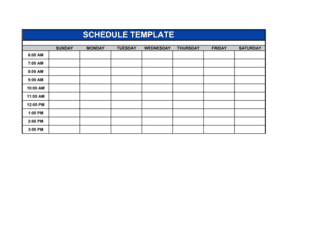
Planning a full workday beyond just the morning blockDaily Schedule Template
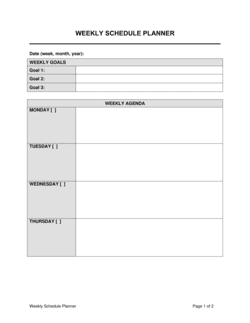
Setting weekly priorities to feed into each morning's planning stepWeekly Planner
Tracking long-term personal and professional goals that morning reviews servePersonal Development Plan
Establishing company-wide productivity standards beyond personal routinesEmployee Performance Improvement Plan
Building a full quarterly operating cadence that morning habits support90-Day Business Plan

Common mistakes to avoid

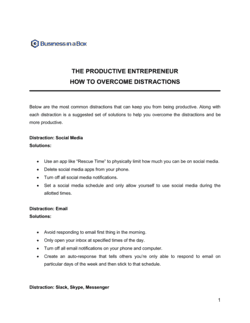
❌ Checking email or social media before the deep-work session

Why it matters: Processing messages triggers reactive thinking that takes 20–30 minutes to recover from. The deep-work session loses its peak-focus window before it begins.

Fix: Move all communication to the designated window after the deep-work block and remove email apps from your phone's home screen to reduce automatic opening.

❌ Building a two-hour routine without time for the routine to actually run

Why it matters: A routine that requires waking at 4:30 a.m. to fit before a 7 a.m. commitment creates sleep debt, which defeats the purpose within two weeks.

Fix: Map your hard morning commitments first, then build the routine backward from the first fixed event, cutting blocks to fit rather than cutting sleep.

❌ Skipping the end-of-morning checkpoint when the morning runs short

Why it matters: Without the checkpoint data, you cannot diagnose which blocks are failing or why β€” the routine never improves because there is no feedback loop.

Fix: Treat the checkpoint as the one non-negotiable two-minute investment. Even a single-sentence note creates actionable data over 30 days.

❌ Redesigning the entire routine after one bad morning

Why it matters: Habit research consistently shows that routines need 21–66 days to stabilize. Restructuring after a single failure resets the clock and prevents any block from becoming automatic.

Fix: Commit to running the routine unchanged for 21 days before making any adjustments. Note friction points daily and address them in a single scheduled review at day 21.

The 8 key sections, explained

Wake time and sleep anchor

Physical movement block

Nutrition and hydration cues

Mindset and reflection practice

Daily priority setting

Deep-work session

Communication window

End-of-morning review checkpoint

How to fill it out

  1. 1

    Audit your current morning for one week first

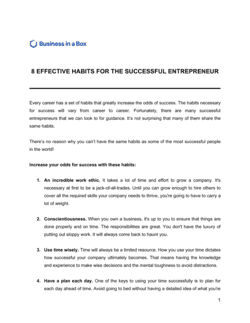
    Before filling in any target times, track what you actually do each morning for five to seven days β€” wake time, first action, first work task, and first meeting. This gives you a baseline to improve from rather than an aspirational fiction.

    πŸ’‘ A one-week audit almost always reveals that the first 30–45 minutes are consumed by phone checking, a habit that the communication window step is specifically designed to replace.

  2. 2

    Set your wake time and bedtime anchor

    Choose a wake time you can hit at least five days a week. Count backward by your sleep target (seven to nine hours for most adults) to set your bedtime. Enter both in the wake-time section.

    πŸ’‘ Pick a wake time 15 minutes earlier than you think you need β€” buffer time disappears fast when a step runs long.

  3. 3

    Choose and schedule your movement block

    Select an activity you will actually do β€” not the one you think you should do. Enter the type, duration, and start time. Keep it to 20–45 minutes on most mornings.

    πŸ’‘ Pre-pack your gym bag or lay out workout clothes the night before. Decision fatigue at 6 a.m. kills the movement block faster than any other friction point.

  4. 4

    Define your mindset practice specifically

    Pick one practice β€” journaling with a specific prompt, a timed meditation, or a chapter of a non-fiction book. Enter the duration and the exact prompt or resource. Vague entries ('do something calming') do not survive contact with a busy week.

    πŸ’‘ Five minutes of focused journaling outperforms 20 minutes of unfocused reflection. Write the prompt into the template so you never waste time deciding what to write about.

  5. 5

    Identify your MIT the night before

    Fill in the daily priority-setting section before you close your laptop each evening, not during the morning routine. Your morning brain should execute, not plan from scratch.

    πŸ’‘ If you cannot identify a clear MIT the night before, it usually means you lack a weekly plan β€” pair this template with a weekly planner to fix the upstream problem.

  6. 6

    Block the deep-work session in your calendar

    Enter the session start time and duration into your calendar as a recurring blocked event visible to anyone who can book your time. Ninety minutes is the evidence-based ceiling for a single focused session.

    πŸ’‘ Label the calendar block with the category of work (e.g., 'writing,' 'product,' 'strategy') rather than just 'deep work' so it resists being overridden by meeting requests.

  7. 7

    Set your communication window boundary

    Enter the window start time β€” after the deep-work session ends β€” and a hard duration. Set an auto-responder if needed to let contacts know you respond to messages after [TIME].

    πŸ’‘ Most contacts adapt within one week. The few who resist a delayed response are usually not your highest-value relationships.

  8. 8

    Run the end-of-morning checkpoint daily for 30 days

    Take two minutes each day to fill in MIT status and one observation. After 30 days, review your notes and adjust any block that failed more than twice per week.

    πŸ’‘ Consistency over perfection β€” a routine completed at 80% beats a perfect routine abandoned after day four.

Frequently asked questions

What does a successful entrepreneur morning routine actually look like?

Most high-output entrepreneurs follow a pattern of four to six blocks completed before the reactive workday begins: a fixed wake time, some form of physical movement (20–45 minutes), a brief mindset or reflection practice, and a 60–90 minute deep-work session on the day's single most important task. Email and messaging are processed only after the deep-work block ends. The specific activities vary β€” some meditate, some journal, some run β€” but the structural pattern of protecting focused work from reactive interruption is consistent.

How long should a morning routine be?

A functional morning routine for entrepreneurs runs between 90 minutes and three hours from wake time to the start of the communication window. The minimum viable version is 60 minutes: 20 minutes of movement, 10 minutes of priority setting, and 30 minutes of focused work. Routines longer than three hours before the first meeting are difficult to sustain unless your schedule genuinely allows for a late start to the reactive day.

What time should entrepreneurs wake up?

There is no universally correct wake time β€” the research supports consistency, not earliness. A 6:30 a.m. wake time you hit five days a week produces better cognitive output than a 5:00 a.m. target you hit two. The more important variable is protecting seven to nine hours of sleep. Calculate your wake time by setting your bedtime first, not the other way around.

Should I check email first thing in the morning?

No β€” checking email first activates reactive mode before you have done any self-directed work. Most productivity researchers and high-output founders delay email until after the deep-work session, typically between 9:00 a.m. and 10:30 a.m. The rare exceptions are roles where a time-sensitive overnight message could change the entire day's plan β€” in those cases, a 60-second scan for urgent flags only is the compromise.

What is the most important part of an entrepreneur's morning routine?

The deep-work session is the single highest-leverage block β€” it is when the most cognitively demanding, highest-value work gets done before the day's interruptions accumulate. Every other element of the routine (movement, nutrition, mindset practice) exists primarily to put you in the best possible state for that session. If time is limited, protect the deep-work block first and trim other steps.

How do I stick to a morning routine when my schedule varies?

Use a modular routine rather than a fixed-time script. Assign each block a duration (e.g., movement = 30 min, planning = 10 min, deep work = 60 min) and run them in sequence regardless of what time you wake. On days with early commitments, compress or drop lower-priority blocks β€” movement or mindset β€” but preserve the deep-work session and the priority-setting step as non-negotiables.

Can I use this template for my team?

Yes β€” this template works as an individual planning tool or as a discussion framework for a leadership offsite on personal productivity. Sharing anonymized versions across a founding team can surface alignment on communication norms, specifically when the team agrees not to expect responses before a certain hour, which protects everyone's focused work window simultaneously.

What is the difference between a morning routine template and a daily schedule template?

A morning routine template covers the first two to four hours of the day with a focus on habits, energy, and priority setting before reactive work begins. A daily schedule template covers the full workday in time-blocked slots including meetings, tasks, and breaks. The morning routine feeds the daily schedule β€” it determines what your MIT is and ensures focused work happens before the schedule fills with others' requests.

How long does it take to form a morning routine habit?

Habit formation research places the range at 21 to 66 days for a new behavior to become automatic, with an average around 45 days. The first two weeks involve the highest friction β€” this is when most people abandon new routines. Committing to run the template unchanged for 30 days before evaluating what to adjust significantly increases the probability that the routine stabilizes into a genuine habit.

How this compares to alternatives

vs Daily Schedule Template

A daily schedule template maps the entire workday in time-blocked slots β€” meetings, tasks, lunch, and end of day. A morning routine template focuses specifically on the pre-reactive hours before the first meeting or message, with an emphasis on habits, energy, and priority setting. The morning routine feeds the daily schedule; they are complementary, not interchangeable.

vs Weekly Planner

A weekly planner sets priorities, goals, and time blocks at the seven-day level. A morning routine template executes against those weekly priorities at the daily level. Without a weekly plan, the morning priority-setting step lacks upstream direction; without a morning routine, weekly plans rarely survive contact with the reactive workweek.

vs Personal Development Plan

A personal development plan maps long-term skill-building goals and milestones across months or years. A morning routine template is an operational daily tool that creates the focused time and mental state in which those development activities actually happen. The development plan sets the destination; the morning routine builds the road.

vs 90-Day Business Plan

A 90-day plan defines strategic objectives and key results for a quarter. A morning routine template is the daily operating mechanism that moves those objectives forward by protecting focused work time from reactive interruption. High-output founders use both: the 90-day plan determines what the MIT should be; the morning routine ensures the MIT gets done.

Industry-specific considerations

Technology / SaaS

Deep-work blocks protect coding, architecture decisions, and product strategy from being displaced by Slack notifications and standup meetings that cluster in the morning.

Professional Services

Client-facing professionals use the morning routine to complete billable analytical work before client calls begin, protecting utilization rates and reducing after-hours catch-up.

Retail / E-commerce

Founders review overnight sales data and set merchandising or ad-spend priorities during the planning block before customer service and operations demands dominate the day.

Creative and Marketing Agencies

Creative directors and copywriters schedule their writing or concept development in the deep-work block before client briefs and revision requests arrive mid-morning.

Template vs pro β€” what fits your needs?

PathBest forCostTime
Use the templateIndividual founders, solopreneurs, and managers building or refining a personal morning productivity routineFree30–60 minutes to complete; 21–45 days to stabilize as a habit
Template + professional reviewLeadership teams wanting a shared productivity framework or founders working with an executive coach$150–$500 for a session with a productivity coach or executive advisor1–2 days to customize and align across a team
Custom draftedCompanies building a formalized employee well-being or performance program that includes structured daily routines$1,000–$5,000 for an organizational design consultant or certified productivity trainer2–4 weeks for program design and rollout

Glossary

Deep Work
A block of distraction-free, cognitively demanding work performed at peak focus β€” typically the highest-leverage task of the day.
Time Blocking
A scheduling method that assigns specific tasks or activity types to fixed time slots, preventing open calendar gaps from filling with reactive work.
MIT (Most Important Task)
The single highest-priority task you commit to completing before noon, identified the night before or in the morning planning step.
Morning Anchor
A fixed wake time that anchors the sleep-wake cycle, making it easier to build consistent pre-work habits without willpower expenditure.
Reactive Mode
A work state driven by incoming messages, notifications, and other people's priorities rather than your own planned agenda.
Energy Management
The practice of scheduling cognitively demanding work during personal peak-energy windows and lower-effort tasks during energy troughs.
Mindset Practice
A brief daily activity β€” journaling, meditation, visualization, or gratitude writing β€” used to reduce anxiety and prime a goal-oriented mental state.
Communication Window
A designated time block, typically after the deep-work session, during which email, Slack, and calls are processed in batch rather than continuously.
Habit Stacking
Linking a new desired habit to an established one so the existing behavior acts as a reliable trigger for the new action.
End-of-Morning Review
A two-to-five minute checkpoint at the close of the morning routine that confirms the MIT is in progress and flags any schedule conflicts before the reactive day begins.

Part of your Business Operating System

This document is one of 3,000+ business & legal templates included in Business in a Box.

  • Fill-in-the-blanks β€” ready in minutes
  • Compatible with all office suites
  • Export to PDF and share electronically

Create your document in 3 simple steps.

From template to signed document β€” all inside one Business Operating System.
1
Download or open template

Access over 3,000+ business and legal templates for any business task, project or initiative.

2
Edit and fill in the blanks with AI

Customize your ready-made business document template and save it in the cloud.

3
Save, Share, Send, Sign

Share your files and folders with your team. Create a space of seamless collaboration.

Save time, save money, and create top-quality documents.

β˜…β˜…β˜…β˜…β˜…

"Fantastic value! I'm not sure how I'd do without it. It's worth its weight in gold and paid back for itself many times."

Managing Director Β· Mall Farm
Robert Whalley
Managing Director, Mall Farm Proprietary Limited
β˜…β˜…β˜…β˜…β˜…

"I have been using Business in a Box for years. It has been the most useful source of templates I have encountered. I recommend it to anyone."

Business Owner Β· 4+ years
Dr Michael John Freestone
Business Owner
β˜…β˜…β˜…β˜…β˜…

"It has been a life saver so many times I have lost count. Business in a Box has saved me so much time and as you know, time is money."

Owner Β· Upstate Web
David G. Moore Jr.
Owner, Upstate Web

Run your business with a system β€” not scattered tools

Stop downloading documents. Start operating with clarity. Business in a Box gives you the Business Operating System used by over 250,000 companies worldwide to structure, run, and grow their business.

Free Forever PlanΒ Β·Β No credit card required