How To Manage Several Departments In A Business As An Entrepreneur

Free to read β€’ Save or share with one click

FreeHow To Manage Several Departments In A Business As An Entrepreneur Template

At a glance

What it is
This guide is a structured Word document that helps entrepreneurs build a repeatable system for overseeing multiple business departments simultaneously. It outlines how to define accountability, establish reporting rhythms, delegate effectively, and maintain strategic visibility across sales, operations, finance, marketing, and HR from a single leadership position. Download it free, edit it in Word, and export as PDF to share with your leadership team.
When you need it
Use it when your business has grown beyond a handful of people and you are personally managing more than two functional areas β€” or when department performance has become inconsistent because oversight is informal and ad hoc. It is especially useful when preparing to hire or promote your first department managers.
What's inside
An organizational accountability map, delegation framework, meeting and reporting cadence, performance metrics by department, communication protocols, decision-rights matrix, and a personal time-allocation guide for the entrepreneur. Each section includes instructions and editable placeholder fields.

What is a How To Manage Several Departments In A Business As An Entrepreneur guide?

A How To Manage Several Departments In A Business As An Entrepreneur guide is a structured operational document that gives business owners a repeatable system for overseeing multiple functional areas β€” sales, operations, finance, marketing, HR, and beyond β€” without becoming a personal bottleneck for every decision and escalation. It translates the informal, ad hoc oversight that works for a two-person company into a documented management operating system: accountability maps, decision-rights frameworks, meeting cadences, department KPIs, and communication protocols that scale as the business grows. Unlike a generic leadership book, this template is a working document you fill in with your actual department names, owners, metrics, and thresholds β€” then distribute to your team as the operating rulebook for how the business is managed.

Why You Need This Document

Without a documented management system, growth creates chaos rather than momentum. Each new department you add without a clear accountability structure multiplies the number of decisions that flow back to you personally β€” until your calendar is entirely consumed by reactive problem-solving and you have no time to build the company strategically. The cost is concrete: managers who cannot make independent decisions become order-takers, not leaders; performance problems go undetected until they have compounded into crises; and cross-departmental handoffs fail silently because no one owns the interface. This template forces the three structural choices that prevent that outcome β€” who owns what, who decides what, and how often you review what β€” before your business outgrows your ability to hold it all in your head.

Which variant fits your situation?

If your situation is…Use this template
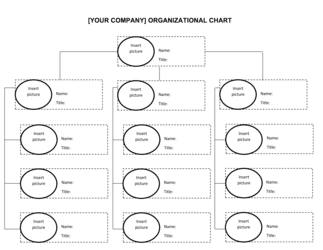
Documenting roles and responsibilities across departmentsOrganizational Chart
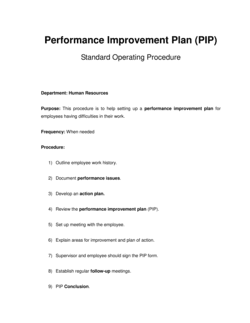
Setting formal performance goals for each department headPerformance Improvement Plan
Planning the business's overall strategic directionStrategic Plan
Standardizing recurring tasks within a single departmentStandard Operating Procedure (SOP)
Defining who owns which decisions across the companyRACI Matrix
Tracking company-wide KPIs across all departmentsKPI Dashboard Report
Onboarding a new department manager quicklyEmployee Onboarding Checklist

Common mistakes to avoid

❌ Delegating verbally with no written framework

Why it matters: Verbal delegation creates no shared reference point. When a manager makes a decision the entrepreneur did not expect, the entrepreneur overrides it β€” and the manager stops making decisions independently.

Fix: Write down the delegation framework in the template and review it with each department head. A one-page document eliminates a persistent source of organizational friction.

❌ Personally approving every departmental decision

Why it matters: Centralizing all decisions at the entrepreneur level creates a bottleneck that slows operations, demotivates managers, and limits the business's ability to scale beyond the owner's available hours.

Fix: Use the decision-rights matrix to identify and immediately transfer at least five recurring decision types to department heads with a defined spending or scope limit.

❌ No fixed reporting cadence across departments

Why it matters: Without scheduled reviews, performance problems surface only when they have become crises β€” at which point corrective action is far more expensive than early intervention would have been.

Fix: Schedule a fixed monthly performance review for each department using the KPI dashboard in this template. Hold it even when numbers are good β€” consistency builds the habit.

❌ Tracking too many KPIs per department

Why it matters: When a department is measured on eight metrics simultaneously, managers optimize for the easiest ones. The metrics that matter most β€” and require the most effort β€” get neglected.

Fix: Limit each department to two to four KPIs. If you cannot reduce to four, your measurement framework is reflecting activity rather than outcomes.

❌ Treating all communication as equally urgent

Why it matters: When every message β€” whether a minor status update or a financial emergency β€” arrives through the same channel, the entrepreneur cannot prioritize correctly and spends time responding to low-priority interruptions.

Fix: Define three communication tiers in the protocols section with separate channels and response-time expectations. Enforce them for at least 30 days before evaluating.

❌ Leaving cross-departmental handoffs undocumented

Why it matters: The gap between two departments is where work most commonly falls through β€” each team assumes the other is responsible for the transition, and no one owns the outcome.

Fix: Complete the cross-departmental coordination plan for every interface where work passes from one team to another. Assign one person as the handoff owner for each interface.

The 9 key sections, explained

Organizational accountability map

Delegation framework

Meeting and reporting cadence

Department performance metrics

Communication protocols

Decision-rights matrix

Cross-departmental coordination plan

Entrepreneur time-allocation guide

Escalation and crisis response protocol

How to fill it out

  1. 1

    List every department and assign a single owner

    Open the accountability map section and enter every functional area your business currently operates β€” even those you personally run. Assign one named person (including yourself where no one else exists yet) as owner of each.

    πŸ’‘ Any department where you are still the only owner is a gap in your management structure β€” flag it as a hiring priority.

  2. 2

    Define which decisions you will delegate immediately

    Complete the delegation framework by separating decisions you must retain from those a department head can own. Be specific about dollar thresholds, headcount limits, and customer-impact criteria.

    πŸ’‘ Start with decisions you currently make more than twice a week β€” these are the highest-leverage items to delegate first.

  3. 3

    Set a fixed meeting and reporting cadence

    Schedule weekly 1:1s with each department head, a monthly performance review, and a quarterly strategic session. Enter the specific day, time, and duration for each recurring meeting.

    πŸ’‘ Book recurring meetings for at least one quarter in advance so department heads can plan around them.

  4. 4

    Select two to four KPIs per department

    For each department, choose metrics that directly measure output quality and operational health. Enter the current baseline, the target, measurement frequency, and the tool where data is tracked.

    πŸ’‘ Prioritize leading indicators (pipeline volume, production cycle time) over lagging ones (quarterly revenue) β€” they give you time to intervene before the number misses.

  5. 5

    Document communication channels and response SLAs

    Fill in the communication protocols section with the specific tool and expected response time for each message type β€” urgent issue, routine update, and formal escalation.

    πŸ’‘ Send the completed protocols to all department heads in a single email and ask each to confirm they have read and understood them β€” this one step eliminates the most common source of miscommunication.

  6. 6

    Build the decision-rights matrix and train the team

    Complete the decision-rights table for the ten most common decision types in your business. Then walk through it with each department head in your next 1:1 to confirm they understand their authority.

    πŸ’‘ Revisit the matrix every six months β€” as the business grows, decision rights that made sense at 10 employees need to shift at 30.

  7. 7

    Block protected strategic time on your calendar

    Use the entrepreneur time-allocation guide to set non-negotiable deep-work blocks for strategy, business development, and planning. Mark them as unavailable in your shared calendar.

    πŸ’‘ Even two uninterrupted hours before 10 a.m. three days a week compounds into measurable strategic output over a quarter.

  8. 8

    Define escalation thresholds and share them with all managers

    Complete the escalation protocol with specific financial, legal, and operational triggers. Distribute the completed protocol to every department head so they know when to escalate and when to decide independently.

    πŸ’‘ Run one tabletop scenario with your team β€” describe a hypothetical crisis and ask each manager how they would respond β€” to test whether the protocol is understood before a real situation arises.

Frequently asked questions

How can an entrepreneur effectively manage multiple departments at once?

The foundation is replacing informal oversight with a documented system: an accountability map assigning one owner to each department, a delegation framework defining decision rights, a fixed reporting cadence, and department-level KPIs. Without these in writing, the entrepreneur defaults to managing reactively β€” responding to whoever is loudest rather than what matters most strategically. This template provides the structure to shift from reactive to systematic oversight.

How many departments can one entrepreneur realistically manage directly?

Most experienced operators recommend a span of control of five to seven direct reports for knowledge-work roles. An entrepreneur managing more than six department heads without a COO or operations director in place typically hits a ceiling where quality of oversight drops for every department simultaneously. The answer to scaling beyond that is not working more hours β€” it is restructuring so some department heads report to an intermediate leader rather than directly to the founder.

What is the most common mistake entrepreneurs make when managing multiple departments?

Retaining all decision authority personally. Entrepreneurs who delegate titles but not decisions end up as the bottleneck for every operational choice, defeating the purpose of having managers. The fix is a written decision-rights matrix that specifies exactly which decisions each department head owns β€” with a dollar threshold and scope limit β€” and then honoring it consistently.

How do I know which decisions to delegate and which to keep?

A useful rule: if a decision is reversible, operational, and recurring, delegate it. If it is irreversible, strategic, or exposes the business to material financial or legal risk, retain it. Most of what occupies an entrepreneur's day falls into the first category β€” recurring operational decisions that any competent manager can handle with clear authority and appropriate guardrails.

What KPIs should I track across my departments?

Choose two to four metrics per department that directly measure output and operational health. For Sales: pipeline value and conversion rate. For Operations: on-time delivery and cost per unit. For Finance: gross margin and cash runway. For Marketing: cost per qualified lead and conversion to opportunity. The exact metrics depend on your business model, but the discipline of limiting to four per department is non-negotiable β€” more than that dilutes focus rather than adding clarity.

How often should an entrepreneur meet with department heads?

A weekly 30-minute 1:1 with each department head is the minimum effective cadence for businesses with five or more employees per department. Supplement this with a monthly performance review using dashboard data and a quarterly half-day strategic planning session. Ad hoc meetings should be the exception, not the primary channel β€” when everything is ad hoc, managers cannot plan their own work around the entrepreneur's schedule.

What is a decision-rights matrix and why does it matter?

A decision-rights matrix is a table that maps each class of business decision to the person who decides, who must be consulted, and who is informed after the fact. It matters because ambiguity about decision authority is one of the primary causes of organizational slowness. When managers do not know whether they can approve a $5,000 vendor invoice independently, they escalate it β€” creating a queue of decisions waiting on the entrepreneur that could have been resolved in seconds at the department level.

How do I protect strategic time when I have multiple departments to manage?

Block time first, before department needs fill the calendar. Reserve at least two to three hours of uninterrupted deep-work time on at least three days per week, and mark it as unavailable in your shared calendar. Pair this with clear communication protocols that define which issues warrant interrupting strategic time β€” typically only genuine operational crises with financial or reputational exposure above a defined threshold.

When should I hire a COO or operations director to help manage departments?

Consider hiring when you are consistently managing more than five department heads directly, when your personal response latency is measurably slowing department operations, or when you spend more than 60% of your week on operational decisions rather than strategic work. A COO or operations director takes the reporting layer between the entrepreneur and department heads, freeing the founder to focus on growth, capital, and strategy.

How this compares to alternatives

vs Strategic Plan

A strategic plan defines where the business is going over a 3–5 year horizon β€” goals, initiatives, and resource priorities. This management guide defines how the entrepreneur oversees the departments executing that plan day to day. Both are needed: the strategic plan sets direction; this document builds the operating system to execute it.

vs Organizational Chart

An organizational chart shows reporting lines and team structure visually but provides no guidance on how to manage across those lines. This guide adds the meeting cadence, decision rights, communication protocols, and KPI framework that make the structure in the org chart actually function.

vs Standard Operating Procedure (SOP)

An SOP documents how a specific task or process is performed within a single department. This management guide operates at a higher level β€” it defines how the entrepreneur coordinates across all departments rather than standardizing any one workflow. Both documents are complementary: this guide governs the entrepreneur's management system; SOPs govern individual team execution.

vs RACI Matrix

A RACI matrix maps responsibility, accountability, consultation, and information for a specific project or process. This document is broader β€” it establishes a durable management operating system across all departments, of which a RACI matrix is one component (the decision-rights section). Use RACI for individual projects; use this guide to manage the whole business.

Industry-specific considerations

Retail and E-commerce

Entrepreneurs manage purchasing, inventory, marketing, and customer service simultaneously β€” each with distinct metrics and seasonal demand peaks that require synchronized planning.

Professional Services

Founders must balance business development, delivery, finance, and HR with limited management layers, making documented delegation and reporting cadences especially critical.

Food and Beverage

Kitchen operations, front-of-house service, procurement, and marketing often report to a single owner-operator, requiring tight cross-departmental coordination and daily KPI monitoring.

Manufacturing

Production, quality control, logistics, and sales must be tightly coordinated; handoff failures between departments translate directly into delivery delays and customer attrition.

Healthcare and Wellness

Clinical, administrative, billing, and marketing departments operate under different compliance obligations, requiring a management framework that enforces accountability without creating cross-departmental confusion.

SaaS and Technology

Product, engineering, sales, and customer success must be aligned on a shared roadmap and release cadence, making the decision-rights matrix and cross-departmental coordination plan especially high-value.

Template vs pro β€” what fits your needs?

PathBest forCostTime
Use the templateEntrepreneurs managing 2–6 departments who need a structured system without outside helpFree3–5 hours to customize and implement
Template + professional reviewFounders preparing to hire their first management layer or transitioning from operator to CEO$500–$2,000 for a session with a business coach or operations consultant1–2 weeks including coaching sessions
Custom draftedScaling businesses with 50+ employees, multiple locations, or complex cross-functional dependencies requiring a custom operating model$5,000–$20,000 for a management consultant engagement4–8 weeks

Glossary

Span of Control
The number of direct reports a single manager can effectively supervise β€” typically 5 to 8 people for knowledge-work roles.
Delegation
Assigning specific tasks, decisions, or responsibilities to another person while retaining accountability for the outcome.
Decision Rights
A documented framework specifying who has authority to make which types of decisions β€” individually, collaboratively, or with escalation.
RACI Matrix
A responsibility assignment chart labeling each task as Responsible, Accountable, Consulted, or Informed for every stakeholder involved.
Reporting Cadence
The scheduled frequency β€” daily, weekly, monthly, quarterly β€” at which departments submit updates or metrics to leadership.
KPI (Key Performance Indicator)
A quantifiable metric used to evaluate whether a department or individual is meeting its objectives β€” e.g., revenue per employee or customer-support ticket resolution time.
Bottleneck
A point in a workflow where work accumulates because one person, process, or resource cannot keep pace with the demand flowing into it.
Accountability Map
A visual or tabular document assigning a single named owner to each department, function, or outcome β€” eliminating shared or ambiguous ownership.
OKRs (Objectives and Key Results)
A goal-setting framework pairing a qualitative objective with two to five measurable key results, typically set quarterly.
Cross-Functional Meeting
A structured gathering involving representatives from two or more departments to align on shared projects, dependencies, or decisions.

Part of your Business Operating System

This document is one of 3,000+ business & legal templates included in Business in a Box.

  • Fill-in-the-blanks β€” ready in minutes
  • Compatible with all office suites
  • Export to PDF and share electronically

Create your document in 3 simple steps.

From template to signed document β€” all inside one Business Operating System.
1
Download or open template

Access over 3,000+ business and legal templates for any business task, project or initiative.

2
Edit and fill in the blanks with AI

Customize your ready-made business document template and save it in the cloud.

3
Save, Share, Send, Sign

Share your files and folders with your team. Create a space of seamless collaboration.

Save time, save money, and create top-quality documents.

β˜…β˜…β˜…β˜…β˜…

"Fantastic value! I'm not sure how I'd do without it. It's worth its weight in gold and paid back for itself many times."

Managing Director Β· Mall Farm
Robert Whalley
Managing Director, Mall Farm Proprietary Limited
β˜…β˜…β˜…β˜…β˜…

"I have been using Business in a Box for years. It has been the most useful source of templates I have encountered. I recommend it to anyone."

Business Owner Β· 4+ years
Dr Michael John Freestone
Business Owner
β˜…β˜…β˜…β˜…β˜…

"It has been a life saver so many times I have lost count. Business in a Box has saved me so much time and as you know, time is money."

Owner Β· Upstate Web
David G. Moore Jr.
Owner, Upstate Web

Run your business with a system β€” not scattered tools

Stop downloading documents. Start operating with clarity. Business in a Box gives you the Business Operating System used by over 250,000 companies worldwide to structure, run, and grow their business.

Start freeΒ Β·Β No credit card required