How To Delegate Your Team Effectively

Free to read β€’ Save or share with one click

FreeHow To Delegate Your Team Effectively Template

At a glance

What it is
How To Delegate Your Team Effectively is a structured operational guide that walks managers through a repeatable process for assigning tasks, setting expectations, and holding team members accountable. This free Word download gives you a ready-to-edit framework you can adapt to your team's size and workflow, then export as PDF to share with direct reports or use as an onboarding reference for new team leads.
When you need it
Use it when you are managing a growing team and find yourself doing work that should belong to someone else, when promoting a high performer into a management role for the first time, or when bottlenecks consistently trace back to a single person who is not passing work down the chain.
What's inside
A delegation readiness assessment, task prioritization matrix, step-by-step handoff process, authority and accountability definitions, feedback and check-in schedule, and a post-delegation review framework for continuous improvement.

What is a How To Delegate Your Team Effectively guide?

A How To Delegate Your Team Effectively guide is a structured operational document that gives managers a repeatable framework for assigning work, setting authority boundaries, and holding team members accountable for outcomes. It walks through every stage of the delegation process β€” from identifying which tasks should be handed off, to matching the right task to the right person, to running a post-completion review that improves each subsequent handoff. Unlike a casual task list or an informal verbal assignment, a structured delegation guide creates a documented, consistent process that can be applied across an entire management team.

Why You Need This Document

Managers who rely on instinct rather than process when delegating create invisible bottlenecks: work piles up on the desks of the most capable people, team members lack the authority to move tasks forward without interrupting their manager, and post-project debriefs never happen because everyone has already moved on to the next crisis. The cost is measurable β€” overloaded managers miss strategic priorities, underutilized team members disengage, and organizations lose institutional knowledge every time a key person leaves. A structured delegation framework prevents all of this by turning each handoff into a consistent, documented event with clear expectations on both sides. This template gives you a ready-to-use starting point so you can build that consistency without designing the process from scratch.

Which variant fits your situation?

If your situation is…Use this template
Delegating a single project to one direct reportTask Assignment Form
Distributing ongoing responsibilities across a departmentRoles and Responsibilities Matrix (RACI)
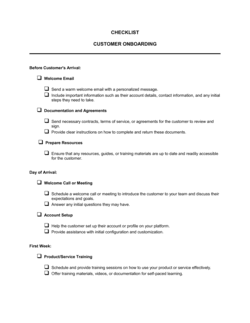
Onboarding a new team lead to manage a sub-teamNew Employee Onboarding Checklist
Improving overall team workflow and removing bottlenecksProcess Improvement Plan
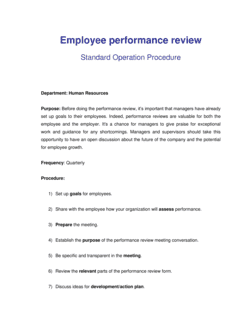
Setting measurable goals for each delegated responsibilityEmployee Performance Review
Documenting a recurring process before handing it offStandard Operating Procedure (SOP)

Common mistakes to avoid

❌ Delegating the task but not the authority

Why it matters: A team member who owns the work but must get approval for every decision will interrupt the manager constantly, defeating the purpose of delegation and slowing execution.

Fix: For every delegated task, explicitly define the decision types the team member can handle independently and write them down before the handoff meeting ends.
❌ Always assigning to the strongest performer

Why it matters: Top performers get overloaded while other team members stagnate β€” creating a single point of failure and a retention risk when the overloaded person burns out.

Fix: Distribute stretch assignments based on development goals and capacity, not just capability. Use the capability profile to rotate meaningful work intentionally.

❌ Skipping the delegation briefing conversation

Why it matters: A task dropped into someone's queue by email without context produces work that misses the point, requires extensive rework, and erodes the team member's confidence.

Fix: Run a 15–30 minute briefing for any task that will take more than four hours to complete. Cover context, outcome, deadline, and authority in every briefing.

❌ Setting no check-in schedule and waiting for the deadline

Why it matters: Without interim touchpoints, small misalignments compound over days or weeks into a deliverable that requires full rework β€” wasting everyone's time.

Fix: Book check-ins before the team member leaves the briefing, not after problems appear. At minimum, schedule one midpoint review for any task longer than one week.

❌ Rescuing the task when the team member struggles

Why it matters: Taking the work back teaches the team member that struggling produces help rather than support β€” reinforcing reverse delegation and preventing skill development.

Fix: When a team member hits an obstacle, coach them toward a solution by asking questions rather than providing answers or reclaiming the work.

❌ Not documenting the process before handing it off

Why it matters: If the task involves a recurring process the manager has been running from memory, the team member has no reference point and the manager becomes an ongoing dependency.

Fix: Before the first handoff of a recurring task, write a brief SOP or step-by-step guide the team member can follow and improve over time.

The 8 key sections, explained

Delegation readiness assessment

Task prioritization matrix

Team member capability profile

Delegation briefing framework

Authority and decision boundary definitions

Check-in and progress review schedule

Obstacle escalation protocol

Post-delegation review

How to fill it out

  1. 1

    Complete the delegation readiness assessment for your current task list

    Work through your open tasks one by one using the assessment criteria. Flag each task as delegate, retain, or develop-first based on skill requirements and risk level.

    πŸ’‘ If more than 60% of your tasks are flagged as 'retain,' the problem is usually habit or control rather than genuine necessity β€” revisit those with fresh eyes.

  2. 2

    Map tasks onto the prioritization matrix

    Place each task on the urgency-importance grid. Tasks in the 'urgent but not important' quadrant are your first delegation targets; tasks in 'not urgent but important' are your best development opportunities.

    πŸ’‘ Do this exercise weekly for the first month β€” your task distribution will shift as you delegate more, and the matrix helps you see the change.

  3. 3

    Match each task to the right team member

    Review capability profiles for each direct report. Assign based on development goals and available capacity, not just current skill level. Note the rationale so you can refer back to it in the post-delegation review.

    πŸ’‘ Pair a stretch task with a support resource β€” a reference document, a subject-matter expert to consult, or a relevant past project to model.

  4. 4

    Run the delegation briefing conversation

    Use the briefing framework to cover context, expected deliverable, deadline, authority level, and available resources in a single 15–30 minute meeting. Confirm understanding by asking the team member to summarize the assignment back to you.

    πŸ’‘ If the team member can't summarize the expected outcome clearly, the brief wasn't clear enough β€” clarify before the meeting ends, not two weeks later.

  5. 5

    Define and document authority boundaries

    Write down which decisions the team member can make independently, which require a heads-up after the fact, and which need prior approval. Share this in writing after the briefing conversation.

    πŸ’‘ Start boundaries slightly tighter than you think necessary β€” it is easier to expand authority as trust builds than to pull it back after a problem.

  6. 6

    Schedule check-ins and set the escalation protocol

    Put check-in dates on the calendar before the team member leaves the briefing meeting. Share the escalation protocol in writing so the team member knows exactly when and how to flag a blocker.

    πŸ’‘ The first check-in should be within 48–72 hours of the handoff β€” early enough to catch misalignment before effort is wasted.

  7. 7

    Conduct the post-delegation review

    Within one week of delivery, debrief with the team member using the review template. Score the outcome, document what changed, and update the capability profile with new evidence.

    πŸ’‘ File completed review notes β€” they become your evidence base for promotion decisions and for designing the next round of stretch assignments.

Frequently asked questions

What is effective delegation and why does it matter?

Effective delegation is the structured transfer of a task, decision, or responsibility to a team member β€” along with the authority and resources needed to complete it β€” while the manager retains accountability for the outcome. It matters because managers who delegate effectively multiply their team's output, develop the skills of their direct reports, and free themselves to focus on work only they can do. Managers who do not delegate become the bottleneck their team works around.

What tasks should a manager delegate?

Start with tasks that are urgent but not strategically important β€” routine reporting, scheduling, and administrative coordination. Next, delegate tasks that are important but not urgent, specifically because these build team capability over time. Retain tasks that require your unique expertise, your specific relationships, or your positional authority to execute. As a rule: if a team member can do it at 70% of your quality today, delegate it β€” they will reach 100% faster through doing than watching.

How do I know which team member to assign a task to?

Match the task to the team member whose development goal it best serves, provided they have the minimum baseline skill to attempt it and the capacity to take it on. Avoid defaulting to your strongest performer for every new assignment β€” review the capability profile for each direct report and rotate meaningful work deliberately. A mismatch between task difficulty and current skill level produces either no development (too easy) or demoralization (too hard).

What is the difference between delegating and dumping?

Delegation includes context, a clear expected outcome, defined authority, available resources, and a support structure. Dumping is assigning work without explanation, authority, or follow-through. The clearest test: could the team member describe the purpose and expected deliverable of the task in one sentence after the handoff? If not, it was a dump.

How do I stop my team from returning delegated tasks to me?

Reverse delegation β€” where team members route decisions back to the manager rather than resolving them β€” is usually trained behavior. If you answer questions immediately and take tasks back when things get hard, the team learns that escalating produces relief. Break the pattern by requiring team members to present a recommended solution before you will discuss a problem, and by asking coaching questions instead of providing answers.

How much oversight is appropriate after delegating a task?

The right level of oversight depends on the team member's experience with the task and the risk level of the outcome. For a first-time assignment, a check-in within 48–72 hours plus a midpoint review is appropriate. For an experienced team member handling a routine task, a single completion check may be enough. The goal is to reduce check-in frequency over time as the team member demonstrates reliability β€” not to maintain the same cadence indefinitely.

Can this delegation template be used with remote or distributed teams?

Yes. The framework is channel-agnostic β€” the briefing conversation can happen on a video call, the authority definitions and check-in schedule can be shared via a project management tool, and the post-delegation review can be run asynchronously using a shared document. For remote teams, written documentation of authority boundaries and escalation protocols is even more important than for co-located teams, since hallway conversations that might catch a misalignment in an office do not happen.

How does effective delegation support employee development?

Delegation is the primary mechanism through which managers develop their team. Stretch assignments β€” tasks slightly above the team member's current skill level β€” build capability faster than training courses because they require applied problem-solving with real consequences. A manager who delegates deliberately, matches assignments to development goals, and debriefs after each task becomes the single biggest driver of their team members' career progression.

What should I do if a delegated task goes wrong?

Resist the impulse to take the task back or to fix it yourself without involving the team member. Instead, use the obstacle escalation protocol to understand what happened, then coach the team member through the corrective action. Conduct a post-delegation review focused on systemic causes β€” unclear brief, insufficient authority, missing resources β€” rather than individual blame. Most failures in delegated work trace back to the quality of the handoff, not the capability of the person.

How this compares to alternatives

vs RACI Matrix

A RACI matrix maps accountability across an entire team or project at once, showing who is Responsible, Accountable, Consulted, and Informed for each task. The delegation guide focuses on the one-to-one handoff process between a manager and a single team member. Use the RACI to design team-wide ownership; use the delegation guide to execute each individual handoff.

vs Standard Operating Procedure (SOP)

An SOP documents how a specific recurring process should be performed β€” step by step. A delegation guide covers how to transfer ownership of that process to another person. The two work together: write the SOP first, then use the delegation guide to hand it off. Delegating without an SOP for recurring tasks creates a dependency on the manager as the walking documentation.

vs Employee Performance Review

A performance review evaluates what a team member achieved over a review period against set goals. A delegation guide is a forward-looking operational tool used during the period to assign work and build skill. The post-delegation review notes generated by this template feed directly into the performance review by providing specific, documented evidence of what was assigned and how it was handled.

vs Project Management Plan

A project management plan covers scope, schedule, budget, risk, and stakeholder communication for an entire project. A delegation guide focuses specifically on the manager-to-team-member handoff of individual tasks or responsibilities within that project. Use the project plan to coordinate the full initiative; use the delegation guide to ensure each assigned task is properly briefed, resourced, and supervised.

Industry-specific considerations

Professional services

Partners and senior consultants use delegation frameworks to transfer billable work to junior staff, protecting margins and developing the next generation of client-facing talent.

Technology / SaaS

Engineering leads and product managers delegate feature ownership and sprint responsibilities to individual contributors, requiring clear authority boundaries and defined escalation paths for technical decisions.

Retail / Hospitality

Store managers and floor supervisors delegate shift-level decisions to team leads, relying on defined authority levels and check-in cadences to maintain service standards without being present at every transaction.

Manufacturing

Plant managers delegate quality control, safety checks, and line supervision to shift leads, where clear handoff documentation and escalation protocols directly affect compliance and output targets.

Template vs pro β€” what fits your needs?

PathBest forCostTime
Use the templateManagers at any level who want a structured, repeatable delegation process they can apply immediatelyFree1–2 hours to complete and adapt for your team
Template + professional reviewOrganizations rolling out a delegation framework across multiple managers or teams$500–$2,000 for an HR or leadership development consultant to tailor and facilitate1–2 weeks
Custom draftedEnterprises building a formal leadership development curriculum with delegation as a core competency$3,000–$10,000 for a custom training program with coaching and assessment4–8 weeks

Glossary

Delegation
The act of assigning responsibility and authority for a specific task or decision to another person while retaining accountability for the outcome.
Authority Level
The degree of decision-making power granted to a team member for a delegated task β€” ranging from 'act and report' to 'recommend only.'
RACI Matrix
A responsibility assignment framework that labels each task with who is Responsible, Accountable, Consulted, and Informed.
Micromanagement
Excessive oversight of a delegated task that removes the team member's autonomy and undermines the purpose of delegation.
Task Scope
A clear statement of what is included in and excluded from a delegated assignment, used to prevent scope creep and misaligned effort.
Check-in Cadence
The agreed schedule for progress updates between the delegator and the team member β€” weekly one-on-ones, milestone reviews, or status reports.
Reverse Delegation
When a team member returns a delegated task to the manager instead of resolving it independently, often by framing it as a question or escalation.
Stretch Assignment
A delegated task that is intentionally slightly beyond the team member's current skill level to accelerate their development.
Accountability Gap
The breakdown that occurs when a task is assigned but no single person owns the outcome β€” leading to missed deadlines and finger-pointing.
Handoff Documentation
Written instructions, context, and resources transferred to the team member at the time of delegation so the manager does not become a dependency.

Part of your Business Operating System

This document is one of 3,000+ business & legal templates included in Business in a Box.

  • Fill-in-the-blanks β€” ready in minutes
  • Compatible with all office suites
  • Export to PDF and share electronically

Create your document in 3 simple steps.

From template to signed document β€” all inside one Business Operating System.
1
Download or open template

Access over 3,000+ business and legal templates for any business task, project or initiative.

2
Edit and fill in the blanks with AI

Customize your ready-made business document template and save it in the cloud.

3
Save, Share, Send, Sign

Share your files and folders with your team. Create a space of seamless collaboration.

Save time, save money, and create top-quality documents.

β˜…β˜…β˜…β˜…β˜…

"Fantastic value! I'm not sure how I'd do without it. It's worth its weight in gold and paid back for itself many times."

Managing Director Β· Mall Farm
Robert Whalley
Managing Director, Mall Farm Proprietary Limited
β˜…β˜…β˜…β˜…β˜…

"I have been using Business in a Box for years. It has been the most useful source of templates I have encountered. I recommend it to anyone."

Business Owner Β· 4+ years
Dr Michael John Freestone
Business Owner
β˜…β˜…β˜…β˜…β˜…

"It has been a life saver so many times I have lost count. Business in a Box has saved me so much time and as you know, time is money."

Owner Β· Upstate Web
David G. Moore Jr.
Owner, Upstate Web

Run your business with a system β€” not scattered tools

Stop downloading documents. Start operating with clarity. Business in a Box gives you the Business Operating System used by over 250,000 companies worldwide to structure, run, and grow their business.

Start freeΒ Β·Β No credit card required