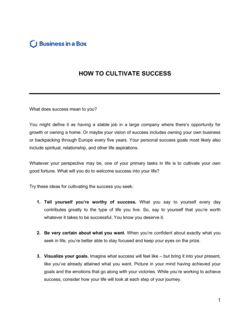
How To Cultivate Confidence In A Competitive Workplace

Free to read β€’ Save or share with one click

FreeHow To Cultivate Confidence In A Competitive Workplace Template

At a glance

What it is
How To Cultivate Confidence In A Competitive Workplace is a structured operational guide and personal development framework that helps professionals identify confidence gaps, set actionable goals, and build the habits and communication skills needed to perform with clarity in high-pressure environments. This free Word download gives you a ready-to-use template you can edit online and share with teams, managers, or coaches.
When you need it
Use it when preparing for a new role, navigating a performance review cycle, entering a highly competitive team, or supporting employees who are struggling to assert themselves in meetings, negotiations, or cross-functional projects.
What's inside
A self-assessment framework, goal-setting module, communication and visibility strategies, resilience-building techniques, and a progress-tracking section β€” structured so that individuals and managers can work through it independently or collaboratively.

What is a How To Cultivate Confidence In A Competitive Workplace guide?

A How To Cultivate Confidence In A Competitive Workplace guide is a structured operational document that walks professionals through a self-assessment, root cause analysis, goal-setting, and habit-building process designed to close the gap between actual competence and the confidence with which it is expressed at work. It covers situational confidence mapping, assertive communication frameworks, visibility strategies, resilience techniques, and a behavioral tracking system β€” organized so that individuals, managers, and coaches can use it independently or collaboratively. This free Word download gives you a ready-to-edit framework you can tailor to your role, team, or organization and export as PDF for sharing.

Why You Need This Document

Without a structured approach to confidence development, professionals in competitive environments default to avoidance β€” skipping high-visibility meetings, over-qualifying their ideas, or waiting to be recognized rather than communicating their contributions. Over time, this pattern compounds: missed visibility opportunities translate into missed promotions, underutilized expertise, and talent that quietly exits rather than advancing. For managers, the cost shows up in team dynamics β€” one low-confidence voice in a high-stakes room can shift the outcome of a decision, a client relationship, or a hire. This guide replaces ad hoc encouragement with a repeatable process: specific goals, trackable behaviors, and monthly checkpoints that produce measurable change in the situations that matter most.

Which variant fits your situation?

If your situation is…Use this template
Individual contributor building confidence for a first management roleLeadership Development Plan
Manager coaching a team member with low visibility and assertivenessEmployee Performance Improvement Plan
New hire navigating a competitive onboarding environment30-60-90 Day Plan
Professional preparing for salary negotiation or promotion reviewCareer Development Plan
Team undergoing restructuring and morale challengesEmployee Engagement Action Plan
Executive preparing for board presentations or investor meetingsExecutive Presentation Guide
HR standardizing confidence training across departmentsTraining and Development Plan

Common mistakes to avoid

❌ Setting outcome goals instead of behavioral goals

Why it matters: Goals like 'be more confident' or 'speak up more' cannot be measured, which means there is no feedback loop and no way to know if anything is changing.

Fix: Replace every outcome goal with a specific, observable behavior tied to a real recurring situation β€” for example, 'contribute at least one idea in every Tuesday sprint review.'

❌ Skipping the root cause section

Why it matters: Applying communication tactics to someone whose confidence gap stems from a toxic past manager or repeated public criticism produces temporary behavior change that collapses under pressure.

Fix: Spend at least 20 minutes on Section 2 before filling out goals. Identifying the source of a pattern is what allows you to interrupt it deliberately.

❌ Tracking feelings rather than behaviors

Why it matters: Mood-based tracking ('I felt better this week') fluctuates with sleep, workload, and social dynamics β€” not with actual skill development β€” so it creates a false picture of progress.

Fix: Track specific, countable behaviors: number of times you spoke up, number of presentations given, number of times you pushed back without over-apologizing.

❌ Treating visibility as self-promotion and avoiding it entirely

Why it matters: In competitive workplaces, contributions that are not communicated are often credited to others or simply overlooked, regardless of their quality.

Fix: Reframe visibility as information-sharing β€” you are helping stakeholders understand the status of work they depend on, not advertising yourself.

❌ Attempting too many goals at once

Why it matters: Working on five confidence areas simultaneously spreads attention so thin that none improve meaningfully, which can reinforce the belief that the gaps are permanent.

Fix: Choose one to three behavioral goals for a 30-day cycle. Depth of practice in a single area consistently outperforms scattered effort across many.

❌ Completing the guide once and filing it away

Why it matters: Confidence in competitive environments degrades without maintenance β€” new roles, new teams, and new challenges continuously reset the baseline.

Fix: Schedule a quarterly review to re-run the self-assessment, update goals, and assess which habits are still serving you versus which need to be replaced.

The 8 key sections, explained

Self-Assessment: Identifying Confidence Gaps

Root Cause Analysis: Where Low Confidence Comes From

Goal Setting: Concrete Confidence Milestones

Communication Skills: Speaking Up and Being Heard

Visibility Strategy: Making Contributions Known

Resilience Building: Handling Setbacks and Criticism

Mindset and Habit Development

Progress Tracking and Accountability

How to fill it out

  1. 1

    Complete the situational self-assessment

    Work through the confidence-rating exercise for each scenario listed in Section 1. Score each item 1–5 and circle the two or three areas with the lowest scores β€” these become your primary development focus.

    πŸ’‘ Do this exercise twice in the same week: once on a good day and once on a difficult day. The gap between scores identifies which areas are skill deficits versus anxiety-driven dips.

  2. 2

    Write out root causes for each low-confidence area

    For each flagged scenario, use the prompt in Section 2 to articulate the underlying belief and its evidence. This takes 20–30 minutes but prevents you from applying surface-level tactics to deep-seated patterns.

    πŸ’‘ If the root cause traces to a specific past event or relationship, note it but don't dwell β€” focus your time on the counter-evidence column, which is where behavioral change begins.

  3. 3

    Set one to three behavioral goals with clear due dates

    Using the SMART format in Section 3, translate each root cause into a concrete behavioral goal. Limit yourself to three goals at a time β€” more than that dilutes focus in competitive environments where bandwidth is already stretched.

    πŸ’‘ Anchor each goal to a recurring meeting or event already on your calendar so you have a natural testing ground each week.

  4. 4

    Practice the communication frameworks

    Read through the assertive communication structures in Section 4 and write out a response to a real situation you are currently navigating β€” a pending disagreement, an upcoming presentation, or a scope negotiation.

    πŸ’‘ Say your drafted response out loud before using it. Written language and spoken language feel different; a sentence that reads confidently may still sound hesitant when spoken without rehearsal.

  5. 5

    Build your visibility action plan for the next 30 days

    Complete Section 5 by listing three specific, calendar-linked visibility actions for the coming month. Each action should involve a real audience β€” a meeting, a report, a channel, or a one-on-one.

    πŸ’‘ Start with the lowest-risk visibility action first. One successful small moment of being heard builds more self-efficacy than a single high-stakes attempt that goes poorly.

  6. 6

    Set up your weekly tracking log

    Create the weekly habit described in Section 8 β€” either in this document or in a separate log. Schedule a recurring 10-minute calendar block each Friday to complete it before the weekend.

    πŸ’‘ Review your tracking log before each monthly check-in with your manager or coach. Three weeks of behavioral data makes those conversations far more productive than a verbal summary from memory.

Frequently asked questions

What is a workplace confidence guide?

A workplace confidence guide is a structured document that walks professionals through a self-assessment, goal-setting, and skill-building process designed to close the gap between their actual competence and the confidence with which they communicate it. It combines reflection exercises, behavioral frameworks, and progress-tracking tools into a single reference that can be used individually or with a manager or coach.

Who should use this guide?

Anyone who feels their performance is being limited by how they present themselves at work β€” not by what they know or can do. Early-career professionals entering competitive teams, mid-level managers preparing for leadership transitions, and experienced professionals navigating new industries or organizations all benefit from a structured confidence-building framework.

What is the difference between confidence and competence?

Competence is what you can actually do; confidence is your belief in your ability to do it and your willingness to act on that belief in front of others. The two often diverge β€” highly competent people frequently underestimate their abilities, while less skilled people can project confidence that outpaces their actual output. This guide focuses on closing the gap where competence exists but confidence does not.

How long does it take to see results from a confidence-building plan?

Most people notice measurable behavioral changes β€” speaking up more consistently, handling feedback without withdrawal β€” within three to four weeks of following the guide's weekly habit structure. Sustained confidence in genuinely new and challenging situations typically takes two to three months of deliberate practice with a feedback loop.

Can a manager use this guide to support a direct report?

Yes. The guide is structured so that a manager can work through it collaboratively with a direct report β€” completing the self-assessment together, co-creating behavioral goals, and conducting the monthly progress reviews described in the tracking section. Managers should read the root cause section before any coaching conversation to avoid jumping straight to tactics.

Is workplace confidence the same as being extroverted?

No. Confidence is a behavioral skill, not a personality trait. Introverted professionals can develop high-impact assertive communication, strong visibility strategies, and resilience under pressure without changing their fundamental orientation. The guide's frameworks are explicitly designed to work for people who prefer depth over breadth in relationships and preparation over improvisation.

How does imposter syndrome affect performance in competitive workplaces?

Imposter syndrome causes high-performing individuals to avoid high-visibility situations, attribute their successes to luck rather than skill, and over-prepare for low-stakes tasks while under-advocating for promotions and opportunities. In competitive environments this is costly because advancement often depends as much on visibility and self-advocacy as on technical output.

How often should this guide be reviewed and updated?

Quarterly reviews are recommended for anyone actively using the guide as a development tool. A full re-run of the self-assessment every six months captures how confidence thresholds shift as roles and responsibilities evolve. Major role changes β€” a new job, a promotion, or a team restructure β€” should trigger an immediate reset regardless of the calendar cycle.

How this compares to alternatives

vs Performance Improvement Plan

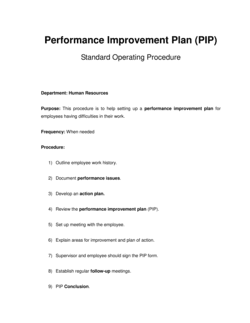
A Performance Improvement Plan (PIP) is a formal, manager-initiated document triggered by documented underperformance β€” it is remedial and often precedes termination. This confidence guide is a proactive, self-directed development tool used before performance problems arise. Use the PIP when a documented gap must be addressed formally; use this guide for development-oriented coaching.

vs Career Development Plan

A career development plan maps long-term skill acquisition and advancement goals across years. This confidence guide focuses specifically on behavioral patterns and communication habits that can be changed in weeks β€” it is narrower in scope but faster to act on. The two documents complement each other: the career plan sets the destination; this guide addresses the internal barriers that slow progress toward it.

vs Employee Training Plan

An employee training plan schedules formal learning activities β€” courses, certifications, workshops β€” to close technical skill gaps. This confidence guide addresses the mindset, communication, and self-presentation gaps that training alone does not fix. Use the training plan to build hard skills; use this guide to ensure those skills are expressed confidently in competitive contexts.

vs Leadership Development Plan

A leadership development plan prepares professionals for management and strategic responsibilities β€” delegation, stakeholder management, team leadership. This confidence guide is a prerequisite for many of those skills: professionals who struggle to assert opinions in peer settings will face compounded challenges when they must do so as a manager. Address confidence gaps with this guide before or alongside leadership development.

Industry-specific considerations

Technology / SaaS

Engineers and product managers navigating highly opinionated team cultures where speaking up in design reviews or sprint retrospectives directly affects career trajectory.

Financial Services

Analysts and associates competing for deal visibility in hierarchical environments where confidence in client-facing situations is explicitly evaluated during promotion reviews.

Professional Services

Consultants and lawyers who must project authority to senior clients from early in their tenure while managing the internal pressure of up-or-out performance cultures.

Healthcare

Clinicians and administrators who need to assert patient-advocacy positions in high-stakes multidisciplinary meetings where hierarchy and status strongly influence whose voice is heard.

Template vs pro β€” what fits your needs?

PathBest forCostTime
Use the templateIndividual contributors, managers, and HR teams running self-directed or light coaching programsFree2–3 hours to complete; 10 minutes per week to maintain
Template + professional reviewProfessionals working with a manager or internal coach who wants a structured framework to anchor conversations$0–$200 for a facilitated session with an internal L&D specialist1–2 guided sessions plus ongoing weekly check-ins
Custom draftedExecutive coaching engagements or organization-wide confidence and leadership programs requiring custom assessments$500–$5,000 depending on coach seniority and program scope2–8 weeks for a custom program design

Glossary

Imposter Syndrome
A persistent internal experience of believing you are not as competent as others perceive you to be, despite evidence of actual achievement.
Self-Efficacy
A person's belief in their own ability to complete a specific task or reach a specific goal, developed through experience and feedback.
Psychological Safety
A team climate in which members feel safe to speak up, ask questions, and make mistakes without fear of embarrassment or retaliation.
Visibility Strategy
A deliberate plan for ensuring that your contributions and expertise are known to colleagues, managers, and stakeholders who influence your career.
Growth Mindset
The belief that skills and intelligence can be developed through effort and learning, as opposed to being fixed traits you either have or lack.
Assertive Communication
A communication style in which a person expresses their needs, opinions, and boundaries clearly and respectfully without aggression or passivity.
Cognitive Reframing
A technique for changing how you interpret a situation β€” shifting from a threat-focused perspective to an opportunity-focused one to reduce anxiety.
Performance Feedback Loop
A structured cycle of setting goals, receiving feedback, reflecting on results, and adjusting behavior β€” used to accelerate skill development.
Stretch Assignment
A task or project that sits slightly beyond a person's current skill level, designed to accelerate development through deliberate challenge.
Internal Locus of Control
The belief that your own actions and decisions β€” rather than external circumstances β€” are the primary drivers of your outcomes.

Part of your Business Operating System

This document is one of 3,000+ business & legal templates included in Business in a Box.

  • Fill-in-the-blanks β€” ready in minutes
  • Compatible with all office suites
  • Export to PDF and share electronically

Create your document in 3 simple steps.

From template to signed document β€” all inside one Business Operating System.
1
Download or open template

Access over 3,000+ business and legal templates for any business task, project or initiative.

2
Edit and fill in the blanks with AI

Customize your ready-made business document template and save it in the cloud.

3
Save, Share, Send, Sign

Share your files and folders with your team. Create a space of seamless collaboration.

Save time, save money, and create top-quality documents.

β˜…β˜…β˜…β˜…β˜…

"Fantastic value! I'm not sure how I'd do without it. It's worth its weight in gold and paid back for itself many times."

Managing Director Β· Mall Farm
Robert Whalley
Managing Director, Mall Farm Proprietary Limited
β˜…β˜…β˜…β˜…β˜…

"I have been using Business in a Box for years. It has been the most useful source of templates I have encountered. I recommend it to anyone."

Business Owner Β· 4+ years
Dr Michael John Freestone
Business Owner
β˜…β˜…β˜…β˜…β˜…

"It has been a life saver so many times I have lost count. Business in a Box has saved me so much time and as you know, time is money."

Owner Β· Upstate Web
David G. Moore Jr.
Owner, Upstate Web

Run your business with a system β€” not scattered tools

Stop downloading documents. Start operating with clarity. Business in a Box gives you the Business Operating System used by over 250,000 companies worldwide to structure, run, and grow their business.

Free Forever PlanΒ Β·Β No credit card required