1
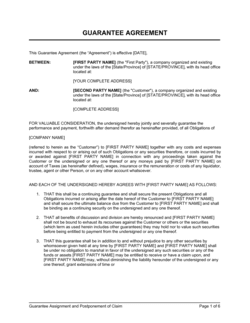
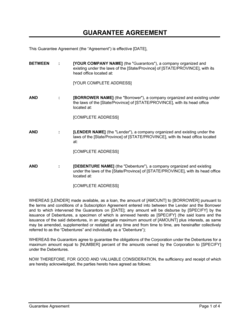
Identify and confirm all party details
Enter the full registered legal names of the lender, borrower, and guarantor. For corporate entities, confirm the jurisdiction of incorporation. For individuals, use the name as it appears on government-issued ID.
💡 Cross-reference the guarantor's name with the register of directors or shareholders to confirm they have authority to grant the guarantee and postponement.
2
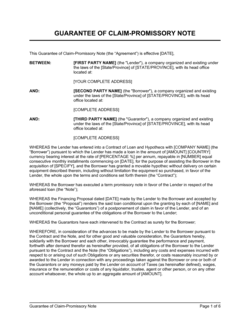
Reference the principal debt instrument precisely
Insert the exact name, date, and key terms of the underlying loan or credit agreement — the principal amount, interest rate, and maturity date. This anchors the scope of the guarantee and postponement to a defined obligation.
💡 Attach the principal loan agreement as a schedule if the lender requires it, so the guarantor cannot later claim they were unaware of the full debt terms.
3
Identify and schedule all existing postponed claims
List every current loan, advance, or intercompany receivable that the borrower owes to the guarantor — with amount, date, and instrument reference. These become the defined 'Postponed Claims' in the postponement clause.
💡 Run a full intercompany receivables reconciliation before drafting. A single unlisted insider loan can undermine the lender's priority position.
4
Confirm the scope of the guarantee — limited or unlimited
Decide whether the guarantee is unlimited (covering all present and future obligations) or capped at a specific maximum amount. Insert the cap in the guarantee clause if a limit is agreed.
💡 Lenders typically prefer unlimited guarantees. If the guarantor negotiates a cap, set it above the total principal plus 18 months of projected interest and fees to avoid gaps.
5
Draft the permitted-payments carve-out
Agree with the lender on what the guarantor may receive from the borrower during the postponement period — typically salary and reasonable management fees up to a defined annual amount — and insert the agreed figures.
💡 Express the permitted salary or management fee as an annual dollar cap rather than 'reasonable compensation' — the latter is indefinite and invites disputes.
6
Confirm the waiver of defenses language is jurisdiction-appropriate
Review the waiver-of-defenses clause against the statutory rights of sureties in the governing jurisdiction. In Canada and the UK, certain statutory protections must be expressly named and waived.
💡 Have local counsel confirm the waiver language is sufficient for the governing province or country before execution — a partial waiver is worse than none because it creates false certainty.
7
Arrange independent legal advice for the guarantor
In most lender policies, the guarantor must obtain independent legal advice before signing. Document this with a lawyer's certificate or an acknowledgment signed by the guarantor confirming they received and understood independent advice.
💡 Many banks will not register or rely on a personal guarantee without a completed ILA certificate. Build this step into the closing checklist at the outset, not the day before signing.
8
Execute and distribute executed copies
All parties must sign the agreement before or at the same time as the underlying loan is funded. Provide each party with a fully executed original or certified copy. Store the executed copy alongside the principal debt instrument.
💡 Use Business in a Box eSign to timestamp execution and ensure the guarantor and lender receive simultaneous copies — avoiding any argument about which version was the operative final document.