8 Habits That Guarantee Success For Business Professionals Template

Free to read β€’ Save or share with one click

Free8 Habits That Guarantee Success For Business Professionals Template

At a glance

What it is
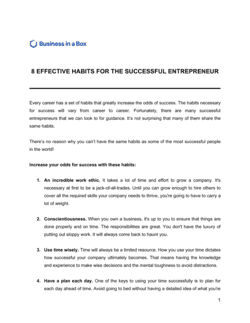
8 Habits That Guarantee Success For Business Professionals is a structured Word document that codifies eight evidence-based behavioral habits proven to drive professional performance, career advancement, and business results. This free Word download gives managers, founders, and individual contributors a ready-to-use framework they can personalize, share with their teams, or integrate into onboarding and coaching programs.
When you need it
Use it when onboarding new hires and setting performance expectations, when coaching a team member through a performance plateau, or when you need a concrete professional development framework to anchor a training session, mentorship program, or personal goal-setting review.
What's inside
Eight clearly defined habits, each with a rationale, implementation guidance, and self-assessment checkpoints. The document also includes an introduction that frames the habits within a business context and a closing action-planning section to help readers commit to specific behavior changes.

What is 8 Habits That Guarantee Success For Business Professionals?

8 Habits That Guarantee Success For Business Professionals is a structured Word document that codifies eight evidence-based behavioral patterns shared by high-performing professionals across industries. Unlike motivational content, each habit is defined as a specific, schedulable behavior with implementation guidance, a common failure mode, and a self-assessment checkpoint β€” making it an operational framework rather than a reading exercise. The document is free to download, fully editable in Word, and designed to be customized for a specific team, role, or development context before distribution.

Why You Need This Document

Without a concrete behavioral framework, professional development conversations stay at the level of vague aspiration β€” "be more proactive," "communicate better," "manage your time" β€” with no shared definition of what those behaviors actually look like in practice. The result is that coaching sessions produce intentions but not sustained change, onboarding programs deliver information but not performance habits, and high-potential employees plateau because no one has mapped the specific behaviors that separate good from exceptional at your organization. This template gives managers, coaches, and individuals a common language and a 30-day commitment structure that converts reading into measurable behavior change β€” closing the gap between knowing what great looks like and consistently doing it.

Which variant fits your situation?

If your situation is…Use this template
Onboarding new employees and setting behavioral expectations from day oneEmployee Onboarding Checklist
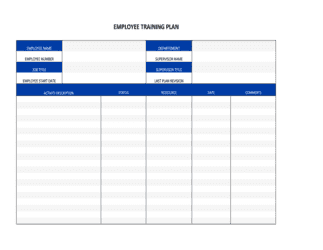
Structuring a formal individual development plan around specific habitsProfessional Development Plan
Facilitating a team workshop on professional effectivenessMeeting Agenda Template
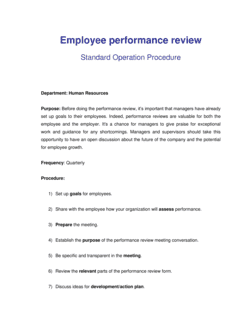
Translating habits into measurable quarterly performance goalsPerformance Review Template
Building a broader personal productivity system beyond habitsAction Plan Template
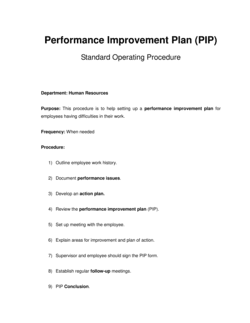
Coaching a struggling team member with a structured improvement frameworkPerformance Improvement Plan
Aligning team habits with company-wide strategic prioritiesStrategic Planning Template

Common mistakes to avoid

❌ Presenting the document as a motivational poster rather than an operational guide

Why it matters: Generic inspirational framing causes readers to nod along and take no action. Without specific implementation steps, habit adoption rates drop sharply after the first week.

Fix: Anchor each habit to a concrete, schedulable behavior β€” a time, a trigger, a duration, and a measurable output β€” rather than an aspiration.
❌ Attempting to implement all eight habits at once

Why it matters: Behavior change research consistently shows that adopting more than two to three new habits simultaneously overwhelms working memory and results in abandoning all of them within two to three weeks.

Fix: Direct readers explicitly to select two to three habits for their first 30 days and stage additional habits in monthly increments thereafter.

❌ Omitting the self-assessment and reflection components

Why it matters: Without a structured checkpoint, individuals have no signal that a habit is slipping until the consequences are already visible in results.

Fix: Include at least one measurable self-assessment indicator per habit β€” a yes/no daily log, a weekly rating, or a concrete output count β€” so deviations surface early.

❌ Distributing the document without a follow-up mechanism

Why it matters: A habits document shared without a follow-up conversation, coaching session, or review date produces a short-lived enthusiasm spike and no sustained change.

Fix: Schedule a 30-day check-in at the time of distribution β€” on the calendar, with a specific agenda β€” before anyone reads the first page.

❌ Using the same unedited version for every audience

Why it matters: A sales team and a finance team share some habits but have different performance rhythms, tools, and definitions of high-value work. A generic document signals low relevance and reduces engagement.

Fix: Spend 20 minutes customizing the examples, tools, and metrics for each audience segment before distribution.

❌ Skipping the action plan section at the end

Why it matters: Reading without committing to specific next steps produces no behavior change. The gap between understanding a habit and performing it consistently is bridged only by a written, scheduled commitment.

Fix: Treat the action plan section as mandatory β€” not optional β€” and complete it with the reader present during any coaching or onboarding session.

The 10 key sections, explained

Introduction: Why habits drive business outcomes

Habit 1: Set outcome-based goals daily

Habit 2: Protect blocks of deep, focused work

Habit 3: Communicate with precision and brevity

Habit 4: Seek and act on feedback continuously

Habit 5: Invest in continuous learning

Habit 6: Build and maintain a deliberate professional network

Habit 7: Own your energy, not just your time

Habit 8: Review, reflect, and adjust weekly

Action plan: Committing to your first 30 days

How to fill it out

  1. 1

    Customize the introduction to your context

    Replace placeholder references with your organization's name, team context, or the specific professional audience this document is intended for. One tailored paragraph dramatically increases engagement compared to a generic opening.

    πŸ’‘ If you are using this for a team session, open with a specific example of a colleague or leader in your industry who exemplifies one of the habits β€” concrete role models outperform abstract principles.

  2. 2

    Review each habit and adjust the guidance for your industry

    Read through each of the eight habit sections and edit the implementation guidance to reflect realistic timelines, tools, and norms for your field. A sales team's version of daily goal-setting looks different from an engineer's.

    πŸ’‘ Keep the core behavior intact but swap generic examples for role-specific ones β€” 'secure two discovery calls' for sales, 'ship one reviewed PR' for engineering.

  3. 3

    Add your organization's preferred tools and systems

    Replace generic references to '[TOOL / JOURNAL]' with the actual platforms your team uses β€” Notion, Salesforce, Slack, or a paper planner. Specificity increases adoption.

    πŸ’‘ Linking each habit to a tool the team already uses reduces the friction of starting a new behavior.

  4. 4

    Calibrate the self-assessment checkpoints

    Set the checkpoint frequency β€” daily, weekly, or monthly β€” based on how quickly each habit is expected to show results. Goal-setting and deep-work habits benefit from daily checks; network-building and learning habits suit weekly reviews.

    πŸ’‘ Shorter feedback loops accelerate habit formation. Even a 2-minute daily check ('did I do this today: yes/no') outperforms a monthly reflection.

  5. 5

    Populate the action plan section with real commitments

    Help the reader β€” or yourself β€” select two to three habits to focus on first and complete the 30-day commitment fields with specific behaviors, metrics, and an accountability partner's name.

    πŸ’‘ Writing an accountability partner's name on paper increases follow-through significantly more than a private mental commitment.

  6. 6

    Export as PDF and distribute or print

    Save the completed document as PDF to lock formatting before sharing with a team, printing for a workshop, or attaching to an onboarding package.

    πŸ’‘ For workshop use, print single-sided with wide margins so participants can annotate during the session.

Frequently asked questions

What are the 8 habits that guarantee success for business professionals?

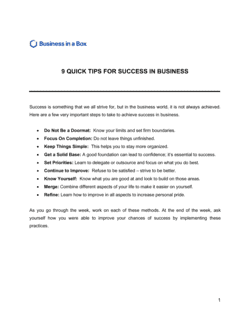
The eight habits covered in this framework are: setting outcome-based goals daily, protecting blocks of deep focused work, communicating with precision and brevity, seeking and acting on feedback continuously, investing in continuous learning, building a deliberate professional network, managing energy not just time, and conducting a structured weekly review. Each habit is supported by implementation guidance and a self-assessment checkpoint so readers can track adoption, not just intention.

How is this document different from a motivational article on habits?

This is a structured operational template, not a listicle. Each habit includes a specific behavior description, implementation instructions with placeholders you can customize, a common failure mode to avoid, and a self-assessment checkpoint. The closing section converts reading into a 30-day action plan with accountability built in. The goal is behavior change, not inspiration.

Who should use this habits framework?

Managers and coaches use it as a structured conversation tool in one-on-ones and development sessions. HR and L&D teams embed it in onboarding and training programs. Individual contributors use it for self-directed performance improvement. Founders use it to set behavioral norms for early-stage teams before a formal performance framework exists.

How long does it take to work through this document?

Reading and self-assessing against all eight habits takes 30 to 45 minutes. Completing the action plan section β€” selecting habits to focus on, setting 30-day targets, and identifying an accountability partner β€” adds another 15 to 20 minutes. For team workshops, plan 60 to 90 minutes to allow discussion and group commitment-setting.

Should I implement all eight habits at once?

No. Behavior change research is consistent on this point: adopting more than two or three new habits simultaneously overwhelms the cognitive load required to maintain them and leads to abandoning all of them within two to three weeks. The action plan section explicitly guides readers to select two to three habits for the first 30 days and layer in additional ones monthly.

Can I use this template for team training or workshops?

Yes. The document is designed to work both as an individual self-study tool and as a facilitated group framework. For workshops, customize the examples for your team's role and industry before distribution, print with wide margins for annotation, and complete the action plan section as a group exercise with a nominated accountability partner for each participant.

How do I measure whether the habits are working?

Each habit section includes a self-assessment checkpoint tied to a specific, observable behavior. Aggregate measures to watch include the percentage of days a deep-work block was protected, the number of feedback requests made and acted on per month, and weekly review completion rate. Tie these behavioral metrics to outcome metrics β€” project completion rate, sales pipeline growth, or promotion timeline β€” to validate which habits are driving the most impact for your specific role.

What is the best way to hold yourself accountable to these habits?

The single most effective accountability mechanism is another person. The action plan section prompts readers to name an accountability partner and schedule a 30-day check-in before closing the document. Secondary tools include a daily yes/no habit log (paper or app), a weekly review that includes habit adherence as a standing agenda item, and a monthly one-on-one with a manager or coach that references the commitments made in the action plan.

Can this framework be integrated into a formal performance review process?

Yes. The eight habits map directly to competencies assessed in most professional performance frameworks β€” goal orientation, communication, continuous improvement, relationship management, and self-management. Managers can reference specific habits during mid-year and annual reviews, and employees can use the self-assessment checkpoints as pre-work before their review conversation. The Business in a Box Performance Review Template is designed to complement this document.

How this compares to alternatives

vs Performance Improvement Plan

A Performance Improvement Plan (PIP) is a corrective document issued when an employee's performance has fallen below an acceptable threshold. The 8 Habits framework is a proactive development tool used before performance issues arise. Use the habits document for onboarding and coaching high-potential employees; use a PIP only when structured corrective action and documentation are required.

vs Employee Development Plan

An Employee Development Plan maps specific skills, training, and milestones for an individual's career progression. The 8 Habits framework focuses on behavioral patterns that support all development goals rather than a specific skill roadmap. The two documents complement each other β€” the habits framework sets the behavioral foundation, and the development plan builds targeted capabilities on top of it.

vs Strategic Planning Template

A strategic plan defines where an organization is going over 3 to 5 years and how it will get there. The 8 Habits framework operates at the individual level, defining the daily behaviors that enable professionals to execute against that strategy. A strategic plan without team members who practice disciplined habits rarely gets implemented; the habits framework addresses the execution gap.

vs Action Plan Template

An action plan defines specific tasks, owners, and deadlines for completing a defined project or goal. The 8 Habits framework is not project-specific β€” it defines repeatable daily and weekly behaviors that improve performance across all projects. Use the action plan for project execution and the habits framework for the behavioral foundation that makes project execution consistently reliable.

Industry-specific considerations

Professional Services

Billable professionals use the deep-work and communication habits to reduce non-billable overhead and increase client-facing output per week.

SaaS / Technology

Engineering and product teams adapt the goal-setting and weekly review habits to integrate with sprint cycles and OKR frameworks.

Sales and Business Development

Sales professionals use the outcome-based goal-setting, network-building, and feedback habits to maintain pipeline discipline and shorten deal cycles.

Financial Services

Analysts and advisors apply the energy management and deep-work habits to protect time for complex modeling and client preparation from reactive inbox management.

Healthcare

Clinical and administrative leaders use the feedback and continuous learning habits to support quality improvement cycles and regulatory compliance readiness.

Manufacturing

Operations managers apply the weekly review and goal-setting habits to track shift performance, reduce variance, and close corrective action loops faster.

Template vs pro β€” what fits your needs?

PathBest forCostTime
Use the templateManagers, coaches, and individual professionals who need a ready-to-customize habits framework for self-directed development or team useFree30–60 minutes to customize and distribute
Template + professional reviewOrganizations embedding the framework into a formal L&D program or competency model requiring alignment with HR leadership$200–$800 for an L&D consultant review and integration session1–3 days
Custom draftedEnterprise organizations commissioning a bespoke behavioral competency framework tied to specific job families, performance grades, and organizational values$3,000–$15,000 for organizational development consulting4–10 weeks

Glossary

Keystone Habit
A single habit whose adoption triggers a chain reaction of other positive behavioral changes across different areas of life or work.
Growth Mindset
The belief that skills and intelligence can be developed through effort and learning, as opposed to being fixed traits.
Time Blocking
A scheduling technique that reserves specific calendar windows for defined categories of work, preventing reactive task-switching.
Deep Work
Cognitively demanding, distraction-free work on high-value tasks that produces results not achievable during fragmented attention.
Accountability Partner
A peer or mentor who regularly checks in on an individual's progress toward stated commitments and goals.
Self-Assessment Checkpoint
A structured moment of reflection β€” typically weekly or monthly β€” where an individual evaluates their adherence to a target behavior and its results.
Professional Development Plan
A documented roadmap of skills, behaviors, and experiences an individual intends to acquire over a defined timeframe to advance their career.
Deliberate Practice
Focused, structured repetition of a specific skill with immediate feedback, designed to accelerate mastery beyond passive experience.
Outcome-Based Goal
A goal defined by a measurable end result β€” such as closing 12 new accounts per quarter β€” rather than by the activity performed to reach it.
Behavioral Cadence
The regular rhythm at which a habit is performed, such as a daily 15-minute planning session or a weekly peer feedback exchange.

Part of your Business Operating System

This document is one of 3,000+ business & legal templates included in Business in a Box.

  • Fill-in-the-blanks β€” ready in minutes
  • Compatible with all office suites
  • Export to PDF and share electronically

Create your document in 3 simple steps.

From template to signed document β€” all inside one Business Operating System.
1
Download or open template

Access over 3,000+ business and legal templates for any business task, project or initiative.

2
Edit and fill in the blanks with AI

Customize your ready-made business document template and save it in the cloud.

3
Save, Share, Send, Sign

Share your files and folders with your team. Create a space of seamless collaboration.

Save time, save money, and create top-quality documents.

β˜…β˜…β˜…β˜…β˜…

"Fantastic value! I'm not sure how I'd do without it. It's worth its weight in gold and paid back for itself many times."

Managing Director Β· Mall Farm
Robert Whalley
Managing Director, Mall Farm Proprietary Limited
β˜…β˜…β˜…β˜…β˜…

"I have been using Business in a Box for years. It has been the most useful source of templates I have encountered. I recommend it to anyone."

Business Owner Β· 4+ years
Dr Michael John Freestone
Business Owner
β˜…β˜…β˜…β˜…β˜…

"It has been a life saver so many times I have lost count. Business in a Box has saved me so much time and as you know, time is money."

Owner Β· Upstate Web
David G. Moore Jr.
Owner, Upstate Web

Run your business with a system β€” not scattered tools

Stop downloading documents. Start operating with clarity. Business in a Box gives you the Business Operating System used by over 250,000 companies worldwide to structure, run, and grow their business.

Free Forever PlanΒ Β·Β No credit card required