- Express Warranty
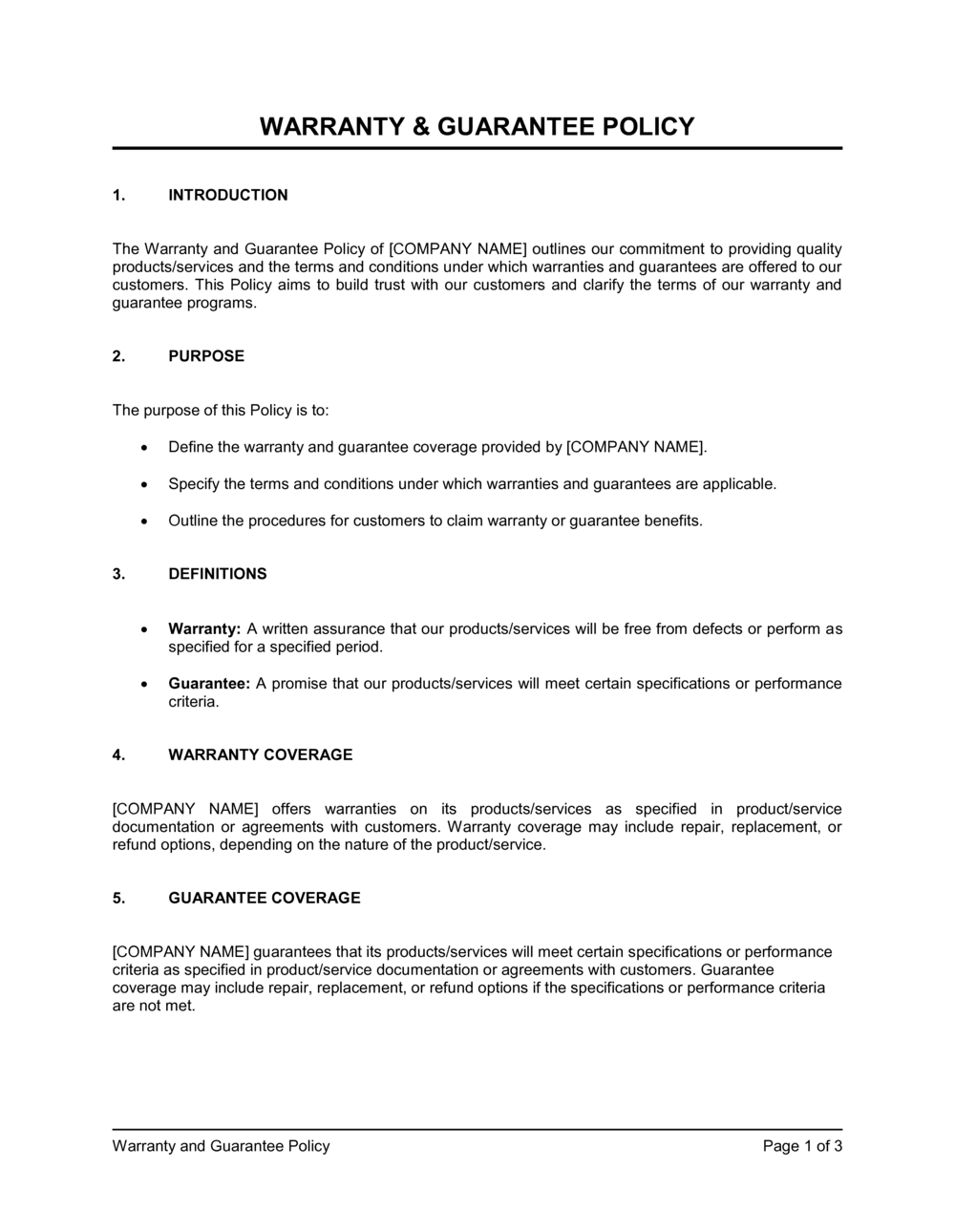
- A written or verbal promise made by a seller about a product's quality, performance, or condition that becomes a binding commitment to the buyer.
- Implied Warranty
- A legally assumed guarantee — such as fitness for a particular purpose or merchantability — that applies automatically in most jurisdictions even without a written statement.
- Limited Warranty
- A warranty that restricts coverage to specific defects, time periods, or remedies, as opposed to a full warranty covering all defects for the product's lifetime.
- Warranty Period
- The defined window of time — typically measured from the purchase date or date of delivery — during which a warranty claim may be submitted.
- Exclusion Clause
- A provision that removes specific situations, damages, or misuse scenarios from warranty coverage, such as normal wear and tear or unauthorized modifications.
- Remedy
- The specific corrective action the company will take upon a valid warranty claim — typically repair, replacement, or a full or partial refund.
- Claimant
- The person or entity entitled to submit a warranty claim — usually the original purchaser, though some policies extend coverage to subsequent owners.
- Proof of Purchase
- Documentation — such as a receipt, order confirmation, or invoice — that a claimant must submit to verify the product was purchased and when.
- Limitation of Liability
- A clause capping the company's financial exposure for warranty claims at a defined amount — typically the original purchase price of the product.
- Satisfaction Guarantee
- A commitment allowing customers to return a product or cancel a service within a specified period if not fully satisfied, regardless of whether a defect exists.
- Warranty Disclaimer
- Language that explicitly negates implied warranties to the extent permitted by applicable law, reducing the seller's exposure beyond the written terms.