1
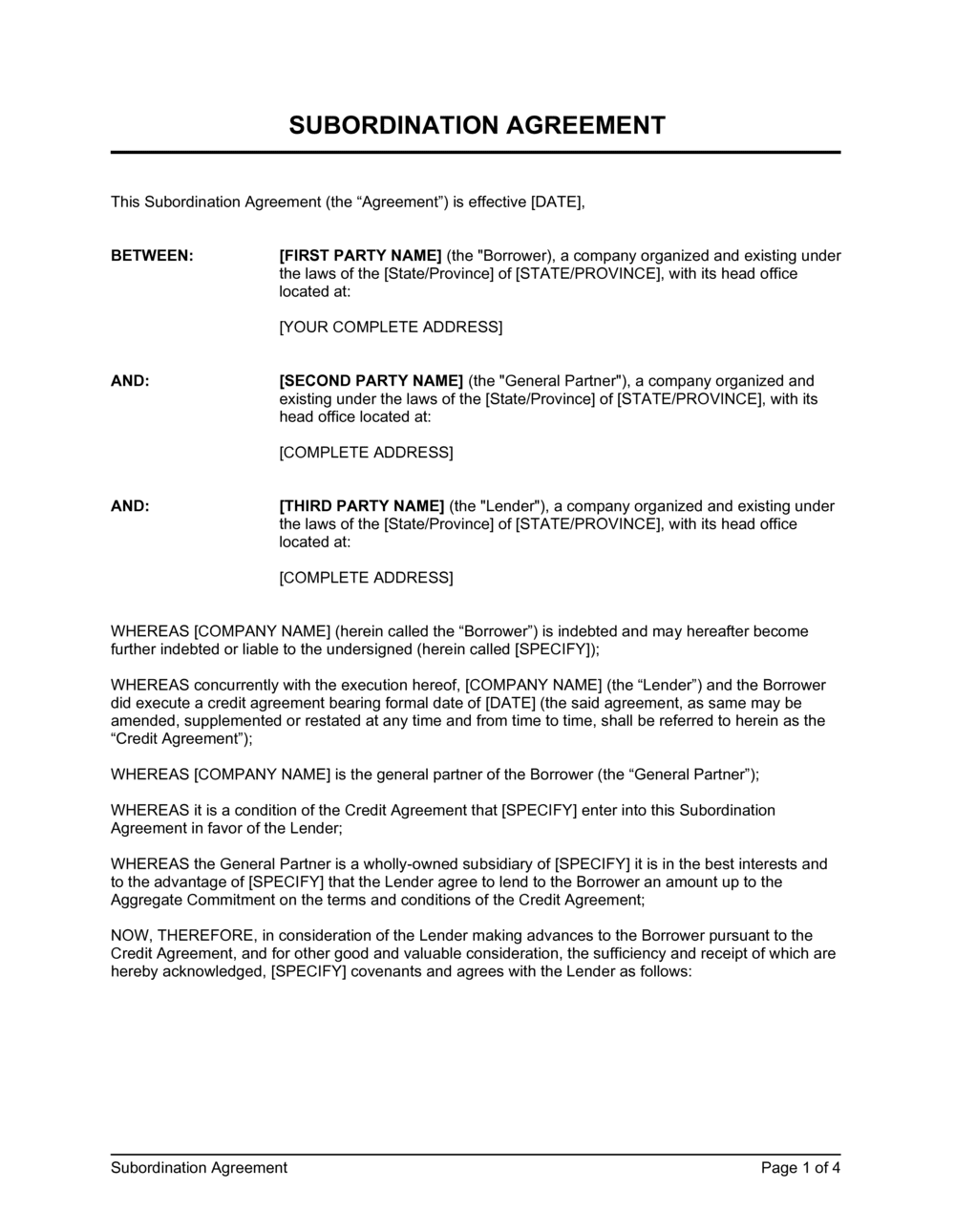
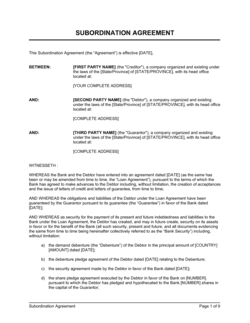
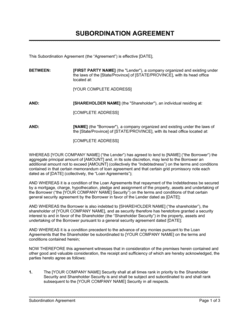
Identify all parties with full legal entity names
Enter the senior lender, junior creditor, and borrower using their exact legal names as they appear in the underlying loan and security documents. For individuals, use full legal name as on government-issued ID.
💡 Cross-reference the title commitment or UCC lien search to confirm the junior creditor's name is identical to how it appears in the recorded instrument — a name mismatch requires a corrective affidavit.
2
Describe the senior debt with full recording references
Enter the senior loan's original principal amount, date, and the full recording citation — county, state, recording date, and instrument or document number — for the deed of trust or mortgage securing it.
💡 Pull the recording information directly from the title commitment or title search rather than from the lender's internal files, which may contain errors.
3
Describe the junior debt with equal specificity
Complete the junior lien description with the same recording data, plus the current outstanding balance. If the junior instrument has been assigned, identify the current holder and the assignment recording reference.
💡 Request a payoff or balance statement from the junior creditor dated within 30 days of closing — using a stale balance creates a factual discrepancy if the agreement is later challenged.
4
Set the standstill period and cure rights
Enter the standstill period in days — typically 90 to 180 days for real estate transactions — and the senior lender's cure period. Confirm these are acceptable to both lenders before circulating the final draft.
💡 Standard market standstill periods run 90 days for residential and 180 days for commercial — using a period shorter than market norm will trigger negotiation and delay closing.
5
Add non-disturbance language if the collateral includes leases
If subordinating a commercial lease, activate the SNDA section and confirm the tenant's lease terms — rent, term, renewal options — are accurately described. Have the tenant's counsel review the non-disturbance language.
💡 Institutional tenants such as national retailers and government agencies will not sign subordination agreements without a non-disturbance clause — omitting it will stall their signature and potentially the whole transaction.
6
Complete the notice addresses and recording instructions
Fill in the current mailing address, email, and designated contact for each party in Schedule A. Specify the county recorder or land registry office where the agreement will be filed and assign recording-fee responsibility.
💡 Confirm the recorder's current requirements for notarization, acknowledgment format, and page fees before execution — requirements vary by county and a non-conforming document will be rejected and require re-execution.
7
Obtain notarized signatures from all parties
All parties — senior lender, junior creditor, and borrower — must sign before a notary public. For entities, the signatory must have documented authority such as a resolution, certificate of incumbency, or operating agreement.
💡 Record the agreement the same day as the senior loan closing, or at minimum within 24 hours — any gap creates a window where an intervening lien could theoretically jump priority.
8
Record and distribute fully executed copies
File the notarized original with the applicable county recorder or land registry and distribute certified copies to all parties and their title companies. Retain the original recording confirmation in the loan file.
💡 Ask the recorder for a file-stamped copy at submission — this provides immediate evidence of recording date and priority even before the official recorded copy is returned.