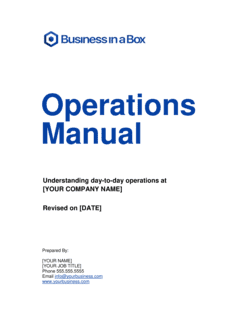
Franchise Operations Manual Template

Free to read β€’ Save or share with one click

FreeFranchise Operations Manual Template

At a glance

What it is
A Franchise Operations Manual is a comprehensive reference document that defines every standard, procedure, and policy a franchisee must follow to operate a franchise location consistently with the franchisor's brand. This free Word download gives franchisors a structured, editable starting point they can customize for their system and export as PDF to share with new and existing franchisees.
When you need it
Use it when onboarding the first franchisee, when standardizing procedures across multiple locations, or when revising an existing manual to reflect updated brand standards, technology, or regulations.
What's inside
Brand and identity standards, pre-opening and setup checklists, daily and weekly operating procedures, staffing and training requirements, customer service protocols, marketing and local advertising guidelines, financial reporting requirements, quality control and inspections, and compliance with health, safety, and regulatory obligations.

What is a Franchise Operations Manual?

A Franchise Operations Manual is the master reference document a franchisor provides to every franchisee, specifying the exact standards, procedures, and policies required to operate a franchise unit in alignment with the brand system. It covers the full scope of the franchisee's operational obligations β€” from brand identity and daily opening procedures to financial reporting, staff training, customer service scripts, and health and safety compliance. Unlike the franchise agreement, which is a legal contract signed once, the operations manual is a living document the franchisor can update as the system evolves, with franchisees bound to comply with the current version under the terms of their agreement.

Why You Need This Document

Without a documented operations manual, a franchise system exists in name only. Franchisees who receive no written standard make their own decisions about portion sizes, uniforms, complaint handling, and reporting β€” and the brand diverges location by location until the inconsistency becomes a customer experience problem, a quality control failure, or a legal dispute. Courts in the United States have found that franchisors who cannot produce a documented system may not qualify legally as franchisors, putting fee income and IP protections at risk. A clear, current operations manual is also the foundation of every franchisee training program, every field audit, and every enforcement action β€” without it, compliance is unenforceable and expansion is built on an unstable base. This template gives franchisors a structured, professionally organized starting point that covers every section a complete manual requires.

Which variant fits your situation?

If your situation is…Use this template
Launching the first franchisee with a full system documentFranchise Operations Manual
Training new hires at the unit level on daily tasksEmployee Training Manual
Documenting a single repeatable process for field staffStandard Operating Procedure (SOP)
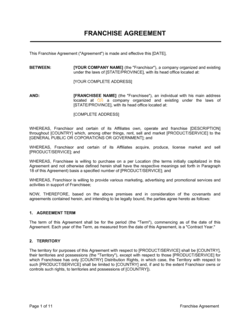
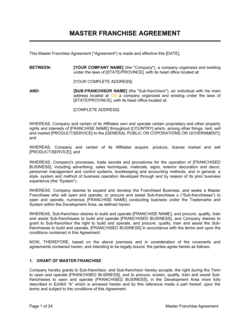
Outlining the terms of the franchise relationship itselfFranchise Agreement
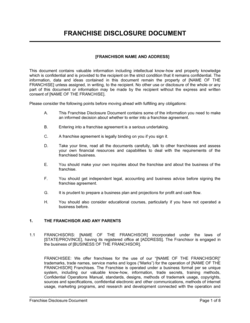
Disclosing the franchise system to prospective franchiseesFranchise Disclosure Document (FDD)
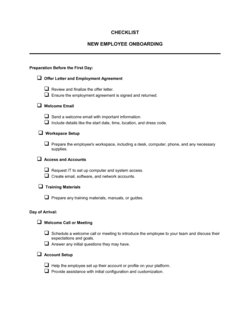
Onboarding a new employee at the franchisee locationEmployee Onboarding Checklist
Conducting a field audit of franchisee complianceFranchise Audit Checklist

Common mistakes to avoid

❌ Writing procedures too vaguely to execute

Why it matters: Procedures like 'clean equipment daily' produce wildly inconsistent results across locations, generating customer complaints and brand damage that the manual was supposed to prevent.

Fix: Write each procedure at task level β€” specific steps, tools required, and time targets β€” so a new employee with no prior experience can execute it correctly on day one.

❌ Defining 'gross sales' ambiguously

Why it matters: Disputes over whether discounts, voids, taxes, or third-party delivery fees are included in royalty calculations are the most common source of financial conflict in franchise systems.

Fix: Define gross sales with an explicit inclusion and exclusion list β€” state exactly which revenue items are included and which are deducted before the royalty percentage is applied.

❌ Publishing the manual without a version control system

Why it matters: Franchisees operating from different versions of the manual apply conflicting standards, and the franchisor has no enforceable basis to require compliance with any specific version.

Fix: Add a version number, effective date, and revision log to every edition. Require franchisees to sign an acknowledgment confirming receipt of each update.

❌ Including regulatory requirements without a review cadence

Why it matters: Health codes, labor posting requirements, and safety regulations change regularly β€” an outdated compliance section exposes both franchisor and franchisee to fines and liability claims.

Fix: Schedule an annual legal review of all regulatory citations and add the review date to the manual's revision log so franchisees can see when it was last verified.

❌ Referencing exhibits or attachments that aren't included

Why it matters: Franchisees cannot follow a procedure or meet a standard that references a form, checklist, or supplier list that was never attached β€” compliance gaps open immediately.

Fix: Complete a cross-reference audit before distribution: search for every 'see Exhibit' reference and confirm the exhibit exists, is current, and is attached to the distributed version.

❌ Treating the manual as a one-time project

Why it matters: An operations manual that is never updated becomes a liability β€” it enshrines outdated technology, discontinued products, and superseded regulations as the official standard.

Fix: Assign a named manual owner, set a mandatory annual full review, and establish a process for issuing interim updates when material changes occur between annual reviews.

The 10 key sections, explained

Introduction and brand overview

Pre-opening requirements and setup checklist

Brand and identity standards

Daily, weekly, and monthly operating procedures

Staffing, hiring, and training requirements

Customer service standards and complaint handling

Marketing, advertising, and local promotion guidelines

Financial reporting, fees, and record-keeping

Quality control, inspections, and compliance

Health, safety, and regulatory compliance

How to fill it out

  1. 1

    Define the scope and version control system

    Decide which operational areas the manual will cover and establish a version numbering system (e.g., v1.0, v1.1) with a named owner responsible for updates. Add a revision log page at the front.

    πŸ’‘ Assign a single internal owner for the manual β€” documents maintained by committee end up contradicting themselves across sections.

  2. 2

    Draft the brand standards section first

    Pull logo files, color codes, signage specs, and uniform requirements from your existing brand guidelines and consolidate them into the brand standards section. Attach source files as exhibits.

    πŸ’‘ Link every brand standard to a rationale β€” franchisees who understand why a standard exists comply more consistently than those who see it as arbitrary.

  3. 3

    Document operating procedures at task level

    For each daily, weekly, and monthly procedure, write steps specific enough that a new employee with no prior experience could execute the task correctly on the first attempt. Include time targets where relevant.

    πŸ’‘ Film a video walk-through of each procedure while writing it β€” the gaps you discover on camera are exactly the gaps that cause franchise inconsistency in the field.

  4. 4

    Set staffing minimums and training requirements

    Specify minimum staff counts by shift type and location size, define the required training curriculum with module names and durations, and state the certification requirement and recordkeeping obligation.

    πŸ’‘ Build the training curriculum in parallel with the manual β€” don't publish a training requirement you haven't yet built the materials to deliver.

  5. 5

    Complete the financial reporting and fee section

    Define 'gross sales' precisely, state all fee rates and their calculation basis, specify reporting deadlines and the technology platform used, and document audit rights and record-retention periods.

    πŸ’‘ Have your accountant review the gross-sales definition before publishing β€” ambiguity here is the leading cause of franchisor-franchisee financial disputes.

  6. 6

    Write the inspection and compliance section

    Describe the inspection program in full β€” frequency, scoring methodology, minimum passing scores, and the corrective action process. Confirm the written criteria match what your field team actually assesses.

    πŸ’‘ Pilot the inspection form with two locations before finalizing the manual β€” discrepancies between the written standard and field reality surface immediately.

  7. 7

    Review all regulatory references for currency

    Cross-check every federal, state, and local regulation cited in the health, safety, and compliance section against current law. Add a note stating the review date and schedule the next review.

    πŸ’‘ Set a calendar reminder 12 months out to re-verify regulatory citations β€” failing to update them is a liability exposure for both parties.

  8. 8

    Distribute and obtain acknowledgment

    Send the finalized manual to all franchisees with a signed acknowledgment form confirming receipt and agreement to comply. Retain signed copies in each franchisee's file.

    πŸ’‘ Use a digital signature tool to timestamp acknowledgment β€” undated paper signatures create enforceability gaps if a franchisee later claims they never received an updated version.

Frequently asked questions

What is a franchise operations manual?

A franchise operations manual is the primary reference document a franchisor provides to franchisees, defining every standard, procedure, and policy required to operate a franchise unit consistently with the brand system. It covers brand standards, daily operating procedures, staffing and training requirements, marketing guidelines, financial reporting obligations, and health and safety compliance. It is typically referenced β€” but not reproduced β€” in the Franchise Disclosure Document and the Franchise Agreement.

Is a franchise operations manual legally required?

In the United States, the FTC Franchise Rule requires franchisors to disclose whether an operations manual exists and to provide a table of contents in Item 11 of the FDD, but does not mandate a specific format or content. In practice, operating without one creates significant legal exposure: courts have found that a franchisor who cannot demonstrate a documented system may not meet the legal definition of a franchise. Most franchise attorneys treat a comprehensive operations manual as essential, not optional.

What is the difference between a franchise operations manual and a franchise agreement?

A franchise agreement is the binding legal contract between franchisor and franchisee β€” it defines fees, territory, term, renewal, and termination rights. The operations manual defines how the franchisee must operate the unit on a day-to-day basis. The agreement typically states that the franchisee must comply with the manual as amended from time to time, which allows the franchisor to update operating standards without renegotiating the underlying contract.

How long should a franchise operations manual be?

Length varies significantly by the complexity of the franchise system. A simple service franchise may require 50–80 pages. A food-service or retail franchise with complex preparation standards, equipment specifications, and multi-department procedures commonly runs 150–300 pages plus exhibits. The right length is whatever is needed to document every standard a franchisee must meet β€” no shorter, no longer.

Can a franchisor update the operations manual after the franchise agreement is signed?

Yes, and most franchise agreements expressly grant the franchisor the right to amend the manual from time to time, provided the changes are reasonable and do not materially alter the fundamental nature of the franchise. The agreement should state that the current version of the manual governs, and franchisees should sign acknowledgment forms each time a new version is issued. Consider consulting a franchise attorney before making changes that affect fees, territory, or core product requirements.

Who should write the franchise operations manual?

The best operations manuals are written by people who actually perform the work β€” unit managers, experienced crew members, and the franchisor's operations team β€” then reviewed and organized by someone with documentation experience. A franchise consultant or attorney should review the final version to confirm it aligns with the FDD and franchise agreement. Outsourcing the writing entirely to a consultant without operational input commonly produces a manual that reads well but fails in practice.

How often should a franchise operations manual be updated?

At minimum, a full review should occur annually. Interim updates are required whenever the franchisor changes a core product, adopts new technology, modifies a fee structure, or becomes aware that a regulatory requirement has changed. Every update should carry a new version number, an effective date, and a summary of changes, with franchisee acknowledgment collected for material revisions.

Should the operations manual be confidential?

Yes. The operations manual contains proprietary systems, supplier relationships, and brand standards that constitute valuable trade secrets. It should be marked confidential, distributed only to franchisees and their authorized staff, and covered by the confidentiality provisions in the franchise agreement. Franchisees should be required to store it securely and return or destroy it upon termination or expiration of the franchise.

What happens if a franchisee does not follow the operations manual?

Non-compliance with the operations manual is typically grounds for a cure notice under the franchise agreement, giving the franchisee a defined period β€” commonly 30 days β€” to correct the deficiency. Repeated or material non-compliance can trigger termination of the franchise agreement. Documenting non-compliance through inspection reports and written notices is essential before any enforcement action, so maintaining a rigorous inspection and corrective action process is as important as the manual itself.

How this compares to alternatives

vs Standard Operating Procedure (SOP)

An SOP documents a single repeatable process in isolation β€” one task, one workflow. A franchise operations manual is a comprehensive system document covering every aspect of running a franchise unit, from brand standards to financial reporting. SOPs are often embedded as exhibits within the operations manual rather than used as standalone replacements.

vs Employee Training Manual

An employee training manual is written for individual staff members and focuses on role-specific tasks and service behaviors. A franchise operations manual is addressed to the franchisee as the business operator and covers the full system β€” strategy, finance, compliance, and brand β€” not just front-line execution. Most franchise systems maintain both documents.

vs Franchise Agreement

A franchise agreement is the binding legal contract defining rights, fees, territory, and remedies. The operations manual defines how those rights must be exercised day to day. The agreement is negotiated and fixed at signing; the manual is a living document the franchisor can update within the bounds the agreement permits.

vs Business Operations Plan

A business operations plan describes how a single business intends to deliver its product or service. A franchise operations manual prescribes exactly how every franchisee in the system must operate β€” it is a binding standard, not a planning document. The franchisee may reference the manual to build their own internal operations plan, but the two serve different purposes.

Industry-specific considerations

Food and beverage

Recipes, food safety protocols, portion controls, equipment maintenance schedules, and health inspection preparation are the most detail-intensive sections in food-service franchise manuals.

Retail

Planogram compliance, inventory management procedures, loss prevention protocols, and seasonal promotional execution requirements dominate retail franchise manuals.

Health and fitness

Membership sales scripts, equipment maintenance logs, certified instructor requirements, liability waiver procedures, and cleanliness standards are critical to health and fitness franchise systems.

Professional services

Client intake procedures, service delivery standards, staff certification requirements, and data privacy compliance are the primary operational concerns in professional-services franchises such as accounting, staffing, or home services.

Template vs pro β€” what fits your needs?

PathBest forCostTime
Use the templateFranchisors documenting their first system or updating an existing manual for a straightforward single-concept franchiseFree2–6 weeks (40–120 hours depending on system complexity)
Template + professional reviewFranchisors preparing a manual for FDD filing or expanding beyond 5 units where enforcement consistency becomes critical$1,000–$3,000 for a franchise consultant or attorney review4–8 weeks
Custom draftedMulti-brand franchisors, food-service systems with complex safety requirements, or franchisors operating in multiple countries$5,000–$20,000+ for a full professional build by a franchise operations consultancy2–4 months

Glossary

Franchisee
A business owner who licenses the right to operate under the franchisor's brand and system in exchange for fees and adherence to the operations manual.
Franchisor
The entity that owns the brand, intellectual property, and operating system, and grants franchisees the right to use them under defined terms.
Brand Standards
The specific visual, verbal, and operational requirements that every location must meet to present a consistent customer experience.
Franchise Disclosure Document (FDD)
A legally required pre-sale disclosure document, mandated in the US under FTC rules, that describes the franchise system and references the operations manual.
Territory
The defined geographic area granted to a franchisee within which the franchisor typically will not open competing units or grant other franchises.
Royalty
A recurring fee β€” typically 4–10% of gross sales β€” paid by the franchisee to the franchisor in exchange for ongoing brand, system, and support rights.
Pre-Opening Checklist
A sequential list of tasks the franchisee must complete before opening day, covering build-out, equipment, staffing, inventory, and inspections.
Mystery Shopper
A third-party evaluator who visits a franchise location anonymously to assess adherence to service, product, and cleanliness standards.
Area Representative
A person authorized by the franchisor to provide support, training, and compliance oversight to franchisees within a defined geographic region.
Approved Supplier
A vendor that has been vetted and authorized by the franchisor; franchisees are typically required to purchase specified products or materials only from approved suppliers.
Transfer Fee
A fee paid to the franchisor when a franchisee sells or transfers their unit to a new owner, covering retraining and administrative costs.

Part of your Business Operating System

This document is one of 3,000+ business & legal templates included in Business in a Box.

  • Fill-in-the-blanks β€” ready in minutes
  • Compatible with all office suites
  • Export to PDF and share electronically

Create your document in 3 simple steps.

From template to signed document β€” all inside one Business Operating System.
1
Download or open template

Access over 3,000+ business and legal templates for any business task, project or initiative.

2
Edit and fill in the blanks with AI

Customize your ready-made business document template and save it in the cloud.

3
Save, Share, Send, Sign

Share your files and folders with your team. Create a space of seamless collaboration.

Save time, save money, and create top-quality documents.

β˜…β˜…β˜…β˜…β˜…

"Fantastic value! I'm not sure how I'd do without it. It's worth its weight in gold and paid back for itself many times."

Managing Director Β· Mall Farm
Robert Whalley
Managing Director, Mall Farm Proprietary Limited
β˜…β˜…β˜…β˜…β˜…

"I have been using Business in a Box for years. It has been the most useful source of templates I have encountered. I recommend it to anyone."

Business Owner Β· 4+ years
Dr Michael John Freestone
Business Owner
β˜…β˜…β˜…β˜…β˜…

"It has been a life saver so many times I have lost count. Business in a Box has saved me so much time and as you know, time is money."

Owner Β· Upstate Web
David G. Moore Jr.
Owner, Upstate Web

Run your business with a system β€” not scattered tools

Stop downloading documents. Start operating with clarity. Business in a Box gives you the Business Operating System used by over 250,000 companies worldwide to structure, run, and grow their business.

Start freeΒ Β·Β No credit card required