Exercising Option to Renew Lease Template

Free Word download β€’ Edit online β€’ Save & share with Drive β€’ Export to PDF

1 pageβ€’20–30 min to fillβ€’Difficulty: Standardβ€’Signature requiredβ€’Legal review recommended
Learn more ↓
FreeExercising Option to Renew Lease Template

At a glance

What it is
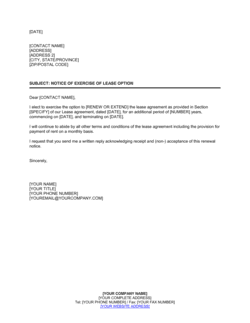
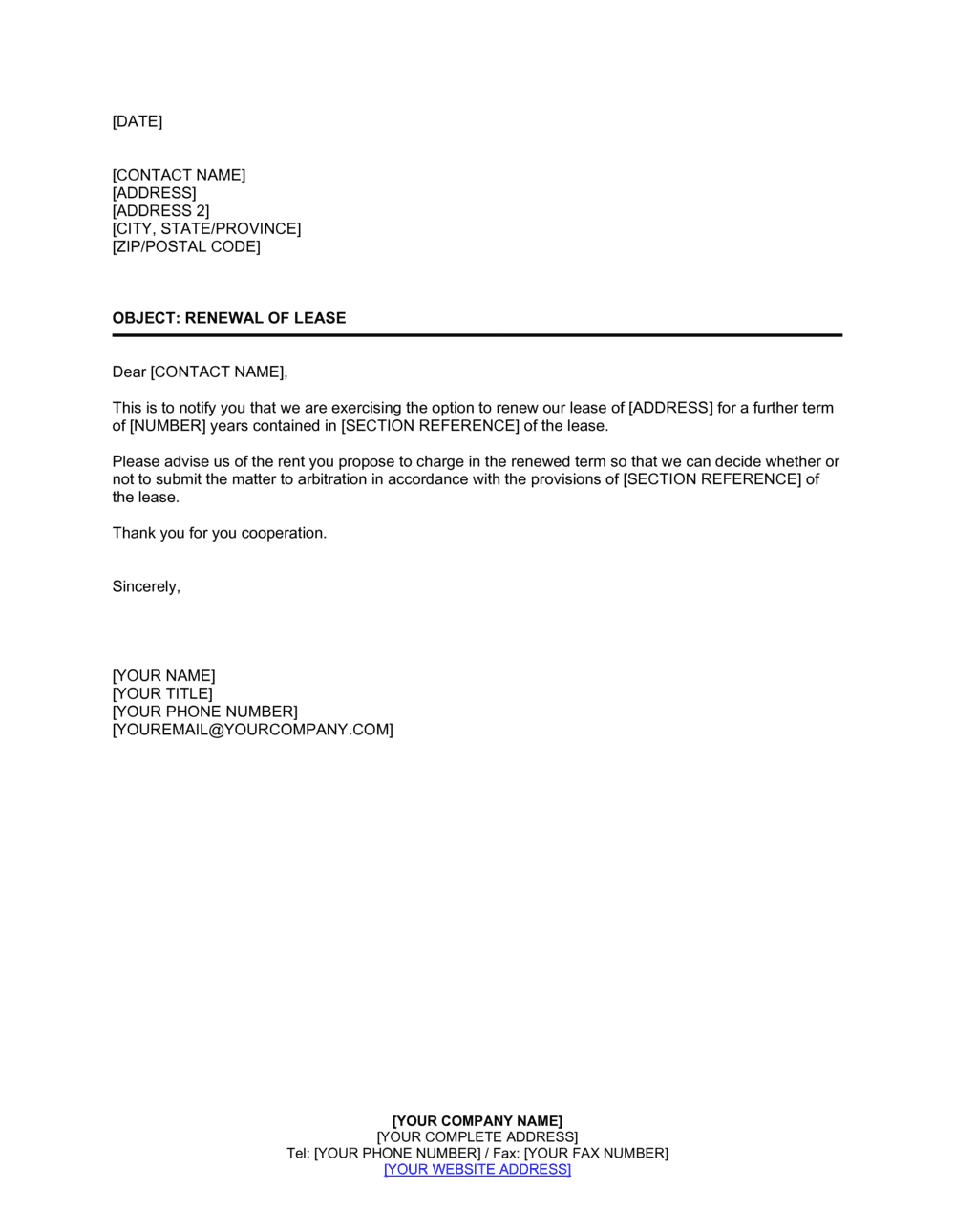
An Exercising Option To Renew Lease letter is a formal written notice a tenant sends to their landlord to activate a lease renewal option that was built into the original lease agreement. This free Word download gives you a professionally structured letter you can edit online, sign, and deliver before your option deadline β€” preserving your right to remain in the premises under the agreed renewed terms.
When you need it
Use it when your existing commercial or residential lease contains a renewal option clause and the notice window β€” typically 30 to 180 days before the lease expiry date β€” is approaching. Failing to deliver written notice within that window typically causes the option to lapse permanently, leaving the tenant without the right to renew on the pre-agreed terms.
What's inside
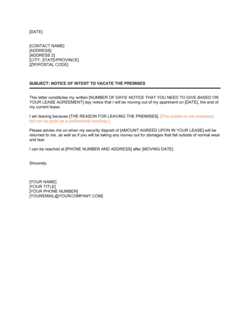
The letter identifies both parties and the premises, references the specific renewal option clause in the original lease, states the tenant's unequivocal intent to exercise the option, confirms the renewal term and commencement date, and requests written acknowledgment from the landlord. It also includes a signature block and provision for delivery confirmation.

What is an Exercising Option To Renew Lease Letter?

An Exercising Option To Renew Lease letter is a formal written notice that a tenant delivers to their landlord to activate a lease renewal option that was negotiated and embedded in the original lease agreement. The option clause grants the tenant a unilateral contractual right to extend the tenancy for a further defined period β€” but that right does not activate automatically. The tenant must deliver a written notice that is unconditional, timely, and compliant with the delivery method specified in the original lease. This template provides the legally structured letter required to do exactly that, in a free Word download you can edit and send within minutes of the original lease details.

Why You Need This Document

A lease renewal option is only as valuable as the notice that exercises it. Miss the window β€” which can be as short as 30 days or as long as 180 days before expiry β€” and the right lapses permanently, leaving you without the contractual basis to remain in the premises on the pre-agreed terms. Courts in the United States, Canada, and the United Kingdom consistently apply time-is-of-the-essence provisions strictly, refusing to grant relief even when the notice was late by a single day. Beyond timing, a poorly worded notice β€” one that includes conditional language, names the wrong party, or is sent by the wrong delivery method β€” can be rejected as legally invalid even if it arrives on time. A missed or invalid notice exposes your business to forced relocation, loss of fit-out investment, disruption to clients and operations, and the cost of negotiating an entirely new lease from a position of weakness. This template gives you a properly structured, unconditional exercise notice that covers every element courts and landlords require, so the right you negotiated at signing is the right you actually keep.

Which variant fits your situation?

If your situation is…Use this template
Renewing a commercial office or retail lease with a pre-agreed optionExercising Option To Renew Lease
Negotiating entirely new lease terms with no existing optionCommercial Lease Agreement
Extending a lease by mutual agreement without a formal option clauseLease Extension Agreement
Subletting premises to another party during the remaining termSublease Agreement
Giving notice of intention to vacate rather than renewNotice of Non-Renewal of Lease
Requesting modified terms (rent reduction, smaller footprint) alongside renewalLease Amendment Agreement
Documenting a new lease from scratch for a commercial propertyOffice Space Lease Agreement

Common mistakes to avoid

❌ Missing the notice deadline

Why it matters: Most option clauses include a 'time is of the essence' provision β€” a notice delivered even one day late permanently forfeits the renewal right, leaving the tenant with no contractual basis to remain.

Fix: Calendar the deadline the moment you sign the lease, set a reminder 30 days before it, and aim to deliver the notice at least 2 weeks ahead of the hard deadline to allow for delivery delays.

❌ Using a non-prescribed delivery method

Why it matters: A notice sent by email or standard post when the lease requires registered mail or courier may be legally invalid even if the landlord actually reads it β€” courts apply the prescribed method strictly.

Fix: Re-read the notices clause in the original lease before sending, and use exactly the method and address it specifies. Retain proof of delivery.

❌ Exercising the option while in material default

Why it matters: Most option clauses are expressly conditional on the tenant not being in default at the time of exercise β€” a landlord can reject a renewal notice on this basis alone, forcing the tenant to vacate.

Fix: Before sending the notice, audit your lease compliance: arrears, maintenance obligations, permitted-use conditions, and any outstanding landlord notices. Cure any defaults first.

❌ Using conditional or equivocal language in the notice

Why it matters: Courts have consistently held that an option must be exercised unconditionally β€” a notice that says 'we wish to renew, subject to agreeing on rent' has been found invalid because the exercise was not unequivocal.

Fix: State the exercise plainly and without qualification. Address any outstanding concerns about rent or terms in a separate letter or negotiation after the unconditional notice has been delivered.

❌ Having an unauthorized person sign the notice

Why it matters: If the signatory lacks authority to bind the tenant entity β€” for example, a manager rather than an authorized officer β€” the landlord can challenge the validity of the exercise and refuse renewal.

Fix: Confirm who has signing authority under the tenant entity's corporate documents or partnership agreement, and ensure that person executes the notice.

❌ Sending to the wrong landlord notice address

Why it matters: Sending to the property address, a leasing agent, or an old landlord address instead of the notice address specified in the lease can render the notice undelivered for legal purposes.

Fix: Use the exact notice address for the landlord as set out in the original lease notices clause β€” if the landlord has changed, confirm the current notice address in writing before sending.

The 10 key clauses, explained

Parties and Premises Identification

In plain language: Identifies the tenant and landlord by full legal name and specifies the exact address and unit of the leased premises.

Sample language
This notice is given by [TENANT LEGAL NAME] ('Tenant') to [LANDLORD LEGAL NAME] ('Landlord') with respect to the premises located at [FULL PROPERTY ADDRESS, UNIT/SUITE NUMBER] (the 'Premises').

Common mistake: Using a trade name instead of the legal entity named in the original lease. If the names do not match exactly, the landlord may dispute that the notice was given by the party with the right to exercise the option.

Reference to the Original Lease and Option Clause

In plain language: Cites the original lease by its execution date and identifies the specific section or clause number that grants the renewal option being exercised.

Sample language
Pursuant to Section [X] of the Lease Agreement dated [ORIGINAL LEASE DATE] between Tenant and Landlord (the 'Lease'), Tenant hereby exercises its option to renew the Lease for an additional term.

Common mistake: Referencing the wrong clause number or omitting the clause reference entirely. Without it, the landlord cannot verify the basis for the notice, and a disputed option becomes much harder to enforce.

Unequivocal Exercise of Option

In plain language: States clearly and without qualification that the tenant is exercising the renewal option β€” leaving no room for ambiguity about the tenant's intent.

Sample language
Tenant hereby unconditionally exercises the option to renew the Lease for a further term of [RENEWAL TERM LENGTH], commencing on [RENEWAL START DATE] and expiring on [RENEWAL END DATE].

Common mistake: Using conditional language such as 'we intend to renew, subject to rent confirmation.' Courts have found conditional notices to be insufficient exercise of an option because the exercise must be unequivocal.

Renewal Term and Commencement Date

In plain language: Specifies the length of the renewal term and the exact date it begins β€” typically the day after the original lease expiry.

Sample language
The Renewal Term shall commence on [DATE], being the day immediately following expiry of the current Lease term, and shall continue for [X] years/months, expiring on [DATE].

Common mistake: Leaving the commencement date vague or incorrectly calculating it from the original lease end date. A one-day error can create a gap period that defaults the tenancy to holdover status.

Rent During the Renewal Term

In plain language: Acknowledges the rent calculation mechanism specified in the original lease for the renewal period β€” whether fixed, CPI-adjusted, or subject to a market rent review.

Sample language
Tenant acknowledges that rent during the Renewal Term shall be determined in accordance with Section [X] of the Lease, being [FIXED AMOUNT / CPI ADJUSTMENT / FAIR MARKET RENT REVIEW], and agrees to be bound by that mechanism.

Common mistake: Attempting to renegotiate rent in the exercise notice itself. The notice should confirm the existing mechanism, not propose new terms β€” mixing negotiation into the notice creates legal ambiguity about whether the option was validly exercised.

Confirmation of Lease Terms Continuing

In plain language: States that all other terms and conditions of the original lease continue in force during the renewal term, except as specifically modified.

Sample language
Except as expressly set out in this notice or as modified by mutual written agreement of the parties, all terms and conditions of the Lease shall remain in full force and effect during the Renewal Term.

Common mistake: Omitting this clause and assuming continuity is implied. Without express confirmation, disputes can arise over whether ancillary obligations β€” insurance, maintenance, permitted use β€” carry over into the renewal.

Delivery and Notice Address

In plain language: Identifies the delivery method used to send the notice and the address to which it was sent, confirming compliance with the notice requirements in the original lease.

Sample language
This notice is delivered to Landlord by [REGISTERED MAIL / COURIER / PERSONAL DELIVERY] at the notice address specified in the Lease: [LANDLORD NOTICE ADDRESS]. Delivery is confirmed on [DATE].

Common mistake: Sending the notice by email or standard mail when the lease requires registered post or courier. Delivery by a non-prescribed method may render the notice invalid even if actually received.

Request for Landlord Acknowledgment

In plain language: Asks the landlord to confirm in writing that the renewal option has been validly exercised and that the renewal term will commence as stated.

Sample language
Tenant respectfully requests that Landlord confirm receipt and acceptance of this notice in writing within [14] days of delivery, confirming that the renewal option has been validly exercised.

Common mistake: Not requesting written acknowledgment. Without it, any future dispute about whether the notice was received on time or in valid form has no written counter-evidence.

Tenant Signature and Authority

In plain language: Executed by the tenant with name, title, and date β€” confirming the signatory has authority to bind the tenant entity.

Sample language
Signed by: [AUTHORIZED SIGNATORY NAME], [TITLE], on behalf of [TENANT LEGAL NAME], on [DATE].

Common mistake: Having an employee without signing authority execute the letter. If the signatory cannot bind the tenant entity, the exercise may be challenged as unauthorized and therefore invalid.

Certificate of Compliance with Option Conditions

In plain language: Confirms that the tenant is not in default under the original lease and has met any pre-conditions required to exercise the renewal option.

Sample language
Tenant represents that, as of the date of this notice, Tenant is not in default under the Lease and has satisfied all conditions precedent to the exercise of the renewal option set out in Section [X] of the Lease.

Common mistake: Exercising the option while in material default. Most option clauses are void if the tenant is in default at the time of exercise β€” and exercising while in default can expose the tenant to a claim that the notice was invalid.

How to fill it out

  1. 1

    Locate the option clause in your original lease

    Find the exact clause number granting the renewal option, the notice window, the prescribed delivery method, and the notice address. Record all of these before filling in the template.

    πŸ’‘ Photocopy or bookmark the option clause and the notices clause β€” they are the two sections that control whether your exercise is valid, regardless of how well-worded your letter is.

  2. 2

    Confirm the notice deadline and calendar it immediately

    Calculate the last valid date for delivery based on the notice window (e.g., 90 days before expiry). Mark it in your calendar with a 2-week buffer to allow for preparation and delivery time.

    πŸ’‘ If the lease says the option must be exercised 'no later than 90 days before expiry,' count backwards from the expiry date and confirm whether the deadline falls on a business day β€” courts typically do not extend deadlines for weekends.

  3. 3

    Enter party names exactly as they appear in the original lease

    Use the full legal names of both the tenant entity and the landlord entity as written in the original lease β€” including any DBA or operating name qualifiers. Do not substitute trade names.

    πŸ’‘ Cross-check the tenant name against your corporate registry or operating agreement to ensure the current legal name is consistent with the lease β€” name changes after signing require an amendment or name-change notice.

  4. 4

    Fill in the premises address, lease date, and option clause reference

    Enter the full civic address of the premises including suite or unit number, the execution date of the original lease, and the section number of the renewal option clause.

    πŸ’‘ If your lease has been amended, check whether the amendment modified or superseded the original option clause β€” if so, reference both the original clause and the amendment number.

  5. 5

    State the renewal term and commencement date precisely

    Enter the renewal term length (years and months) and the exact start date β€” typically the calendar day after the original lease expiry. Double-check the expiry date against the original lease.

    πŸ’‘ Add the exact expiry date of the renewal term as well β€” this eliminates any future dispute about when the renewed tenancy ends.

  6. 6

    Confirm the rent mechanism without renegotiating

    Identify the rent clause from the original lease that governs renewal-period rent (CPI, fixed increase, or market review) and reference it by section number. Do not insert proposed rent figures.

    πŸ’‘ If you believe the fair market rent review process will produce an unfavorable result, engage your landlord about rent negotiations separately from and after sending the exercise notice.

  7. 7

    Confirm compliance with option conditions

    Check whether the option clause requires the tenant to be in good standing, not in default, or to have met other conditions at the time of exercise. Complete the compliance certificate clause accordingly.

    πŸ’‘ If you are aware of any outstanding defaults or disputes, resolve or document them before sending the notice β€” exercising an option while in material default is a common ground for landlords to resist renewal.

  8. 8

    Deliver by the prescribed method and retain proof

    Send the signed letter using exactly the delivery method specified in the original lease notices clause β€” registered mail, courier, or personal delivery. Retain the delivery receipt, tracking number, and a copy of the signed letter.

    πŸ’‘ Scan and store the signed letter and delivery confirmation in a shared drive immediately after sending β€” the delivery receipt is your only evidence that the notice was timely if a dispute arises months later.

Frequently asked questions

What does it mean to exercise an option to renew a lease?

Exercising an option to renew a lease means formally notifying your landlord, within the window specified in your lease, that you are activating your contractual right to extend the tenancy for a further defined period. The option was negotiated and embedded in the original lease β€” exercising it converts that right into a binding obligation on both parties to continue the tenancy on the agreed terms. Without a written exercise notice delivered on time, the option lapses and the landlord has no obligation to renew.

When should I send an option to renew lease notice?

You should send the notice within the window specified in your renewal option clause β€” commonly between 30 and 180 days before the lease expiry date, depending on what was negotiated. Commercial leases typically require 90 to 180 days' notice; residential leases may require as little as 30 days. Check the exact window in your lease and deliver the notice well before the deadline, retaining proof of timely delivery. Missing the window typically forfeits the right permanently.

Does the option to renew have to be in writing?

Yes. Virtually all commercial lease option clauses require the exercise notice to be in writing, delivered by a prescribed method such as registered mail or courier. Even where the lease is silent on form, a written notice is the only reliable way to create a clear record that the option was exercised on time. Verbal exercises of options are generally unenforceable and should never be relied upon.

What happens if I miss the option exercise deadline?

Missing the deadline typically causes the option to lapse permanently. Because most option clauses contain a time-is-of-the-essence provision, courts in most jurisdictions will not grant relief for a late notice unless there are extraordinary circumstances such as landlord misrepresentation or a clerical error by both parties. After the deadline, you may still negotiate a renewal with the landlord, but you lose the contractual right to renew on the terms pre-agreed in the original lease.

Can a landlord refuse to renew if I exercised the option on time?

Generally no. A validly exercised option creates a binding contractual obligation on the landlord to renew on the terms specified in the original lease. If the landlord refuses, the tenant may seek specific performance or damages through the courts. However, many option clauses include conditions β€” such as the tenant not being in default β€” that the landlord may invoke to resist renewal. This is why confirming lease compliance before exercising is critical.

Does exercising the option automatically set the renewal rent?

Not always. The rent during the renewal term is determined by the mechanism specified in the original lease β€” which may be a fixed amount, a CPI-indexed increase, a fixed percentage increase, or a fair market rent review. Exercising the option activates that mechanism but does not determine the final figure if a market rent review is required. In those cases, you may need to follow a separate review process after the option is exercised.

What is the difference between a lease renewal option and a lease extension?

A lease renewal option is a pre-negotiated contractual right embedded in the original lease that gives the tenant the right to renew for a further term by giving notice. A lease extension is a separate agreement between landlord and tenant, negotiated at or near expiry, that extends the term β€” typically without a pre-existing right to do so. Options are unilateral rights the tenant can enforce; extensions require mutual agreement and can be declined by either party.

Do I need a lawyer to exercise an option to renew a lease?

For straightforward commercial leases with a clear option clause and standard terms, a well-prepared template delivered on time is generally sufficient. You should involve a lawyer when the option conditions are complex or disputed, when the lease involves significant rent or capital expenditure, when the landlord has raised concerns about your compliance, or when a fair market rent review is triggered by the renewal β€” as those processes can be contentious and benefit from professional representation.

Can the landlord change the lease terms when I exercise the option?

No. A properly exercised option binds both parties to the terms specified in the original lease for the renewal period, except as expressly modified in that lease. If the landlord tries to impose new terms as a condition of acknowledging the renewal, you are not obligated to accept them β€” the option itself is the binding mechanism. Any changes to terms require mutual agreement and should be documented in a lease amendment separate from the exercise notice.

How this compares to alternatives

vs Lease Extension Agreement

A lease extension agreement is a bilateral document negotiated and signed by both landlord and tenant to extend the lease term β€” neither party has a pre-existing right to demand it. An option to renew exercise letter is a unilateral notice activating a right already embedded in the original lease. Use the exercise letter when you have a contractual option; use the extension agreement when you are negotiating new terms at or near expiry without a pre-agreed option.

vs Commercial Lease Agreement

A commercial lease agreement creates the entire tenancy relationship from scratch, covering all terms from rent to maintenance obligations. An option exercise letter simply activates a renewal right that already exists within a signed lease. If there is no renewal option in your current lease, you need to negotiate a new lease agreement β€” the exercise letter has no legal effect without an underlying option clause.

vs Lease Amendment Agreement

A lease amendment modifies specific terms of an existing lease by mutual written agreement β€” rent, permitted use, premises size, or other conditions. An option exercise letter does not modify the lease; it continues it under the pre-agreed terms. If you want to change terms at renewal, send the exercise letter unconditionally first, then negotiate a separate amendment β€” mixing the two in one document can invalidate the exercise.

vs Notice of Non-Renewal of Lease

A notice of non-renewal informs the landlord that the tenant will not be extending or renewing the lease and intends to vacate at expiry. An option exercise letter does the opposite β€” it activates the renewal right to continue occupancy. Both notices must be delivered within the window specified in the lease; sending the wrong one, or failing to send either, can result in either an unwanted holdover tenancy or a forfeited renewal right.

Industry-specific considerations

Retail

Location continuity is critical for foot-traffic-dependent retailers β€” exercising the option protects against losing a high-performing site to a competitor tenant at lease expiry.

Professional Services

Law firms, accounting practices, and consultancies rely on client-accessible office addresses; a missed renewal option can force a disruptive relocation mid-client-engagement.

Food and Beverage

Restaurants and cafes invest heavily in fit-out and build location-specific goodwill β€” renewal options protect that investment from being lost at the end of the original term.

Healthcare

Medical and dental clinics depend on regulatory-approved premises β€” relocation requires new approvals and can interrupt patient care, making renewal option exercise especially high-stakes.

Jurisdictional notes

United States

Option exercise requirements are governed by the terms of the individual lease and applicable state contract law β€” there is no uniform federal standard. Most states treat time-of-the-essence provisions as strict, meaning a late notice forfeits the option. California, New York, and Texas courts have consistently refused to grant equitable relief for missed option deadlines absent landlord misconduct. Some states require options to be exercised by the same delivery method specified for general notices under the lease.

Canada

Commercial lease option clauses are governed by provincial contract law, and courts in Ontario, British Columbia, and Alberta have upheld strict time-is-of-the-essence requirements. In Quebec, civil law principles apply and courts have somewhat more discretion to grant relief from forfeiture in limited circumstances. Leases subject to provincial commercial tenancy legislation may impose additional notice requirements. Bilingual notices may be advisable for leases in Quebec.

United Kingdom

Commercial lease renewals in England and Wales are governed by both the contractual option clause and, for qualifying tenancies, the Landlord and Tenant Act 1954, which gives tenants a statutory right to renewal independent of a contractual option. Where a 1954 Act tenancy is contracted out, the contractual option is the tenant's only protection and strict compliance is essential. Scottish commercial leases operate under distinct Scots law principles and do not benefit from the 1954 Act framework.

European Union

Commercial lease law varies substantially across EU member states, with no harmonized framework governing option exercise procedures. France, Germany, and the Netherlands each have distinct statutory protections for commercial tenants that may supplement or override contractual option terms. In Germany, the Mietrecht framework provides significant tenant protections in some commercial contexts. GDPR considerations may apply where the exercise notice includes personal data about the tenant's authorized signatories.

Template vs lawyer β€” what fits your deal?

PathBest forCostTime
Use the templateTenants with a clearly worded standard option clause, no current defaults, and a straightforward renewal termFree20–30 minutes
Template + legal reviewTenants whose lease contains complex option conditions, a fair market rent review, or any outstanding landlord correspondence$200–$500 for a lease lawyer review1–3 days
Custom draftedHigh-value commercial leases, disputed options, multi-site portfolios, or situations where the landlord has indicated resistance to renewal$500–$2,000+3–7 days

Glossary

Option to Renew
A clause in a lease that gives the tenant the contractual right to extend the lease for a further defined term, usually by providing written notice within a specified window.
Notice Period
The window of time β€” typically 30 to 180 days before lease expiry β€” during which the tenant must deliver written notice to exercise the renewal option.
Renewal Term
The new period of tenancy that begins immediately after the original lease expires, as activated by the exercise of the renewal option.
Holdover Tenancy
A situation where a tenant remains in the premises after the lease expiry without a renewed agreement β€” often converting the tenancy to month-to-month at a higher rent or creating a trespass liability.
Rent Escalation Clause
A provision in the original lease specifying how rent will be calculated during the renewal term, often tied to CPI, a fixed percentage increase, or a fair market rent review.
Time of the Essence
A contractual provision stating that deadlines are strict and non-negotiable β€” missing a notice deadline by even one day forfeits the tenant's right under that clause.
Delivery Method
The prescribed manner in which notice must be sent to be legally valid β€” commonly registered mail, courier, or certified delivery to the landlord's notice address in the lease.
Lease Commencement Date
The date on which the renewed lease term officially begins, typically the day after the original lease expiry date.
Personal Guaranty
An obligation by an individual (often a business owner) to personally guarantee lease obligations, which may carry forward into the renewal term.
Estoppel Certificate
A document in which a tenant certifies the current status of a lease β€” including whether any options have been exercised β€” often required by landlords or lenders during property transactions.

Part of your Business Operating System

This document is one of 3,000+ business & legal templates included in Business in a Box.

  • Fill-in-the-blanks β€” ready in minutes
  • 100% customizable Word document
  • Compatible with all office suites
  • Export to PDF and share electronically

Create your document in 3 simple steps.

From template to signed document β€” all inside one Business Operating System.
1
Download or open template

Access over 3,000+ business and legal templates for any business task, project or initiative.

2
Edit and fill in the blanks with AI

Customize your ready-made business document template and save it in the cloud.

3
Save, Share, Send, Sign

Share your files and folders with your team. Create a space of seamless collaboration.

Save time, save money, and create top-quality documents.

β˜…β˜…β˜…β˜…β˜…

"Fantastic value! I'm not sure how I'd do without it. It's worth its weight in gold and paid back for itself many times."

Managing Director Β· Mall Farm
Robert Whalley
Managing Director, Mall Farm Proprietary Limited
β˜…β˜…β˜…β˜…β˜…

"I have been using Business in a Box for years. It has been the most useful source of templates I have encountered. I recommend it to anyone."

Business Owner Β· 4+ years
Dr Michael John Freestone
Business Owner
β˜…β˜…β˜…β˜…β˜…

"It has been a life saver so many times I have lost count. Business in a Box has saved me so much time and as you know, time is money."

Owner Β· Upstate Web
David G. Moore Jr.
Owner, Upstate Web

Run your business with a system β€” not scattered tools

Stop downloading documents. Start operating with clarity. Business in a Box gives you the Business Operating System used by over 250,000 companies worldwide to structure, run, and grow their business.

Free Forever PlanΒ Β·Β No credit card required