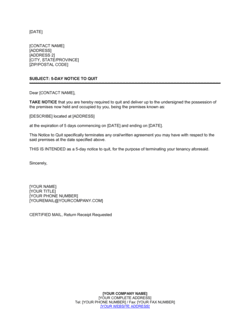
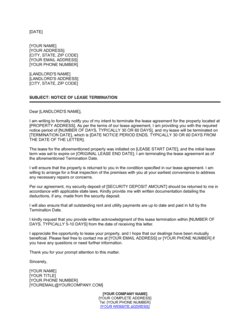
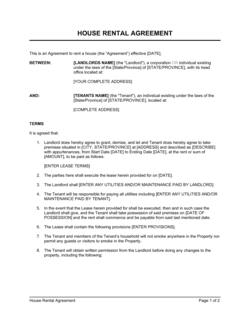
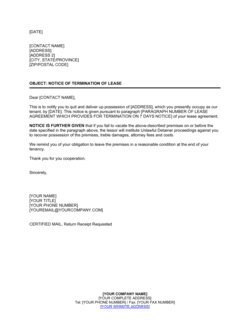
Notice of Breach of Lease Template

Free Word download β€’ Edit online β€’ Save & share with Drive β€’ Export to PDF

1 pageβ€’15–20 min to fillβ€’Difficulty: Standard
Learn more ↓
FreeNotice of Breach of Lease Template

At a glance

What it is
A Notice of Breach of Lease is a formal written letter a landlord sends to a tenant identifying a specific violation of the lease agreement β€” such as unpaid rent, unauthorized occupants, property damage, or prohibited use β€” and demanding the tenant cure the breach within a defined period. This free Word download is editable online and exports as PDF, giving landlords a professionally formatted, documented starting point they can send in minutes.
When you need it
Use it as soon as a tenant fails to meet a lease obligation and you want to create a written record before escalating to formal lease termination or eviction proceedings. Most jurisdictions require a written cure notice as a mandatory step before any eviction filing is valid.
What's inside
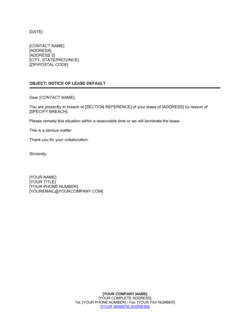
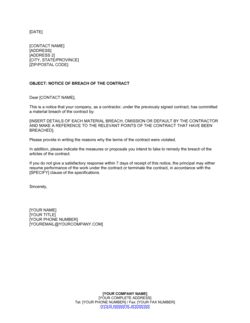
The letter identifies both parties and the property address, states the specific lease clause violated, describes the breach with dates and facts, sets a cure deadline, outlines the consequence of non-cure, and closes with the landlord's signature block.

What is a Notice of Breach of Lease?

A Notice of Breach of Lease is a formal written letter a landlord sends to a tenant documenting a specific violation of the lease agreement and demanding the tenant cure the breach within a defined period. It identifies the parties, cites the exact lease clause violated, describes the breach with supporting facts and dates, states what the tenant must do to remedy the situation, and sets a firm deadline β€” after which the landlord may proceed to terminate the lease and initiate eviction proceedings. Unlike an informal warning, a properly served breach notice creates a legally documented record of the violation and satisfies the written-notice requirement that most jurisdictions impose before any eviction filing is valid.

Why You Need This Document

Attempting to evict a tenant without a prior written breach notice is one of the most common procedural errors landlords make β€” and it typically results in an immediate dismissal of the eviction case, forcing the landlord to restart the entire process from the beginning, often months later. Beyond protecting your right to proceed to eviction, the notice also creates a contemporaneous written record that is difficult for a tenant to dispute in court: it establishes that the breach occurred, that you identified it specifically, and that the tenant had a fair opportunity to correct it. For property managers overseeing multiple units, a standardized breach notice template also ensures consistent documentation across the portfolio and reduces exposure to claims of selective enforcement. This template gives you a complete, professionally formatted letter you can complete in under 30 minutes and send the same day a violation is confirmed.

Which variant fits your situation?

If your situation is…Use this template
Tenant has failed to pay rentNotice of Breach of Lease (Rent Default)
Tenant has caused damage beyond normal wear and tearNotice of Breach of Lease (Property Damage)
Tenant refuses to cure and you are proceeding to evictionEviction Notice
Lease term has ended and tenant has not vacatedNotice to Quit
You want to end the tenancy with proper advance noticeLease Termination Letter
Tenant has introduced unauthorized occupants or petsLease Violation Warning Letter
Tenant has cured the breach and you want to confirm resolutionLease Amendment

Common mistakes to avoid

❌ Setting a cure period shorter than the statutory minimum

Why it matters: A notice with an insufficient cure period is procedurally defective. The tenant can use it to have an eviction case dismissed, forcing the landlord to restart the process from scratch.

Fix: Check the landlord-tenant statute for your specific jurisdiction and type of breach before inserting the cure period. When uncertain, default to 30 days.

❌ Accepting partial payment after sending the notice without a written reservation of rights

Why it matters: Courts in many jurisdictions treat acceptance of partial payment as a waiver of the breach, effectively canceling the notice and requiring the landlord to start over.

Fix: If you accept any payment after sending the notice, attach a written statement confirming you accept it without waiving the breach or your right to proceed.

❌ Describing the breach in vague terms

Why it matters: A notice that says only 'you have violated your lease' without citing a specific clause or providing dates and facts gives tenants grounds to challenge it as insufficient.

Fix: Cite the exact lease section, state the specific obligation breached, and describe the facts β€” dates, amounts, or observed conditions β€” in plain, concrete terms.

❌ Delivering the notice by an unauthorized method

Why it matters: A notice delivered by text, informal email, or a method not permitted by the lease or local statute may be deemed undelivered, even if the tenant actually received it.

Fix: Use certified mail with return receipt as the default. If your lease specifies a different method, follow it exactly and keep proof of delivery.

The 8 key clauses, explained

Parties and property identification

In plain language: Names the landlord and tenant as they appear on the lease and states the full address of the leased property.

Sample language
This Notice is issued by [LANDLORD FULL NAME] ('Landlord') to [TENANT FULL NAME] ('Tenant') regarding the property located at [FULL PROPERTY ADDRESS] ('Premises').

Common mistake: Using a nickname or informal address instead of the legal name on the lease β€” the notice may not be tied to the enforceable agreement if names don't match.

Reference to the lease agreement

In plain language: Identifies the specific lease by date so there is no ambiguity about which agreement is being enforced.

Sample language
This Notice is issued pursuant to the Lease Agreement entered into on [LEASE DATE] between Landlord and Tenant ('Lease').

Common mistake: Omitting the lease date entirely. If the tenant disputes which agreement applies, an undated reference is difficult to connect to the correct document.

Description of the breach

In plain language: States the specific lease clause violated and describes the breach factually β€” what happened, when, and how it deviates from the lease terms.

Sample language
Pursuant to Section [X] of the Lease, Tenant is required to [OBLIGATION]. As of [DATE], Tenant has failed to [SPECIFIC FAILURE], specifically: [FACTUAL DESCRIPTION OF BREACH].

Common mistake: Writing a vague description like 'you have violated your lease' without citing a clause or specific facts. Vague notices are harder to enforce and give tenants grounds to dispute the notice on procedural grounds.

Amount or remedy required to cure

In plain language: States exactly what the tenant must do to cure β€” the dollar amount owed, the action required, or the behavior that must stop.

Sample language
To cure this breach, Tenant must [PAY THE SUM OF $[AMOUNT] representing rent due for [PERIOD] / REMOVE THE UNAUTHORIZED OCCUPANT / REPAIR THE FOLLOWING DAMAGE] no later than [CURE DEADLINE DATE].

Common mistake: Being imprecise about the cure requirement. If the notice says 'pay overdue rent' without stating the exact amount, the tenant can argue they did not know what was required.

Cure deadline

In plain language: Sets the specific calendar date by which the breach must be cured, calculated in accordance with the lease terms and any applicable statutory minimum.

Sample language
Tenant has [NUMBER] days from the date of this Notice to cure the breach described above. The cure deadline is [SPECIFIC DATE].

Common mistake: Setting a cure period shorter than the statutory minimum for the jurisdiction. A notice with an inadequate cure period is invalid and restarts the entire process.

Consequence of non-cure

In plain language: States clearly what will happen if the tenant fails to cure by the deadline β€” typically lease termination and commencement of eviction proceedings.

Sample language
If the breach is not fully cured by [CURE DEADLINE DATE], Landlord reserves the right to terminate the Lease and commence legal proceedings to recover possession of the Premises, plus any damages, costs, and attorneys' fees permitted by law.

Common mistake: Omitting the consequence language entirely. Without it, the notice reads as a complaint rather than a legal precursor to action, which weakens the landlord's position in subsequent proceedings.

Reservation of rights

In plain language: Clarifies that sending this notice does not waive any other rights under the lease or applicable law.

Sample language
This Notice is not a waiver of any other right or remedy available to Landlord under the Lease or applicable law. All rights are expressly reserved.

Common mistake: Accepting partial payment after sending the notice without a written reservation of rights. Accepting payment can be construed as waiving the breach, which voids the notice.

Delivery and signature block

In plain language: Identifies the date and method of delivery and provides the landlord's signature, printed name, and contact information.

Sample language
Delivered by [CERTIFIED MAIL / PERSONAL DELIVERY / EMAIL] on [DATE]. [LANDLORD SIGNATURE] | [LANDLORD PRINTED NAME] | [LANDLORD ADDRESS] | [PHONE] | [EMAIL]

Common mistake: Delivering the notice by text or informal email without confirming the lease allows that method. Courts may reject notices not delivered by a method prescribed in the lease or by statute.

How to fill it out

  1. 1

    Enter the landlord and tenant's legal names

    Use the exact names as they appear on the lease agreement. Include the full property address in the opening paragraph.

    πŸ’‘ Copy the name and address fields directly from the signed lease β€” any discrepancy gives the tenant grounds to dispute the notice.

  2. 2

    Reference the lease by its execution date

    State the date the lease was signed so the notice is tied unambiguously to the correct agreement, especially if multiple lease versions or amendments exist.

    πŸ’‘ If the lease has been amended, reference both the original lease date and the most recent amendment date.

  3. 3

    Describe the breach precisely, with dates and facts

    Cite the specific lease section violated and describe what happened, when it occurred, and how it deviates from the tenant's obligations. Avoid emotional language β€” state facts only.

    πŸ’‘ Attach supporting evidence (bank statements showing non-payment, photos of damage) as an exhibit referenced in the body of the notice.

  4. 4

    State the exact cure requirement

    For rent default, state the exact dollar amount owed and the period it covers. For other breaches, describe the specific action the tenant must take to remedy the violation.

    πŸ’‘ Break out rent arrears by month if multiple months are unpaid β€” a single lump sum without a breakdown invites disputes about how much is actually owed.

  5. 5

    Calculate and insert the cure deadline

    Check the lease and your jurisdiction's landlord-tenant statutes for the minimum cure period required. Enter the specific calendar date by which the tenant must act.

    πŸ’‘ When in doubt, give more time than the minimum β€” a longer cure period is always valid; a shorter one may void the notice.

  6. 6

    Add consequence and reservation-of-rights language

    State explicitly that failure to cure will result in lease termination and eviction proceedings, and confirm that sending this notice does not waive any other lease rights.

    πŸ’‘ Do not soften the consequence language. Courts read these notices literally β€” vague threats are not the same as a stated legal intention to terminate.

  7. 7

    Deliver by a lease-prescribed or statutory method and keep proof

    Send by certified mail with return receipt, personal delivery with a witness, or any other method your lease or local statute explicitly permits. Retain the delivery receipt.

    πŸ’‘ Make a dated copy of the sent notice and file it with the delivery confirmation before doing anything else β€” this becomes your evidence if the matter proceeds to court.

Frequently asked questions

What is a notice of breach of lease?

A notice of breach of lease is a formal letter a landlord sends to a tenant documenting a specific violation of the lease agreement β€” such as unpaid rent, property damage, unauthorized occupants, or prohibited use β€” and demanding the tenant remedy the violation within a defined period. It creates a written record of the breach and is typically a required legal step before a landlord can proceed to lease termination or eviction.

Is a notice of breach of lease required before eviction?

In most jurisdictions, yes β€” landlords are generally required to provide written notice of the breach and a reasonable cure period before filing for eviction. Skipping this step can result in an eviction case being dismissed on procedural grounds. The required notice period varies by jurisdiction and breach type, ranging from 3 days for non-payment of rent in some US states to 30 days for other violations.

How long does a tenant have to cure a breach?

The cure period depends on your jurisdiction's landlord-tenant statutes and the type of breach. Non-payment of rent typically triggers a 3-day, 5-day, or 14-day cure period depending on the state or province. Other violations β€” such as unauthorized occupants or property damage β€” commonly require 10 to 30 days. Always check the applicable statute before calculating the cure deadline, as a period that is too short can invalidate the notice.

What happens if the tenant does not cure by the deadline?

If the tenant fails to remedy the breach within the stated cure period, the landlord typically has the right to terminate the lease and commence formal eviction proceedings. In many jurisdictions, the landlord must then serve a separate notice of termination before filing an unlawful detainer action with the court. The original breach notice becomes a critical piece of evidence in those proceedings.

Can a landlord accept rent after sending a breach notice?

Accepting payment after issuing a breach notice carries significant risk. Courts in many jurisdictions interpret acceptance of rent as a waiver of the breach, effectively nullifying the notice and requiring the landlord to start the process over. If you do accept payment, attach a written statement at the time of acceptance confirming that you reserve all rights under the lease and the notice remains in effect.

What types of lease violations warrant a breach notice?

The most common triggers are non-payment or chronic late payment of rent, unauthorized subletting or additional occupants, keeping pets in violation of a no-pet clause, property damage beyond normal wear and tear, operating a business from a residential unit in violation of the lease, and creating nuisance conditions that affect other tenants or neighbors. Any material failure to comply with a lease obligation can justify a formal breach notice.

Does a breach notice need to be signed by the landlord?

While a signature is not universally required to make the notice legally valid, signing it is strongly recommended. A signed notice confirms authenticity, looks more authoritative, and reduces the likelihood of a tenant claiming the communication was informal or unauthorized. Property management companies acting on a landlord's behalf should identify their authority to act in the signature block.

Can a tenant dispute a notice of breach of lease?

Yes. A tenant can dispute the notice on substantive grounds β€” arguing the alleged breach did not occur or was already remedied β€” or on procedural grounds, such as an inadequate cure period, improper delivery method, or an inaccurate description of the violation. A clearly drafted notice with specific facts, correct statutory cure periods, and documented delivery is far harder to challenge successfully.

Should I use this template for both residential and commercial leases?

The structure of the notice is the same for both residential and commercial tenancies, but the applicable legal framework differs. Residential tenancies are governed by consumer-protection-oriented landlord-tenant statutes with mandatory notice periods. Commercial leases typically allow the parties to set their own cure periods in the lease itself. Review the specific lease and applicable local law before completing the template for either context.

How this compares to alternatives

vs Eviction Notice

A notice of breach of lease identifies the violation and gives the tenant an opportunity to cure. An eviction notice is served after the cure period has passed without remedy, initiating the formal legal process to recover possession of the property. The breach notice almost always precedes the eviction notice β€” skipping it typically invalidates the eviction filing.

vs Lease Termination Letter

A lease termination letter ends the tenancy by mutual agreement or with proper advance notice when neither party has necessarily violated the lease. A breach notice is adversarial β€” it documents a specific violation and demands cure. Use a termination letter when you want to end a lease on agreed terms; use a breach notice when a tenant has failed to meet their obligations.

vs Notice to Quit

A notice to quit demands the tenant vacate the premises without offering an opportunity to cure β€” typically used for holdover tenants or non-remediable breaches. A breach notice always includes a cure period. If the breach is curable (e.g., unpaid rent), serve a breach notice first; if the breach is non-remediable (e.g., illegal activity), a notice to quit may be the appropriate instrument.

vs Lease Agreement

The lease agreement is the original contract establishing the tenant's obligations. The notice of breach of lease is a downstream enforcement document that references specific clauses of the lease. Without a well-drafted lease clearly stating each obligation, the breach notice has no contract language to cite and becomes significantly harder to enforce.

Industry-specific considerations

Residential Real Estate

Non-payment of rent and unauthorized occupants are the two most frequent triggers; statutory cure periods are strictly regulated and vary by state or province.

Commercial Real Estate

Unauthorized subletting, operating outside the permitted use clause, and failure to maintain the premises to required standards are the most common commercial breach scenarios.

Property Management

Property managers typically maintain a standardized breach-notice library for each jurisdiction they operate in, with cure periods pre-calculated for each violation type.

Hospitality and Short-Term Rentals

Lease violations in furnished or extended-stay contexts often involve noise complaints, unauthorized guests, or damage to furnishings that requires prompt documented notice.

Template vs pro β€” what fits your needs?

PathBest forCostTime
Use the templateLandlords handling straightforward rent-default or property-damage notices for a single residential or commercial tenancyFree15–30 minutes
Template + professional reviewLandlords dealing with repeated violations, tenants likely to dispute the notice, or properties in jurisdictions with complex notice requirements$100–$300 for a single attorney review1–2 business days
Custom draftedComplex commercial lease breaches, multi-tenant disputes, or situations where eviction litigation is already anticipated$400–$1,500+3–7 business days

Glossary

Breach of Lease
A tenant's failure to fulfill a material obligation set out in the lease agreement, such as paying rent, maintaining the property, or complying with use restrictions.
Cure Period
The number of days the tenant has to correct a breach after receiving written notice β€” typically 3, 5, 10, or 30 days depending on the jurisdiction and type of violation.
Notice to Cure
A formal written demand requiring the tenant to remedy a specific lease violation within a stated deadline or face further legal action.
Material Breach
A violation serious enough to justify lease termination or eviction β€” typically non-payment of rent, significant property damage, or illegal activity on the premises.
Unlawful Detainer
The legal action a landlord files to recover possession of a property when a tenant refuses to vacate after a valid notice has expired.
Lease Default
The state in which a tenant has failed to meet one or more lease obligations and has not cured the failure within any applicable notice period.
Constructive Notice
Legal notice deemed delivered when sent by a method prescribed in the lease β€” typically certified mail or personal delivery β€” regardless of whether the tenant reads it.
Holdover Tenant
A tenant who remains in possession of the property after the lease term has expired without the landlord's explicit consent.
Unconditional Quit Notice
A notice that demands the tenant vacate with no opportunity to cure β€” typically used after repeated violations or when the breach is non-remediable.
Pay or Quit Notice
A specific type of breach notice requiring a tenant to pay all overdue rent within a defined period or vacate the premises.

Part of your Business Operating System

This document is one of 3,000+ business & legal templates included in Business in a Box.

  • Fill-in-the-blanks β€” ready in minutes
  • 100% customizable Word document
  • Compatible with all office suites
  • Export to PDF and share electronically

Create your document in 3 simple steps.

From template to signed document β€” all inside one Business Operating System.
1
Download or open template

Access over 3,000+ business and legal templates for any business task, project or initiative.

2
Edit and fill in the blanks with AI

Customize your ready-made business document template and save it in the cloud.

3
Save, Share, Send, Sign

Share your files and folders with your team. Create a space of seamless collaboration.

Save time, save money, and create top-quality documents.

β˜…β˜…β˜…β˜…β˜…

"Fantastic value! I'm not sure how I'd do without it. It's worth its weight in gold and paid back for itself many times."

Managing Director Β· Mall Farm
Robert Whalley
Managing Director, Mall Farm Proprietary Limited
β˜…β˜…β˜…β˜…β˜…

"I have been using Business in a Box for years. It has been the most useful source of templates I have encountered. I recommend it to anyone."

Business Owner Β· 4+ years
Dr Michael John Freestone
Business Owner
β˜…β˜…β˜…β˜…β˜…

"It has been a life saver so many times I have lost count. Business in a Box has saved me so much time and as you know, time is money."

Owner Β· Upstate Web
David G. Moore Jr.
Owner, Upstate Web

Run your business with a system β€” not scattered tools

Stop downloading documents. Start operating with clarity. Business in a Box gives you the Business Operating System used by over 250,000 companies worldwide to structure, run, and grow their business.

Free Forever PlanΒ Β·Β No credit card required