1
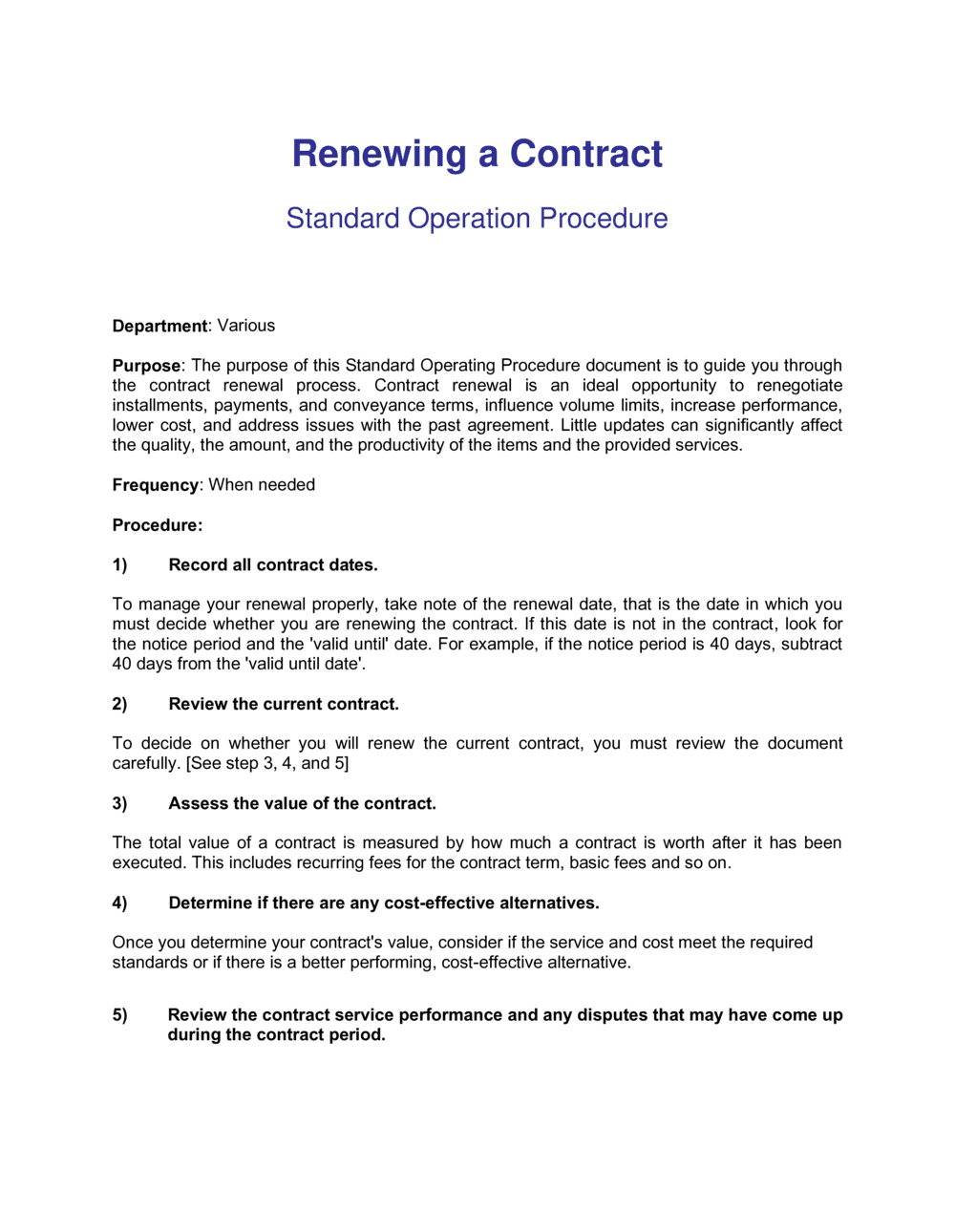
Identify all contracts due for renewal in the next 90 days
Pull every active contract from your contract register and filter for those expiring within 90 days. Flag any with auto-renewal clauses and confirm their notice deadlines.
💡 If you do not have a contract register, build one now — a simple spreadsheet with counterparty, agreement type, expiry date, and notice period handles most small-business needs.
2
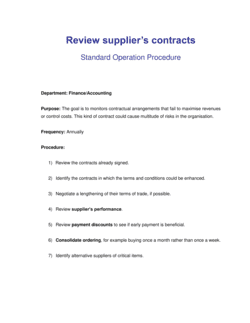
Complete the performance review for each contract
Gather delivery records, SLA reports, invoice history, and any stakeholder feedback from the current term. Score performance against the original obligations and document your renewal recommendation.
💡 A low performance score is your strongest leverage point in renegotiation — quantify it before you open negotiations.
3
Define your renegotiation scope in writing
List every term you want to change, ranked by priority. Separate non-negotiables from trade-off items so you know in advance what you can concede to win what matters most.
💡 Share the ranked scope with your internal stakeholders and get sign-off before approaching the counterparty — internal alignment prevents contradictory signals during negotiation.
4
Route the renewal for internal approval
Send the performance review, proposed new terms, and budget impact to every required approver in sequence. Record approvals and dates in the stakeholder workflow section of the template.
💡 Build a 5-business-day buffer between each approval step. Sequential approvals routinely take longer than expected when stakeholders are traveling or in budget cycles.
5
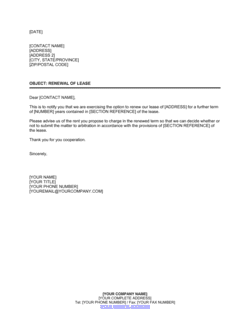
Send the formal renewal notice to the counterparty
Issue the written renewal notice before the contractual notice deadline. State your intent to renew, the proposed new term, and that updated terms will follow. Keep a timestamped copy.
💡 Send by email with read receipt and, for high-value contracts, follow up by post. The timestamp protects you if the counterparty later disputes whether notice was given.
6
Negotiate and document agreed changes
Conduct negotiations and log every exchange — proposal, counteroffer, and final agreement — in the negotiation log section. Once terms are agreed, draft the updated terms documentation.
💡 Close negotiations at least 10 business days before the expiry date to leave time for drafting, review, and signature without a gap in coverage.
7
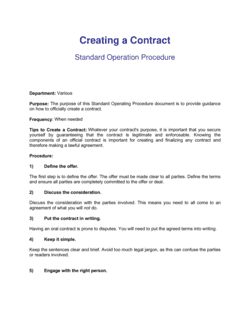
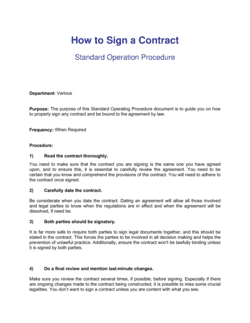
Execute the renewal agreement or amendment
Route the final document for signature by all required parties. Confirm that the executed agreement accurately reflects every change agreed during negotiation before sending for signature.
💡 Use a consistent file-naming convention — e.g., [VENDOR]_[AGREEMENT TYPE]_RENEWAL_[YYYY] — so the executed document is easy to locate at the next renewal cycle.
8
Update the contract register and set the next trigger date
Record the new start date, expiry date, notice deadline, and document storage location in your contract register. Assign an owner and set a calendar reminder for the next review start.
💡 Set two reminders: one at 90 days before the new expiry and one at the notice deadline. The 90-day reminder starts the process; the notice-deadline reminder catches anything that slipped.