Modification of Lease Template

Free Word download β€’ Edit online β€’ Save & share with Drive β€’ Export to PDF

2 pagesβ€’20–30 min to fillβ€’Difficulty: Standardβ€’Signature requiredβ€’Legal review recommended
Learn more ↓
FreeModification of Lease Template

At a glance

What it is
A Modification of Lease is a legally binding amendment that changes one or more specific terms of an existing lease agreement without replacing the entire contract. This free Word download lets you document agreed changes β€” rent adjustments, term extensions, permitted-use expansions, or space alterations β€” edit online, and export as PDF for execution by both parties.
When you need it
Use it any time a landlord and tenant agree to alter specific lease conditions mid-term β€” such as when a business needs to expand into adjacent space, extend its occupancy beyond the original end date, or renegotiate rent following an economic disruption.
What's inside
Identification of the original lease and parties, a precise description of each changed term with before-and-after language, an effective date for the changes, confirmation that all unmodified terms remain in full force, and signature blocks for both parties.

What is a Modification of Lease?

A Modification of Lease is a legally binding written amendment that changes one or more specific provisions of an existing lease agreement β€” such as the rent amount, lease term, permitted use, or premises size β€” while leaving every other term of the original contract in full force and effect. Rather than replacing the entire lease, it surgically updates only the agreed-upon conditions and is read together with the original document as a single integrated agreement. Both the landlord and tenant must sign the modification for it to be enforceable, and in most jurisdictions it must satisfy the same formality requirements as the original lease itself.

Why You Need This Document

Relying on verbal agreements or email threads to document lease changes is one of the most common and costly mistakes landlords and tenants make. Most lease agreements include an integration clause that expressly voids any modification not made in a signed writing β€” meaning an oral rent reduction or informally agreed extension may be completely unenforceable when the relationship sours. Without a properly executed amendment, the original lease terms control: a tenant who stopped paying the old rent based on a verbal agreement faces a default claim; a landlord who allowed a new use without a written modification may lose the ability to enforce the original use restriction. A signed Modification of Lease closes these gaps, creates a clear audit trail for future disputes, and satisfies the evidentiary requirements of courts, lenders, and title companies reviewing the lease in connection with a property sale or refinancing.

Which variant fits your situation?

If your situation is…Use this template
Extending the lease end date only, with no other changesLease Extension Agreement
Adjusting monthly rent amount for the remainder of the termModification of Lease (Rent Amendment)
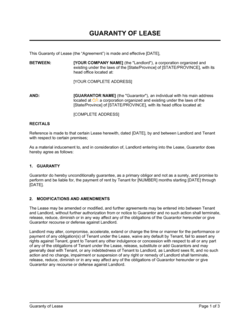
Adding or removing a guarantor from the original leaseLease Guaranty Amendment
Terminating the lease before its natural expiry dateLease Termination Agreement
Allowing the tenant to sublease part of the premisesSublease Agreement
Documenting a completely renegotiated set of termsCommercial Lease Agreement
Adding a renewal option that was missing from the original leaseLease Renewal Agreement

Common mistakes to avoid

❌ Using an email exchange as the amendment

Why it matters: Most lease agreements include an integration clause requiring modifications to be in a signed writing. An email thread, even if both parties acknowledge agreement, may not satisfy the formal amendment requirement and can be challenged as unenforceable.

Fix: Always document agreed changes in a signed, dated written amendment that references the original lease by date and address, and have both parties execute it before the effective date.

❌ Failing to identify all prior amendments in the recitals

Why it matters: If a lease has been modified twice before and the third amendment doesn't acknowledge the prior two, there is ambiguity about which version of the modified terms is the operative baseline β€” courts have voided amendments on this basis.

Fix: List every prior amendment by date in the recitals and confirm the current operative version of each clause being changed.

❌ Changing rent without addressing pre-amendment arrears or credits

Why it matters: If the tenant owes back rent or the landlord holds a credit when the new rent takes effect, the amendment may be read as wiping those balances β€” or conversely, the tenant may continue disputing them.

Fix: Include a brief statement in the rent-adjustment clause confirming the balance owed as of the effective date and how it will be handled.

❌ Omitting a conflict-resolution clause

Why it matters: When an amendment and the original lease address the same issue with different language β€” which happens easily when drafting quickly β€” the absence of a controlling-document clause forces expensive dispute resolution.

Fix: Include the standard language: 'In the event of any conflict between this Amendment and the Original Lease, the terms of this Amendment shall control.'

❌ Adding a new permitted use without checking zoning and upstream lease restrictions

Why it matters: A landlord who amends a commercial lease to permit a new use that violates local zoning or a ground lease covenant may be in breach of their own superior agreement β€” exposing both parties to liability.

Fix: Before executing a permitted-use amendment, confirm that the proposed new use is permitted by the applicable zoning designation and that no superior lease or mortgage prohibits it.

❌ Not obtaining lender or ground-lessor consent when required

Why it matters: Commercial mortgage agreements and ground leases routinely require the property owner to obtain lender or ground-lessor consent before materially modifying a lease. Skipping this step can trigger a loan default or void the amendment entirely.

Fix: Review the landlord's financing documents and any ground lease before executing the amendment, and obtain all required third-party consents in writing before the effective date.

The 10 key clauses, explained

Recitals and identification of original lease

In plain language: Names both parties and precisely identifies the original lease being modified β€” property address, original execution date, and any prior amendments.

Sample language
This Modification of Lease ('Amendment') is entered into as of [EFFECTIVE DATE] by and between [LANDLORD LEGAL NAME] ('Landlord') and [TENANT LEGAL NAME] ('Tenant'), with respect to the Lease Agreement dated [ORIGINAL LEASE DATE] for the premises located at [PROPERTY ADDRESS] (the 'Original Lease').

Common mistake: Referencing the lease by address only without including the original execution date. If prior amendments exist, failing to list all of them creates ambiguity about which version of the lease is being modified.

Description of modified terms

In plain language: Sets out each specific change clearly β€” quoting the original provision being replaced and stating the new language that supersedes it.

Sample language
Section [X] of the Original Lease, currently reading '[ORIGINAL LANGUAGE],' is hereby deleted in its entirety and replaced with the following: '[NEW LANGUAGE].'

Common mistake: Summarizing the change in plain English without quoting the original provision. If the original wording is ambiguous, a summary-only amendment creates a new layer of ambiguity and can be disputed.

Effective date of modification

In plain language: States the precise date the amended terms take effect, which may be retroactive, concurrent with signing, or a future date.

Sample language
The modifications set forth in this Amendment shall be effective as of [EFFECTIVE DATE], regardless of the date on which this Amendment is executed by the parties.

Common mistake: Leaving the effective date blank or writing 'upon signing.' If parties sign on different dates, a missing effective date creates uncertainty about when the new terms apply.

Rent adjustment

In plain language: States the new base rent amount, the date from which it applies, and any agreed escalation schedule, replacing the corresponding section of the original lease.

Sample language
Commencing [DATE], the monthly base rent shall be $[AMOUNT], payable on the [FIRST] day of each calendar month. All other provisions of the Original Lease relating to rent escalation and late fees remain unchanged.

Common mistake: Failing to address what happens to rent arrears or credits accumulated before the amendment date. Leaving pre-amendment balances unresolved leads to disputes over how the new rent figure is applied.

Term extension or reduction

In plain language: Extends or shortens the lease end date, states the new expiry date, and confirms whether existing renewal options are preserved or superseded.

Sample language
The Term of the Original Lease is hereby extended for a period of [X] months, commencing [START DATE] and expiring on [NEW END DATE] (the 'Extended Term'). All options to renew, if any, set forth in the Original Lease shall [remain in effect / be of no further force or effect] during the Extended Term.

Common mistake: Extending the term without addressing whether the tenant's existing renewal options reset or carry forward. Ambiguity here routinely generates disputes when the extended term nears its own expiry.

Permitted use amendment

In plain language: Expands, restricts, or clarifies what activities the tenant may conduct on the premises, replacing the original permitted-use clause.

Sample language
Section [X] (Permitted Use) of the Original Lease is amended to permit Tenant to use the Premises for [ORIGINAL USE] and additionally for [NEW USE], subject to all applicable laws, zoning regulations, and the remaining terms of the Original Lease.

Common mistake: Adding a new permitted use without checking whether the building's zoning or the landlord's superior lease (ground lease or mortgage) prohibits it. The amendment is unenforceable to the extent it conflicts with an upstream restriction.

Premises modification (expansion or reduction)

In plain language: Adds or removes square footage from the leased premises, updates the defined 'Premises' description, and adjusts rent and operating-cost contributions proportionately.

Sample language
Effective [DATE], the Premises shall be expanded to include Suite [NUMBER], comprising approximately [X] rentable square feet, as shown on Exhibit A attached hereto. Monthly base rent shall increase by $[AMOUNT] to reflect the additional square footage.

Common mistake: Describing the added space by room name or common description rather than attaching a revised floor plan exhibit. Without a precise description, the parties may later disagree on exactly which area was included.

Tenant improvements and responsibility for alterations

In plain language: Specifies who pays for and performs any physical alterations required by the modification, and who owns the improvements at the end of the term.

Sample language
Tenant shall, at its sole cost and expense, complete the improvements described in Exhibit B ('Tenant Work') by [DATE], using contractors approved in advance by Landlord. All Tenant Work shall become the property of Landlord upon installation unless Landlord notifies Tenant in writing to restore the Premises to its prior condition at the end of the Term.

Common mistake: Omitting a restoration obligation. If the lease is silent on whether tenant improvements must be removed, landlords and tenants frequently dispute the point at lease expiry β€” often resulting in costly litigation.

Confirmation that remaining terms survive

In plain language: Expressly states that all original lease provisions not specifically changed by this amendment remain in full force and effect.

Sample language
Except as expressly modified herein, all terms and conditions of the Original Lease shall remain unchanged and in full force and effect. In the event of any conflict between this Amendment and the Original Lease, the terms of this Amendment shall control.

Common mistake: Omitting the conflict-resolution sentence (which document controls in case of inconsistency). Without it, courts must determine which version prevails, often at significant cost to both parties.

Signatures and authority

In plain language: Provides dated signature blocks for each party and β€” for entities β€” a representation that the signatory has authority to bind the company.

Sample language
IN WITNESS WHEREOF, the parties have executed this Amendment as of the date first written above. [LANDLORD LEGAL NAME] By: _______________ Name: [NAME] Title: [TITLE] Date: _______________ [TENANT LEGAL NAME] By: _______________ Name: [NAME] Title: [TITLE] Date: _______________

Common mistake: Having an employee sign without confirming they hold signing authority. An amendment signed by someone without authority β€” such as a store manager rather than an authorized officer β€” may be voidable by the landlord or tenant entity.

How to fill it out

  1. 1

    Gather and review the original lease and all prior amendments

    Locate the fully executed original lease and every amendment or addendum signed to date. Confirm the current operative version of each clause you intend to modify.

    πŸ’‘ Create a short table listing the original clause number, the current text, and the proposed new text before opening the template β€” this prevents drafting errors and missed cross-references.

  2. 2

    Identify and name both parties with their legal entity names

    Enter the full registered legal names of the landlord and tenant exactly as they appear on the original lease. If ownership or tenancy has changed since the original signing, note the successor entity and the basis for the transfer.

    πŸ’‘ If the landlord has sold the property since the original lease, confirm the new owner's legal name from the county property records before drafting.

  3. 3

    Set the effective date explicitly

    Enter a specific calendar date for when the changes take effect. Decide whether it is retroactive, concurrent with signing, or a future date, and state it clearly in the effective-date clause.

    πŸ’‘ For rent reductions, a retroactive effective date requires a credit or refund calculation β€” document the math in an exhibit to avoid disputes.

  4. 4

    Draft each modified term with before-and-after language

    For each clause being changed, quote the original provision in full, then state the replacement language. If you are adding a provision that did not exist before, state that Section X is added rather than replaced.

    πŸ’‘ Never paraphrase the original clause β€” copy it verbatim from the signed lease so there is no dispute about what is being replaced.

  5. 5

    Attach exhibits for any premises descriptions or improvement plans

    If the modification adds or removes space, attach a revised floor plan as Exhibit A. If tenant improvements are authorized, attach a scope-of-work description as Exhibit B and reference both exhibits in the body of the amendment.

    πŸ’‘ Label exhibits clearly and reference them by letter in the amendment body β€” 'as shown on Exhibit A attached hereto and incorporated by reference.'

  6. 6

    Confirm authority and obtain signatures before the effective date

    Verify that each signatory has authority to bind their entity β€” check corporate resolutions or partnership agreements if the lease involves an LLC, corporation, or partnership. Obtain both signatures before or on the effective date.

    πŸ’‘ Use Business in a Box eSign to timestamp execution and create an audit trail. Store the fully executed amendment with the original lease file immediately.

  7. 7

    Notify any required third parties

    Check whether the original lease requires the landlord's lender, a ground lessor, or a lease guarantor to consent to modifications. If so, obtain that consent in writing before the amendment takes effect.

    πŸ’‘ Many commercial mortgages require the lender's written consent before the landlord can materially modify a lease. Skipping this step can trigger a loan default.

Frequently asked questions

What is a modification of lease?

A modification of lease is a written agreement between a landlord and tenant that changes specific terms of an existing lease β€” such as rent, lease duration, permitted use, or premises size β€” while leaving all other provisions of the original lease intact. It is also called a lease amendment or lease addendum, depending on whether it changes existing terms or adds new ones.

When should I use a lease modification instead of a new lease?

Use a modification when both parties are satisfied with the majority of the existing lease terms and only need to change one or a few specific provisions. Drafting a new lease is appropriate when the changes are so extensive β€” new parties, entirely renegotiated economics, new premises β€” that the original document provides little useful framework. For targeted changes like a rent adjustment or a six-month extension, a modification is faster, cheaper, and preserves the protections both sides already negotiated.

Does a lease modification need to be in writing?

Yes, in virtually all jurisdictions. Leases are required to be in writing under the Statute of Frauds when they cover a term of more than one year, and modifications to those leases must also be in writing to be enforceable. Most leases also include an integration clause expressly requiring written amendments. Verbal agreements to modify lease terms are rarely enforceable and create significant evidentiary problems.

What is the difference between a lease modification and a lease addendum?

A lease modification (or amendment) changes existing provisions that are already in the original lease β€” replacing old language with new language. An addendum adds entirely new provisions that were not addressed in the original document. In practice, the two terms are often used interchangeably, but understanding the distinction matters for drafting: if you are changing an existing clause, use amendment language; if you are adding something new, use addendum language.

Does a lease modification require notarization?

In most US states and Canadian provinces, notarization is not required for commercial lease amendments, though some states require notarization for residential leases over a certain term. In the UK and EU, notarization requirements vary by jurisdiction and property type. As a general practice, notarization is not typically required but may be requested by a lender or title company as part of a financing or sale transaction. Check local requirements and any lender conditions before skipping it.

What happens to the original lease after a modification is signed?

The original lease remains the governing document for all terms not specifically changed by the amendment. The modification and the original lease are read together as a single integrated agreement. This is why the confirmation clause β€” "all unmodified terms remain in full force and effect" β€” is essential: it prevents arguments that the amendment replaced the entire lease or waived provisions not mentioned.

Can a lease modification extend a lease that has already expired?

Generally no β€” once a lease has expired, the landlord-tenant relationship has ended (or converted to a holdover tenancy) and there is no longer a valid original contract to modify. To document a new arrangement after expiry, the parties should execute a new lease agreement rather than an amendment. If a holdover tenancy exists, a new lease or lease renewal agreement is the appropriate instrument.

Should I notify my lender before modifying a commercial lease?

If you are the landlord and the property is mortgaged, review your loan documents before executing any lease amendment. Many commercial mortgage agreements require the lender's written consent before the landlord can materially change a lease β€” particularly changes that affect rent, permitted use, or term length. Modifying a lease without required lender consent can constitute a loan default. Tenants facing a change-of-ownership situation should also confirm that the new landlord has the authority to amend the lease.

How this compares to alternatives

vs Lease Extension Agreement

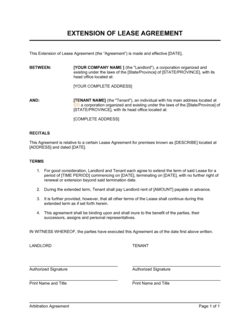
A lease extension agreement specifically prolongs the lease term beyond its original end date and typically adjusts rent for the extended period. A modification of lease is broader β€” it can change any term, including but not limited to the term length. Use a lease extension when the only change needed is the end date; use a modification when multiple provisions are changing simultaneously.

vs Lease Renewal Agreement

A lease renewal creates a new lease term β€” sometimes with substantially renegotiated conditions β€” after the original term expires. A modification is executed during the existing term while the original lease is still active. Renewals often reset the relationship; modifications preserve it with targeted adjustments.

vs Lease Termination Agreement

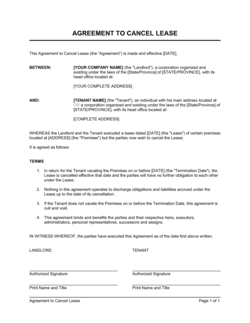
A lease termination agreement ends the lease early by mutual consent, releasing both parties from future obligations. A modification keeps the lease alive and changes specific terms. If a tenant wants to exit before the lease ends, termination is the right instrument; if they want to stay under revised conditions, a modification is the right instrument.

vs Sublease Agreement

A sublease agreement allows the tenant to transfer possession of part or all of the premises to a third-party subtenant while remaining liable to the landlord. A modification of lease changes the direct relationship between the original landlord and tenant. If the goal is to bring in a subtenant, a sublease is needed β€” but a modification may first be required to add or confirm the sublease right in the original lease.

Industry-specific considerations

Retail

Lease modifications in retail frequently address rent reductions during low-sales periods, permitted-use expansions to accommodate new product lines, and co-tenancy adjustments when anchor tenants leave a shopping center.

Office and Professional Services

Office tenants commonly use lease modifications to expand into adjacent suites, add sublease rights as headcount fluctuates, or extend terms when a build-out investment makes relocation economically impractical.

Manufacturing and Industrial

Industrial lease modifications often involve adding permitted-use categories for new production processes, adjusting load-bearing or utility specifications, and documenting landlord-approved structural alterations.

Food and Beverage

Restaurant and food-service operators use lease modifications to add outdoor patio rights, expand kitchen ventilation allowances, adjust percentage-rent triggers, and document force majeure rent deferrals following public-health disruptions.

Jurisdictional notes

United States

Under the Statute of Frauds, leases and amendments covering terms of more than one year must be in writing and signed by the party to be charged. Most states impose no notarization requirement for commercial lease amendments, but some states β€” including Florida and New York β€” require notarization for residential lease amendments exceeding a certain term. California imposes additional tenant protections for residential leases that can limit the enforceability of certain modification terms.

Canada

Each province regulates lease modifications differently under its Landlord and Tenant Act or Commercial Tenancies Act. Residential lease modifications in Ontario must comply with the Residential Tenancies Act, which limits rent increases to provincially prescribed guidelines regardless of what a modification states. In Quebec, lease amendments may need to be in French or bilingual form for provincially regulated tenancies. Commercial lease modifications have fewer statutory constraints but must still be in writing.

United Kingdom

In England and Wales, a lease modification (called a deed of variation) for a lease originally granted by deed must itself be executed as a deed β€” signed, witnessed, and delivered β€” to be legally effective. The Land Registration Act 2002 requires registration of certain lease variations at HM Land Registry if the affected term has more than seven years remaining. Scotland and Northern Ireland have separate property law regimes with distinct formality requirements.

European Union

There is no single EU-wide framework for lease modifications; requirements vary significantly by member state. In Germany, commercial lease amendments must be in writing but do not require notarization. In France, a bail commercial amendment must respect mandatory statutory provisions on rent indexation and renewal rights regardless of what the parties agree. In Spain, lease modifications affecting a term of more than six years must generally be registered in the Property Registry to be enforceable against third parties.

Template vs lawyer β€” what fits your deal?

PathBest forCostTime
Use the templateStraightforward single-term changes β€” rent adjustment, short extension, or minor permitted-use clarification β€” between cooperative partiesFree30–60 minutes
Template + legal reviewModifications involving premises expansion, tenant improvements, sublease rights, or any change with financial implications over $25,000$300–$800 for a real estate attorney review2–5 business days
Custom draftedComplex multi-term renegotiations, lender consent requirements, high-value commercial leases, or situations involving a change in parties or guarantors$1,000–$4,000+1–3 weeks

Glossary

Lease Modification
A written amendment that changes specific terms of an existing lease while leaving all other provisions intact.
Addendum
A supplemental document attached to the original lease to add new terms that did not exist in the original agreement.
Amendment
A formal change to one or more existing provisions of a signed contract, agreed to by all original parties.
Effective Date
The specific calendar date on which the modified lease terms take legal effect, which may differ from the date of signing.
Permitted Use
A lease clause defining the specific activities the tenant is allowed to conduct on the premises.
Subordination Clause
A provision making the tenant's lease rights subordinate to the rights of a lender holding a mortgage on the property.
Estoppel Certificate
A signed statement by a tenant confirming the current terms and status of a lease β€” often required by lenders before approving property financing.
Holdover Tenant
A tenant who continues to occupy the premises after the lease term expires, typically on a month-to-month basis at an adjusted rent.
Base Rent
The fixed monthly or annual rent amount specified in the lease, excluding operating expenses, taxes, or percentage rent.
Triple Net (NNN)
A lease structure in which the tenant pays base rent plus their proportionate share of property taxes, insurance, and maintenance costs.
Force Majeure
A clause excusing a party from performance obligations when extraordinary events beyond their control β€” such as natural disasters or pandemics β€” make performance impossible.
Privity of Contract
The legal principle that only the original parties to a contract can enforce its terms β€” relevant when leases are assigned or ownership changes.

Part of your Business Operating System

This document is one of 3,000+ business & legal templates included in Business in a Box.

  • Fill-in-the-blanks β€” ready in minutes
  • 100% customizable Word document
  • Compatible with all office suites
  • Export to PDF and share electronically

Create your document in 3 simple steps.

From template to signed document β€” all inside one Business Operating System.
1
Download or open template

Access over 3,000+ business and legal templates for any business task, project or initiative.

2
Edit and fill in the blanks with AI

Customize your ready-made business document template and save it in the cloud.

3
Save, Share, Send, Sign

Share your files and folders with your team. Create a space of seamless collaboration.

Save time, save money, and create top-quality documents.

β˜…β˜…β˜…β˜…β˜…

"Fantastic value! I'm not sure how I'd do without it. It's worth its weight in gold and paid back for itself many times."

Managing Director Β· Mall Farm
Robert Whalley
Managing Director, Mall Farm Proprietary Limited
β˜…β˜…β˜…β˜…β˜…

"I have been using Business in a Box for years. It has been the most useful source of templates I have encountered. I recommend it to anyone."

Business Owner Β· 4+ years
Dr Michael John Freestone
Business Owner
β˜…β˜…β˜…β˜…β˜…

"It has been a life saver so many times I have lost count. Business in a Box has saved me so much time and as you know, time is money."

Owner Β· Upstate Web
David G. Moore Jr.
Owner, Upstate Web

Run your business with a system β€” not scattered tools

Stop downloading documents. Start operating with clarity. Business in a Box gives you the Business Operating System used by over 250,000 companies worldwide to structure, run, and grow their business.

Free Forever PlanΒ Β·Β No credit card required