- Change in Control
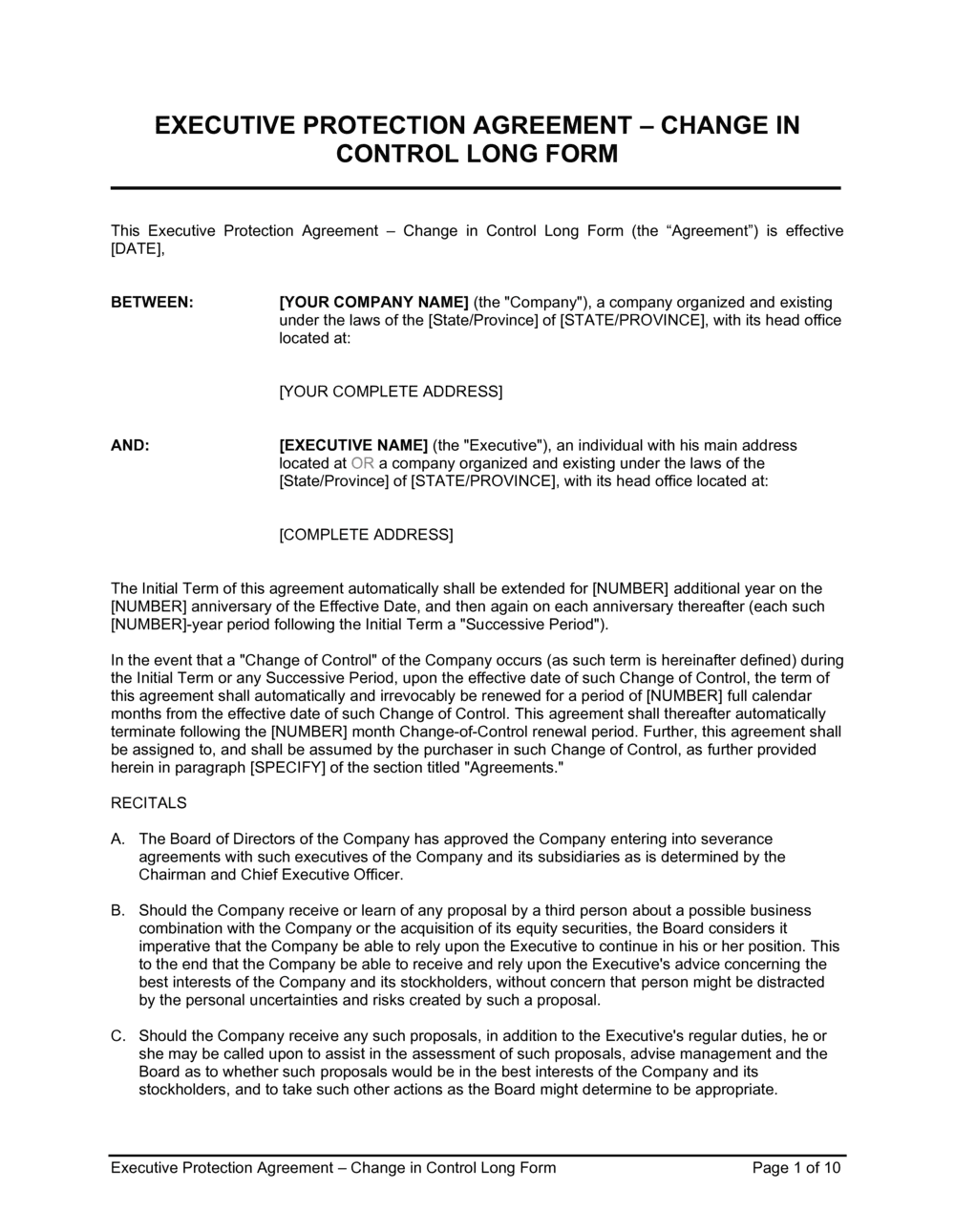
- A defined triggering event — typically a merger, acquisition, asset sale, or majority stock transfer — that activates the executive's contractual protections.
- Single Trigger
- A structure in which benefits become payable immediately upon a change-in-control event, regardless of whether the executive is terminated.
- Double Trigger
- A structure requiring two conditions — a change of control plus a qualifying termination or resignation for good reason — before benefits are paid.
- Good Reason
- A defined set of employer-initiated adverse changes — such as a pay cut, demotion, or relocation — that allow the executive to resign and still collect severance.
- Gross-Up Payment
- An additional cash payment made to the executive to cover any excise taxes triggered under IRC Section 4999 on excess parachute payments.
- Equity Acceleration
- Vesting of unvested stock options or restricted shares ahead of their normal schedule upon a qualifying change-in-control event.
- Parachute Payment
- Compensation paid to an executive upon a change of control; payments exceeding three times the executive's base amount trigger a 20% excise tax under IRC Section 4999.
- Release of Claims
- A condition requiring the executive to sign a waiver of employment-related legal claims against the company before receiving severance or other protection benefits.
- Cause
- Specific documented grounds — misconduct, fraud, or material policy violation — that allow the company to terminate the executive without triggering protection payments.
- Best-of-Net Provision
- An alternative to a gross-up in which the executive receives either the full parachute payment (and pays excise tax personally) or a reduced amount that avoids excise tax — whichever leaves the executive with more after-tax cash.