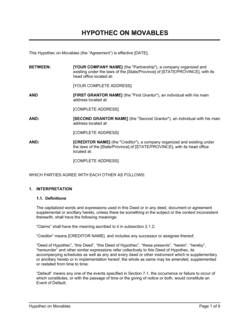
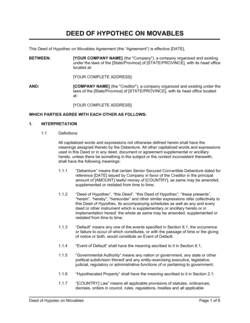
- Hypothec
- A security right granted to a creditor over a debtor's property without transferring possession, entitling the creditor to have the property sold if the debt is not repaid.
- Movable Property
- Assets that can be physically moved or transferred, such as equipment, vehicles, inventory, or financial instruments — as opposed to land or buildings.
- Creditor
- The party in whose favor the hypothec is granted — typically the lender or financier who is owed the secured obligation.
- Debtor
- The party who grants the hypothec over their property as security for a debt or obligation owed to the creditor.
- Secured Obligation
- The specific debt, loan, or contractual obligation that the hypothec is intended to secure, including the principal amount and any interest.
- Collateral
- The movable property specifically identified in the form as subject to the security interest, which the creditor may seize and sell upon default.
- Default
- A failure by the debtor to meet the terms of the secured obligation — such as missing a payment — that triggers the creditor's enforcement rights.
- Enforcement Rights
- The remedies available to the creditor upon default, typically including the right to take possession of and sell the hypothecated property.
- Publication of Rights
- The process of registering the hypothec in the applicable public registry so that the security interest is enforceable against third parties.
- Principal Amount
- The original sum of money lent or the value of the obligation secured, before interest or fees are added.