1
Identify the parties using full legal entity names
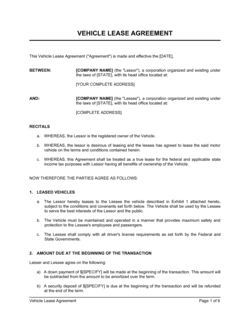
Enter both the lessor's and lessee's complete registered legal names, entity types (LLC, corporation, etc.), states of formation, and principal business addresses. Do not use trade names or DBA names in the party block.
💡 Pull both party names directly from their most recent state registration filings to ensure an exact match — this matters if you ever need to enforce the agreement in court.
2
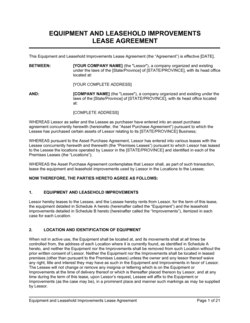
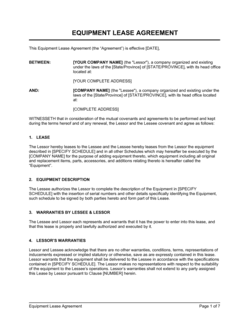
Complete Schedule A with a precise equipment description
List each piece of leased equipment by manufacturer, model number, serial number, year of manufacture, and current condition. If leasing multiple units, give each a line entry. Attach photographs if the equipment has any pre-existing damage.
💡 A serial number is the single most important identifier — it ties the contract to a specific asset and eliminates any dispute about which unit is covered.
3
Set the lease term with exact calendar dates
Enter the commencement date as the anticipated acceptance date — not the signing date — and calculate the expiration date based on the agreed term length. Leave the commencement date as a blank to be filled in on the acceptance certificate if delivery timing is uncertain.
💡 For equipment with long installation windows, use a 'deemed commencement' clause triggered by the acceptance certificate rather than a fixed calendar date.
4
Fill in the payment schedule and late-fee rate
State the monthly (or quarterly) rent amount, the day of the month it is due, the grace period before a late fee accrues, and the late-fee rate. Confirm the payment method and remittance details.
💡 A 1.5% per month late fee is common for commercial equipment leases — it signals seriousness without being unenforceable as a penalty in most US jurisdictions.
5
Define insurance minimums and name the loss payee
Enter the required liability coverage limits, the replacement value of the equipment for property insurance, and the lessor's full legal name as loss payee. Specify the deadline for delivering certificates of insurance after signing.
💡 Request a copy of the lessee's existing insurance declarations page before finalizing the coverage amounts — require limits that match or exceed the equipment's replacement cost, not its book value.
6
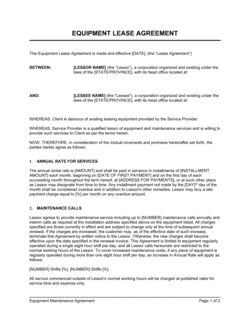
Tailor the maintenance obligations to the equipment type
Specify the manufacturer's recommended maintenance schedule by reference (e.g., 'as set out in the [MANUFACTURER] Maintenance Manual, current edition') and state who pays for consumables, wear items, and major component overhauls separately from routine servicing.
💡 For high-value industrial machinery, consider attaching the manufacturer's maintenance schedule as a Schedule B — it eliminates disputes over what 'routine maintenance' means.
7
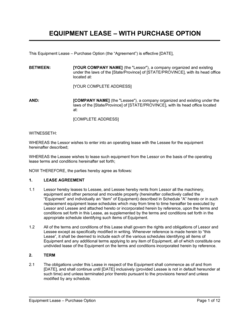
Complete the end-of-term options and notice deadlines
Choose which options the lessee will have at expiration — return, purchase at a stated price, or renewal at a stated rate. Set the written-notice deadline for each option (typically 60–90 days before expiration for high-value equipment).
💡 If the purchase option price is 'fair market value,' define who determines it and the appraisal process — an undefined FMV standard invites a valuation dispute at the worst possible time.
8
Execute before delivery and file a UCC-1 if required
Both parties must sign before the equipment is delivered. In the US, the lessor should file a UCC-1 financing statement in the lessee's state of formation promptly after execution to publicly perfect title to the equipment against the lessee's creditors.
💡 UCC-1 filings cost $20–$50 per state and are searchable online — skipping this step can result in the lessor losing title priority to a secured lender in the lessee's bankruptcy.