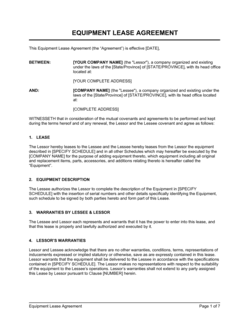
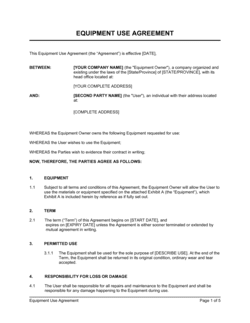
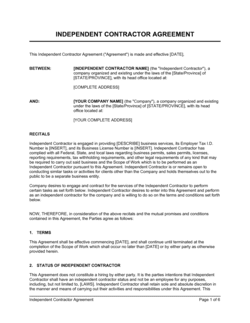
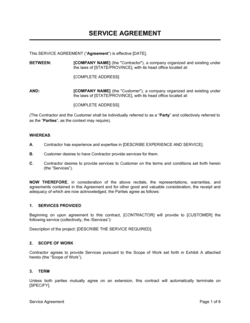
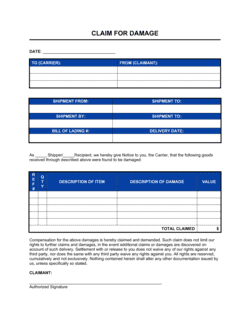
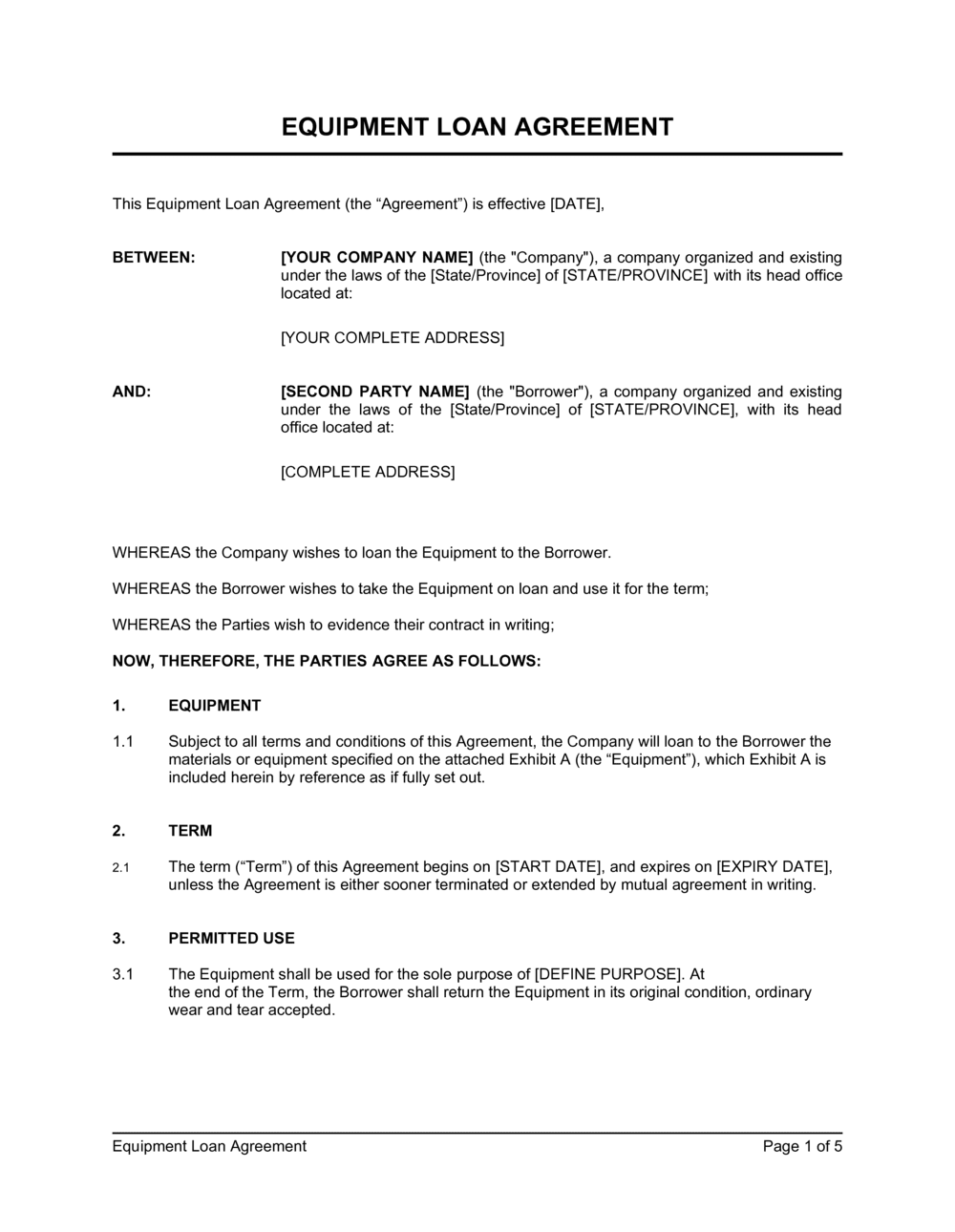
Equipment Loan Agreement Template

Free Word download • Edit online • Save & share with Drive • Export to PDF

5 pages25–35 min to fillDifficulty: ComplexSignature requiredLegal review recommended
Learn more ↓
FreeEquipment Loan Agreement Template

At a glance

What it is
An Equipment Loan Agreement is a legally binding document under which an owner (lender) allows a borrower to use specific equipment for a defined period without transferring ownership. This free Word download covers permitted use, condition at handover, maintenance obligations, insurance requirements, liability for loss or damage, and return procedures — all in a single editable document you can export as PDF and sign on the spot.
When you need it
Use it any time you loan equipment to another party — a colleague, tenant, partner organization, or client — and need a written record that title stays with you, the borrower is responsible for care, and both sides understand exactly when and how the equipment comes back.
What's inside
Equipment description and serial numbers, loan period and return date, permitted use restrictions, condition and handover acknowledgment, maintenance and repair obligations, insurance requirements, liability allocation for loss or damage, and a termination and return clause.

What is an Equipment Loan Agreement?

An Equipment Loan Agreement is a legally binding document under which an owner (the lender) grants another party (the borrower) temporary possession and use of specific equipment without transferring title. Unlike a rental agreement, no fee is charged for use; unlike a sale or lease, ownership stays entirely with the lender. The agreement records exactly what is being loaned, who may use it, for what purpose, and under what conditions — and establishes clear financial responsibility if the equipment is damaged, lost, or returned late. It is the formal expression of the legal relationship known as gratuitous bailment, giving both parties enforceable rights and obligations in writing.

Why You Need This Document

Loaning equipment on a handshake — even to a trusted colleague or partner organization — leaves the lender exposed on every front that matters. Without a written agreement, there is no documented record of the equipment's condition at handover, making damage claims impossible to prove. There is no return date, so demanding the equipment back requires a formal legal demand rather than a contractual trigger. There is no insurance obligation, so a total loss leaves the lender holding the cost. And there is no permitted-use restriction, meaning a borrower who uses the equipment outside its intended purpose — voiding the warranty or causing an accident — faces no contractual consequence. A properly executed equipment loan agreement closes all of these gaps before the equipment leaves your hands, for the cost of 20 minutes and a template download.

Which variant fits your situation?

If your situation is…Use this template
Loaning equipment at no charge between two businessesEquipment Loan Agreement
Charging a fee for temporary use of equipmentEquipment Rental Agreement
Permanently transferring ownership of equipment to another partyEquipment Sale Agreement
Leasing equipment long-term with an option to purchaseEquipment Lease Agreement
Loaning equipment to an employee for remote workEmployee Equipment Agreement
Licensing software or digital tools rather than physical equipmentSoftware License Agreement
Loaning a vehicle specifically rather than general equipmentVehicle Loan Agreement

Common mistakes to avoid

❌ No serial number or unique equipment identifier

Why it matters: Without a serial number, it is impossible to prove in a dispute that a particular piece of equipment — and not a different one — was the subject of the agreement, making damage or loss claims nearly unenforceable.

Fix: Record the serial number, asset tag, or other unique identifier in both the agreement body and the attached condition report, and photograph it at handover.

❌ Open-ended loan period with no return date

Why it matters: An indefinite loan creates a gratuitous bailment with no fixed obligation to return, meaning the lender must issue a formal demand and allow a reasonable period before taking legal action — a process that can take weeks or months.

Fix: Always set a specific calendar return date. If the loan is genuinely open-ended, include a provision allowing either party to trigger a 7- or 14-day return notice.

❌ Requiring insurance without naming the lender as loss payee

Why it matters: If the borrower holds property insurance but the lender is not named as loss payee, any payout on a total loss goes to the borrower — leaving the lender to sue separately to recover the equipment's value.

Fix: Specify the replacement value, require the borrower to add the lender as loss payee before handover, and make delivery of a certificate of insurance a condition precedent to receiving the equipment.

❌ No daily overdue fee or recovery mechanism for late return

Why it matters: Without a contractual remedy for late return, the lender's only option is a general conversion or detinue claim — a court process that takes months and delivers uncertain results while the lender remains without their equipment.

Fix: Include a daily overdue fee and an explicit right to recover the equipment at the borrower's expense after a short cure period — typically 48 to 72 hours after the return date passes.

❌ Skipping the condition report at handover

Why it matters: Without a documented pre-loan condition, any damage claim on return becomes a credibility contest — the borrower claims the scratch was pre-existing, the lender claims it was new, and neither can prove their position.

Fix: Complete a written condition report signed by both parties at handover, supplemented by timestamped photographs of all surfaces and any pre-existing wear.

❌ Using a vague permitted-use clause

Why it matters: A clause that says only 'for business purposes' or 'reasonable use' gives the borrower latitude to use the equipment in ways that increase wear, trigger safety issues, or void the lender's manufacturer warranty.

Fix: State the specific activity, project, or location the equipment is authorized for, and add an explicit prohibition on modification, sublending, or use outside the named purpose.

The 10 key clauses, explained

Equipment description and identification

In plain language: Precisely identifies the equipment being loaned — make, model, serial number, and any distinguishing features — so there is no ambiguity about what is covered by the agreement.

Sample language
The Lender agrees to loan to the Borrower the following equipment: [EQUIPMENT NAME], Make: [MAKE], Model: [MODEL], Serial Number: [SERIAL NUMBER], Color/Description: [DESCRIPTION] ('Equipment'), for the sole purposes described herein.

Common mistake: Using a generic description like 'one laptop' without a serial number. Without a unique identifier, proving which specific item was loaned — and what condition it was in — becomes nearly impossible in a dispute.

Loan period and return date

In plain language: States the exact start and end dates of the loan, and what happens if the borrower needs more time — requiring written extension approval from the lender.

Sample language
The loan period shall commence on [START DATE] and terminate on [END DATE] ('Return Date'). Any extension of the loan period must be agreed in writing by both parties prior to the original Return Date.

Common mistake: Leaving the return date open-ended or stating 'until further notice.' An indefinite loan term makes it legally difficult to demand return or claim overdue possession without a formal demand process.

Permitted use

In plain language: Defines exactly how the borrower may use the equipment, restricts use to named personnel or locations, and prohibits sublending or unauthorized modification.

Sample language
The Borrower shall use the Equipment solely for [PERMITTED PURPOSE] at [PERMITTED LOCATION] and shall not permit any third party to use, operate, or possess the Equipment without the prior written consent of the Lender. The Borrower shall not modify, alter, or attach accessories to the Equipment.

Common mistake: Stating only that use must be 'reasonable' or 'appropriate' without specifying permitted purpose. Vague permitted-use language gives the borrower latitude to use equipment in ways that increase wear or void the lender's insurance coverage.

Condition at handover

In plain language: Documents the equipment's condition at the time of delivery to the borrower, typically by reference to an attached condition report or photographs, and confirms the borrower's acknowledgment of that condition.

Sample language
The Lender represents that the Equipment is in [GOOD / DESCRIBED] working condition as documented in the Condition Report attached as Schedule A. The Borrower acknowledges receipt of the Equipment in the condition described and accepts responsibility for its care from the date of handover.

Common mistake: Skipping the condition report entirely and relying on a verbal acknowledgment. Without a written or photographic record of pre-existing damage, the lender cannot distinguish new damage from prior wear when the equipment is returned.

Maintenance and repair obligations

In plain language: Assigns responsibility for routine maintenance, consumables, and repairs during the loan period, and requires the borrower to notify the lender promptly of any damage or malfunction.

Sample language
The Borrower shall maintain the Equipment in good working order, perform routine maintenance at the Borrower's expense, and promptly notify the Lender of any damage, malfunction, or required repair. Repairs exceeding $[AMOUNT] require the Lender's prior written approval.

Common mistake: Placing all repair obligations on the borrower without a notification threshold. A borrower who authorizes an expensive repair without lender approval can create a dispute over who owes what — and may void a warranty in the process.

Insurance requirements

In plain language: Requires the borrower to maintain insurance covering the equipment at replacement value during the loan period and to name the lender as an additional insured or loss payee.

Sample language
The Borrower shall, at its own expense, maintain property insurance covering the Equipment for its full replacement value of $[REPLACEMENT VALUE] throughout the loan period, naming [LENDER NAME] as loss payee. Evidence of coverage shall be provided to the Lender within [X] days of execution.

Common mistake: Requiring insurance without specifying the replacement value or the lender as loss payee. If the borrower's policy pays out to the borrower alone and the equipment is destroyed, the lender receives nothing and must pursue the borrower separately.

Liability for loss or damage

In plain language: Allocates financial responsibility between the parties for loss, theft, or damage to the equipment during the loan period, and specifies whether the borrower's liability is capped at replacement value or fair market value.

Sample language
The Borrower shall be liable for any loss, theft, or damage to the Equipment occurring during the loan period, whether caused by the Borrower's negligence or otherwise, up to the replacement value of $[REPLACEMENT VALUE]. The Lender shall not be liable for any damage to the Borrower's property arising from use of the Equipment.

Common mistake: No liability cap or valuation method specified. 'The borrower is responsible for damage' without a dollar figure or valuation method leads to disputes over whether liability is replacement cost, fair market value, or depreciated book value.

Return of equipment

In plain language: Sets out where, when, and in what condition the equipment must be returned, and what the lender may do if the borrower fails to return it on time.

Sample language
The Borrower shall return the Equipment to [RETURN LOCATION] by [RETURN DATE] in the same condition as at handover, reasonable wear and tear excepted. Failure to return the Equipment by the Return Date entitles the Lender to charge a daily fee of $[DAILY FEE] and to recover the Equipment at the Borrower's expense.

Common mistake: No overdue return remedy. Without a daily fee or right-of-recovery clause, a lender whose borrower fails to return equipment on time has no contractual lever — only a general legal claim that takes months to pursue.

Termination for cause

In plain language: Allows the lender to terminate the loan immediately and demand return of the equipment if the borrower breaches the agreement — including unauthorized use, failure to insure, or subletting to a third party.

Sample language
The Lender may terminate this Agreement immediately upon written notice if the Borrower: (a) uses the Equipment for any unauthorized purpose; (b) fails to maintain required insurance; (c) permits a third party to use the Equipment without consent; or (d) becomes insolvent or makes an assignment for the benefit of creditors.

Common mistake: Only including a termination-for-convenience clause and omitting for-cause triggers. Without specific cause grounds, the lender cannot demand immediate return without giving the full notice period — even when the borrower is actively misusing the equipment.

Governing law and dispute resolution

In plain language: Specifies which jurisdiction's law governs the agreement and how disputes are resolved — typically the lender's jurisdiction, with a choice between mediation, arbitration, or courts.

Sample language
This Agreement shall be governed by the laws of [STATE / PROVINCE / COUNTRY]. Any dispute arising under this Agreement shall first be submitted to non-binding mediation. If mediation fails within [30] days, either party may pursue binding arbitration under [AAA / JAMS / applicable body] rules in [CITY].

Common mistake: Choosing a governing law with no connection to where either party operates or where the equipment is located. In cross-border loans, courts in the equipment's physical location may assert jurisdiction regardless of a contrary choice-of-law clause.

How to fill it out

  1. 1

    Identify both parties with full legal names

    Enter the lender's and borrower's full legal names — registered business name and entity type if applicable — along with addresses and contact details for each.

    💡 For business borrowers, confirm the legal entity name against a corporate registry filing before executing, so the agreement binds the right legal person.

  2. 2

    Describe the equipment precisely

    Enter the equipment's full name, make, model, serial number, and any distinguishing physical characteristics. Attach a photograph or condition report as Schedule A.

    💡 For high-value equipment, record the serial number in both the body of the agreement and Schedule A — a discrepancy between the two is the first thing disputed in a claim.

  3. 3

    Set exact loan period dates

    Enter a specific start date and end date, including the time of day if the loan involves overnight or weekend handovers. Add a brief extension procedure requiring written consent.

    💡 Avoid open-ended terms like 'until the project is complete.' Tie the end date to a calendar date, not a milestone, to avoid disputes about when the return obligation triggered.

  4. 4

    Define permitted use and location

    State the specific purpose for which the borrower is authorized to use the equipment and the physical address where it will be kept. Restrict use to named operators if safety or liability requires it.

    💡 If the equipment carries manufacturer use restrictions or warranty conditions, reference them in the permitted use clause — a borrower who voids the warranty through misuse should bear that cost explicitly.

  5. 5

    Complete the condition report at handover

    Walk through the equipment with the borrower at handover, note any pre-existing scratches, wear, or faults in Schedule A, and have both parties sign and date it on the spot.

    💡 Photographs timestamped at handover are the single most effective evidence in a return-condition dispute — take them even if the condition report is thorough.

  6. 6

    Set the insurance and replacement value

    Enter the equipment's current replacement value — what it costs to buy a new equivalent today — and require the borrower to obtain coverage for that amount with the lender named as loss payee. Set a deadline for providing proof of coverage.

    💡 Request a certificate of insurance before physically handing over the equipment. A promise to insure is not the same as coverage in place.

  7. 7

    Specify liability, daily overdue fees, and return terms

    Enter the return location, the daily overdue fee, and the liability cap tied to replacement value. Confirm that normal wear and tear is excluded from the borrower's damage liability.

    💡 Set the daily overdue fee high enough to create a real incentive for on-time return — a nominal amount is easily ignored, especially by borrowers with no other contractual penalty.

  8. 8

    Execute before handover and store copies

    Both parties should sign the agreement and Schedule A before the equipment changes hands. Provide each party with a fully executed copy and store the lender's original in a secure location.

    💡 Use a timestamped eSign tool so the execution date is independently verifiable — this matters if the borrower later disputes whether the agreement was signed before or after the loan began.

Frequently asked questions

What is an equipment loan agreement?

An equipment loan agreement is a legally binding document under which an owner (the lender) allows another party (the borrower) to use specific equipment for a defined period without transferring ownership. It records the equipment's identity, the permitted use, the loan period, maintenance and insurance obligations, and the borrower's liability for loss or damage. Title remains with the lender throughout; the agreement is not a sale or lease.

What is the difference between an equipment loan agreement and an equipment rental agreement?

The key distinction is compensation. A loan agreement is typically gratuitous — the borrower uses the equipment at no charge. A rental agreement involves a periodic fee paid by the renter in exchange for temporary use. Both documents cover condition, maintenance, insurance, and return, but rental agreements additionally address payment terms, late fees, and often include more detailed damage-deposit provisions. If any fee is being charged for use, use a rental agreement instead.

Does an equipment loan agreement need to be notarized?

Notarization is generally not required for an equipment loan agreement in most jurisdictions. A signed written agreement between two competent parties is typically sufficient to be enforceable. However, for high-value equipment or international loans, having signatures witnessed or notarized can strengthen enforceability and reduce the risk of a party disputing authenticity. Check local requirements if the equipment is a regulated asset such as a vehicle or aircraft.

Who is responsible if the equipment is damaged during the loan?

Under a standard equipment loan agreement, the borrower bears responsibility for any loss, theft, or damage occurring during the loan period — including damage caused by third parties if the borrower permitted unauthorized use. The agreement should specify whether liability is based on replacement value or fair market value, and whether normal wear and tear is excluded. Without this language, the parties must negotiate or litigate the basis of compensation after the fact.

Does the borrower need their own insurance?

Yes — the borrower should maintain property insurance covering the equipment at its full replacement value during the loan period, with the lender named as loss payee. Relying on the lender's own insurance is not advisable because most property policies do not cover equipment while in the possession of a third party. The agreement should require proof of coverage before handover, not just a promise to obtain it.

Can a borrower sublet or re-loan the equipment to someone else?

Not without the lender's explicit written consent. A properly drafted equipment loan agreement prohibits the borrower from permitting any third party to use, operate, or possess the equipment without prior approval. If a borrower sublends the equipment and it is damaged, the lender may have difficulty recovering from a party they never contracted with. Unauthorized sublending is also typically a ground for immediate termination of the loan.

What happens if the borrower does not return the equipment on time?

The agreement should specify a daily overdue fee accruing from the missed return date and grant the lender an explicit right to recover the equipment at the borrower's expense after a short cure period — typically 48 to 72 hours. Without these contractual remedies, the lender must pursue a general conversion or detinue claim in court, which is slower, more expensive, and delivers less certain outcomes than a contract-based demand.

Does an equipment loan agreement transfer any ownership rights?

No. An equipment loan agreement explicitly preserves the lender's title to the equipment throughout the loan period. The borrower receives only a temporary right of possession and use for the specified purpose. The agreement should include a clear statement that nothing in it constitutes a sale, transfer, or grant of any ownership interest — this protects the lender if the borrower attempts to pledge the equipment as collateral or sell it to a third party.

Do I need a lawyer to draft an equipment loan agreement?

For straightforward loans of low-to-medium-value equipment between known parties, a well-drafted template is typically sufficient. Consider engaging a lawyer when the equipment is high-value (over $25,000), when the loan crosses international borders, when the borrower is in a heavily regulated industry, or when the lender needs to ensure specific insurance or liability structures are enforceable in the borrower's jurisdiction. A 1-hour legal review typically costs $150–$400 and is worthwhile for any loan where the replacement value is material.

How this compares to alternatives

vs Equipment Rental Agreement

An equipment rental agreement is used when the owner charges a periodic fee for the temporary use of equipment. An equipment loan agreement covers the same operational ground — condition, maintenance, insurance, return — but involves no charge for use. If any monetary consideration is exchanged for the use of the equipment, a rental agreement is the appropriate document.

vs Equipment Lease Agreement

An equipment lease is a longer-term arrangement — typically months to years — often with an option to purchase at the end of the term. It involves regular lease payments and may transfer some ownership-like rights to the lessee. An equipment loan agreement is suited to shorter, fee-free arrangements where the owner retains clear title and the borrower has no purchase option.

vs Bailment Agreement

A bailment agreement is the broader legal category covering any temporary transfer of possession without title — including storage, repair, and transportation. An equipment loan agreement is a specific form of gratuitous bailment focused on authorizing use rather than mere storage or transit. Where active use of the equipment by the borrower is the purpose, an equipment loan agreement is more appropriate and more detailed.

vs Property Loan Agreement

A property loan agreement covers the temporary loan of personal property broadly — furniture, artwork, or general assets. An equipment loan agreement is specifically tailored for operational or mechanical equipment, with additional clauses for maintenance obligations, operator restrictions, calibration, and equipment-specific insurance. Use an equipment loan agreement when the item being loaned has operational, mechanical, or safety characteristics that a generic property loan template does not address.

Industry-specific considerations

Construction and Trades

Heavy machinery, power tools, and scaffolding loaned between contractors on shared job sites, with site-specific permitted-use and operator-certification requirements.

Healthcare and Medical

Diagnostic or therapeutic equipment loaned between clinics or research facilities, requiring regulatory compliance notes and strict maintenance and sterilization protocols.

Education and Research

Lab instruments, scientific apparatus, and computing equipment loaned between departments or institutions under grant-funded research agreements, often requiring funder notification.

Events and Production

Audio-visual, staging, and lighting equipment loaned to venues or co-producers for single events, with narrow loan windows and high replacement values requiring day-of condition documentation.

Technology and IT

Laptops, servers, and peripherals loaned to remote employees or contractors, with data-security obligations and mandatory return of all credentials and software licenses at the end of the loan.

Manufacturing

Specialized tooling, jigs, or testing equipment loaned between manufacturers for short-run production, with calibration records, permitted-operator restrictions, and precise maintenance schedules.

Jurisdictional notes

United States

Equipment loans are governed by state-level personal property and bailment law, which varies across states. The UCC Article 9 may apply if the equipment is used as collateral in a financing arrangement — lenders should ensure the agreement explicitly states no security interest is created. Some states impose strict liability on commercial bailors for equipment defects; others follow a negligence standard. California and New York have developed case law on the implied duty of care owed by a gratuitous bailor.

Canada

Canadian bailment law follows common-law principles in all provinces except Quebec, which applies civil-law rules under the Civil Code of Quebec governing loans for use (prêt à usage). In common-law provinces, the standard of care owed by a gratuitous bailee is gross negligence, while a bailee for reward is held to ordinary negligence. Provincial personal property security legislation (e.g., Ontario's PPSA) may affect the lender's position if the borrower subsequently pledges the equipment as collateral.

United Kingdom

In the UK, equipment loans are treated as gratuitous bailments under common law. The bailee (borrower) owes a duty to take reasonable care of the goods. The Torts (Interference with Goods) Act 1977 governs the lender's rights if the equipment is wrongfully retained or damaged. Where the loan is between businesses, the Consumer Rights Act 2015 does not apply, but the agreement should comply with the Unfair Contract Terms Act 1977 if liability exclusions are included.

European Union

EU member states treat equipment loans under their respective civil codes as a loan for use (commodatum), which is a gratuitous contract creating a duty of care on the borrower. The degree of care required varies by jurisdiction — France and Germany both impose a standard of good-faith custody. GDPR considerations arise if the loaned equipment stores personal data; the agreement should address data deletion obligations on return. Cross-border loans within the EU may trigger VAT questions depending on the duration and commercial context.

Template vs lawyer — what fits your deal?

PathBest forCostTime
Use the templateShort-term loans of equipment with a replacement value under $10,000 between known parties in the same jurisdictionFree15–30 minutes
Template + legal reviewEquipment valued between $10,000 and $50,000, cross-organizational loans, or loans involving regulated equipment categories$150–$400 for a 1-hour lawyer review1–3 days
Custom draftedHigh-value or specialized equipment above $50,000, international loans, heavily regulated industries, or loans where insurance and indemnity structures must be precisely coordinated$800–$3,000+1–2 weeks

Glossary

Lender
The party who owns the equipment and is allowing the borrower to use it temporarily without transferring title.
Borrower
The party receiving temporary use of the equipment, responsible for its care, permitted use, and return in agreed condition.
Loan Period
The defined start and end dates during which the borrower is authorized to possess and use the equipment.
Permitted Use
The specific purpose or activity for which the borrower is authorized to use the equipment, as stated in the agreement.
Bailment
A legal relationship in which one party (bailor) temporarily transfers possession of personal property to another (bailee) without transferring ownership — an equipment loan is a form of gratuitous bailment.
Condition Report
A written or photographic record of the equipment's state at the time of handover, used to assess damage or wear upon return.
Indemnification
A clause requiring one party to compensate the other for specified losses, damages, or legal costs arising from defined events — typically the borrower indemnifying the lender for damage caused during the loan.
Force Majeure
A clause excusing a party from performance obligations when an event outside their control — such as a natural disaster or government action — makes performance impossible.
Replacement Value
The current cost to purchase a new equivalent of the loaned equipment, used as the basis for insurance coverage and damage liability calculations.
Title
Legal ownership of the equipment, which remains with the lender throughout the loan period regardless of who has physical possession.
Subrogation
The right of an insurer who has paid a claim to pursue recovery from the party legally responsible for the loss — relevant when the borrower's insurer seeks to recover from the lender.

Part of your Business Operating System

This document is one of 3,000+ business & legal templates included in Business in a Box.

  • Fill-in-the-blanks — ready in minutes
  • 100% customizable Word document
  • Compatible with all office suites
  • Export to PDF and share electronically

Create your document in 3 simple steps.

From template to signed document — all inside one Business Operating System.
1
Download or open template

Access over 3,000+ business and legal templates for any business task, project or initiative.

2
Edit and fill in the blanks with AI

Customize your ready-made business document template and save it in the cloud.

3
Save, Share, Send, Sign

Share your files and folders with your team. Create a space of seamless collaboration.

Save time, save money, and create top-quality documents.

★★★★★

"Fantastic value! I'm not sure how I'd do without it. It's worth its weight in gold and paid back for itself many times."

Managing Director · Mall Farm
Robert Whalley
Managing Director, Mall Farm Proprietary Limited
★★★★★

"I have been using Business in a Box for years. It has been the most useful source of templates I have encountered. I recommend it to anyone."

Business Owner · 4+ years
Dr Michael John Freestone
Business Owner
★★★★★

"It has been a life saver so many times I have lost count. Business in a Box has saved me so much time and as you know, time is money."

Owner · Upstate Web
David G. Moore Jr.
Owner, Upstate Web

Run your business with a system — not scattered tools

Stop downloading documents. Start operating with clarity. Business in a Box gives you the Business Operating System used by over 250,000 companies worldwide to structure, run, and grow their business.

Free Forever Plan · No credit card required