- Net Lease
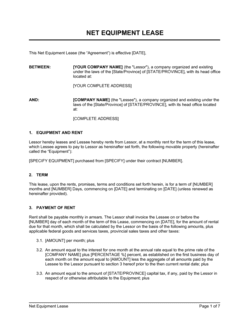
- A lease structure in which the lessee pays base rent plus some or all operating expenses — such as taxes, insurance, and maintenance — rather than the lessor absorbing those costs.
- Lessor
- The party who owns the equipment and grants the right to use it to the lessee in exchange for rent payments.
- Lessee
- The party who pays rent and takes possession of the equipment for the duration of the lease term.
- Lease Term
- The defined period during which the lessee has the contractual right to use the equipment, stated as a start date and end date or a number of months.
- Base Rent
- The fixed periodic payment the lessee owes the lessor, exclusive of any net costs such as insurance premiums or maintenance expenses.
- Net Cost Obligations
- The operating expenses — commonly maintenance, property taxes on the equipment, and insurance premiums — that the lessee agrees to pay directly under a net lease structure.
- Default
- A failure by either party to perform a contractual obligation — most commonly the lessee's failure to pay rent or maintain the equipment as required.
- Acceleration Clause
- A provision that makes all remaining rent payments immediately due and payable upon the lessee's default, rather than requiring the lessor to collect payments as they fall due.
- End-of-Term Option
- A clause specifying what happens when the lease expires — the lessee may return the equipment, renew the lease, or exercise a purchase option at a pre-agreed price.
- Indemnification
- A contractual obligation by one party to compensate the other for losses, liabilities, or legal claims arising from specified events — typically the lessee's use or misuse of the equipment.
- Fair Market Value
- The price at which equipment would change hands between a willing buyer and seller, used to set purchase-option pricing at lease end.
- Hell-or-High-Water Clause
- A provision stating the lessee's obligation to pay rent is unconditional and cannot be suspended or reduced for any reason, including equipment failure or casualty.