Equipment Operating Lease Template

Free Word download • Edit online • Save & share with Drive • Export to PDF

10 pages30–40 min to fillDifficulty: ComplexSignature requiredLegal review recommended
Learn more ↓
FreeEquipment Operating Lease Template

At a glance

What it is
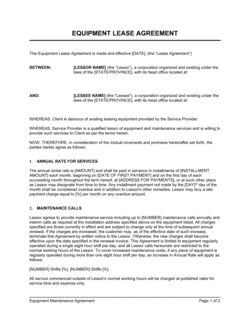
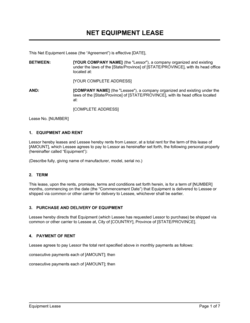
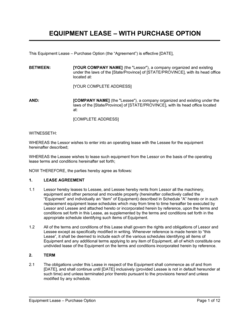
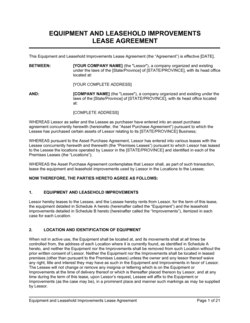
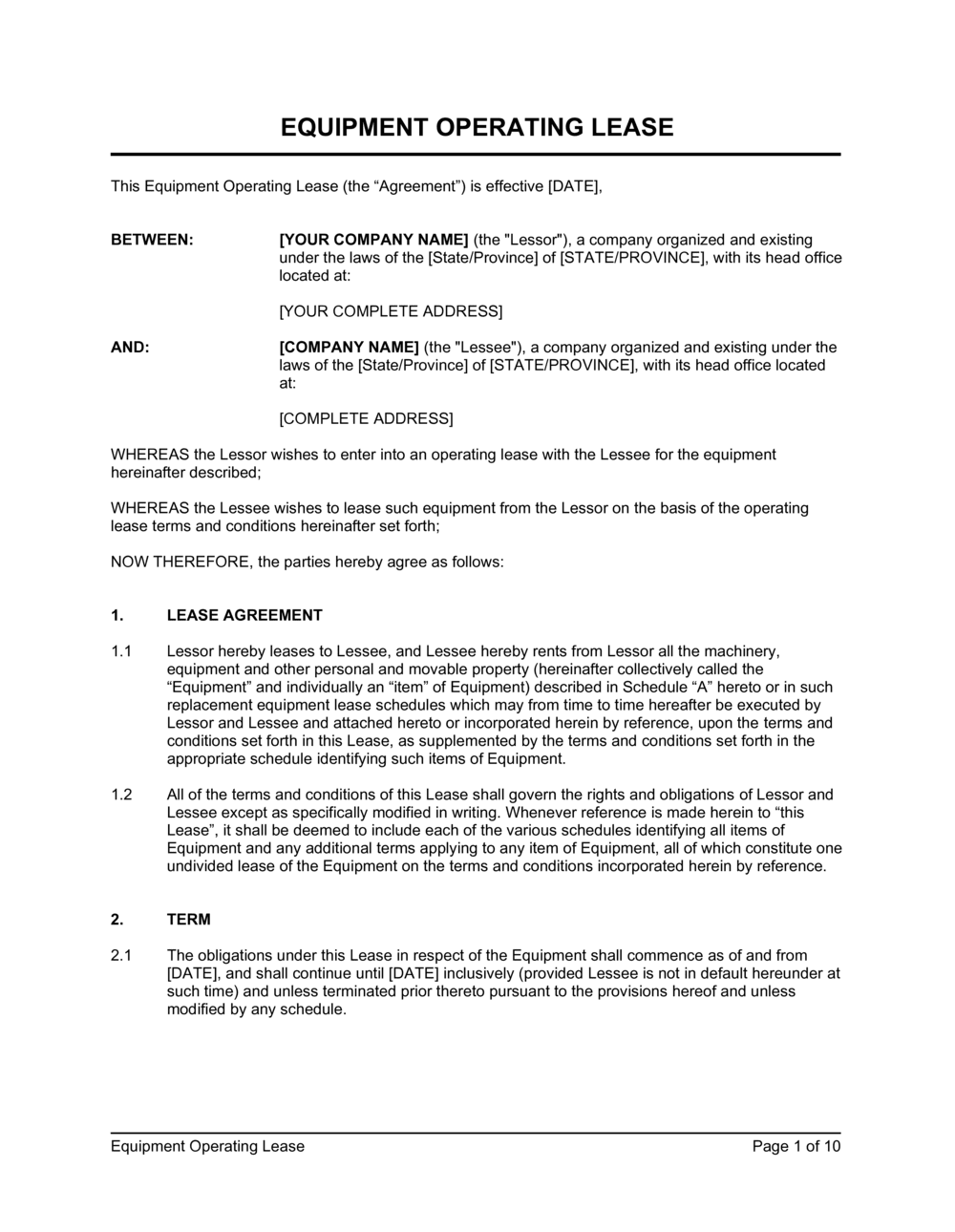
An Equipment Operating Lease is a legally binding agreement in which an equipment owner (lessor) allows a business (lessee) to use specified equipment for a defined period in exchange for regular rental payments, without transferring ownership at the end of the term. This free Word download gives you a structured, attorney-informed starting point you can edit online and export as PDF to execute with your lessor or lessee before equipment is handed over.
When you need it
Use it when a business needs to use equipment for a set period — such as machinery, vehicles, medical devices, or IT hardware — without purchasing it outright, and when both parties want a written record of responsibilities, payment terms, and return conditions before possession changes hands.
What's inside
Equipment description and identification, lease term and commencement date, rental payment schedule, maintenance and repair obligations, insurance requirements, permitted use restrictions, default and remedies provisions, and conditions for return or early termination.

What is an Equipment Operating Lease?

An Equipment Operating Lease is a legally binding agreement in which an equipment owner (the lessor) grants a business (the lessee) the right to use identified equipment for a specified term in exchange for regular rental payments, without transferring ownership at the end of the lease. Unlike a finance lease, the lessor retains the residual value of the equipment and reclaims possession when the term expires. The agreement governs every material aspect of the relationship — permitted use, maintenance responsibilities, insurance obligations, default consequences, and return conditions — in a single enforceable document that protects both parties from the moment possession changes hands.

Why You Need This Document

Without a written equipment operating lease, both parties expose themselves to significant financial and legal risk the moment equipment leaves the lessor's premises. A lessor with no signed agreement has no contractual basis to recover unpaid rent, enforce permitted-use restrictions, or claim damages for equipment returned in degraded condition. A lessee without a written lease has no documented right to quiet enjoyment, no agreed maintenance allocation, and no early termination rights if circumstances change. Disputes over who owes what — for a breakdown, an insurance gap, or a missed payment — become credibility contests rather than contract interpretation. A properly executed equipment operating lease signed before possession transfers closes all of these gaps, establishes a clear paper trail for accounting and tax purposes, and gives both parties a defined path to resolution if the relationship breaks down.

Which variant fits your situation?

If your situation is…Use this template
Leasing equipment with an option to purchase at the end of the termEquipment Finance Lease
Short-term or project-specific equipment rental of less than 30 daysEquipment Rental Agreement
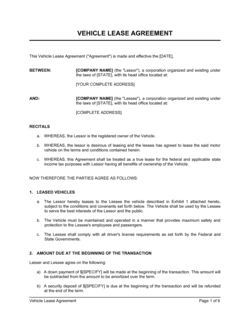
Leasing a commercial vehicle fleet to employees or contractorsVehicle Lease Agreement
Leasing office equipment such as copiers or phone systemsOffice Equipment Lease Agreement
Subletting leased equipment to a third partyEquipment Sublease Agreement
Leasing technology hardware under a managed-service arrangementTechnology Equipment Lease Agreement
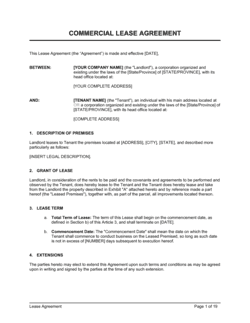
Leasing equipment as part of a broader commercial property arrangementCommercial Lease Agreement

Common mistakes to avoid

❌ No equipment condition report at commencement

Why it matters: Without a signed baseline condition record, the lessor cannot prove that damage discovered at return was caused by the lessee rather than pre-existing before the lease began — making damage claims nearly impossible to enforce.

Fix: Complete and sign a detailed condition report with photographs at the time of equipment handover. Attach it as a schedule to the agreement and have both parties initial it.

❌ Generic equipment description without a serial number

Why it matters: A vague description like 'one excavator' creates ambiguity about which unit is covered — the lessor could substitute inferior equipment or the lessee could dispute identity in an insurance or damage claim.

Fix: Always include make, model, year, and serial number. For equipment without a serial number, use a unique asset tag number assigned specifically for the lease.

❌ No insurance certificate required before possession

Why it matters: If the lessee takes possession without providing proof of insurance and the equipment is damaged or destroyed on day one, the lessor bears the full loss with no contractual recourse against the lessee's insurer.

Fix: Make delivery of a current certificate of insurance naming the lessor as additional insured a condition precedent to the lessee taking possession of the equipment.

❌ No cure period specified before lessor can repossess

Why it matters: Instant repossession rights on any default — including a payment that is one day late — are routinely challenged in court. Judges in most jurisdictions imply a reasonable cure period, creating litigation uncertainty.

Fix: Specify a cure period of 10–15 days for payment defaults and 30 days for non-monetary defaults. This is both commercially reasonable and more consistently enforced.

❌ Commencement tied to delivery without an acceptance clause

Why it matters: If the equipment arrives non-functional or not matching the specification and the lease begins on the delivery date, the lessee owes rent from day one despite having no usable equipment.

Fix: Include an acceptance testing provision giving the lessee 3–5 business days to inspect and test the equipment, with commencement triggered only upon written acceptance.

❌ Maintenance obligations undefined between routine and major repairs

Why it matters: When a mid-lease mechanical failure occurs, both parties claim the other is responsible. Unresolved maintenance disputes leave equipment idle and lead to default proceedings over a cost allocation that a single sentence could have settled.

Fix: Define routine maintenance by reference to the manufacturer's maintenance schedule and list specific items (filters, fluids, belts) explicitly. Define major structural repairs by dollar threshold — e.g., any single repair exceeding $[X] is the lessor's responsibility absent lessee misuse.

The 10 key clauses, explained

Equipment description and identification

In plain language: Identifies the specific equipment covered by the lease — make, model, serial number, and condition at commencement — so there is no ambiguity about what is being leased.

Sample language
The Lessor agrees to lease to the Lessee the following equipment: [MAKE/MODEL], Serial No. [SERIAL NUMBER], Year [YEAR], in the condition described in Schedule A attached hereto ('Equipment').

Common mistake: Using a generic description like 'one forklift' without a serial number. If the lessor substitutes a different unit or a dispute arises over condition, the lessee has no contractual basis to object.

Lease term and commencement date

In plain language: States the exact start date, end date, and total duration of the lease, and specifies what triggers commencement — delivery, acceptance testing, or a fixed calendar date.

Sample language
The lease term shall commence on [COMMENCEMENT DATE] and expire on [EXPIRY DATE] ('Lease Term'), unless earlier terminated in accordance with this Agreement. Commencement is conditioned upon the Lessee's written acceptance of delivery.

Common mistake: Tying commencement to delivery without an acceptance testing clause. If equipment arrives non-functional, the lessee may still owe rent from the delivery date under a strictly worded agreement.

Rental payments and payment schedule

In plain language: Specifies the monthly or periodic rental amount, due dates, accepted payment methods, and the consequences of late payment — including any grace period and late-fee rate.

Sample language
Lessee shall pay Lessor a monthly rental of $[AMOUNT], due on the [DAY] of each month, commencing [FIRST PAYMENT DATE]. Payments more than [X] days late shall accrue interest at [X]% per month.

Common mistake: Omitting a late-fee provision entirely. Without one, the lessor has no contractual lever beyond default proceedings to incentivize on-time payment.

Permitted use and location

In plain language: Restricts how and where the equipment may be used, prohibiting unauthorized modifications, subletting, or relocation without lessor consent.

Sample language
Lessee shall use the Equipment solely for [PERMITTED PURPOSE] at [LOCATION] and shall not relocate, sublet, or permit third-party use of the Equipment without the Lessor's prior written consent.

Common mistake: No location restriction on high-value mobile equipment. Equipment moved across state or provincial lines can create unexpected tax, registration, and insurance compliance issues for the lessor.

Maintenance and repairs

In plain language: Allocates responsibility for routine maintenance, consumables, and repairs between the lessor and lessee — typically lessee handles day-to-day upkeep while the lessor covers structural defects.

Sample language
Lessee shall maintain the Equipment in good working order and perform all routine maintenance per the manufacturer's schedule at Lessee's expense. Lessor is responsible for major structural repairs not caused by Lessee's misuse or negligence.

Common mistake: Assigning all maintenance to the lessee without defining what constitutes 'routine' versus 'major.' This creates disputes over who pays for mid-lease failures and can leave equipment unrepaired while the parties argue.

Insurance obligations

In plain language: Requires the lessee to maintain specific insurance coverage — typically all-risk property and general liability — naming the lessor as an additional insured, and to provide proof of coverage at signing.

Sample language
Lessee shall maintain, at its own expense, all-risk property insurance covering the Equipment for its full replacement value of $[AMOUNT] and commercial general liability insurance of not less than $[AMOUNT] per occurrence, naming Lessor as additional insured.

Common mistake: No requirement to provide a certificate of insurance before possession is transferred. Discovering the lessee has no coverage after an equipment loss leaves the lessor unprotected and without recourse under the lease.

Default and remedies

In plain language: Defines what constitutes a default — missed payments, insolvency, unauthorized use, or breach of material terms — and gives the lessor the right to repossess equipment and claim damages after a cure period.

Sample language
A default shall occur if Lessee fails to pay any amount due within [X] days of notice, becomes insolvent, or materially breaches any provision of this Agreement. Upon default, Lessor may terminate this Agreement, repossess the Equipment, and recover all amounts owed including remaining rental payments and costs of repossession.

Common mistake: No cure period before the lessor can repossess. Courts in most jurisdictions will imply a reasonable cure period anyway — specifying it explicitly (typically 10–15 days for payment defaults) prevents litigation and signals good faith.

Return conditions

In plain language: States the required condition of the equipment upon return — beyond fair wear and tear — and the process for inspection, documentation of damage, and charges for excess wear or missing components.

Sample language
Upon expiry or termination, Lessee shall return the Equipment to Lessor at [LOCATION] in the same condition as received, subject to fair wear and tear. Lessor shall inspect the Equipment within [X] business days of return and provide a written damage report.

Common mistake: No condition inspection at commencement. Without a signed condition report at delivery, the lessor cannot prove post-lease damage was caused by the lessee rather than pre-existing at the start of the term.

Early termination

In plain language: Sets out the conditions under which either party may terminate the lease before its natural expiry, the required notice period, and the early termination fee or formula for calculating outstanding obligations.

Sample language
Lessee may terminate this Agreement before the Expiry Date by providing [X] days' written notice and paying an early termination fee equal to [X] months' remaining rental payments or $[MINIMUM AMOUNT], whichever is greater.

Common mistake: No early termination provision at all, leaving both parties uncertain about exit rights. A lessee whose circumstances change — insolvency, project cancellation — will stop paying regardless; a clear termination clause limits the dispute.

Governing law and jurisdiction

In plain language: Specifies which jurisdiction's law governs the agreement, where disputes will be resolved, and whether arbitration or litigation is the required mechanism.

Sample language
This Agreement shall be governed by the laws of [STATE/PROVINCE/COUNTRY]. Any dispute arising hereunder shall be submitted to binding arbitration in [CITY] under the rules of [AAA/JAMS/APPLICABLE BODY], except that Lessor may seek injunctive relief in any court of competent jurisdiction.

Common mistake: Choosing a governing jurisdiction with no connection to where the equipment is located or used. Several states and provinces apply local law regardless of the contract's choice-of-law clause when equipment is physically situated within their borders.

How to fill it out

  1. 1

    Identify the parties and their legal entities

    Enter the full registered legal name, address, and contact information of both the lessor and the lessee. Use the entity name as it appears on corporate registration documents — not a trade name.

    💡 For corporate lessors, confirm whether the signing authority needs a board resolution or officer certificate before execution — some institutional lessors require one.

  2. 2

    Describe the equipment precisely

    Enter the make, model, year, serial number, and current condition of the equipment. Attach a signed condition report or photographs as Schedule A to establish a baseline for the return assessment.

    💡 A serial number is non-negotiable for any equipment above $5,000 in value — it is the only unambiguous way to identify the specific unit in the event of a dispute or insurance claim.

  3. 3

    Set the lease term and commencement trigger

    Enter the exact start and end dates. If commencement is tied to delivery and acceptance testing rather than a fixed date, describe the acceptance procedure and the maximum testing window.

    💡 For equipment requiring installation or calibration, use a 3–5 business day acceptance window and define what 'acceptance' means — passing a specific functional test, not just physical delivery.

  4. 4

    Complete the rental payment schedule

    Enter the periodic rental amount, due date, accepted payment methods, grace period, and late-fee rate. Confirm whether payments are inclusive or exclusive of applicable taxes such as sales tax or GST.

    💡 State tax treatment explicitly — in several US states and Canadian provinces, equipment rental payments are subject to sales tax or HST and the lessee is responsible for remittance.

  5. 5

    Define permitted use and location restrictions

    Specify exactly how the equipment may be used, the permitted location or site, and whether the lessee may transport the equipment to other locations with or without prior notice.

    💡 For vehicles or mobile equipment, include a geographic boundary clause — crossing state or provincial lines may trigger registration, licensing, or tax obligations the lessor needs to manage.

  6. 6

    Allocate maintenance responsibilities and insurance

    Clearly separate routine maintenance (lessee's responsibility) from structural defects (lessor's), and specify the minimum insurance coverage amounts. Require a certificate of insurance to be delivered before possession is transferred.

    💡 Set the required insurance amount to the full replacement value of the equipment, not the book value — depreciated book value leaves the lessor underinsured for a total loss.

  7. 7

    Set return conditions and conduct a delivery inspection

    Define what condition the equipment must be in at return, specify the inspection window, and document the current condition at delivery in a signed Schedule A. Both parties should sign the condition report at handover.

    💡 Photograph every surface, meter reading, and component at delivery and return. A timestamped photo file resolves most condition disputes without litigation.

  8. 8

    Sign before possession is transferred

    Both parties must execute the agreement before the lessee takes possession of the equipment. Post-delivery signatures create enforceability risks on key clauses, particularly insurance obligations and permitted use restrictions.

    💡 Use an e-signature platform that timestamps execution — it eliminates disputes about when the agreement was signed relative to the equipment handover date.

Frequently asked questions

What is an equipment operating lease?

An equipment operating lease is a contract in which an equipment owner (lessor) allows a business (lessee) to use specific equipment for a defined term in exchange for regular rental payments, without transferring ownership at the end of the lease. The lessor retains the residual value of the equipment. Operating leases are commonly used for machinery, vehicles, medical devices, and IT hardware where the lessee wants access to equipment without the capital outlay or balance-sheet liability of ownership.

What is the difference between an operating lease and a finance lease?

An operating lease transfers only the right to use the equipment — not the risks and rewards of ownership — and the equipment is returned to the lessor at the end of the term. A finance lease (also called a capital lease) effectively transfers most ownership risks to the lessee, typically includes a purchase option, and results in the asset appearing on the lessee's balance sheet. Under IFRS 16 and ASC 842, most leases over 12 months now appear on lessees' balance sheets, but the operating versus finance distinction still affects P&L treatment and lease structuring.

Who is responsible for maintaining equipment under an operating lease?

Responsibility depends on the specific terms negotiated. In most standard equipment operating leases, the lessee is responsible for routine day-to-day maintenance per the manufacturer's schedule, while the lessor covers major structural defects not caused by the lessee's misuse or negligence. The lease should define the boundary explicitly — typically by categorizing specific tasks or setting a dollar threshold above which the lessor assumes responsibility.

Can a lessee terminate an equipment operating lease early?

A lessee can terminate early if the lease includes an early termination provision, but will typically owe an early termination fee — often calculated as a set number of remaining monthly payments or a minimum fixed amount. Without an early termination clause, the lessee remains legally obligated to pay rent for the full term. Negotiating a reasonable early termination right before signing is strongly advised, particularly for longer-term leases tied to project work.

Does an equipment operating lease need to be in writing?

While oral lease agreements can be enforceable in some jurisdictions for short terms, a written agreement is essential for any lease of meaningful value or duration. Written leases eliminate ambiguity about payment obligations, maintenance responsibilities, permitted use, and return conditions — all of which become disputed when an agreement is oral. Most commercial lenders and insurance carriers also require a signed written lease as a condition of financing or coverage.

What insurance does a lessee need for an equipment operating lease?

At minimum, lessees typically need all-risk property insurance covering the equipment's full replacement value and commercial general liability insurance — commonly $1M to $2M per occurrence — with the lessor named as an additional insured. Some lessors also require business interruption or inland marine coverage for mobile equipment. The required amounts should be specified in the lease and a certificate of insurance delivered before possession transfers.

What happens if the leased equipment breaks down?

The answer depends on how the lease allocates maintenance and repair obligations. If the breakdown stems from a structural defect and the lessor bears major repair responsibility, the lessor is typically required to repair or replace the unit within a reasonable time. If the lessee caused the failure through misuse or neglect of routine maintenance, the lessee bears the cost. A well-drafted lease will specify a maximum repair response window and address rent abatement — or the absence of it — during a prolonged equipment outage.

Is an equipment operating lease the same as a rental agreement?

They serve a similar purpose but differ in scope and duration. A rental agreement typically covers short-term, day-to-day, or project-specific use — often less than 30 days — with minimal ongoing obligations. An equipment operating lease covers a defined medium-to-long-term period, includes detailed provisions on maintenance, insurance, default, and return conditions, and creates enforceable obligations on both sides for the full term. For use beyond 30 days or equipment of significant value, an operating lease is the appropriate document.

Do I need a lawyer to review an equipment operating lease?

For straightforward domestic leases of equipment under $25,000 in value with a term under 24 months, a high-quality template is typically sufficient. Legal review is advisable when the equipment is high-value, the lease spans multiple jurisdictions, the maintenance and IP provisions are complex (medical devices, specialized machinery), or the lessee is a public company subject to IFRS 16 or ASC 842 balance-sheet treatment. A 1–2 hour review by a commercial attorney typically costs $300–$600 and is worthwhile for leases above $50,000 in total commitment.

How this compares to alternatives

vs Equipment Finance Lease

A finance lease (capital lease) transfers substantially all risks and rewards of ownership to the lessee and typically includes a purchase option at the end of the term. An operating lease keeps ownership with the lessor — the lessee uses the equipment and returns it. Finance leases appear on the lessee's balance sheet as a liability; operating leases historically did not, though IFRS 16 and ASC 842 have narrowed this distinction for leases over 12 months.

vs Equipment Rental Agreement

A rental agreement covers short-term, often day-to-day or week-to-week, equipment use with minimal obligations beyond the rental rate. An operating lease governs a defined medium-to-long-term period with detailed provisions on maintenance, insurance, default, and return. For use beyond 30 days or equipment above $10,000 in value, an operating lease provides significantly stronger protection for both parties.

vs Vehicle Lease Agreement

A vehicle lease agreement is specifically tailored to motor vehicles — covering mileage caps, registration, traffic violations, and cross-border use restrictions that are irrelevant to stationary machinery. An equipment operating lease is the broader, more adaptable instrument suitable for any category of business equipment, from medical devices to production machinery.

vs Commercial Lease Agreement

A commercial lease agreement governs the right to occupy and use real property — buildings, warehouses, or office space. An equipment operating lease governs the right to use personal property — movable equipment. The two documents are structurally similar in that both define term, payment, and return conditions, but the underlying asset class, applicable law, and registration requirements are entirely different.

Industry-specific considerations

Construction

Heavy equipment leases — excavators, cranes, and compactors — structured around project duration, with early termination rights tied to project completion milestones.

Healthcare

Medical device and diagnostic equipment leases require regulatory compliance clauses, service and calibration obligations, and provisions addressing equipment recall or FDA-mandated modification.

Manufacturing

Production machinery leases often include output-based wear provisions, operator certification requirements, and spare-parts stocking obligations to minimize production downtime.

Technology / IT

Hardware and server leases address data security on return — requiring certified data wiping or destruction — and include upgrade rights to replace aging units mid-term.

Transportation and Logistics

Vehicle and fleet leases include mileage caps, geographic use restrictions, licensing and registration obligations, and provisions for cross-border or cross-provincial operation.

Retail and Food Service

Point-of-sale systems, refrigeration units, and commercial kitchen equipment leases require uptime guarantees and rapid-replacement terms given the direct impact of equipment failure on daily revenue.

Jurisdictional notes

United States

Equipment leases in the US are governed primarily by Article 2A of the Uniform Commercial Code, which has been adopted in most states with minor variations. Lessors should perfect their security interest by filing a UCC-1 financing statement to protect priority against the lessee's creditors. Sales tax treatment of rental payments varies by state — some states tax periodic lease payments, others tax only the initial transaction. California and New York have particularly detailed requirements. ASC 842 requires most leases over 12 months to appear on the lessee's balance sheet.

Canada

Equipment leasing in Canada is governed by provincial personal property security legislation — PPSA regimes exist in all provinces except Quebec, which uses the Civil Code of Quebec instead. Lessors must register a lease of more than one year under the applicable provincial PPSA to protect their ownership interest against third-party creditors. GST/HST applies to lease payments and the applicable rate depends on the province where the equipment is used. Quebec requires French-language provisions in consumer-facing contracts and recommends bilingual documentation for commercial leases.

United Kingdom

Equipment leasing in the UK is governed by the Consumer Credit Act 1974 for leases to individuals and unincorporated businesses, and by common law principles for commercial leases between companies. IFRS 16 applies to UK companies reporting under IFRS — most operating leases over 12 months must be capitalized on the lessee's balance sheet. VAT is generally chargeable on equipment lease payments at the standard rate of 20%. The lessor should register a financial charge at Companies House if the lessee is a company, to protect priority in the event of insolvency.

European Union

Equipment leasing across EU member states is subject to both domestic civil and commercial law and EU-wide accounting standards under IFRS 16. VAT treatment of lease payments varies by member state — most apply VAT at the applicable domestic rate, but the place-of-supply rules for cross-border leases are complex. Germany, France, and the Netherlands each have specific commercial code provisions affecting lease enforceability and lessor priority rights on lessee insolvency. GDPR may apply if the leased equipment processes personal data — data-handling obligations should be addressed in the agreement.

Template vs lawyer — what fits your deal?

PathBest forCostTime
Use the templateStandard domestic equipment leases under $25,000 in total value with terms under 24 monthsFree30–45 minutes
Template + legal reviewEquipment over $25,000, leases spanning multiple jurisdictions, or regulated industries such as healthcare and food service$300–$6001–3 days
Custom draftedHigh-value or bespoke industrial equipment, complex maintenance and IP provisions, or sale-leaseback structures$1,500–$4,000+1–2 weeks

Glossary

Operating Lease
A lease in which the lessee uses equipment for a period shorter than its useful life and returns it to the lessor at the end of the term, with no ownership transfer.
Lessor
The party that owns the equipment and grants the right to use it in exchange for rental payments.
Lessee
The party that pays to use the equipment during the lease term without acquiring ownership.
Lease Term
The defined period during which the lessee has the right to possess and use the equipment, beginning on the commencement date and ending on the expiry date.
Residual Value
The estimated market value of the equipment at the end of the lease term, which the lessor retains since no purchase option is included.
Finance Lease (Capital Lease)
A lease structured so that substantially all risks and rewards of ownership transfer to the lessee — the accounting and legal opposite of an operating lease.
Default
A breach of a material lease obligation — such as missed payments or unauthorized use — that triggers the lessor's right to repossess the equipment and claim damages.
Permitted Use
A clause specifying the exact purposes for which the lessee may use the equipment, restricting use outside the defined scope to protect the lessor's asset.
Fair Wear and Tear
Normal, reasonable deterioration of equipment through authorized use over time, for which the lessee is typically not liable upon return.
Hell-or-High-Water Clause
A provision making the lessee's obligation to pay rent unconditional — payments cannot be withheld even if the equipment malfunctions or is disputed.
Early Termination Fee
A penalty charged to the lessee for ending the lease before the agreed expiry date, compensating the lessor for anticipated lost rental income.
Right of Quiet Enjoyment
The lessee's contractual right to use the equipment without interference from the lessor, provided all lease obligations are being met.

Part of your Business Operating System

This document is one of 3,000+ business & legal templates included in Business in a Box.

  • Fill-in-the-blanks — ready in minutes
  • 100% customizable Word document
  • Compatible with all office suites
  • Export to PDF and share electronically

Create your document in 3 simple steps.

From template to signed document — all inside one Business Operating System.
1
Download or open template

Access over 3,000+ business and legal templates for any business task, project or initiative.

2
Edit and fill in the blanks with AI

Customize your ready-made business document template and save it in the cloud.

3
Save, Share, Send, Sign

Share your files and folders with your team. Create a space of seamless collaboration.

Save time, save money, and create top-quality documents.

★★★★★

"Fantastic value! I'm not sure how I'd do without it. It's worth its weight in gold and paid back for itself many times."

Managing Director · Mall Farm
Robert Whalley
Managing Director, Mall Farm Proprietary Limited
★★★★★

"I have been using Business in a Box for years. It has been the most useful source of templates I have encountered. I recommend it to anyone."

Business Owner · 4+ years
Dr Michael John Freestone
Business Owner
★★★★★

"It has been a life saver so many times I have lost count. Business in a Box has saved me so much time and as you know, time is money."

Owner · Upstate Web
David G. Moore Jr.
Owner, Upstate Web

Run your business with a system — not scattered tools

Stop downloading documents. Start operating with clarity. Business in a Box gives you the Business Operating System used by over 250,000 companies worldwide to structure, run, and grow their business.

Start free · No credit card required