1
Identify and describe the equipment precisely
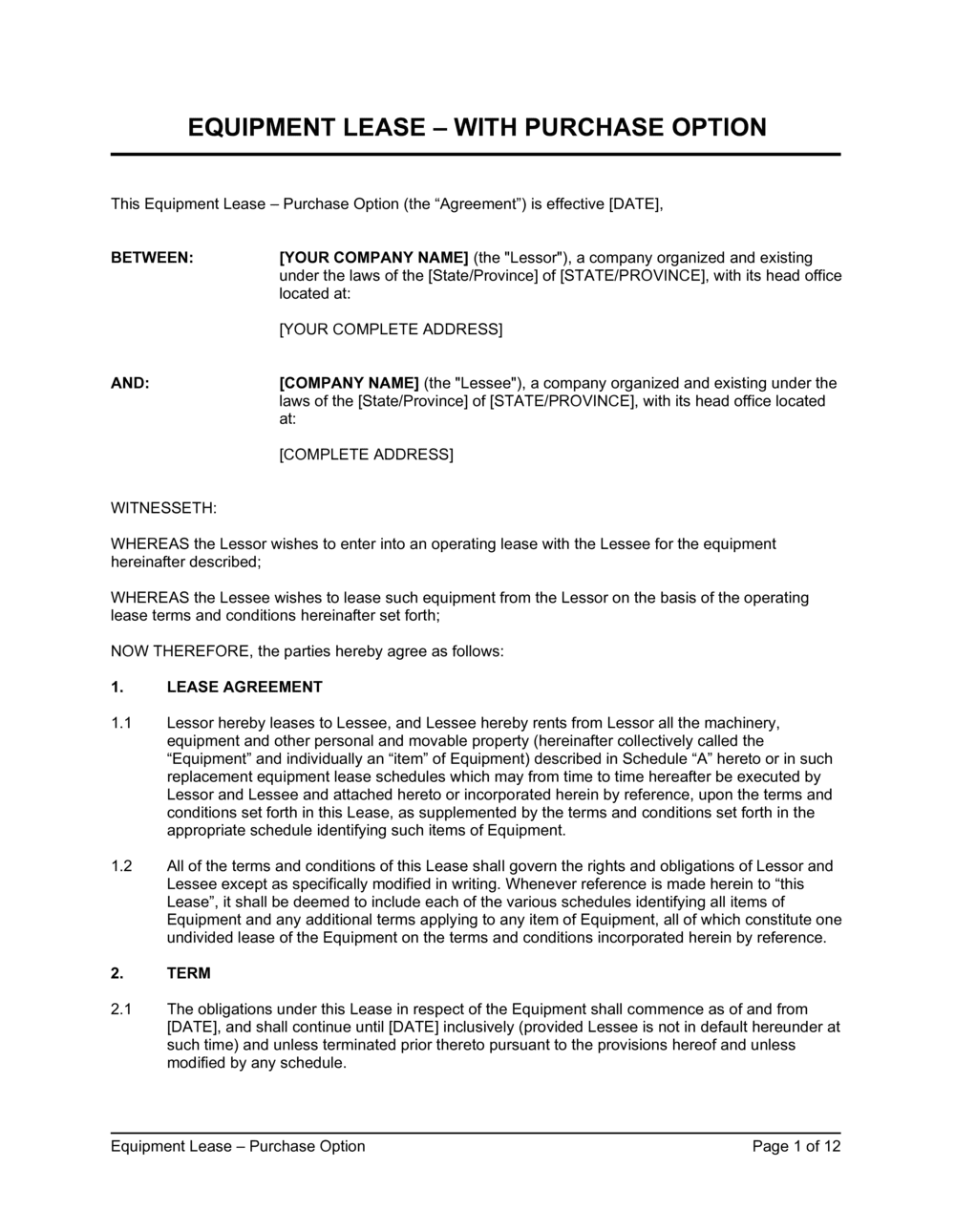
Enter the equipment's full make, model, year, serial number, and current condition in Schedule A. Attach manufacturer spec sheets or photos for high-value or complex machinery.
💡 Photograph the equipment at delivery and attach images to the signed agreement. This single step eliminates the majority of 'pre-existing damage' disputes at lease end.
2
Set the lease term, commencement date, and renewal terms
Enter the exact start and end dates. Decide whether the lease renews automatically on a month-to-month basis if neither party acts, and specify the written notice required to prevent renewal.
💡 A 60-day non-renewal notice requirement protects both parties — it gives the lessee time to arrange financing if they intend to exercise the purchase option.
3
Define rental payments, late fees, and payment credits
Enter the monthly payment amount, due date, accepted methods, and late-fee rate. If any portion of each payment applies toward the purchase price, state the credit amount explicitly.
💡 Specifying an ACH or bank transfer as the payment method — rather than 'any lawful means' — reduces payment tracing disputes and makes default dates unambiguous.
4
Set the purchase option price and exercise window
State the exact purchase option price (fixed dollar amount, FMV at the time of exercise, or residual value formula). Define the window during which the lessee may exercise — typically the final 30–90 days of the term.
💡 A fixed purchase price protects the lessee from market appreciation but may undervalue the equipment for the lessor. FMV purchase options work better for long-term leases on assets with volatile values.
5
Allocate maintenance and repair responsibilities
Specify which party handles routine maintenance, consumables, and major repairs. Reference the manufacturer's maintenance schedule and define 'normal wear and tear' in measurable terms where possible.
💡 For complex machinery, require the lessee to maintain a service log and provide it to the lessor on request. This creates an audit trail and supports the lessee's purchase option exercise by demonstrating the equipment's condition.
6
Specify insurance requirements and proof deadlines
Enter minimum coverage amounts, the required policy types (property, liability), and the deadline for the lessee to provide certificates of insurance before commencement.
💡 Require the lessee to notify the lessor at least 30 days before any policy cancellation or material change. Most insurance carriers can add this endorsement at no cost.
7
Define default events, cure periods, and remedies
List specific events of default, the number of days the defaulting party has to cure each type, and the remedies available — repossession, acceleration, or damages.
💡 Distinguish monetary defaults (missed payment — typical cure: 5–10 days) from non-monetary defaults (insurance lapse — typical cure: 15–30 days). Blending them into one cure period creates ambiguity.
8
Execute and file a UCC-1 financing statement
Both parties sign the agreement before or on the commencement date. The lessor should file a UCC-1 with the appropriate state secretary of state within 10 days of execution to perfect their security interest.
💡 File the UCC-1 in the state where the lessee is organized (for entities) or domiciled (for individuals) — not necessarily where the equipment is located — as that is the UCC Article 9 default filing location.