1
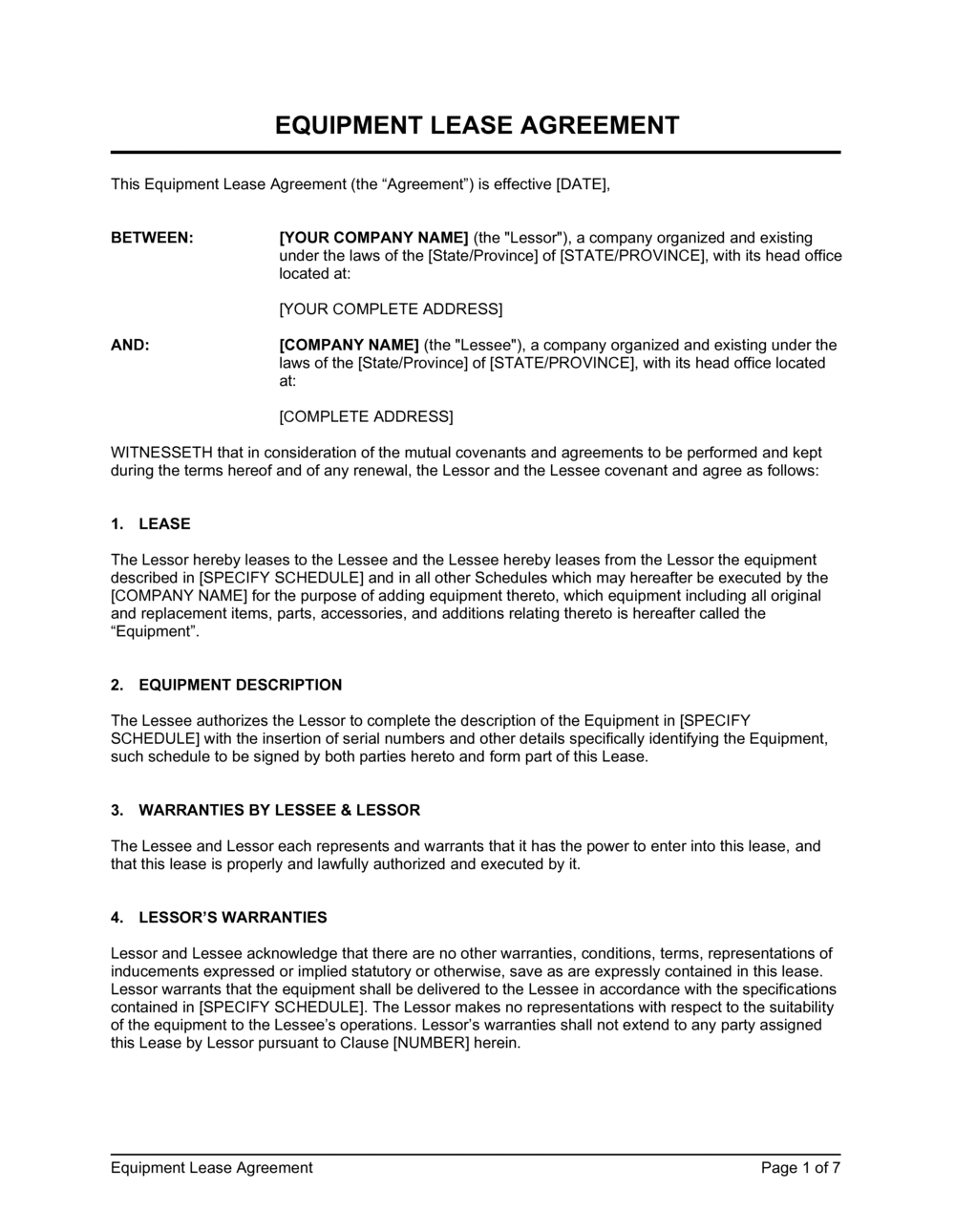
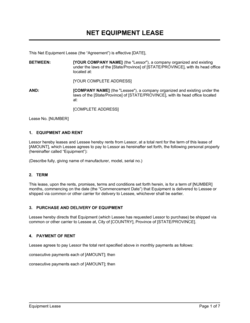
Identify the parties and insert legal entity names
Enter the lessor's and lessee's full registered legal names, addresses, and entity types. For corporate lessees, confirm the exact name on their business registration before signing.
💡 A mismatch between the contract name and the registered entity name can void personal liability guarantees and complicate repossession.
2
Complete the equipment description in Schedule A
List the make, model, serial number, year of manufacture, and current condition for every item being leased. Attach photos or a condition report and reference them in Schedule A.
💡 A timestamped photo set of the equipment at delivery is the single most effective way to resolve return-condition disputes.
3
Set the lease term, commencement date, and renewal options
Enter the exact start and end dates and specify whether renewal is automatic, optional, or at lessor's discretion. Set a clear written-notice deadline for renewal — 30 to 60 days before expiry is standard.
💡 For equipment with long lead times, build in a commencement condition: 'Term begins on the date Lessee signs the Acceptance Certificate' rather than a fixed calendar date.
4
Define the payment schedule and late-fee terms
State the payment amount, frequency (monthly is most common), due date, accepted payment methods, and the interest rate for overdue balances. Enter the security deposit amount and the refund timeline.
💡 An interest rate of 1.5% per month (18% per annum) is widely enforced in North America and is high enough to incentivize on-time payment without triggering usury concerns.
5
Allocate maintenance and insurance obligations
Specify which routine maintenance tasks fall to the lessee and which to the lessor, and require the lessee to provide a certificate of insurance naming the lessor as loss payee before taking possession.
💡 Request the certificate of insurance before handing over the equipment — not after. A lessee who takes delivery without providing proof of insurance may be uninsurable.
6
Configure the end-of-lease options
Choose whether the lessee may purchase, renew, or must return the equipment at expiry. If a purchase option is included, state the price — either a fixed amount or fair market value — and the notice deadline.
💡 A nominal purchase-option price ($1.00 or 10% of original value) may trigger finance-lease classification under ASC 842 or IFRS 16, affecting the lessee's balance sheet. Confirm with the lessee's accountant before finalizing.
7
Review default, remedies, and cure-period language
Confirm that default events are clearly listed, that the lessee has a written cure period of 5–10 business days for non-payment, and that the acceleration and repossession remedies comply with the governing jurisdiction's self-help repossession rules.
💡 Some US states and Canadian provinces require a court order before repossession of commercial equipment — check your jurisdiction before relying on a self-help remedy clause.
8
Sign before equipment delivery and retain a fully executed copy
Both parties must sign before the equipment changes hands. Attach the completed Schedule A and the Acceptance Certificate to the signed agreement.
💡 Use an e-signature platform that timestamps execution and stores the document with the original attachment set — the Acceptance Certificate is evidence in any return-condition dispute.