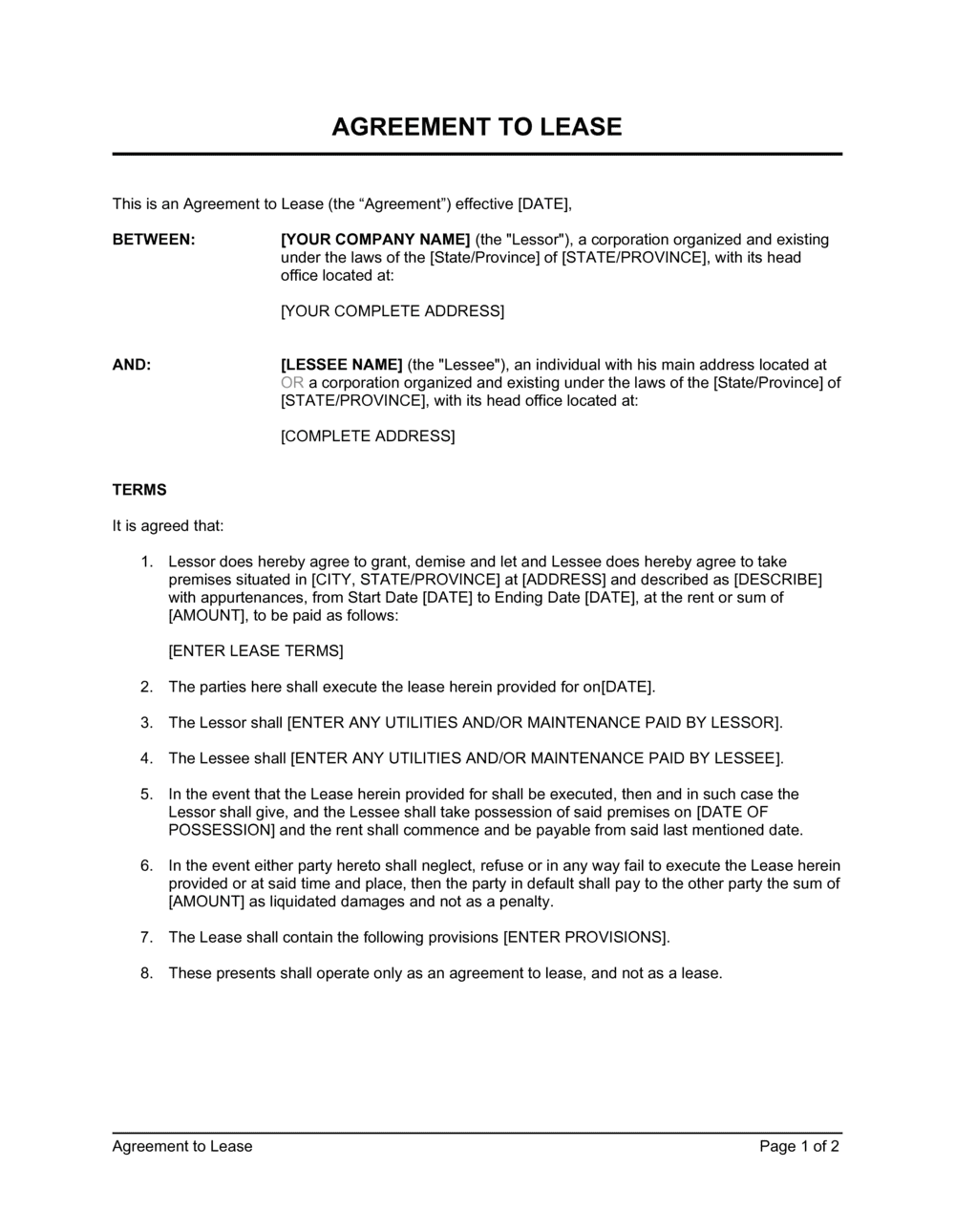
- Agreement to Lease
- A binding contract that obligates both landlord and tenant to enter into a formal lease on terms set out in the agreement, before the full lease document is signed.
- Conditions Precedent
- Specific events or approvals that must occur before the parties are obligated to proceed — such as planning permission, board approval, or fit-out completion.
- Heads of Terms
- A summary document outlining the key commercial terms agreed between landlord and tenant, which the agreement to lease then converts into binding obligations.
- Net Rent
- Rent payable before operating costs, taxes, and insurance are added — common in commercial leases where the tenant pays these charges separately.
- Security Deposit
- A sum paid by the tenant to the landlord at signing, held against non-performance, damage, or unpaid rent, and returned at the end of the lease term subject to deductions.
- Lease Commencement Date
- The date on which the formal lease begins, from which the tenant's rent and obligations run — distinct from the date the agreement to lease is signed.
- Permitted Use
- The specific purpose for which the tenant is allowed to occupy and use the premises, as defined in the lease — e.g., retail clothing store or professional office.
- Gross Lease
- A lease structure where the tenant pays a single rent amount and the landlord covers operating costs, taxes, and insurance from that payment.
- Break Clause
- A contractual right for one or both parties to terminate the lease early, typically on specified dates and subject to notice requirements.
- Long-Stop Date
- The final date by which the formal lease must be executed; if not met, either party may typically withdraw from the agreement to lease without penalty.
- Rent-Free Period
- An agreed period at the start of the lease during which the tenant pays no rent, typically granted to allow for fit-out or as a commercial incentive.