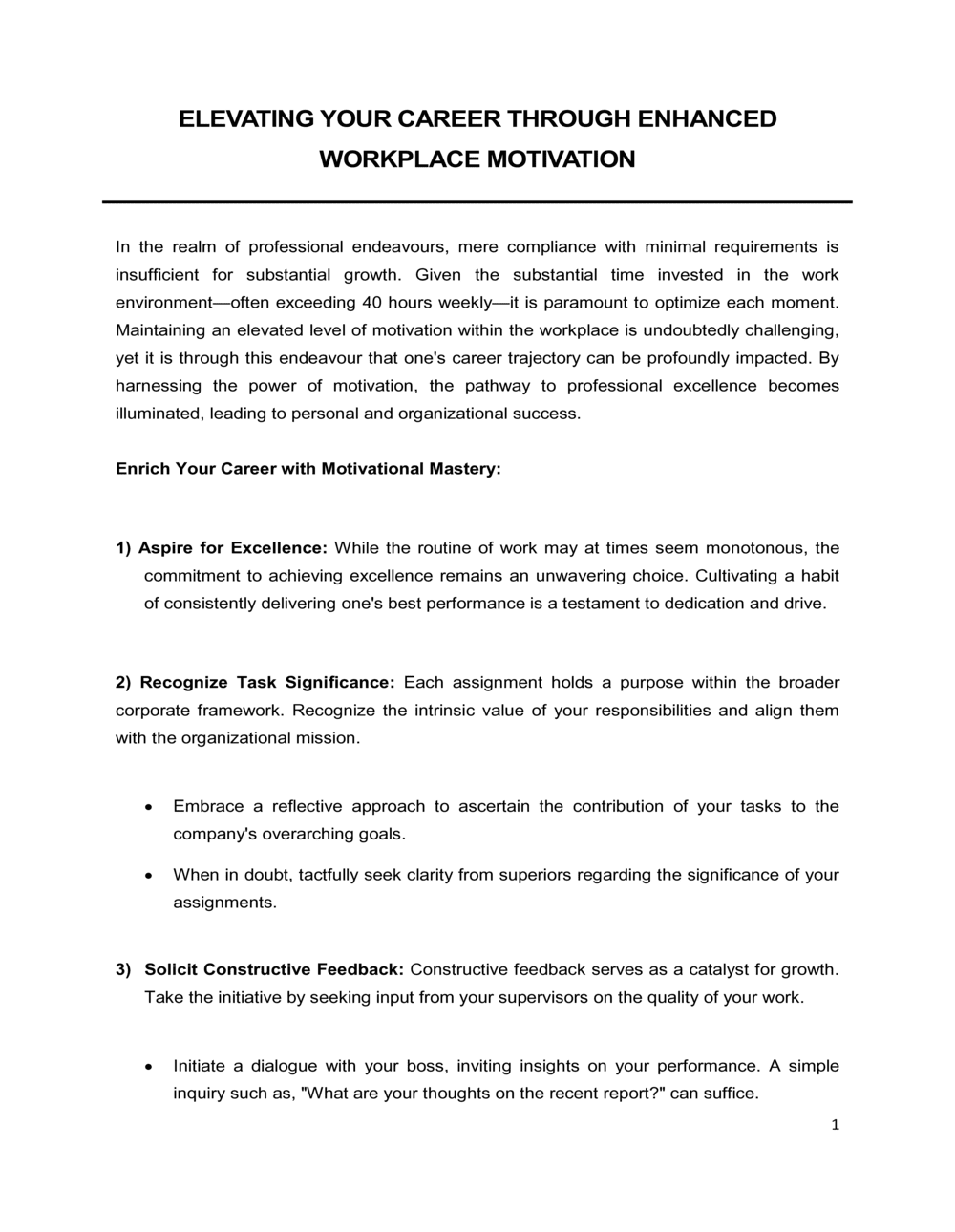
Elevating Your Career Through Enhanced Workplace Motivation Template

Free download β€’ Use as a template β€’ Print or share

3 pagesβ€’20–25 min to useβ€’Difficulty: Standard
Learn more ↓
FreeElevating Your Career Through Enhanced Workplace Motivation Template

At a glance

What it is
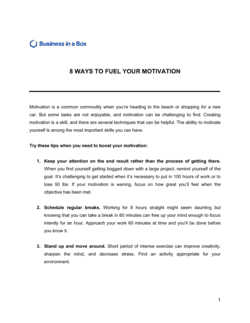
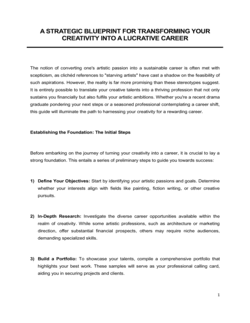
The Elevating Your Career Through Enhanced Workplace Motivation template is a structured Word document that helps professionals identify their core motivational drivers, set concrete career advancement goals, and build an actionable plan for sustained professional growth. This free Word download guides individuals and managers through a systematic framework β€” from self-assessment to milestone tracking β€” that can be completed independently or used in a coaching or performance review context.
When you need it
Use it when you are feeling stalled in your current role, preparing for a performance review, transitioning into a leadership position, or building a structured professional development program for your team. It is equally useful after a promotion, a role change, or any moment when aligning daily work habits with longer-term career ambitions becomes a priority.
What's inside
A self-assessment of motivational drivers, a current-state career analysis, SMART goal-setting worksheets, a motivation strategy action plan, a skills gap analysis, an accountability and milestone tracker, and a reflection section for ongoing adjustment. Every section includes prompts and sample language to reduce blank-page friction.

What is an Elevating Your Career Through Enhanced Workplace Motivation Plan?

An Elevating Your Career Through Enhanced Workplace Motivation plan is a structured personal development document that connects an individual's core motivational drivers to concrete career advancement goals, a skills gap analysis, and the behavioral tactics required to sustain progress over time. It moves beyond a standard goal list by first examining what genuinely energizes a person at work β€” distinguishing intrinsic motivators like mastery and purpose from extrinsic ones like compensation and recognition β€” and then building a goal-setting and accountability framework on top of that honest baseline. The result is a working document that guides daily behavior and provides a clear reference point for performance conversations, coaching sessions, and career transitions.

Why You Need This Document

Without a written motivation and career plan, professional development tends to happen reactively β€” in response to a performance review, a missed promotion, or a moment of frustration β€” rather than as a deliberate, compounding process. The absence of a structured plan means skills gaps go unaddressed until they become visible liabilities, career goals remain vague enough to be endlessly deferred, and motivation fluctuations are managed by willpower alone rather than by designed habits and accountability structures. Employees who operate without a written plan are significantly more likely to experience career plateaus and disengagement, because there is no mechanism for identifying drift early and correcting it. This template provides that mechanism β€” a single document that turns career ambition into scheduled, measurable actions, and gives both individuals and their managers a shared reference for development conversations that produce real outcomes.

Which variant fits your situation?

If your situation is…Use this template
Creating a formal development plan tied to a promotion trackEmployee Career Development Plan
Setting quarterly performance and growth objectivesProfessional Development Plan
Onboarding a new employee with structured 30-60-90 day goals30-60-90 Day Plan
Documenting team-wide motivation and engagement initiativesEmployee Engagement Plan
Conducting a formal annual performance and goal reviewPerformance Review Template
Building a skills inventory before a role transitionSkills Gap Analysis
Structuring a coaching session around career motivationCoaching Action Plan

Common mistakes to avoid

❌ Confusing aspirational motivators with actual motivators

Why it matters: Building a plan around motivators you wish you had β€” rather than the ones that actually drive your behavior β€” produces strategies you won't follow. The plan looks ambitious but generates no energy.

Fix: Observe your behavior over the past 30 days: which tasks did you start early, which did you defer? Let behavioral patterns override self-reported preferences in the self-assessment.

❌ Setting goals without measurable indicators

Why it matters: A goal like 'become a better communicator' cannot be evaluated at the 90-day review, making it impossible to know whether the plan is working or needs adjustment.

Fix: Attach a specific observable indicator to every goal β€” for example, 'deliver two internal presentations rated 4/5 or above by peer feedback by [DATE].'

❌ Skipping the obstacles and contingency section

Why it matters: Plans that ignore predictable barriers fail at the first disruption β€” a busy quarter, a manager change, or a competing priority β€” because no response has been pre-decided.

Fix: Spend at least 15 minutes on the obstacles section before finalizing the action plan. A written contingency removes the decision-making burden in the moment the obstacle appears.

❌ Never updating the reflection log after the first 30 days

Why it matters: A static plan becomes irrelevant within 60–90 days as context shifts. Abandoning reflection means accumulating unacknowledged drift until the entire plan feels too far off track to salvage.

Fix: Treat the reflection log as a standing bi-weekly appointment. Five minutes of documented reflection every two weeks compounds into more plan adherence than an hour of initial planning.

The 9 key sections, explained

Motivational self-assessment

Current career state analysis

Career vision statement

SMART goals worksheet

Skills gap analysis

Motivation strategy action plan

Accountability and milestone tracker

Obstacles and contingency planning

Reflection and plan adjustment log

How to fill it out

  1. 1

    Complete the motivational self-assessment before reading ahead

    Fill in the self-assessment section without skipping to later sections first. Seeing the goal-setting prompts before completing the assessment biases your answers toward aspirational rather than honest responses.

    πŸ’‘ Set a 20-minute timer and answer each prompt without editing. Raw first responses are more accurate than polished ones.

  2. 2

    Document your current career state with metrics, not descriptions

    For every responsibility you list, attach a number β€” output volume, team size, budget managed, or percentage change achieved. This transforms the section from a job description into a performance baseline.

    πŸ’‘ Pull from your last performance review, LinkedIn profile, or resume to surface metrics you have already documented elsewhere.

  3. 3

    Write a career vision statement in one sitting

    Draft the full vision statement in a single session of 15–20 minutes. Include the target role, organization type, scope of impact, and an approximate compensation range. Revise it only after completing the rest of the template.

    πŸ’‘ Read it aloud when finished. If it sounds generic, add one specific detail β€” an industry, a team size, or a named skill β€” until it feels distinctly yours.

  4. 4

    Limit your SMART goals to three to five active items

    Select the three to five goals most directly connected to your career vision. For each, complete all five SMART criteria fields β€” do not leave 'Achievable because' blank; this field is where most wishful thinking surfaces.

    πŸ’‘ If you cannot articulate why a goal is achievable within the timeframe, shorten the timeline or narrow the scope before proceeding.

  5. 5

    Prioritize your skills gaps by impact, not ease

    Rank gaps by the degree to which closing each one accelerates progress toward your career vision β€” not by which ones are most comfortable to address. High-impact, uncomfortable gaps should appear at the top of your list.

    πŸ’‘ Ask a trusted colleague or manager which single skill improvement would make the biggest visible difference in your performance. Their answer is usually more accurate than your own ranking.

  6. 6

    Design habits, not to-do items, for your motivation strategy

    For each motivation tactic, specify a trigger (a time, place, or preceding action), the behavior, and the immediate reward. Habits anchored to existing routines persist far longer than tasks added to a list.

    πŸ’‘ Attach new professional development habits to an existing daily routine β€” for example, reviewing one development goal every morning while your computer boots up.

  7. 7

    Schedule bi-weekly check-ins and enter them in your calendar now

    Before closing the template, book the first four check-in dates in your calendar. Assign an accountability partner if possible, and share the milestone tracker section with them so they have context for the conversation.

    πŸ’‘ A 15-minute calendar block is sufficient for a check-in β€” the constraint forces you to be specific about what has and hasn't moved.

  8. 8

    Set a 90-day full plan review date

    Add a 90-day review to your calendar and return to the reflection log section at that point. Reassess each goal, update completion status in the milestone tracker, and adjust any tactics that produced no observable change.

    πŸ’‘ If fewer than 50% of milestones are on track at 90 days, the problem is almost always goal count or specificity β€” reduce the number of active goals before adding new ones.

Frequently asked questions

What is a workplace motivation career development plan?

A workplace motivation career development plan is a structured document that connects an individual's motivational drivers to concrete career advancement goals and the behavioral tactics needed to reach them. It combines self-assessment, SMART goal-setting, skills gap analysis, and an accountability framework into a single working document. Unlike a general resume or job description, it focuses on internal drivers and deliberate development rather than past accomplishments.

Who should use this template?

This template is useful for any professional who wants to move from passive career drift to deliberate advancement. Mid-career employees feeling plateaued, new managers building leadership habits, HR teams running structured development conversations, and career coaches working with clients all benefit from the framework. It is equally applicable for individual use or as a shared document between an employee and their manager during performance planning cycles.

How is this different from a standard performance review?

A performance review evaluates past behavior against pre-set targets, typically from the organization's perspective. This template is forward-looking and individual-centered β€” it starts with what motivates the person, then builds goals and tactics around those drivers. The two documents complement each other: a completed motivation and career plan gives an employee concrete material to bring into a performance review conversation, shifting it from evaluation to development dialogue.

How often should I update the plan?

The milestone tracker and reflection log should be updated at least bi-weekly. A full plan review β€” revisiting goals, reassessing the skills gap, and adjusting tactics β€” should happen every 90 days. Annual reviews should revisit the career vision statement and self-assessment, since both can shift meaningfully over a 12-month period as circumstances and priorities evolve.

Can managers use this template with their direct reports?

Yes. Managers can use the template as a facilitation guide for one-on-one development conversations. Asking a direct report to complete the self-assessment and current-state sections before a meeting provides a structured starting point for discussing goals, blockers, and support needed. The accountability section can be used to document commitments made during that conversation, with shared check-in dates entered in both parties' calendars.

What is the difference between intrinsic and extrinsic motivation, and why does it matter for career planning?

Intrinsic motivation comes from within β€” the enjoyment of the work itself, a sense of mastery, or a feeling of purpose. Extrinsic motivation comes from outside β€” pay, recognition, or status. Career plans built solely on extrinsic targets (the next title, the next salary band) tend to produce short bursts of effort followed by renewed disengagement once the target is achieved. Plans that also address intrinsic drivers β€” the kind of work that feels meaningful and energizing β€” sustain momentum through longer development cycles.

How many goals should I set in the SMART goals section?

Three to five active goals is the recommended range. Research on goal pursuit consistently shows that tracking more than five goals simultaneously reduces completion rates across all of them, because attention and daily decision-making capacity are finite. If you identify more than five important goals, rank them by impact on your career vision and defer the lower-ranked ones to your next 90-day review cycle.

Do I need a manager's involvement to use this template effectively?

No β€” the template is fully usable as a solo exercise. However, sharing the SMART goals and milestone tracker with a manager or accountability partner significantly improves completion rates. A manager who has visibility into your development priorities is also better positioned to create opportunities β€” project assignments, stretch roles, or training access β€” that align with your plan. Sharing is optional but consistently produces better outcomes.

How long does it take to complete the template?

Allow two to three hours for the initial completion, spread across two sessions if possible. The self-assessment and current-state sections take about 45 minutes. The SMART goals and skills gap sections take another 45–60 minutes if you approach them with specific metrics in mind. The motivation strategy and accountability sections take 30–45 minutes. Rushing the first pass produces a plan that looks complete but lacks the specificity needed to guide behavior.

How this compares to alternatives

vs Professional Development Plan

A professional development plan focuses on structured skill acquisition and training activities agreed between an employee and their organization. This template goes deeper on motivational analysis β€” identifying why engagement fluctuates and how to sustain it β€” before building the development actions. Use both together when you want motivation analysis to inform the development activities you prioritize.

vs Performance Review Template

A performance review evaluates past results against pre-set organizational expectations. This template is forward-looking and individually driven β€” it starts with personal motivators, not organizational KPIs. A completed motivation and career plan gives an employee concrete material to bring into a performance review, turning it from a backward-looking evaluation into a development conversation.

vs 30-60-90 Day Plan

A 30-60-90 day plan structures the immediate priorities and milestones for a new role or assignment over a 90-day window. This template operates on a longer horizon β€” 1 to 3 years β€” and focuses on motivation, vision, and career trajectory rather than role-specific onboarding tasks. Use the 30-60-90 plan to execute the first 90 days; use this template to define where those 90 days are leading.

vs Employee Engagement Survey

An employee engagement survey measures team-wide sentiment at a point in time and is completed anonymously in aggregate. This template is an individual planning document β€” completed by one person for their own career development. Survey data can inform where motivation issues exist across a team; this template provides the individual framework for addressing them at the personal level.

Industry-specific considerations

Technology / SaaS

Fast-changing role definitions and rapid skill obsolescence make structured motivation and development planning essential for retaining high performers and managing career trajectory in flat org structures.

Professional Services

Billable-hour pressure often crowds out development time; a written motivation plan with scheduled non-billable development blocks creates a defensible structure for sustained career growth.

Healthcare

High burnout rates and demanding work environments make identifying and reinforcing intrinsic motivators β€” patient impact, clinical mastery, team contribution β€” a practical retention and engagement tool.

Retail / Hospitality

High turnover and limited formal promotion structures make individual motivation planning a differentiating tool for employees targeting supervisory or regional management roles.

Template vs pro β€” what fits your needs?

PathBest forCostTime
Use the templateIndividual professionals, employees preparing for performance reviews, and managers running development conversationsFree2–3 hours initial completion; 15 minutes bi-weekly thereafter
Template + professional reviewEmployees preparing for a promotion conversation or major role transition who want external input on their plan$100–$400 for a single career coaching session1–2 weeks including coaching appointment
Custom draftedOrganizations building a standardized motivation and career development framework for 50+ employees or a formal leadership pipeline program$2,000–$8,000 for an HR consultant or organizational development specialist4–8 weeks

Glossary

Intrinsic Motivation
Motivation driven by internal rewards β€” interest, mastery, purpose, or personal satisfaction β€” rather than external incentives like pay or recognition.
Extrinsic Motivation
Motivation driven by external factors such as salary, bonuses, promotions, or public recognition.
SMART Goals
Goals that are Specific, Measurable, Achievable, Relevant, and Time-bound β€” a standard framework for translating ambitions into actionable targets.
Skills Gap
The difference between the competencies an employee currently has and those required for the role or career level they are targeting.
Growth Mindset
The belief that abilities and intelligence can be developed through effort, feedback, and persistence β€” as opposed to a fixed mindset that treats traits as static.
Accountability Partner
A colleague, manager, or coach who regularly checks in on progress toward stated goals and provides candid feedback.
Career Plateau
A period in which an employee's role, responsibilities, and compensation remain static β€” often signaling a need for deliberate re-engagement or a change in direction.
Milestone Tracker
A structured log of intermediate targets and completion dates used to measure progress toward a larger career goal.
360-Degree Feedback
Performance input gathered from a range of sources β€” direct reports, peers, managers, and sometimes clients β€” rather than from a single supervisor alone.
Professional Development Plan (PDP)
A documented agreement between an employee and their organization outlining the skills, experiences, and behaviors the employee will develop within a defined timeframe.

Part of your Business Operating System

This document is one of 3,000+ business & legal templates included in Business in a Box.

  • Fill-in-the-blanks β€” ready in minutes
  • 100% customizable Word document
  • Compatible with all office suites
  • Export to PDF and share electronically

Create your document in 3 simple steps.

From template to signed document β€” all inside one Business Operating System.
1
Download or open template

Access over 3,000+ business and legal templates for any business task, project or initiative.

2
Edit and fill in the blanks with AI

Customize your ready-made business document template and save it in the cloud.

3
Save, Share, Send, Sign

Share your files and folders with your team. Create a space of seamless collaboration.

Save time, save money, and create top-quality documents.

β˜…β˜…β˜…β˜…β˜…

"Fantastic value! I'm not sure how I'd do without it. It's worth its weight in gold and paid back for itself many times."

Managing Director Β· Mall Farm
Robert Whalley
Managing Director, Mall Farm Proprietary Limited
β˜…β˜…β˜…β˜…β˜…

"I have been using Business in a Box for years. It has been the most useful source of templates I have encountered. I recommend it to anyone."

Business Owner Β· 4+ years
Dr Michael John Freestone
Business Owner
β˜…β˜…β˜…β˜…β˜…

"It has been a life saver so many times I have lost count. Business in a Box has saved me so much time and as you know, time is money."

Owner Β· Upstate Web
David G. Moore Jr.
Owner, Upstate Web

Run your business with a system β€” not scattered tools

Stop downloading documents. Start operating with clarity. Business in a Box gives you the Business Operating System used by over 250,000 companies worldwide to structure, run, and grow their business.

Start freeΒ Β·Β No credit card required