Deliveries Held Until Past Due Balance Paid Template

Free Word download β€’ Edit online β€’ Save & share with Drive β€’ Export to PDF

1 pageβ€’20–25 min to fillβ€’Difficulty: Standardβ€’Signature requiredβ€’Legal review recommended
Learn more ↓
FreeDeliveries Held Until Past Due Balance Paid Template

At a glance

What it is
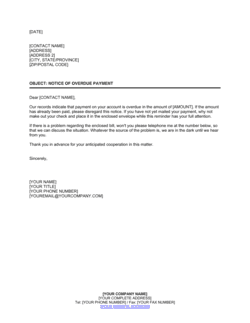
A Deliveries Held Until Past Due Balance Paid notice is a formal written communication from a supplier or vendor to a customer informing them that all pending and future shipments or deliveries are suspended until the outstanding overdue balance is paid in full. This free Word download gives you a structured, enforceable letter you can edit online and export as PDF to send by email, certified mail, or courier.
When you need it
Use it when a customer's account falls past due and you need to formally document your decision to halt deliveries as a condition of continued supply. It is particularly important when the customer has ignored prior payment reminders or when the overdue amount is large enough to represent meaningful credit risk to your business.
What's inside
Identification of both parties and the account in question, a statement of the outstanding balance with aging detail, a clear notice that all deliveries are suspended effective immediately, the specific conditions required to reinstate delivery, and a deadline for resolution before further collection action is taken.

What is a Deliveries Held Until Past Due Balance Paid Notice?

A Deliveries Held Until Past Due Balance Paid notice is a formal written communication from a supplier or vendor to a customer stating that all pending and future shipments are suspended because the customer's account carries an unpaid overdue balance. It identifies every outstanding invoice by number and amount, states a specific total past due, sets a hard deadline for payment, and defines the exact conditions β€” including any revised credit terms β€” that must be met before deliveries resume. Unlike a payment reminder, which is a request, this notice is a documented exercise of the supplier's contractual or statutory right to withhold supply, creating a written record that supports subsequent collections action, lien filings, or litigation if the customer does not cure the default.

Why You Need This Document

Operating without a formal delivery hold notice exposes your business on three fronts simultaneously. First, continuing to deliver goods to a customer who is not paying increases your total exposure with every shipment β€” each new delivery extends unsecured credit to a party who has already demonstrated they will not pay on time. Second, without a documented notice, the customer can later claim they were unaware deliveries had been suspended or that no formal demand was made, complicating collections proceedings. Third, a signed, dated notice with an invoice-level balance schedule and a cure deadline is precisely the paper trail that collections agencies, small claims courts, and commercial litigators need to act quickly on your behalf. This template gives you a professionally structured notice you can complete in under 20 minutes, send by email and certified mail the same day, and file in the customer's account record as the opening document in a clear, escalating collections sequence.

Which variant fits your situation?

If your situation is…Use this template
First overdue notice β€” balance is 1–30 days past duePast Due Payment Reminder Letter
Formal delivery suspension with a specific cure deadlineDeliveries Held Until Past Due Balance Paid
Escalating to collections after delivery hold is ignoredFinal Demand for Payment Letter
Terminating the supply relationship entirely for non-paymentContract Termination Letter
Suspending services (not physical deliveries) for non-paymentServices Suspended for Non-Payment Letter
Placing a lien on delivered goods for unpaid balancesMechanic's Lien Notice
Setting up a payment plan to resolve the overdue balancePayment Plan Agreement

Common mistakes to avoid

❌ No invoice-level balance breakdown

Why it matters: A lump-sum past due figure is routinely disputed β€” customers claim invoices are incorrect, already paid, or subject to credit notes. Without a line-by-line schedule, the dispute stalls the collection process indefinitely.

Fix: Attach a signed aging schedule listing every invoice by number, date, amount, and days overdue. Reference it in the notice as Exhibit A.
❌ Reinstating deliveries after partial payment without new written terms

Why it matters: Accepting partial payment and resuming deliveries without documenting the new arrangement signals that the full balance is no longer required, weakening your collections position for the remainder.

Fix: Before reinstating deliveries, issue a written payment plan agreement or amended credit terms that explicitly preserves the right to collect the full outstanding balance.

❌ Using an interest rate not in the original agreement

Why it matters: Courts in most jurisdictions will not enforce a unilaterally imposed interest rate. Introducing a new rate in the delivery hold letter creates a disputed term that delays payment.

Fix: Use only the rate stated in the original invoice, credit application, or supply agreement. If no rate was agreed, reference the applicable statutory default rate by name and cite the statute.

❌ Sending the notice to the wrong contact

Why it matters: A delivery hold notice sent only to the purchasing or operations contact β€” rather than the finance department or an officer β€” may never reach the person who can authorize payment, letting the cure deadline pass without action.

Fix: Send to at least three contacts simultaneously: the accounts payable email on file, a senior finance officer, and the main business contact. Copy all three on both the email and the certified mail notice.

The 8 key clauses, explained

Parties and account identification

In plain language: Identifies the supplier and the customer by legal name, account number, and contact details so the notice is unambiguously tied to the correct business relationship.

Sample language
This notice is issued by [SUPPLIER LEGAL NAME] ('Supplier') to [CUSTOMER LEGAL NAME] ('Customer'), Account No. [ACCOUNT NUMBER], regarding the outstanding balance on Customer's account as of [DATE].

Common mistake: Using a trading name instead of the customer's registered legal entity name. If the notice is later used in a collections proceeding, misidentifying the debtor entity can force you to restart the process.

Statement of outstanding balance

In plain language: States the total overdue amount, itemized by invoice number, invoice date, due date, and days past due, so the customer cannot dispute which invoices are in arrears.

Sample language
As of [DATE], Customer's account reflects a past due balance of $[AMOUNT], comprising the following unpaid invoices: Invoice [#] dated [DATE], due [DATE], $[AMOUNT] ([X] days past due); Invoice [#] dated [DATE], due [DATE], $[AMOUNT] ([X] days past due).

Common mistake: Stating only a lump-sum total without an invoice-level breakdown. Customers routinely dispute the aggregate figure β€” a line-by-line schedule eliminates ambiguity and accelerates payment.

Notice of delivery suspension

In plain language: The operative clause formally stating that all pending and future deliveries are suspended, effective immediately, until the overdue balance is paid in full.

Sample language
Effective [DATE], Supplier hereby suspends all pending and future deliveries of goods and/or services to Customer until the full past due balance of $[AMOUNT] is received and cleared by Supplier.

Common mistake: Failing to state an effective date for the suspension. An undated hold creates uncertainty about which orders are covered and exposes the supplier to claims that in-transit orders should have been delivered.

Conditions for reinstatement of deliveries

In plain language: Specifies exactly what the customer must do β€” and by when β€” to have delivery reinstated, including the payment method and any new credit conditions such as prepayment or reduced credit limits.

Sample language
Deliveries will be reinstated within [X] business days of Supplier's receipt of full payment of $[AMOUNT] in cleared funds. Upon reinstatement, Customer's credit terms will be revised to [PREPAYMENT / REDUCED NET TERMS / COD] for a period of [X] months.

Common mistake: Reinstating deliveries automatically upon receipt of partial payment without documenting the new conditions in writing. Partial payments that restart deliveries without a written agreement leave the remaining balance in dispute.

Cure deadline and escalation warning

In plain language: Sets a hard deadline by which the customer must pay in full before the supplier escalates to further collection action, including referral to a collections agency, legal proceedings, or contract termination.

Sample language
If full payment is not received by [CURE DEADLINE β€” DATE], Supplier reserves the right to (a) refer the account to a third-party collections agency, (b) commence legal proceedings to recover the outstanding balance, and (c) terminate any existing supply agreement between the parties.

Common mistake: Listing escalation options without any deadline. An open-ended threat carries no urgency and is routinely ignored. A specific calendar date triggers action on both sides.

Accrual of late charges and interest

In plain language: States that contractually agreed late fees or interest continue to accrue on the overdue balance during the suspension period at the rate specified in the original credit agreement or invoice terms.

Sample language
Interest on the past due balance shall continue to accrue at the rate of [X]% per month (or the maximum rate permitted by applicable law, whichever is lower) from the original due date until payment in full is received.

Common mistake: Introducing an interest rate in the delivery hold letter that was never stated in the original invoice or credit agreement. Courts in most jurisdictions will not enforce a unilaterally imposed interest rate that was not agreed to at the outset.

Reservation of rights

In plain language: Preserves all of the supplier's existing legal and contractual rights β€” including the right to pursue damages, seek injunctive relief, or exercise rights of retention or stoppage in transit β€” without waiving any of them by issuing this notice.

Sample language
This notice does not constitute a waiver of any rights or remedies available to Supplier under the supply agreement, applicable law, or in equity. Supplier expressly reserves all such rights, including but not limited to the right to recover all costs of collection, including reasonable attorneys' fees.

Common mistake: Omitting a reservation-of-rights clause entirely. Without it, a customer may argue that the delivery hold letter is the supplier's sole remedy, foreclosing other claims.

Governing law and dispute resolution

In plain language: Specifies which jurisdiction's law governs the notice and how disputes arising from it β€” including collections actions β€” will be resolved.

Sample language
This notice and any disputes arising from it shall be governed by the laws of [STATE / PROVINCE / COUNTRY]. Any legal proceedings shall be brought exclusively in the courts of [JURISDICTION].

Common mistake: Choosing a governing law that conflicts with the governing-law clause in the original supply agreement. The two documents should be consistent β€” courts apply the original contract's choice-of-law provision if there is a conflict.

How to fill it out

  1. 1

    Enter both parties' legal names and account details

    Use the customer's registered legal entity name β€” not a trade name or contact person's name. Include the account number, your own legal entity name, and the date the notice is issued.

    πŸ’‘ Cross-reference the customer's legal name against the original credit application or supply agreement to ensure they match exactly.

  2. 2

    List every overdue invoice individually

    Complete the invoice schedule with invoice number, invoice date, original due date, amount, and days past due for each unpaid invoice. Sum them to the total past due balance.

    πŸ’‘ Attach a printed aging report from your accounting system as an exhibit to the notice β€” it adds credibility and makes disputes harder to sustain.

  3. 3

    State the effective date of the delivery suspension

    Set a specific calendar date on which all pending and future deliveries are suspended. If orders are already in transit, decide whether they will be completed or recalled, and state that decision explicitly.

    πŸ’‘ For large in-transit orders, consult your logistics provider about stoppage-in-transit rights before committing to a recall date β€” the cost of return may exceed the value of the hold.

  4. 4

    Set the conditions for reinstatement

    State the exact payment amount required, the accepted payment methods, and any new credit conditions β€” prepayment, COD, or reduced credit limit β€” that will apply once deliveries resume.

    πŸ’‘ Require cleared funds (wire transfer or bank draft) rather than a personal or business check for reinstatement β€” checks can bounce after you have already shipped.

  5. 5

    Insert a specific cure deadline

    Set a hard calendar date β€” typically 7 to 14 days from the notice date β€” by which full payment must be received before escalation begins. Do not use vague language like 'promptly' or 'as soon as possible.'

    πŸ’‘ A 10-business-day cure window is standard in most B2B credit agreements and is generally considered reasonable by courts if the matter proceeds to litigation.

  6. 6

    Confirm the applicable interest rate

    Insert only the interest rate that was agreed to in the original invoice, credit application, or supply agreement. If no rate was agreed, leave this field blank or reference the statutory rate for your jurisdiction.

    πŸ’‘ In Canada and the EU, there are statutory late-payment interest rates that apply by default even without a contractual rate β€” check the applicable statute before leaving the field blank.

  7. 7

    Sign and send by a trackable method

    Have an authorized officer or accounts receivable manager sign the notice. Send it by email with a read receipt and simultaneously by certified mail or courier to create a documented delivery record.

    πŸ’‘ Email alone is insufficient for a notice that may be used in collections or litigation. A certified mail receipt establishes that the customer received the notice on a specific date, starting the cure clock.

Frequently asked questions

What is a deliveries held until past due balance paid notice?

It is a formal written notice from a supplier to a customer stating that all pending and future deliveries are suspended because the customer's account has an unpaid past due balance. The notice identifies the specific overdue invoices, states the total amount owed, sets conditions for reinstating delivery, and warns of further collection action if payment is not received by a stated deadline.

Is a supplier legally allowed to hold deliveries for non-payment?

In most commercial relationships, yes β€” provided the original supply agreement, purchase order terms, or credit agreement grants the supplier the right to withhold delivery upon default. Even without explicit contractual language, common law and UCC principles in the US and equivalent statutes in Canada, the UK, and the EU generally permit a seller to withhold future deliveries when a buyer is in material default on past payments. Consult a lawyer before suspending delivery if the supply agreement is silent on this point.

What should a delivery hold notice include to be enforceable?

An effective notice identifies both parties by legal name, lists every overdue invoice with amounts and due dates, states the exact total past due, specifies an effective date for the suspension, sets a concrete cure deadline, describes the reinstatement conditions, preserves the supplier's other legal rights, and is signed by an authorized representative. Missing any of these elements weakens the document's usefulness in subsequent collections or litigation.

How many days past due should a balance be before sending this notice?

Most suppliers issue payment reminders at 30 and 60 days past due before escalating to a delivery hold at 60–90 days. The appropriate threshold depends on your industry, the customer's payment history, and the size of the overdue balance. For large balances or customers with a pattern of late payment, a hold notice at 45 days is commercially reasonable. For strategic accounts, many businesses wait until 90 days and pursue a payment plan first.

Can a customer dispute a delivery hold?

A customer can dispute the hold if they believe the invoices are incorrect, already paid, or subject to a credit or setoff. A well-documented notice with an invoice-level aging schedule makes frivolous disputes harder to sustain. If the customer raises a genuine dispute about specific invoices, consider releasing delivery on undisputed amounts while maintaining the hold on disputed balances, and document that decision in writing.

What happens to goods already in transit when a hold is issued?

Goods already in transit at the time the hold notice is issued present a practical and legal complication. Under UCC Article 2 in the US and equivalent sale-of-goods statutes in Canada and the UK, a seller has a right of stoppage in transit if the buyer becomes insolvent. For solvent buyers who are simply past due, the right to recall in-transit goods depends on the contract terms and the stage of delivery. In most cases, completing delivery of in-transit orders and applying the hold to new orders is the safest practical approach.

Should this notice be sent by email or certified mail?

Both. Email provides immediate delivery and creates a timestamp; certified mail or courier creates a physical proof of receipt that is accepted as evidence in court. Sending only by email risks a customer claiming they did not receive it. For any notice that starts a legal cure period, a documented delivery record is essential. Keep copies of both the sent email and the certified mail receipt in the customer's file.

What credit terms should apply when deliveries are reinstated?

After a delivery hold is lifted, most suppliers impose stricter credit terms for a defined period β€” typically prepayment, cash on delivery, or a reduced credit limit for 3–6 months. These revised terms should be documented in writing before deliveries resume. Reinstating the original credit terms immediately after a hold creates the same risk of default that triggered the hold in the first place.

Do I need a lawyer to send a delivery hold notice?

For a straightforward commercial account with a clear past due balance and a supply agreement that permits delivery suspension, a well-drafted template is typically sufficient. Engage a lawyer when the customer threatens litigation over the hold, when the overdue balance is large enough to materially affect your business, when the supply agreement is ambiguous about suspension rights, or when the customer is in a jurisdiction with statutory restrictions on credit holds.

How this compares to alternatives

vs Past Due Payment Reminder Letter

A payment reminder is a soft, non-binding request for payment β€” appropriate for early-stage delinquency at 15–30 days past due. A delivery hold notice is a formal, consequential action that suspends supply and creates a documented cure deadline. Use the reminder first; escalate to the delivery hold only after one or two reminders have been ignored.

vs Final Demand for Payment Letter

A final demand for payment is typically issued after a delivery hold has been ineffective, demanding full payment under threat of immediate legal action. The delivery hold notice is an operational remedy; the final demand is a legal ultimatum. They serve different stages of the collections escalation sequence.

vs Contract Termination Letter

A contract termination letter ends the supply relationship entirely, while a delivery hold notice suspends it temporarily pending payment. The hold is the preferred first step because it preserves the relationship and revenue stream β€” termination is appropriate only when the customer has ignored the hold and all subsequent collection efforts.

vs Payment Plan Agreement

A payment plan agreement structures repayment of the overdue balance in installments, typically allowing deliveries to resume concurrently. It is appropriate when the customer acknowledges the debt but cannot pay in full immediately. A delivery hold notice creates the leverage that makes a payment plan negotiation possible β€” the two documents are often used in sequence.

Industry-specific considerations

Wholesale and distribution

High-volume, low-margin distributors face outsized cash-flow risk from a single past due account β€” a delivery hold notice is a standard credit management tool used before escalating to a collections agency.

Manufacturing

Manufacturers holding custom or made-to-order inventory for a non-paying buyer face compounded loss β€” the notice formally documents the hold and preserves the right to resell goods if the buyer defaults entirely.

Construction and building materials

Material suppliers to construction projects use delivery holds in conjunction with mechanic's lien rights β€” the notice serves as documented evidence of default that supports a subsequent lien filing.

Food and beverage

Perishable goods suppliers must act quickly on past due balances given the limited resale window β€” a delivery hold notice at 30–45 days past due is common practice in this industry.

Jurisdictional notes

United States

UCC Article 2 governs the sale of goods in all US states and generally permits a seller to withhold delivery when the buyer is in breach of payment obligations. State-specific rules apply to the right of stoppage in transit (UCC Β§2-705) and the seller's right to reclaim goods (UCC Β§2-702). Some states cap contractual late-payment interest rates β€” confirm the applicable usury ceiling before inserting an interest rate in the notice.

Canada

The Sale of Goods Acts in each province give a seller an unpaid seller's lien and a right of stoppage in transit equivalent to the UCC provisions. Quebec's Civil Code governs commercial sales in that province and provides similar remedies under different terminology. The Interest Act limits certain contractual interest rates, and provincial consumer protection legislation may apply if the buyer is an individual rather than a business entity.

United Kingdom

The Sale of Goods Act 1979 and the Late Payment of Commercial Debts (Interest) Act 1998 are the primary statutes governing delivery holds and late-payment interest in commercial B2B transactions. The 1998 Act entitles suppliers to statutory interest at 8% above the Bank of England base rate on overdue commercial debts, plus a fixed debt recovery cost of Β£40–£100, even without a contractual rate. A delivery hold on undelivered goods is generally enforceable where the buyer is in material breach.

European Union

The EU Late Payment Directive (2011/7/EU) requires member states to permit suppliers to charge statutory interest on overdue B2B payments at 8% above the European Central Bank reference rate, with automatic entitlement arising after 30 days without a formal notice requirement. Rights to withhold delivery vary by member state β€” German, French, and Dutch commercial law all recognize a supplier's right of retention, but the procedural requirements differ. Cross-border EU transactions should specify governing law explicitly to avoid ambiguity.

Template vs lawyer β€” what fits your deal?

PathBest forCostTime
Use the templateSuppliers with a clear supply agreement, an undisputed past due balance, and a straightforward B2B credit relationshipFree15–20 minutes
Template + legal reviewLarger overdue balances, customers who have threatened to dispute the hold, or supply agreements that are ambiguous about suspension rights$150–$400 for a lawyer review of the completed notice1–2 business days
Custom draftedComplex supply relationships with custom contracts, cross-border buyers, insolvency risk, or overdue balances above $50,000$500–$2,0003–7 business days

Glossary

Past Due Balance
An amount owed by a customer that has not been paid by the agreed due date stated on the invoice or in the credit agreement.
Credit Hold
A supplier's unilateral decision to suspend order fulfillment or delivery until a customer's overdue balance is resolved.
Aging Schedule
A breakdown of outstanding receivables by how long they have been unpaid β€” typically bucketed as 0–30, 31–60, 61–90, and 90+ days.
Cure Period
A defined window of time given to a defaulting party to correct a breach β€” here, the window in which the customer must pay before further action is taken.
Right of Retention
A supplier's legal right, in certain jurisdictions, to withhold goods in its possession until payment for those goods is received.
COD (Cash on Delivery)
A payment condition requiring full payment at the time of delivery rather than on credit terms, sometimes imposed after a credit hold is lifted.
Stoppage in Transit
A supplier's right to reclaim goods that are in transit before the buyer takes possession, typically exercised when the buyer becomes insolvent.
Default
A customer's failure to meet a contractual payment obligation by the due date, triggering the supplier's remedies under the credit agreement.
Prepayment Requirement
A condition imposed on a customer requiring full or partial payment before future orders are shipped, typically as a consequence of prior default.
Setoff
A customer's right to reduce the amount owed to a supplier by an amount the supplier independently owes to the customer.

Part of your Business Operating System

This document is one of 3,000+ business & legal templates included in Business in a Box.

  • Fill-in-the-blanks β€” ready in minutes
  • 100% customizable Word document
  • Compatible with all office suites
  • Export to PDF and share electronically

Create your document in 3 simple steps.

From template to signed document β€” all inside one Business Operating System.
1
Download or open template

Access over 3,000+ business and legal templates for any business task, project or initiative.

2
Edit and fill in the blanks with AI

Customize your ready-made business document template and save it in the cloud.

3
Save, Share, Send, Sign

Share your files and folders with your team. Create a space of seamless collaboration.

Save time, save money, and create top-quality documents.

β˜…β˜…β˜…β˜…β˜…

"Fantastic value! I'm not sure how I'd do without it. It's worth its weight in gold and paid back for itself many times."

Managing Director Β· Mall Farm
Robert Whalley
Managing Director, Mall Farm Proprietary Limited
β˜…β˜…β˜…β˜…β˜…

"I have been using Business in a Box for years. It has been the most useful source of templates I have encountered. I recommend it to anyone."

Business Owner Β· 4+ years
Dr Michael John Freestone
Business Owner
β˜…β˜…β˜…β˜…β˜…

"It has been a life saver so many times I have lost count. Business in a Box has saved me so much time and as you know, time is money."

Owner Β· Upstate Web
David G. Moore Jr.
Owner, Upstate Web

Run your business with a system β€” not scattered tools

Stop downloading documents. Start operating with clarity. Business in a Box gives you the Business Operating System used by over 250,000 companies worldwide to structure, run, and grow their business.

Start freeΒ Β·Β No credit card required