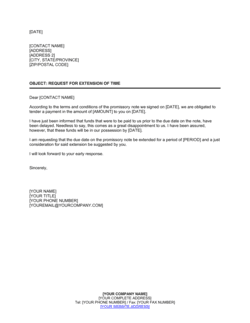
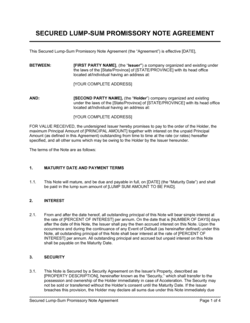
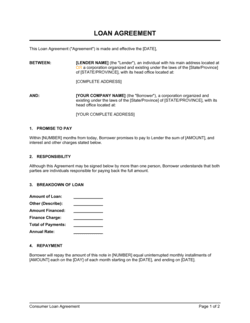
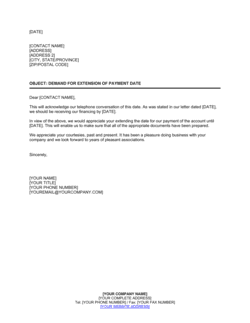
Letter of Default on Promissory Note Template

Free Word download β€’ Edit online β€’ Save & share with Drive β€’ Export to PDF

1 pageβ€’15–25 min to fillβ€’Difficulty: Standard
Learn more ↓
FreeLetter of Default on Promissory Note Template

At a glance

What it is
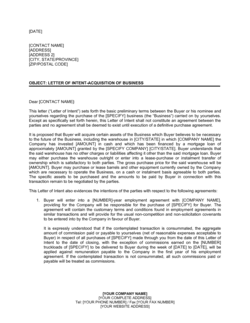
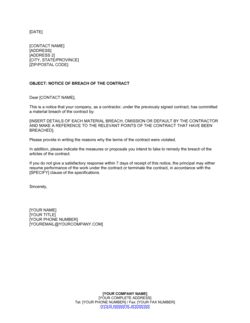
A Letter of Default on Promissory Note is a formal written notice a lender sends to a borrower to declare that the borrower has failed to meet one or more obligations under a promissory note β€” typically a missed payment or series of missed payments. This free Word download gives you a ready-to-edit template you can customize with the borrower's details, the outstanding balance, and a cure deadline, then export as PDF and send in minutes.
When you need it
Send it as soon as a borrower misses a scheduled payment and the grace period in the original promissory note has expired. It is also used when a borrower breaches a non-payment obligation β€” such as failing to maintain required insurance or filing for bankruptcy β€” that triggers a default under the note's terms.
What's inside
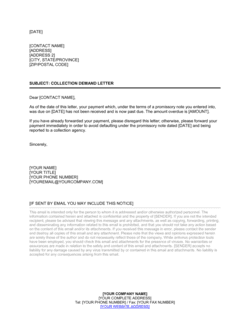
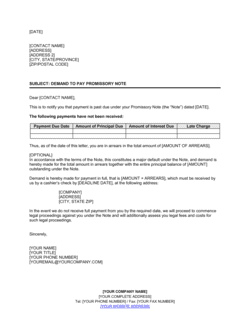
Lender and borrower identification, reference to the original promissory note, a clear statement of the default event, the total amount currently owed, a specific cure deadline, and the consequences of failing to cure β€” including acceleration of the full outstanding balance.

What is a Letter of Default on Promissory Note?

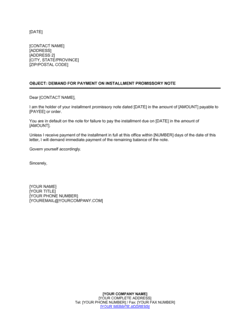
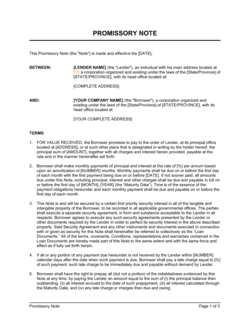
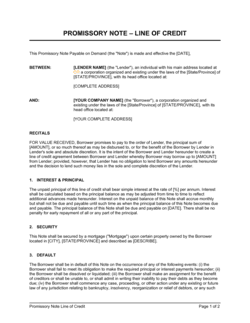
A Letter of Default on Promissory Note is a formal written notice that a lender sends to a borrower to declare that the borrower has breached one or more obligations under a signed promissory note β€” most commonly by failing to make a scheduled payment. The letter identifies the specific default event, states the total amount required to cure it, sets a firm deadline for that cure, and warns that failure to act will trigger the note's acceleration clause, making the entire remaining balance immediately due. It is not a demand for full repayment on its own; it is the required procedural step that must precede acceleration, collections, or legal action under virtually every promissory note's enforcement provisions.

Why You Need This Document

Skipping a formal default notice β€” or sending one that is vague, incomplete, or undelivered β€” can strip a lender of the right to enforce the note's most powerful remedies. Courts and collections attorneys require documented proof that the borrower was notified of the specific default and given a reasonable opportunity to cure before the lender escalated. A missing or defective notice gives a borrower grounds to contest acceleration, delay proceedings, or seek damages for improper enforcement. Beyond legal protection, a properly structured default letter often prompts payment without further action β€” many borrowers cure within the notice period once they understand the full financial consequence of non-cure. This template gives you a complete, correctly sequenced notice you can send in under 20 minutes, fully documented and ready to support enforcement if the borrower does not respond.

Which variant fits your situation?

If your situation is…Use this template
Borrower has missed one or more scheduled paymentsLetter of Default on Promissory Note
Debt has been fully charged off and transferred to a third partyDebt Assignment Agreement
Lender wants to demand full immediate repayment of all outstanding amountsDemand Letter for Payment
Both parties want to restructure or extend the repayment schedulePromissory Note Amendment
Borrower has not responded and lender is escalating to formal collectionsFinal Notice Before Legal Action
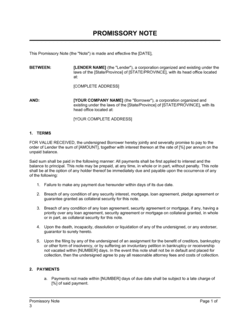
Lender needs to document the original loan terms before sending default noticePromissory Note

Common mistakes to avoid

❌ Not documenting delivery

Why it matters: A default letter that cannot be proven to have been received may not legally start the cure period, potentially invalidating subsequent enforcement steps.

Fix: Send via certified mail with return receipt requested and retain the tracking confirmation. For email delivery, request a read receipt and save the sent message with a timestamp.
❌ Understating the total amount owed

Why it matters: If you list only the missed payment and the borrower pays only that amount, you may be forced to accept it as a full cure even if default interest or late fees are owed.

Fix: Itemize every component of the cure amount β€” principal arrears, accrued interest, default-rate interest if applicable, and late fees β€” before sending the notice.

❌ Setting a cure period shorter than the note requires

Why it matters: Providing fewer days than the promissory note's default clause mandates makes the notice legally defective, giving the borrower grounds to challenge enforcement or acceleration.

Fix: Re-read the original promissory note's default and notice provisions before calculating the deadline, and confirm the cure period meets any minimum required.

❌ Omitting the reservation of rights clause

Why it matters: A lender who has previously accepted late payments without protest may be found to have waived strict enforcement rights unless the notice expressly reserves them.

Fix: Include a standard reservation-of-rights paragraph in every default notice, regardless of whether you have accepted late payments in the past.

The 9 key clauses, explained

Header and date

In plain language: Identifies the letter as a formal legal notice and records the date it was sent β€” which starts the clock on the cure period.

Sample language
[DATE] NOTICE OF DEFAULT Sent via [CERTIFIED MAIL / EMAIL] β€” Delivery Confirmation Requested

Common mistake: Sending the letter without a documented delivery method. If the borrower later claims they never received the notice, the lender cannot prove the cure period began.

Lender and borrower identification

In plain language: States the full legal names and addresses of both parties, establishing who is sending the notice and who is receiving it.

Sample language
From: [LENDER FULL NAME], [LENDER ADDRESS] To: [BORROWER FULL NAME], [BORROWER ADDRESS]

Common mistake: Using a nickname or trade name instead of the legal entity or individual name that signed the original promissory note β€” creating a mismatch that can complicate enforcement.

Reference to the original promissory note

In plain language: Identifies the specific promissory note in default by its date of execution and principal amount, tying this notice to the governing document.

Sample language
Re: Notice of Default β€” Promissory Note dated [DATE], in the original principal amount of $[AMOUNT], executed by [BORROWER NAME] in favor of [LENDER NAME].

Common mistake: Referencing the note by amount alone without the execution date. Multiple notes between the same parties create ambiguity about which obligation is in default.

Statement of default

In plain language: Clearly states what the borrower did or failed to do that constitutes a default under the terms of the note.

Sample language
You are hereby notified that you are in default under the above-referenced Promissory Note. As of [DATE], you have failed to make the required monthly payment of $[PAYMENT AMOUNT] due on [DUE DATE], constituting a default under Section [X] of the Note.

Common mistake: Using vague language such as 'you have not been paying as agreed' instead of citing the specific missed payment date and amount β€” which weakens the notice's legal standing.

Outstanding amount owed

In plain language: Sets out the full amount currently due, broken down into principal, accrued interest, late fees, and any other charges β€” so the borrower knows exactly what must be paid to cure.

Sample language
As of [DATE], the total amount required to cure the default is as follows: Outstanding Principal: $[X] | Accrued Interest at [X]%: $[X] | Late Fee(s): $[X] | Total Amount Due: $[X].

Common mistake: Stating only the missed payment amount rather than the total cure amount. If the note includes a default interest rate or late fees, omitting them understates the obligation.

Cure deadline

In plain language: Gives the borrower a specific calendar date by which the default must be remedied to avoid further action.

Sample language
You have [X] days from the date of this notice β€” until [CURE DEADLINE DATE] β€” to cure the default by remitting the total amount due stated above to the address or account listed below.

Common mistake: Setting a cure deadline without checking the original note for a mandatory cure period. Providing fewer days than the note requires can render the notice defective.

Acceleration notice

In plain language: Warns the borrower that failure to cure by the deadline will trigger the acceleration clause, making the entire remaining loan balance immediately due.

Sample language
If the default is not cured by [CURE DEADLINE DATE], [LENDER NAME] hereby reserves the right to accelerate the entire outstanding principal balance of $[TOTAL PRINCIPAL REMAINING], together with all accrued interest, fees, and costs of collection, which shall become immediately due and payable.

Common mistake: Omitting the acceleration warning entirely. Without it, the borrower may assume only the missed payment is at stake, making subsequent enforcement harder.

Payment instructions

In plain language: Provides the exact method and account details by which the borrower must remit payment to cure the default.

Sample language
Payment must be made by [WIRE TRANSFER / CERTIFIED CHECK / ACH] to: [BANK NAME], Account: [ACCOUNT NUMBER], Routing: [ROUTING NUMBER]. Please include the reference: 'Cure Payment β€” Note dated [DATE].'

Common mistake: Leaving payment instructions out of the notice. A borrower who wants to cure but cannot locate remittance details will almost certainly miss the deadline.

Reservation of rights

In plain language: States that sending this notice does not waive any of the lender's rights under the promissory note or applicable law.

Sample language
Nothing in this notice shall constitute a waiver of any rights or remedies available to [LENDER NAME] under the Promissory Note or applicable law, all of which are hereby expressly reserved.

Common mistake: Omitting this clause after previously accepting a late payment. Courts in some jurisdictions may find that a history of accepting late payments without protest constitutes a waiver of strict enforcement rights.

How to fill it out

  1. 1

    Enter the date and delivery method

    Fill in today's date at the top of the letter and note the delivery method β€” certified mail, email with read receipt, or courier β€” in the header.

    πŸ’‘ Send via certified mail with return receipt and keep the tracking number; it proves the borrower received the notice and the cure period began.

  2. 2

    Identify both parties using their legal names

    Enter the full legal name and address of the lender and the borrower exactly as they appear on the original promissory note.

    πŸ’‘ If the borrower is a business entity, use the registered corporate name β€” not a DBA or brand name β€” to ensure the notice is enforceable against the right party.

  3. 3

    Reference the original promissory note

    Enter the execution date and original principal amount of the promissory note being declared in default in the Re: line of the letter.

    πŸ’‘ If you have multiple notes with the same borrower, also include the note's serial or reference number to eliminate any ambiguity.

  4. 4

    Describe the specific default event

    State the exact payment(s) missed, the due date(s), and the dollar amount(s). If the default is a non-payment breach, describe the specific obligation that was not met.

    πŸ’‘ Cite the specific section of the promissory note that defines the obligation β€” for example, 'Section 3(a), Monthly Payment Obligations' β€” to strengthen the notice.

  5. 5

    Calculate and itemize the total cure amount

    Add up outstanding principal, accrued interest at the rate stated in the note (or default rate if applicable), late fees, and any other charges. List each line separately.

    πŸ’‘ Double-check your interest calculation against the note's rate and compounding method β€” errors in the stated cure amount can give the borrower grounds to dispute the notice.

  6. 6

    Set the cure deadline

    Count forward from today by the number of days required under the note's default or cure clause β€” typically 10 to 30 days β€” and enter the specific calendar date.

    πŸ’‘ Review the original promissory note for any mandatory cure period before setting your deadline. Providing fewer days than required makes the notice defective.

  7. 7

    Add payment remittance instructions

    Include complete wire transfer, ACH, or mailing details so the borrower can remit the cure payment without needing to contact you first.

    πŸ’‘ Specify that payments must reference the note date in the memo or wire description so your records stay clean if you are managing multiple loans.

Frequently asked questions

What is a letter of default on a promissory note?

A letter of default on a promissory note is a formal written notice from a lender to a borrower stating that the borrower has failed to meet an obligation β€” typically a missed payment β€” under the terms of a promissory note. It identifies the specific default, states the total amount needed to cure it, sets a deadline for that cure, and warns that failure to cure may result in acceleration of the entire outstanding balance. It is the standard first step before a lender pursues collections or legal action.

When should I send a letter of default?

Send it as soon as the grace period specified in the original promissory note has expired without payment. Most notes include a 5-to-15-day grace period after the due date. Do not wait until multiple payments are missed β€” acting promptly after the first missed payment strengthens your legal position and gives the borrower the earliest possible opportunity to cure.

Does a letter of default need to be signed?

A signature is not required for the letter to be legally effective in most circumstances, but signing it adds formality and indicates it was intentionally sent by an authorized person. More important than a signature is documented delivery β€” send by certified mail or email with read receipt so you can prove the borrower received the notice.

What happens if the borrower does not cure the default by the deadline?

If the borrower fails to cure the default within the stated cure period, the lender typically has the right to invoke the acceleration clause, making the entire remaining loan balance immediately due and payable. The lender may then pursue collections, file a lawsuit to enforce the note, or β€” if the note is secured β€” initiate foreclosure or repossession of the collateral. The default letter is generally required as a prerequisite to any of these remedies.

Is a letter of default the same as a demand letter?

They are related but distinct. A letter of default formally declares that a specific obligation has been breached and gives the borrower a cure period. A demand letter typically follows a failed cure and demands immediate repayment of the accelerated full balance. In practice, some lenders combine both functions in a single notice when they want to skip a cure period β€” though the original note must permit this.

Do I need a lawyer to send a letter of default?

For straightforward consumer or business loans where the promissory note is clearly documented and the default is a missed payment, a well-drafted template is typically sufficient. Consider engaging a lawyer for larger loan amounts (above $50,000), secured loans involving real property, or situations where the borrower has contested prior notices or the facts of default are disputed.

What information must be included in a default notice?

At minimum: the names and addresses of both parties, the date and original amount of the promissory note, the specific default event with date and amount, the total cure amount itemized by component, the cure deadline as a specific calendar date, the consequences of non-cure including acceleration, payment remittance instructions, and a reservation of rights. Missing any of these weakens the notice.

Can I waive a default if the borrower pays late?

Accepting a late payment without protest can constitute a waiver of your right to declare default for that specific breach in some jurisdictions. If you accept a late payment while still intending to enforce strict payment terms going forward, include a written statement at the time of acceptance confirming you are not waiving future enforcement rights. A reservation-of-rights clause in the default notice serves the same protective purpose.

How this compares to alternatives

vs Demand letter for payment

A demand letter requests immediate payment of a debt and typically implies legal action will follow without delay. A letter of default on a promissory note is more specific β€” it cites the note, identifies the exact breach, and provides a cure period before acceleration. Use the default letter when a promissory note is the underlying instrument; use a general demand letter for open invoices or other undocumented debts.

vs Promissory note

A promissory note is the original loan agreement that creates the repayment obligation. A letter of default on a promissory note is a subsequent enforcement notice triggered when the borrower breaches that obligation. You cannot send a valid default notice without a signed promissory note in place β€” the two documents work in sequence.

vs Debt collection letter

A debt collection letter is a general-purpose notice used to recover any outstanding balance β€” invoices, chargebacks, or unpaid fees β€” without necessarily referencing a specific loan instrument. A letter of default on a promissory note is a more precise document that invokes the specific default and acceleration provisions of a signed note. The default letter is the correct instrument when a promissory note governs the debt.

vs Loan modification agreement

A loan modification agreement restructures the terms of an existing loan β€” adjusting the payment schedule, interest rate, or principal balance β€” to bring a struggling borrower back into good standing. A letter of default declares a breach and demands cure. If you want to work with the borrower rather than enforce, a modification agreement is the appropriate tool; if enforcement is the goal, the default letter comes first.

Industry-specific considerations

Real estate and property

Seller-financed transactions and private mortgage notes frequently require formal default notices before a lender can initiate foreclosure proceedings.

Financial services and lending

Community banks, credit unions, and private lenders use default notices as a documented first step in their loan workout and collections process.

Professional services

Law firms, accounting practices, and consultancies that financed client engagements or extended payment plans via promissory notes use this letter to enforce repayment.

Small business and retail

Business owners who accepted promissory notes in lieu of upfront payment for goods, services, or equipment use this notice to formally enforce collection before escalating to legal action.

Template vs pro β€” what fits your needs?

PathBest forCostTime
Use the templatePrivate lenders and small business owners sending a default notice on a clearly documented promissory note for amounts under $50,000Free15–20 minutes
Template + professional reviewLenders dealing with secured notes, real property collateral, or borrowers who have previously disputed notices$150–$400 for a brief attorney review1–2 business days
Custom draftedHigh-value notes above $100,000, complex multi-party loan structures, or situations where litigation is anticipated$500–$1,500+3–7 business days

Glossary

Default
A borrower's failure to fulfill an obligation under a promissory note β€” most commonly a missed payment, but also a breach of any other condition stated in the note.
Promissory Note
A written promise by one party (the borrower) to pay a specified sum of money to another party (the lender) on demand or by a defined date, often with interest.
Acceleration Clause
A provision in a promissory note that allows the lender to demand immediate repayment of the full outstanding balance if the borrower defaults.
Cure Period
The window of time β€” typically 5 to 30 days β€” given to a borrower to remedy a default before the lender takes further action such as accelerating the note.
Grace Period
A short window after a payment due date β€” often 5 to 15 days β€” during which a late payment is accepted without triggering a formal default.
Outstanding Principal
The remaining unpaid balance of the original loan amount, excluding accrued interest or fees.
Accrued Interest
Interest that has accumulated on the unpaid principal balance from the last payment date through the date of the default notice.
Default Interest Rate
A higher interest rate that automatically applies to an overdue balance once a borrower enters default, as specified in the original promissory note.
Acceleration
The act of invoking an acceleration clause, making the entire unpaid loan balance immediately due and payable rather than continuing on the original schedule.
Notice of Default
The formal written communication β€” this letter β€” that officially informs a borrower their loan is in default and initiates the cure period.

Part of your Business Operating System

This document is one of 3,000+ business & legal templates included in Business in a Box.

  • Fill-in-the-blanks β€” ready in minutes
  • 100% customizable Word document
  • Compatible with all office suites
  • Export to PDF and share electronically

Create your document in 3 simple steps.

From template to signed document β€” all inside one Business Operating System.
1
Download or open template

Access over 3,000+ business and legal templates for any business task, project or initiative.

2
Edit and fill in the blanks with AI

Customize your ready-made business document template and save it in the cloud.

3
Save, Share, Send, Sign

Share your files and folders with your team. Create a space of seamless collaboration.

Save time, save money, and create top-quality documents.

β˜…β˜…β˜…β˜…β˜…

"Fantastic value! I'm not sure how I'd do without it. It's worth its weight in gold and paid back for itself many times."

Managing Director Β· Mall Farm
Robert Whalley
Managing Director, Mall Farm Proprietary Limited
β˜…β˜…β˜…β˜…β˜…

"I have been using Business in a Box for years. It has been the most useful source of templates I have encountered. I recommend it to anyone."

Business Owner Β· 4+ years
Dr Michael John Freestone
Business Owner
β˜…β˜…β˜…β˜…β˜…

"It has been a life saver so many times I have lost count. Business in a Box has saved me so much time and as you know, time is money."

Owner Β· Upstate Web
David G. Moore Jr.
Owner, Upstate Web

Run your business with a system β€” not scattered tools

Stop downloading documents. Start operating with clarity. Business in a Box gives you the Business Operating System used by over 250,000 companies worldwide to structure, run, and grow their business.

Start freeΒ Β·Β No credit card required