- Servitude
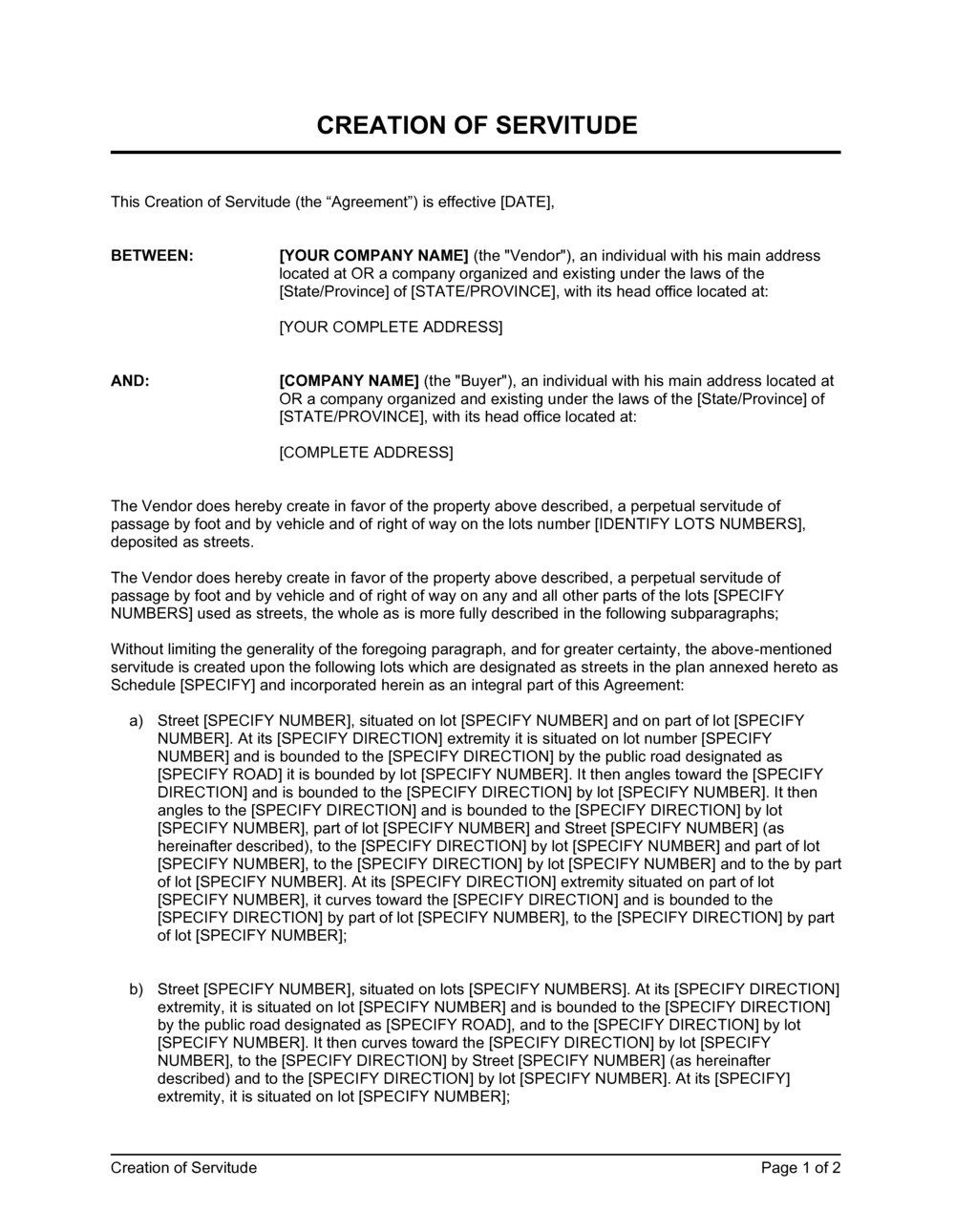
- A real right that burdens one parcel of land (the servient tenement) in favor of another parcel or person (the dominant tenement), typically recorded against the title.
- Dominant Tenement
- The property or party that benefits from the servitude — the one that holds the right to use the burdened land.
- Servient Tenement
- The property that bears the burden of the servitude — the land over which the rights are exercised.
- Easement
- The common law term for a servitude — a non-possessory right to use another's land for a defined purpose, such as access, drainage, or utilities.
- Appurtenant Servitude
- A servitude that is attached to the dominant land and automatically transfers with it when the property is sold or conveyed.
- Servitude in Gross
- A servitude that benefits a person or entity rather than an adjoining parcel — for example, a utility company's pipeline right — and may or may not transfer on sale.
- Right of Way
- A type of servitude granting the holder the right to pass over or through a defined strip of another's land.
- Burdened Area
- The precisely defined portion of the servient tenement over which the servitude rights are exercised, typically described by survey or metes and bounds.
- Consideration
- The payment or other benefit given by the dominant party to the servient landowner in exchange for granting the servitude.
- Prescription
- The acquisition of a servitude through long, open, uninterrupted, and adverse use of another's land without formal agreement, recognized in most common-law jurisdictions after a statutory period.
- Extinguishment
- The lawful termination of a servitude — through merger of title, expiry of term, abandonment, or formal release — resulting in the burden being removed from the title.
- Metes and Bounds
- A method of describing land by specifying boundary lines using compass directions and distances from fixed reference points, commonly used to define the burdened area in a servitude.