1
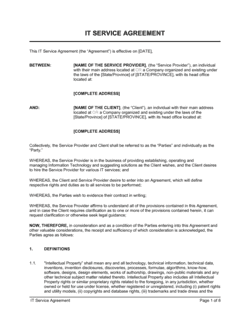
Enter legal entity names and the effective date
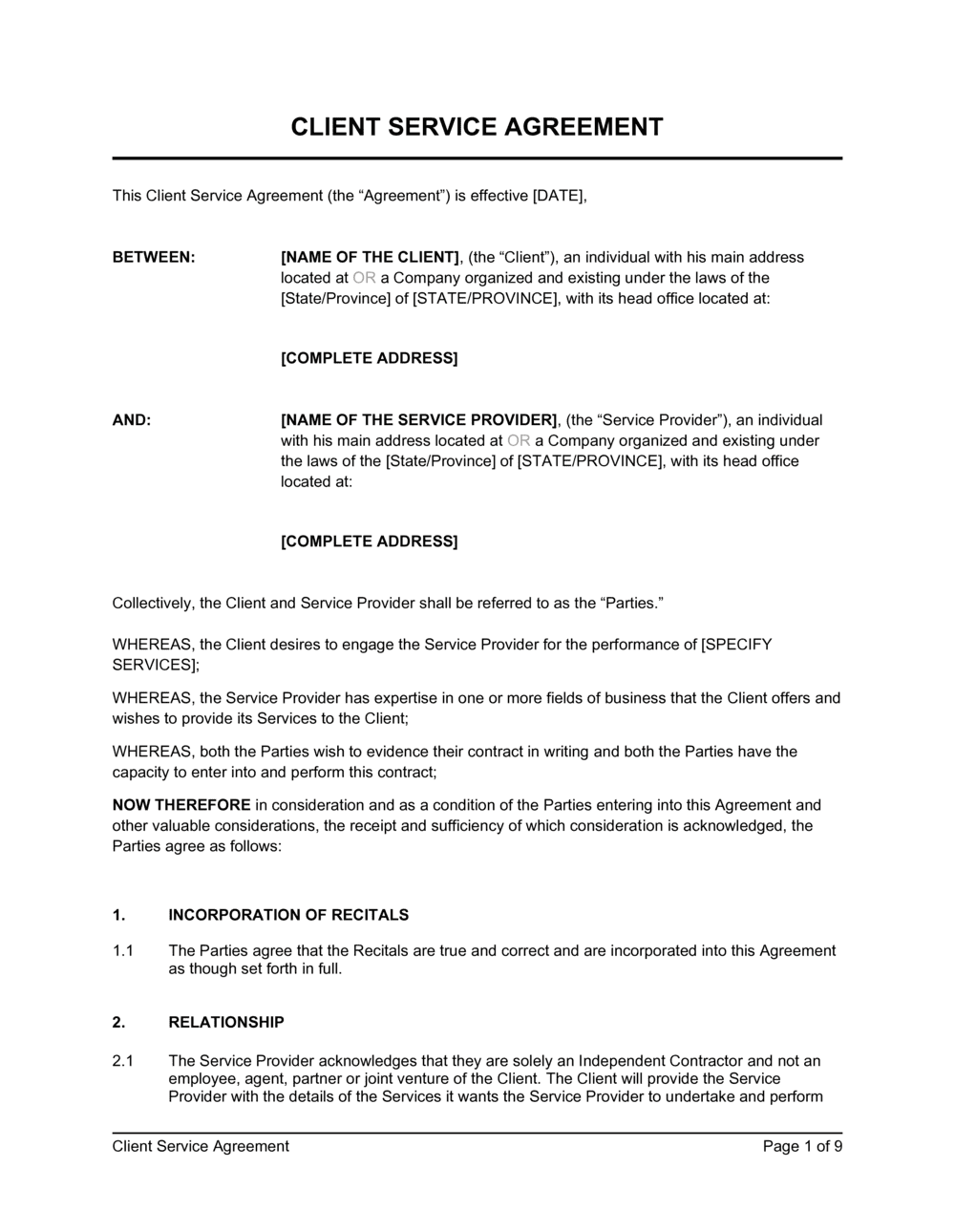
Use the full registered legal names of both the service provider and the client — not trade names or individual names unless the provider is a sole proprietor. Set the effective date to the date both parties will sign.
💡 Confirm the client's legal entity name against their invoicing or purchase-order documentation before drafting — mismatches cause enforceability questions.
2
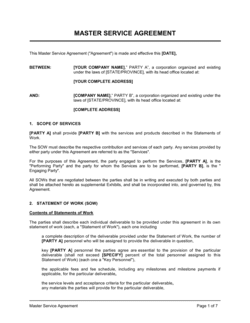
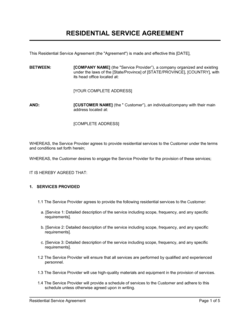
Define the scope of services with explicit exclusions
Write a specific, measurable description of every service to be provided and every deliverable to be produced. Then add a short exclusions paragraph listing what is not included — common exclusions are rush timelines, third-party fees, or services outside a specific geography.
💡 If the scope is complex, attach a detailed Statement of Work (SOW) as Schedule A and reference it in the body — this keeps the main agreement clean and the scope easy to update.
3
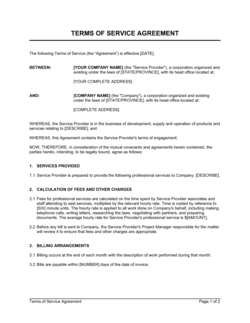
Set fees, invoicing cadence, and payment terms
Enter the total project fee or applicable rate (hourly, daily, or monthly), the invoicing schedule (upfront, milestone-based, or monthly), and the payment due date. Add a late-fee rate — 1.5% per month is typical — and a suspension-of-services right after a defined overdue period.
💡 Requiring a deposit of 25–50% before work begins is standard practice for project-based engagements and dramatically reduces non-payment risk.
4
Allocate intellectual property rights clearly
Decide whether the client receives full ownership of all deliverables upon payment, or whether the provider retains background IP and grants only a license. Then write the clause to match that decision explicitly — courts do not infer IP assignment from silence.
💡 If you reuse code libraries, design systems, or frameworks across clients, retain ownership of those and grant a license — assigning them to one client inadvertently restricts your ability to serve others.
5
Fill in the confidentiality and data-handling terms
Specify what counts as confidential information, the obligations of each party, any permitted disclosures (e.g., to subcontractors under NDA), and how long the obligation survives after the agreement ends — 2 to 3 years is typical.
💡 If the client will share personal data of their customers with you, add a data processing addendum — GDPR, CCPA, and PIPEDA all impose separate obligations that a standard confidentiality clause does not satisfy.
6
Set the term, notice period, and termination triggers
State the start date and either an end date or a project-completion trigger. Set the termination-for-convenience notice period (30 days is standard) and the cure period for material breach (10–15 days is common).
💡 Include a 'fees earned through termination date' clause — without it, clients who terminate for convenience may dispute how much is owed for work already completed.
7
Confirm governing law and dispute resolution
Choose the jurisdiction where both parties are located, or the provider's home jurisdiction. Decide between arbitration, mediation, or court, and name the specific venue or arbitration body (e.g., AAA, JAMS, or ICDR for cross-border).
💡 Arbitration clauses that include a loser-pays provision meaningfully deter frivolous disputes from either side — worth adding if the contract value is substantial.
8
Sign before any work begins
Both parties must sign the agreement — and any attached schedules — before the first billable hour or deliverable is produced. Post-commencement signatures may not protect IP created or confidential information shared before signing.
💡 Use an e-signature tool that timestamps execution and stores the fully-executed copy in a secure, accessible location for both parties.